LEED Certification in Delhi helps building owners, developers, corporate organizations, and facility managers plan and demonstrate the sustainability performance of eligible buildings and interior projects. For organizations working on commercial properties, hotels, healthcare facilities, institutional campuses, and existing buildings, LEED provides a framework for addressing environmental performance throughout a project’s lifecycle.
Delhi’s building landscape is distinct from that of a typical technology-led business city. It includes government and institutional facilities, established commercial districts, high-density neighborhoods, hospitality properties and major redevelopment projects. From Connaught Place and Nehru Place to Aerocity, Dwarka, Saket and Okhla, each area presents different building uses and project considerations.
GQS supports organizations pursuing LEED Certification in Delhi, with assistance aligned to the building’s location, use, project stage, and certification scope.
LEED Certification for Delhi’s Diverse Building Landscape
Delhi’s mix of older properties and newer commercial developments makes project-specific planning important. A retrofit in an established business district may have different constraints from a new office building in Aerocity or an institutional project in Dwarka.
The city’s hot summers, seasonal air-quality challenges, water-management needs, and dense urban environment also make building design and operations important considerations. LEED certification can help project teams organize sustainability objectives around energy, water, materials, indoor environmental quality, and site-related criteria, according to the selected rating system.
LEED Certification can help Delhi building owners and project teams improve environmental performance while addressing the needs of the capital’s diverse building landscape.
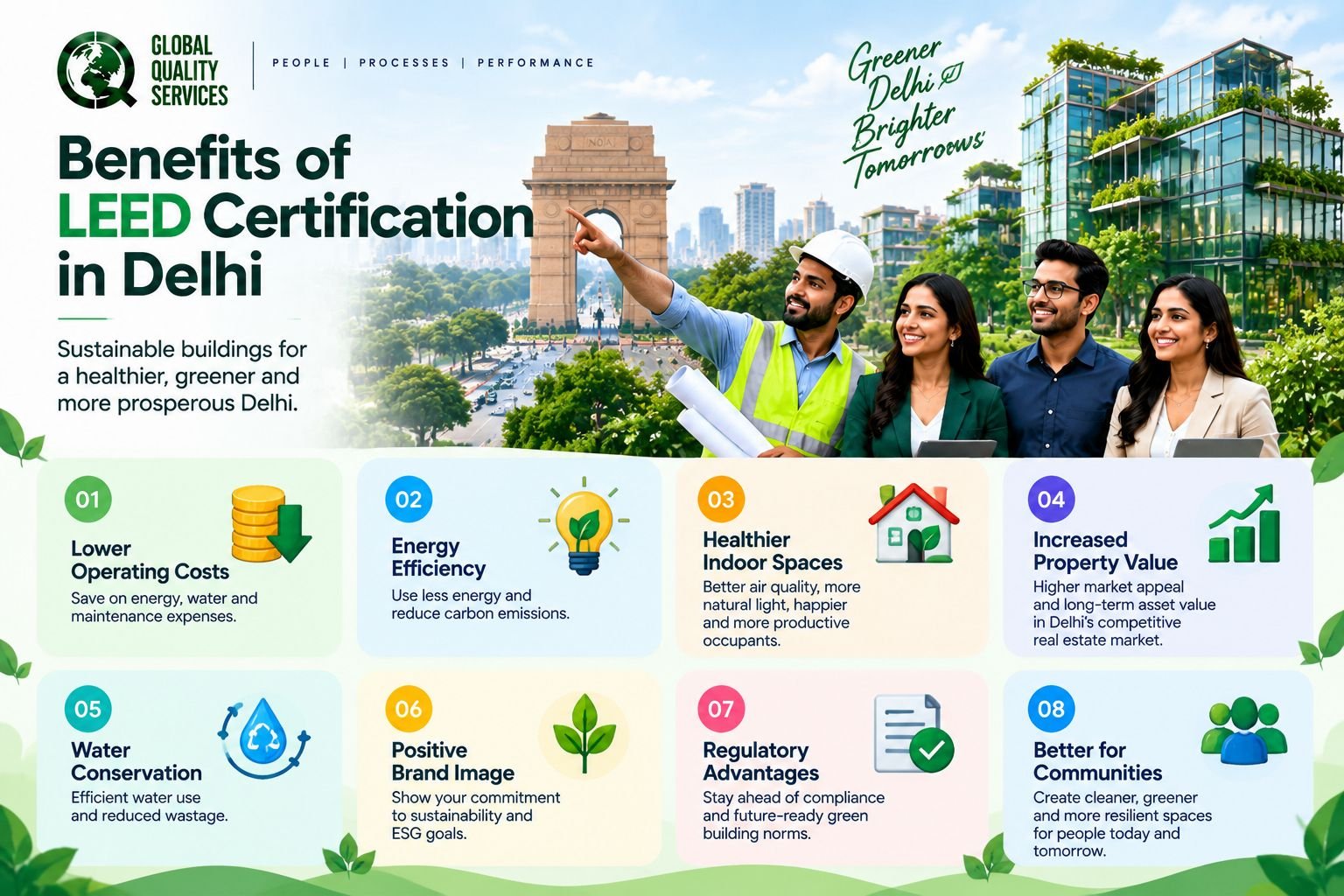
- Better energy performance: Helps project teams address heating, cooling, lighting, and electricity use, particularly in buildings exposed to Delhi’s seasonal temperature extremes.
- Improved water efficiency: Encourages more efficient water use through applicable building and operational measures.
- Healthier indoor environments: Addresses indoor air quality, ventilation, lighting and occupant comfort, which are important considerations for offices, healthcare facilities, hotels and institutional buildings.
- More sustainable redevelopment: Provides a framework for eligible renovation and existing-building projects to assess environmental performance alongside upgrades.
- Documented sustainability credentials: Gives owners and organizations a recognized way to communicate building performance to tenants, clients and other stakeholders.
- Support for corporate sustainability goals: Helps organizations connect building-level actions with wider environmental commitments and reporting priorities.
Areas We Cover for LEED Certification in Delhi
GQS supports eligible projects across Delhi’s commercial, institutional, hospitality and redevelopment areas.
- Connaught Place and Central Delhi: Established offices, hotels, retail properties and commercial buildings may need to consider LEED during renovation, interior redevelopment or building-performance upgrades. Project scope and existing site conditions are important planning factors.
- Nehru Place and South Delhi: Corporate offices, commercial complexes and business properties can assess LEED pathways based on whether the project involves a whole building, tenant interior or ongoing operations.
- Aerocity and Mahipalpur: Hospitality, office and commercial developments in this area can consider LEED requirements during new projects and major upgrades, particularly where building services and occupant experience are central to the project.
- Okhla and Jasola: Offices, institutional properties and industrial or commercial facilities may explore eligible certification routes. Applicable requirements depend on the building’s use and the project boundaries.
- Saket and Vasant Kunj: Retail, hospitality, office and mixed-use properties can assess LEED for eligible new construction, interiors and existing-building projects.
- Dwarka and Janakpuri: Institutional, commercial, healthcare and large residential developments may consider applicable green building pathways depending on project type and scope.
- Rohini and North Delhi: Commercial, institutional and mixed-use developments can evaluate LEED where the building and project meet the requirements of the selected rating system.
Which Delhi Projects May Need LEED Certification?
LEED may be suitable for eligible new buildings, major renovations, commercial interiors and existing facilities across Delhi. The project’s purpose and stage determine which rating system to consider.
Corporate Offices and Commercial Complexes
Delhi’s established business districts include offices, multi-tenant properties and commercial complexes. Building owners and corporate occupiers can assess LEED when planning new premises, upgrading workspaces or improving existing building operations.
Hotels, Retail and Hospitality Properties
Hotels, shopping centers and other high-occupancy properties have ongoing energy, water and indoor-environment considerations. LEED can provide a framework for project teams addressing these priorities.
Healthcare and Institutional Buildings
Hospitals, educational facilities and institutional campuses have specific operating schedules, occupancy needs and building-service requirements. Eligibility and the relevant certification route should be assessed against the actual project.
Redevelopment and Interior Projects
Delhi has many established properties where the project may focus on a particular floor, tenant space, or renovation rather than an entire new building. An appropriate LEED pathway can be considered if the project meets the relevant scope rules.
Location-Specific Considerations for LEED Projects in Delhi
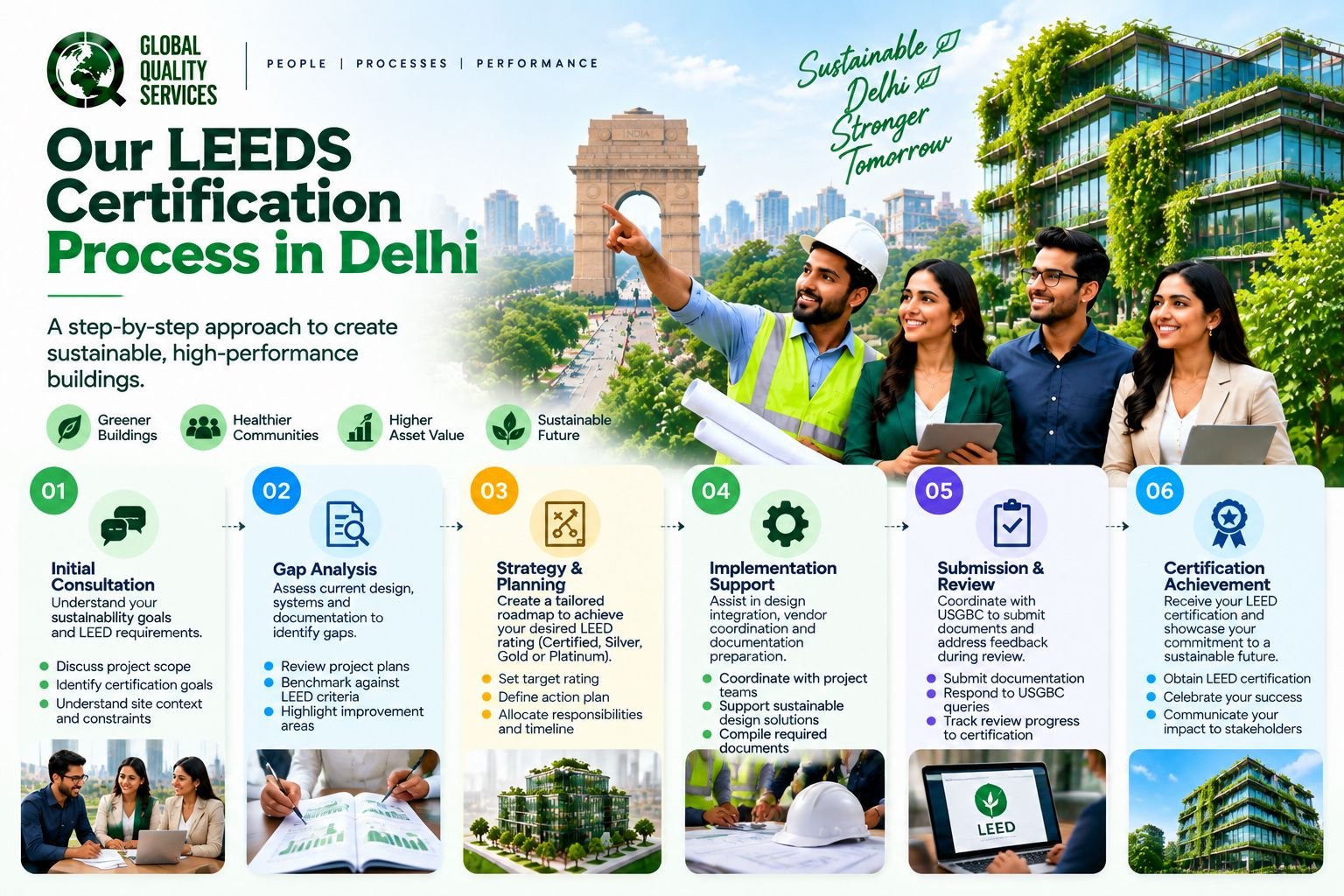
A Delhi LEED project must account for its site, building condition, and intended use, not simply select credits from a standard checklist.
For existing properties, the team may need to establish which building systems and spaces are included and what performance records are available. For new developments, decisions about site planning, energy systems, water use, materials and indoor environmental quality may need coordination across the design and construction teams.
Delhi’s seasonal climate also makes cooling, heating, ventilation,n and indoor environmental conditions important parts of project planning. The applicable LEED requirements and documentation should be reviewed in relation to the project’s actual design and operation.
How GQS Helps with LEED Certification in Delhi
Global Quality Services helps Delhi project teams understand applicable LEED requirements and prepare the documentation needed for certification. GQS can support developers, building owners, corporate occupiers and facility teams with project-scope review, requirements planning, readiness checks and coordination of supporting evidence.
Whether the project is in Central Delhi, Aerocity, Nehru Place, Okhla, Saket, Dwarka or another part of the capital, support is tailored to its building type and stage. This helps the team work from a clear project-specific plan rather than relying on a generic checklist.
FAQs About LEED Certification in Delhi
Can existing buildings in Delhi apply for LEED Certification?
Eligible existing buildings may pursue a suitable LEED pathway for operations. The right option depends on the building’s use, purpose, and the relevant rating-system requirements.
Is LEED Certification suitable for hotels and commercial properties in Delhi?
Hotels, offices, retail properties, and other eligible commercial buildings can assess LEED pathways based on the project type and whether the work involves new construction, interiors, or existing operations.
Can a renovation project in Delhi pursue LEED Certification?
Some renovation and interior projects may qualify. The team should first confirm the project boundary, scope and applicable rating system.
What should Delhi project owners prepare before starting?
Project owners should clarify the building scope, stage, intended use, project-team responsibilities, and availability of design, construction, or operational records.
How can GQS support LEED Certification in Delhi?
GQS can help assess the project, identify applicable requirements, review documentation readiness, and organize evidence for the certification submission.