India’s food manufacturing sector has expanded rapidly over the past decade. With this growth comes greater responsibility for manufacturers to maintain safe production environments and meet regulatory standards. The food industry today includes thousands of manufacturers, processors, exporters, and packaged food brands that must operate under strict safety guidelines.
The stakes for non-compliance have reached an all-time high. Recent parliamentary data reveals that in the 2024-25 period alone, FSSAI received over 7,700 complaints related to food safety and adulteration, marking a significant jump in consumer vigilance.
Furthermore, national enforcement data indicates that nearly 27.5% of food samples tested across India fail to meet safety or quality standards. For food manufacturers and B2B entities, a professional food safety audit is the only definitive way to navigate these tightening regulations while safeguarding long-term brand reputation.
Professional food safety audits are not only about meeting regulations. They help manufacturers strengthen internal systems, improve operational discipline, and demonstrate responsible production practices to regulators, buyers, and customers. Let’s look at what food safety audits are and why they are critical.
What is a Food Safety Audit Services?
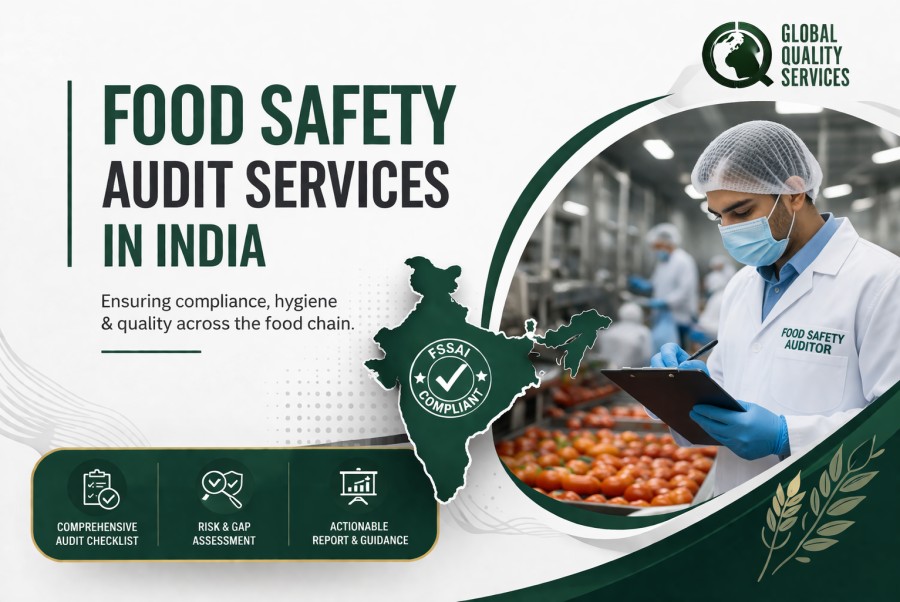
A food safety audit is a systematic, independent examination of a food business’s facilities, digital records, and daily operational processes. It is important to distinguish an audit from a basic inspection. While an inspection might check if a floor is clean, an audit evaluates the effectiveness of your Food Safety Management System (FSMS). It verifies if your written safety protocols are actually being followed by your staff on a Tuesday afternoon when no one is watching.
Food safety audit in India now encompasses digital traceability, real-time Critical Control Point (CCP) monitoring, and the verification of high-tech sanitation logs. It is a data-driven deep dive into the reliability of your food production.
Why Food Safety Audit Services are Important for Food Businesses in India
Food businesses in India operate in a challenging environment. High temperatures, long transportation routes, and complex supply chains can increase the risk of spoilage and contamination if proper controls are not in place. Here is why regular food safety audits act as an important safeguard for manufacturers and processors:
Regulatory Protection
Food safety enforcement in India has become more stringent in recent years. Authorities actively monitor compliance and impose penalties on businesses that fail to meet required standards. Regular audits help companies review their operations, identify gaps early, and ensure they remain aligned with regulatory expectations. This reduces the risk of fines, legal issues, or disruptions to business operations.
Maintaining Strong Compliance Records
Regulators increasingly rely on compliance history when assessing food businesses. Facilities that consistently maintain good audit records are generally seen as lower risk, while repeated non-compliance can lead to closer monitoring and more frequent inspections. Regular audits help businesses maintain strong compliance performance.
Strengthening Supply Chain Confidence
Many retailers, distributors, and institutional buyers expect suppliers to demonstrate reliable food safety practices. A clear audit record shows that a company follows structured safety procedures and maintains responsible production standards. This helps build trust across the supply chain and supports long-term business relationships.
Food Safety Regulations and Compliance Standards in India
Food businesses in India operate under a structured regulatory framework designed to ensure safe production, processing, and distribution of food products. Understanding these regulations helps manufacturers maintain compliance and avoid operational risks.
Food Safety and Standards Act, 2006
This is the primary law governing food safety in India. It sets the rules for food manufacturing, hygiene practices, labelling, and quality standards that businesses must follow.
Food Safety Amendment Regulations, 2026
Recent regulatory updates have introduced a risk based inspection system. Under this approach, inspection frequency depends on the type of food business and its past compliance record. Higher risk operations may face more frequent inspections.
Schedule 4 Hygiene and Sanitation Requirements
Schedule 4 outlines the hygiene and sanitation practices that food businesses must maintain. These include facility cleanliness, employee hygiene, equipment maintenance, and safe food handling procedures. Requirements vary depending on the type of food operation.
International Food Safety Standards
Many manufacturers also adopt standards such as ISO 22000 and FSSC 22000. While not always mandatory in India, these frameworks are widely used by companies supplying international markets and help strengthen overall food safety systems.
Step-by-Step Food Safety Audit Process
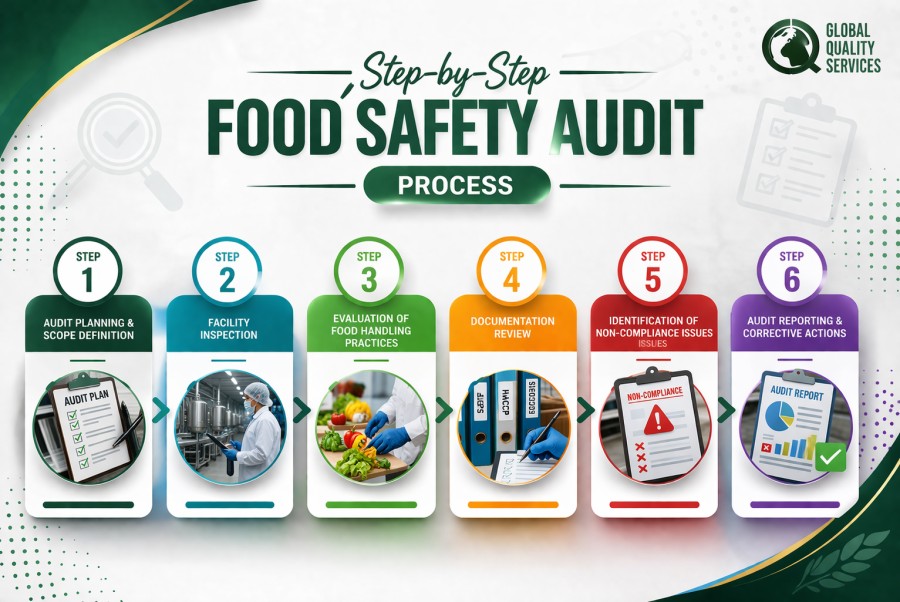
A structured audit process allows auditors to evaluate food safety practices in a systematic and consistent way. Here is the complete food safety audit process:
Step 1: Audit planning and scope definition
The audit begins by defining which processes, production areas, and documentation systems will be evaluated. Auditors prepare a checklist based on regulatory requirements and facility operations.
Step 2: Facility inspection
Auditors conduct a physical walkthrough of the manufacturing facility. This includes reviewing production areas, storage spaces, waste management practices, and sanitation conditions.
Step 3: Evaluation of food handling practices
Food processing activities are examined to confirm that ingredients are handled safely and contamination risks are minimized.
Step 4: Documentation review
Auditors review operational records such as sanitation logs, production records, equipment maintenance logs, and traceability systems.
Step 5: Identification of non-compliance issues
If any practices do not meet required standards, they are documented as observations or non-conformities.
Step 6: Audit reporting and corrective actions
At the end of the audit, a detailed report is prepared outlining findings and recommended corrective actions that help businesses strengthen their food safety systems.
Industries That Benefit From Food Safety Audits in India
Food safety audits are important across many sectors within the food industry. Some sectors require especially strict monitoring because of higher safety risks.
| Industry | Primary Audit Focus |
| Dairy and poultry | Pathogen control and cold chain integrity |
| Ready-to-eat foods | Microbial stability and packaging safety |
| Packaged drinking water | Filtration systems and water quality |
| Export-oriented food units | Residue testing and regulatory compliance |
| Cloud kitchens | Food temperature control and packaging hygiene |
Common Food Safety Issues Identified During Audits
Based on our extensive experience in the Indian market, we frequently encounter several recurring gaps that can lead to audit failure:
- Inadequate Record-Keeping: Missing temperature logs or expired pest control certificates account for nearly 35% of non-compliance notices. If it isn’t documented, an auditor assumes it didn’t happen.
- Cold Chain Failures: Up to 17% of facilities struggle to maintain consistent storage temperatures during peak Indian summers, often due to poor insulation or lack of power backup.
- Mislabeling: Small errors in font size, missing allergen declarations, or incorrect veg/non-veg logos are common reasons for product seizures.
- Structural Gaps: Something as simple as an unsealed window or a cracked floor can allow pest entry, which is an automatic “Major” non-conformance.
Why Global Quality Services is the Right Choice for Food Safety Auditors in India
Choosing the right audit partner is important for any food manufacturer. An effective auditor should not only evaluate compliance but also understand how food production actually works on the factory floor. Global Quality Services focuses on practical audits that support both compliance and operational efficiency.
- Strong regulatory knowledge: Our auditors understand Indian food safety regulations and how they are applied during real inspections. This helps businesses stay aligned with current requirements and avoid compliance gaps.
- Practical and business focused audits: We recognize that production schedules are tight. Our audits are designed to identify real operational risks and provide clear recommendations that can be implemented without disrupting daily operations.
- Pan India audit capability: With teams located across major manufacturing regions, we are able to support facilities in different parts of the country while maintaining consistent audit standards.
- Clear and practical communication: Food safety regulations can be complex. Our auditors explain findings and recommendations in simple, clear language so that management teams and production staff understand what needs to be improved and why it matters.
Professional Food Safety Audit Services in India
Maintaining strong food safety practices is essential for every food manufacturing facility. Regular audits help businesses verify compliance, improve operational processes, and identify potential risks.
Professional food safety audit services provide an independent evaluation of production environments and help manufacturers maintain responsible manufacturing practices.
Global Quality Services supports food manufacturers by evaluating hygiene standards, production processes, and compliance with regulatory requirements.
If your organization operates in food manufacturing or food processing, scheduling a professional food safety audit can help ensure that your facility meets regulatory standards and maintains safe production practices.
Frequently Asked Questions
- Does an FSSAI license require regular audits?
While not every license requires a formal third-party audit, businesses must maintain compliance with food safety regulations. Many manufacturers conduct regular audits to verify operational practices.
- How often should food manufacturers conduct audits?
Many companies conduct internal or third-party audits annually. High-risk facilities may require more frequent reviews.
- How long does a food safety audit take?
The duration depends on the size of the facility. Smaller operations may require a single day, while large manufacturing units may require several days.
- Who performs food safety audits?
Audits are typically conducted by trained auditors from independent inspection companies or specialized food safety consulting firms.
- Can audits help businesses prepare for regulatory inspections?
Yes. Many companies use third-party audits to review their operations before regulatory inspections to ensure readiness.