Cyber threats are rising fast, and businesses can no longer rely on basic security measures. A recent report shows that 83% of companies worldwide experienced more than one data breach, a number that highlights how urgent strong security has become.
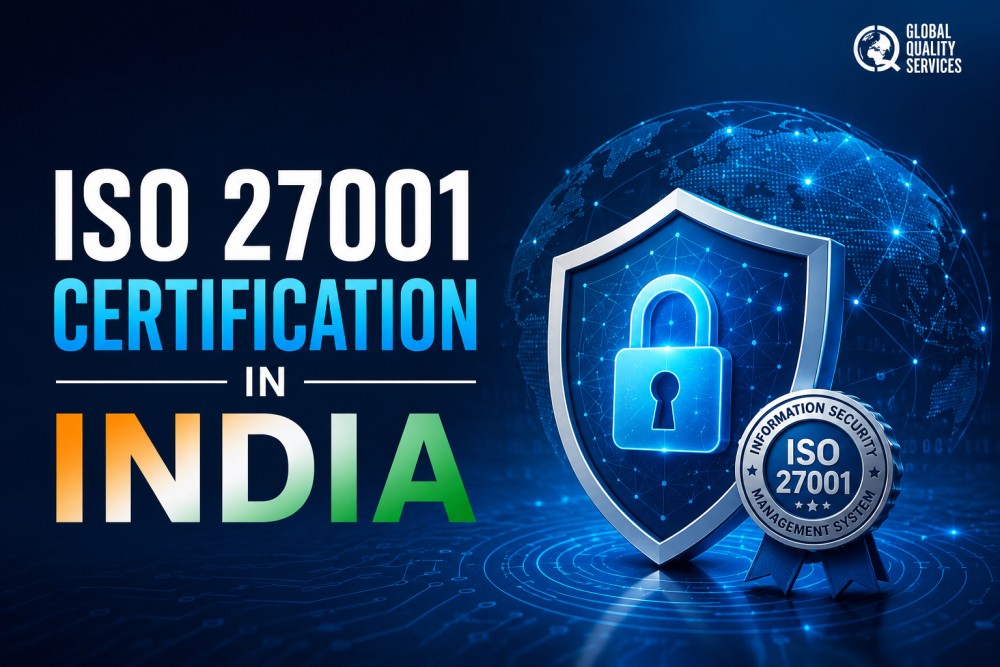
ISO 27001 helps organizations build a disciplined and reliable approach to protecting sensitive information. It strengthens trust, supports compliance, and reduces cyber risks. And honestly, working with an experienced consultant like Global Quality Services makes the certification journey far smoother, especially when you want everything done right the first time.
What is ISO 27001 Certification?
ISO 27001 is a globally accepted standard for managing information security. It provides a structured framework that helps businesses identify risks, apply controls, and monitor their systems effectively. It also protects all forms of data, whether digital, cloud-based, or physical. The certification verifies that an organization meets global security best practices.
Why ISO 27001 Certification Matters for Indian Businesses?
ISO 27001 has become increasingly important for companies in IT, BFSI, telecom, e-commerce, SaaS, manufacturing, logistics, and government sectors. The certification builds trust, improves business credibility, helps organizations qualify for more tenders and contracts, and provides a structured approach to protecting sensitive information.
As India strengthens its data privacy framework through the Digital Personal Data Protection (DPDP) Act, 2023, ISO 27001 also helps businesses put effective information security practices in place to better manage and safeguard personal data.
Key Benefits of ISO 27001 Certification
The certification brings long-term security improvement, reduces cyber risks, and supports business growth by proving your commitment to protecting sensitive information responsibly.
1. Strong Data Protection
It safeguards customer, employee, and business data from breaches, leaks, and misuse.
2. Reduced Cyber Risks
It helps identify security threats early, allowing proactive steps to avoid cyberattacks and internal security incidents.
3. Trusted Brand Image
Clients and partners trust certified businesses more, especially in the IT outsourcing and cloud service industries.
4. Legal and Regulatory Compliance
It helps meet India’s data-security expectations like DPDP Act requirements, IT Act provisions, and industry norms.
5. Better Business Opportunities
It increases your chances of winning corporate, global, and government projects where ISO 27001 is a mandatory requirement.
Who Needs ISO 27001 Certification in India?
Any business that handles digital, cloud, or confidential information can benefit from ISO 27001, regardless of its size, industry, or complexity.
- IT companies
- Software development firms
- SaaS and cloud platforms
- BPOs and call centres
- E-commerce companies
- Banks and fintech companies
- Healthcare providers
- Manufacturing and logistics companies
- Startups handling customer data
ISO 27001 Certification Process in India
The certification process follows a clear, step-by-step approach that helps businesses build strong security practices and meet all mandatory compliance requirements.
Step 1: Gap Analysis
A review of your existing security controls and identification of what needs improvement.
Step 2: Documentation & ISMS Development
Creation of policies, procedures, and processes aligned to ISO 27001 standards.
Step 3: Implementation of Controls
Applying security controls, assigning responsibilities, and training employees.
Step 4: Internal Audit
An internal check to ensure everything works correctly before the final audit.
Step 5: Stage 1 Audit – Document Review
The auditor checks whether your documentation meets ISO 27001 requirements.
Step 6: Stage 2 Audit – Implementation Check
The auditor examines real-world implementation across departments.
Step 7: Certification Issued
Upon meeting all requirements, the certification body issues the ISO 27001 certificate.
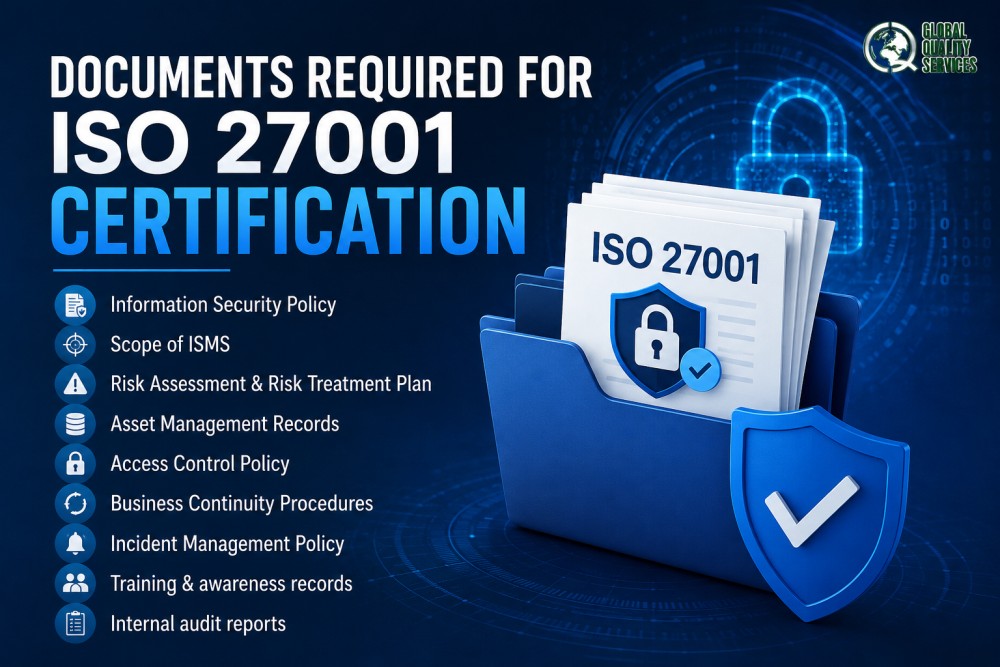
Documents Required for ISO 27001 Certification
Organizations must prepare clear and structured documentation that shows how they manage information security and follow the ISO 27001 standard effectively.
 Cost of ISO 27001 Certification in India
The cost of ISO 27001 certification in India depends on the organization’s size, ISMS scope, business complexity, documentation requirements, and audit efforts. The overall investment may also vary based on the level of preparation and certification support required.
How Long Does It Take to Get ISO 27001 Certified?
On average, certification takes 30 to 90 days for small to mid-sized companies. Larger organizations may need 4–6 months due to complex processes.
The timeline depends on how prepared your organization is and how quickly your team implements mandatory controls and required documentation tasks.
Common Challenges Businesses Face During ISO 27001 Certification
Companies often struggle with documentation, employee awareness, control implementation, and ongoing monitoring while working toward ISO 27001 certification readiness.
- Lack of technical knowledge
- Poor documentation structure
- Delayed internal audits
- Limited employee awareness
- Resource constraints
- Difficulty maintaining controls after certification
ISO 27001 Certification Consultants in India
ISO 27001 Certification in Delhi | ISO 27001 Certification in Noida | ISO 27001 Certification in Hyderabad
ISO 27001 Certification in Ahmedabad
Summary Points
- ISO 27001 strengthens information security by helping organizations protect sensitive data through a clear and structured ISMS framework.
- It supports compliance with the DPDP Act, IT Act, and global data-security expectations, reducing legal, financial, and reputational risks.
- Certification lowers the chances of cyberattacks by encouraging regular monitoring, risk assessment, and strong preventive controls across all systems.
- Improved security processes help reduce operational disruptions, data-loss incidents, and recovery costs.
- Growing awareness around data protection makes ISO 27001 a major trust booster for Indian businesses, enhancing credibility and client confidence.
Why Choose Global Quality Services for ISO 27001 Certification?
Working with an experienced consultant speeds up documentation, simplifies compliance, avoids audit failures, and ensures smoother certification for every type of business.
A consultant helps with gap analysis, policy drafting, risk assessment, implementation, training, internal audits, and external audit support. This reduces workload and makes the process faster and stress-free. Contact us to make your certification journey smooth and reliable.
Frequently Asked Questions
1. Does ISO 27001 help organizations prepare for the DPDP Act in India?
Yes. While ISO 27001 is not a legal requirement, its controls align closely with the DPDP Act. It helps businesses build strong data-handling practices, access controls, and breach-response systems, making compliance much easier.
2. Can a small business or startup get ISO 27001 certified?
Absolutely. ISO 27001 works for companies of all sizes. Startups often benefit even more because the framework helps them build secure processes from the beginning.
3. Do remote or hybrid teams affect ISO 27001 compliance?
Yes, they do. Companies must implement additional controls for remote access, device security, VPN usage, and secure data-sharing practices to remain compliant.
4. How often should risk assessments be updated after getting certified?
Risk assessments should ideally be reviewed at least once a year or whenever there is a major operational, technical, or structural change in the organization.
5. Can ISO 27001 be integrated with other ISO standards?
Yes. ISO 27001 aligns well with ISO 9001, ISO 20000, ISO 22301, and ISO 45001. Integrated systems help companies reduce documentation load and simplify audits.