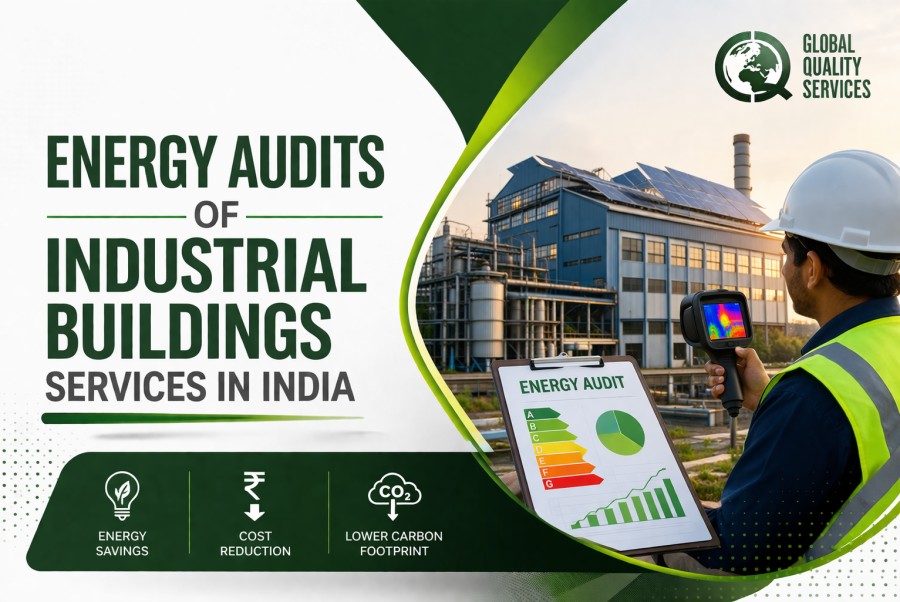
Industrial energy costs are rising across India, and energy efficiency has become a major operational priority for manufacturing facilities and large industrial buildings. The industrial sector accounts for about one‑third to nearly half of India’s final energy consumption, making it the largest energy‑using sector in the economy, as per recent India‑energy‑scenario and government‑level reports.
At the same time, detailed energy‑audit studies in Indian industries show that systematic audits can identify 20–30% energy‑saving opportunities across many facilities, often with payback periods of 2–3 years or less. For industrial building owners and plant managers, this presents a clear opportunity.
An energy audit provides a structured way to analyze energy consumption across equipment, utilities, and production systems, helping organizations reduce costs, improve operational efficiency, and meet sustainability targets.
Professional Energy Audits of Industrial Buildings Services in India help organizations identify hidden inefficiencies, optimize energy use, and implement practical improvements that deliver measurable savings over time.
What is an Industrial Energy Audit?
An industrial energy audit is a systematic engineering survey and analysis of energy flows within a facility. Unlike a simple utility bill review, this process involves using calibrated instruments to track how energy enters a building, where it is wasted, and how it can be optimized without compromising production quality or volume.
A typical audit examines:
- Electricity consumption across departments
- Energy performance of production equipment
- HVAC and cooling systems
- Boilers and steam systems
- Lighting and compressed air systems
- Energy losses due to outdated equipment or operational inefficiencies
Why Industrial Buildings Need Energy Audits Services
Industrial facilities rely on energy-intensive systems such as machinery, boilers, compressors, and HVAC equipment. Over time, these systems can become inefficient due to aging equipment, operational changes, or lack of monitoring. Below are the key reasons industrial buildings benefit from regular energy audits:
Identify Hidden Energy Waste
Energy losses often occur in areas that are not immediately visible, such as compressed air leaks, inefficient motors, poor insulation, or outdated lighting systems. An energy audit examines these systems using performance data and specialized tools to detect inefficiencies and pinpoint where energy is being wasted.
Reduce Energy Costs
Energy is a major operating expense for many industries. By identifying inefficient equipment and operational practices, energy audits provide practical recommendations that help reduce electricity and fuel consumption without affecting production output.
Improve Equipment Efficiency and Reliability
Equipment that consumes excess energy often operates under unnecessary stress. Energy audits identify performance issues in systems such as motors, compressors, and HVAC units, helping improve efficiency while reducing maintenance costs and equipment wear.
Support Sustainability Goals
Many organizations are working to lower carbon emissions and improve environmental performance. Energy audits provide a clear understanding of energy consumption and help implement efficiency measures that reduce the facility’s environmental impact.
Prepare for Energy Compliance
Certain high-energy-consuming industries in India must follow efficiency programs introduced by the Bureau of Energy Efficiency (BEE) and initiatives like the Perform Achieve and Trade (PAT) scheme. Regular energy audits help organizations stay aligned with these regulatory expectations.
Enable Better Energy Management
An energy audit provides a clear picture of energy consumption across the facility and identifies opportunities for improvement. This information helps organizations plan upgrades, prioritize efficiency investments, and develop long-term energy management strategies.
Industries That Benefit from Energy Audits
Energy audits are valuable across many sectors where energy consumption is high and operational efficiency is critical. Industries that commonly conduct energy audits include:
| Industry | Energy Systems Commonly Audited |
| Manufacturing | Motors, compressed air systems, HVAC |
| Food Processing | Refrigeration, boilers, steam systems |
| Pharmaceuticals | Cleanroom HVAC systems, chilled water plants |
| Textile Industry | Steam systems, dryers, motors |
| Chemical Plants | Thermal systems, process heating |
| Warehousing & Industrial Buildings | Lighting, ventilation, refrigeration |
Energy Audit Regulations in India
Energy audits in India are supported by national policies that encourage industries to improve energy efficiency and reduce overall consumption. These regulations are mainly implemented by the Bureau of Energy Efficiency (BEE) under the Ministry of Power.
Key regulatory frameworks include:
- Energy Conservation Act, 2001: The main law governing energy efficiency in India. It established the Bureau of Energy Efficiency and introduced programs that require industries to monitor and improve energy performance.
- Bureau of Energy Efficiency (BEE): The central authority responsible for promoting energy efficiency, issuing guidelines, and certifying qualified energy auditors.
- Designated Consumer (DC) Program: Large energy-intensive industries such as cement, steel, chemicals, and textiles are classified as Designated Consumers and must conduct periodic energy audits.
- Perform, Achieve and Trade (PAT) Scheme: This program sets energy reduction targets for high-consumption industries and allows companies to trade energy-saving certificates based on their performance.
- BEE-Accredited Energy Auditors: Energy audits for regulated facilities must be conducted by certified auditors to ensure accuracy and compliance.
Step-by-Step Industrial Energy Audit Process
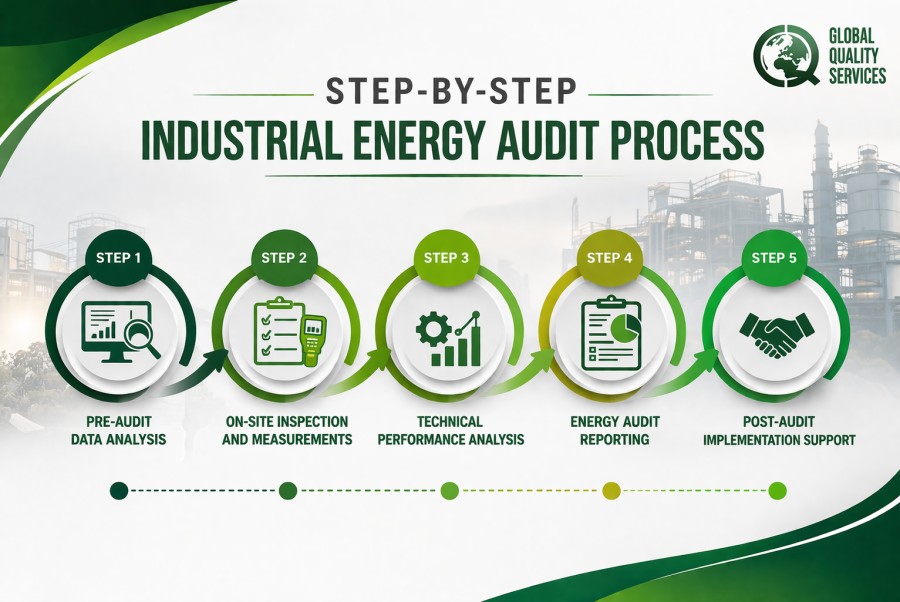
A professional energy audit follows a structured methodology to ensure accurate analysis and practical recommendations. Below is the typical process followed during industrial energy audits:
Step 1: Pre-Audit Data Analysis
The process begins with reviewing 12–24 months of utility bills, fuel consumption records, and production data. This helps auditors understand energy usage patterns and identify areas that require closer evaluation during the audit.
Step 2: On-Site Inspection and Measurements
Energy auditors visit the facility to inspect systems and collect real-time data. Tools such as thermal imaging cameras, power quality analyzers, and ultrasonic leak detectors are used to detect heat losses, electrical issues, and compressed air leaks.
Step 3: Technical Performance Analysis
The collected data is analyzed to compare actual equipment performance with design specifications and efficiency benchmarks. This helps identify systems that are operating inefficiently or consuming excess energy.
Step 4: Energy Audit Reporting
Auditors prepare a detailed report outlining inefficiencies and recommended improvements. These recommendations are typically categorized as no-cost actions, medium-investment upgrades, and high-investment improvements.
Step 5: Post-Audit Implementation Support
After the audit, experts may assist with implementing recommended improvements and verifying whether the expected energy savings are achieved.
Cost of Industrial Energy Audit Services in India
The cost of an industrial energy audit depends on the scope and complexity of the facility being evaluated. Since every industrial building has different energy systems, production processes, and operational requirements, the audit is usually customized to the specific site. Several factors influence the overall scope of the audit:
- Facility size – Larger plants require more time for inspection, measurements, and analysis.
- The number of energy systems – Systems such as boilers, compressors, HVAC units, and motors increase the audit scope.
- Operational complexity – Facilities with complex production processes require deeper technical evaluation.
- Depth of the audit – Detailed audits involving measurements and energy flow analysis require more extensive work.
- Reporting requirements – Comprehensive reports include energy analysis, improvement recommendations, and implementation guidance.
Energy Audit Services Consultants
Energy Audit of Industrial Building Services in Delhi | Energy Audit of Industrial Building Services in Bengaluru
Energy Audit of Industrial Building Services in Noida | Energy Audit of Industrial Building Services in Hyderabad
Energy Audit of Industrial Building Services in Ahmedabad | Energy Audit of Industrial Building Services in Chennai
Energy Audit of Industrial Building Services in Pune | Energy Audit of Industrial Building Services in Mumbai
Improve Your Industrial Energy Performance with Global Quality Services
Stop letting energy inefficiencies drain your operational budget. Whether you need to meet mandatory BEE requirements or simply want to reduce your monthly utility spend, Global Quality Services provides the technical depth and regulatory clarity you need.
Our experts assess your facility’s energy systems, identify inefficiencies, and provide practical recommendations that support better energy management and cost savings. Contact us today to schedule a preliminary consultation and take the first step toward a leaner, greener industrial future.
Frequently Asked Questions
1. How long does a typical industrial energy audit take to complete?
A detailed audit usually requires 4 to 7 days of on-site data collection, depending on the complexity of the machinery. The final analysis and comprehensive report are typically delivered within 2 to 3 weeks following the site visit.
2. Will the energy audit process disrupt our daily production schedule?
No. Our auditors use non-intrusive instruments like clamp-on meters and ultrasonic sensors. We work around your production cycles to ensure that data is captured during peak operational hours without requiring any downtime.
3. Is a BEE-certified energy audit mandatory for all factories in India?
No. BEE-certified energy audits are mandatory only for industries classified as Designated Consumers (DCs) under the PAT scheme. Other factories are not legally required to conduct audits, but many choose to do so to reduce energy costs and improve efficiency.
4. Does Global Quality Services help implement the audit recommendations?
Yes. In addition to providing the audit report, Global Quality Services offers post-audit advisory support. This includes reviewing vendor proposals and helping monitor results to ensure the recommended improvements deliver the expected energy savings.
5. Can an energy audit support ISO 50001 or green building certifications?
Yes. The data collected during an energy audit provides the baseline energy review required for ISO 50001 energy management systems and can also support documentation needed for green building certifications such as IGBC or LEED.