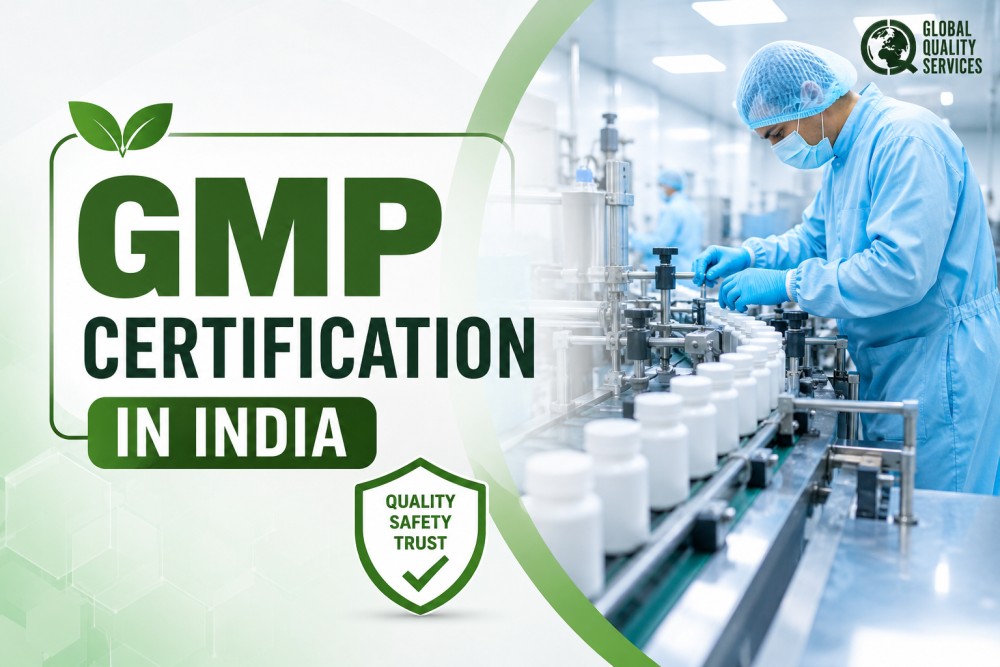
Good Manufacturing Practices (GMP) play a vital role in helping Indian manufacturers maintain consistent product quality, safety, and compliance across regulated industries. From pharmaceuticals and cosmetics to food, nutraceuticals, and medical devices, GMP provides a structured framework for controlling manufacturing processes and reducing quality risks.
India’s pharmaceutical sector alone recorded an annual turnover of ₹4.72 lakh crore in FY 2024–25, according to the Government of India, highlighting the growing importance of strong manufacturing and quality systems. Department of Pharmaceuticals Annual Report 2025–26: GMP Certification in India helps businesses strengthen operational controls, improve inspection readiness, and build greater confidence among regulators, customers, and business partners.
Understanding GMP in the Indian Regulatory Context
Understanding India’s GMP framework helps manufacturers align operations with regulations, avoid compliance gaps, and build quality-driven, inspection-ready production systems.
What GMP Means for Indian Manufacturers
GMP defines systematic practices that control every stage of production, from raw material sourcing to final product distribution. In India, it ensures that manufacturing processes consistently meet predefined quality, safety, and efficacy standards across regulated industries.
Regulatory Authorities Governing GMP in India
In India, GMP requirements are enforced by bodies such as the Central Drugs Standard Control Organization and State Drug Control Departments. These authorities align national regulations with global standards to ensure product reliability and consumer safety.
Core Principles of GMP Compliance
Core GMP principles establish disciplined systems, trained teams, and controlled environments that ensure consistent quality, safety, and regulatory compliance across manufacturing operations.
Quality Management System (QMS)
A robust QMS ensures documented procedures, accountability, and continuous improvement. It helps organizations monitor quality objectives, manage deviations, and implement corrective actions systematically across all manufacturing and support functions. Businesses can also strengthen their overall quality management framework through ISO 9001 Certification in India.
Personnel Training and Hygiene
GMP emphasizes trained personnel and strict hygiene practices. Employees must understand their roles, follow standard operating procedures, and maintain personal cleanliness to prevent contamination and ensure consistent product quality.
Facility and Equipment Control
Manufacturing facilities and equipment must support hygienic operations and controlled workflows. Proper layout, maintenance, calibration, and validation reduce risks of cross-contamination and ensure reliable production outcomes.
Features of a Good Manufacturing Certificate in India
A valid GMP certificate demonstrates that an organisation follows applicable Good Manufacturing Practices and maintains controlled processes to support product quality and safety. Key features include:
- Details of the certified organisation or manufacturing facility
- Scope of certification and applicable GMP requirements
- Certificate number for identification and verification
- Date of issue and validity period
- Name of the certification or issuing body
- Authorised signature or approval
- Clear reference to the applicable standard or GMP requirements
GMP Documentation and Record Management
GMP documentation creates traceability, accountability, and consistency, enabling manufacturers to demonstrate compliance, control quality, and respond confidently during audits.
Standard Operating Procedures (SOPs)
SOPs provide clear, written instructions for every critical activity. They ensure consistency, reduce human error, and serve as a reference point during audits, inspections, and internal quality reviews.
Batch Manufacturing and Quality Records
Accurate batch records and quality logs enable traceability and accountability. These records help identify deviations, investigate root causes, and demonstrate compliance during regulatory inspections.
GMP Audits and Inspections in India
GMP audits and inspections validate real-world compliance, identify operational gaps early, and ensure manufacturers remain inspection-ready and aligned with Indian regulatory expectations.
Internal GMP Audits
Internal audits help organizations identify gaps before regulatory inspections. They assess process effectiveness, employee adherence, and documentation accuracy, enabling timely corrective and preventive actions.
Regulatory Inspections and Outcomes
Regulatory inspections evaluate real-time GMP implementation. Non-compliance can lead to warning letters, license suspension, or product recalls, making inspection readiness critical for uninterrupted operations.
Who Can Get GMP Certification?
GMP certification is suitable for businesses involved in manufacturing, processing, packaging, or handling products where quality, hygiene, and controlled production processes are essential. It is particularly relevant for:
- Pharmaceutical manufacturers
- API manufacturers
- Nutraceutical and dietary supplement manufacturers
- Cosmetic and personal care product manufacturers
- Ayurvedic and herbal product manufacturers
- Food and beverage manufacturers
- Medical device manufacturers
- Biotechnology and biological product manufacturers
- Contract and third-party manufacturers
- Packaging and processing facilities
GMP requirements may differ depending on the industry and product category. Food and beverage businesses can strengthen their food safety systems through ISO 22000 Certification in India, while cosmetic and personal care manufacturers may also consider ISO 22716 Certification in India for industry-specific cosmetic GMP requirements.
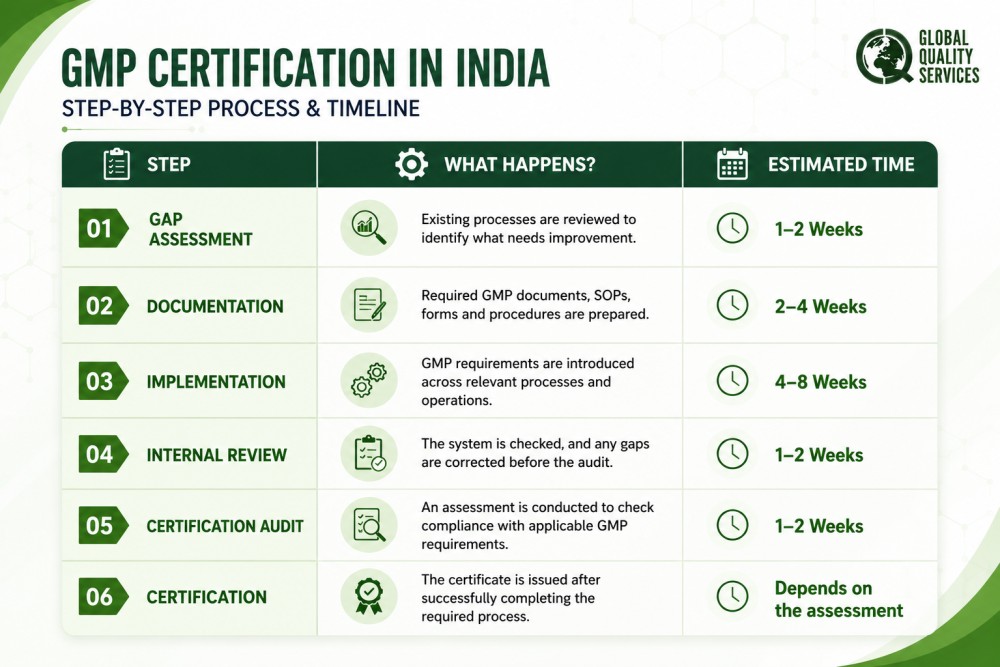
Role of a Certification Advisor and GMP Certification Timeline
A certification advisor helps your organisation prepare for GMP certification by guiding you through the required documentation, implementation, and audit preparation process.
Benefits of GMP Certification for Indian Businesses
Beyond compliance, GMP certification delivers measurable business advantages that strengthen internal operations while positioning Indian manufacturers for sustainable, long-term growth.
Enhanced Product Quality and Safety
GMP compliance ensures products meet safety and quality expectations consistently. This builds consumer trust and reduces risks related to defects, recalls, and regulatory penalties.
Market Access and Business Growth
GMP-certified facilities gain easier access to domestic and international markets. Compliance supports export readiness, strengthens brand reputation, and improves partnerships with global distributors and regulators.
Operational Efficiency and Process Consistency
GMP certification streamlines manufacturing workflows, reduces process variability, minimizes wastage, and improves overall operational efficiency through standardized, well-documented procedures.
Key Documents Required for GMP Certification in India
GMP documentation is generally focused on establishing controlled procedures and maintaining evidence that manufacturing activities are performed consistently. The most important documents include:
- GMP / Quality Manual
- Quality Policy and Quality Objectives
- System Procedures
- Standard Operating Procedures (SOPs)
- Site Master File
- Checklists
- Forms and Formats
- Batch Manufacturing and Batch Packing Records
- Quality Control and Testing Records
- Equipment Calibration and Maintenance Records
- Personnel Training Records
- Validation and Qualification Records
Eligibility Criteria for GMP Certification for Individuals in India
GMP certification is generally issued to manufacturing facilities and organisations, not individuals. However, individuals can pursue GMP training or professional courses to develop their knowledge of Good Manufacturing Practices.
Individuals who can benefit include:
- Pharmaceutical professionals
- QA and QC professionals
- Production and manufacturing professionals
- Food, cosmetic and nutraceutical professionals
- Students and freshers interested in quality and manufacturing careers
Eligibility for individual GMP training or courses may vary depending on the training provider and programme.
GMP Certification Consultants in India
GMP Certification in Delhi | GMP Certification in Bengaluru
GMP Certification in Noida | GMP Certification in Hyderabad
GMP Certification in Ahmedabad | GMP Certification in Chennai
Why Choose Global Quality Services as Your GMP Consultant
Top-notch GMP consultants with over 26 years of experience, Global Quality Services simplify compliance, reduce implementation risks, and guide Indian manufacturers through regulations with clarity, confidence, and practical industry expertise.
- Industry-Focused Expertise: Our experienced team provides practical GMP guidance tailored to your industry, operations, and compliance requirements.
- Complete Documentation Support: Get guidance for preparing essential GMP documents, including SOPs, procedures, manuals, and records.
- Experienced Compliance Guidance: We help businesses understand applicable GMP requirements and implement them effectively.
- Clear and Transparent Process: We clearly explain the requirements, scope, and steps involved throughout the GMP compliance journey.
- Audit and Inspection Preparation: We help organisations prepare for audits and inspections while supporting ongoing GMP compliance.
Partner with Global Quality Services for GMP in India
Partner with Global Quality Services, a reputed consultant, to achieve GMP compliance with confidence in India. Our experts deliver practical guidance, gap-driven solutions, and inspection-ready systems tailored to your industry. We simplify regulations, reduce risks, and accelerate compliance without disrupting operations. Build quality, credibility, and market readiness with a trusted GMP partner. Contact us to make your journey smooth and reliable.
Frequently Asked Questions
1. Is GMP mandatory for all manufacturing industries in India?
GMP is mandatory for regulated sectors like pharmaceuticals, food, cosmetics, and medical devices. Other industries may adopt GMP voluntarily to improve quality, safety, and operational discipline.
2. How long does it take to achieve GMP compliance in India?
Timelines vary based on facility size, existing systems, and regulatory scope. With expert guidance, most organizations achieve baseline GMP compliance within three to six months.
3. Does GMP certification need periodic renewal?
Yes, GMP compliance requires ongoing adherence. Regulatory authorities conduct periodic inspections, and organizations must continuously maintain systems, records, and training to remain compliant.
4. Can small and medium manufacturers implement GMP effectively?
Yes, GMP principles scale well for SMEs. With structured planning and consultant support, smaller manufacturers can implement cost-effective GMP systems without operational disruption.
5. What is the difference between GMP and ISO standards?
GMP focuses on regulatory compliance for product safety and quality, while ISO standards emphasize management systems. Many organizations integrate both for stronger governance and global credibility.