Chennai is among India’s best industrial hubs, comprising many dense clusters of plants manufacturing pharmaceuticals, nutraceuticals, biotechnology, and food products. Due to the implementation of regulatory changes such as Revised Schedule M by the CDSCO in conjunction with state licensing agencies, the process of plant compliance has become an everyday affair, rather than mere documentation.
According to official export performance reports from the Pharmaceuticals Export Promotion Council of India (Pharmexcil), Indian drug exports reached $30.47 billion in FY25 and crossed $31.11 billion in FY26. These statistics are further supported by Tamil Nadu’s vital industrial complexes, including Sriperumbudur, Chengalpattu, Ambattur, and Guindy. GMP Certification in Chennai is critical to ensuring that local plants have a quality infrastructure that helps them pass official audits and secure orders from foreign customers without halting production.
Why GMP Compliance Is Important for Chennai Manufacturers in 2026
Setting up strong Good Manufacturing Practice certification is mandatory for staying in business, keeping consumers safe, and securing new sales contracts. Running a factory without proper GMP systems creates immediate legal and financial hazards.
- Mandatory Revised Schedule M Rules: Updated Schedule M guidelines require digital data tracking, cleanroom standards, and tested HVAC systems for all medicine manufacturing units. Non-compliance can lead to swift suspension of your factory license.
- Smooth CDSCO and State Joint Audits: Joint inspections by state drug inspectors and central officers focus heavily on real plant practices. Proper GMP implementation helps your facility clear these joint audits without critical warnings.
- Access to Export Markets: Foreign buyers across North America, Europe, Southeast Asia, and the Middle East demand WHO-GMP or ISO 22716 certification before signing manufacturing agreements.
- Protection Against Batch Failures: Standardized workflows cut down cross-contamination risks and batch failures, saving your company money on discarded goods and legal claims.
- Better B2B Credibility: Commercial buyers and large health institutions actively select certified suppliers who can prove their plant is always audit-ready.
Which Industries in Chennai Need GMP Certification
GMP standards apply across several industrial product lines. Each line operates under specific government regulators and quality guidelines. Here is a list of primary business sectors that require formal certification:
- Pharmaceutical and Biological Products: Covers units making tablets, capsules, liquids, injectables, ointments, active ingredients (APIs), and biological items. Regulated under the Drugs and Cosmetics Act and Revised Schedule M.
- Food Processing, Drinks, and Health Supplements: Covers plants making packaged foods, dairy products, beverages, nutraceuticals, and dietary items. Regulated under FSSAI Schedule 4, HACCP, and ISO 22000 rules.
- Cosmetics, Skincare, and Personal Care: Factories manufacturing hair care items, lotions, creams, and personal hygiene lines. Regulated under the Cosmetics Rules 2020 and ISO 22716 export guidelines.
- AYUSH, Herbal, and Alternative Medicines: Units preparing Ayurvedic, Siddha, Unani, and herbal health products following state licensing rules and herbal medicine standards.
How GMP Certification Works for Businesses in Chennai
Getting your plant certified requires a clear step-by-step workflow that moves your facility from early gap checking to final audit approval. This section breaks down the five core stages of the certification journey:
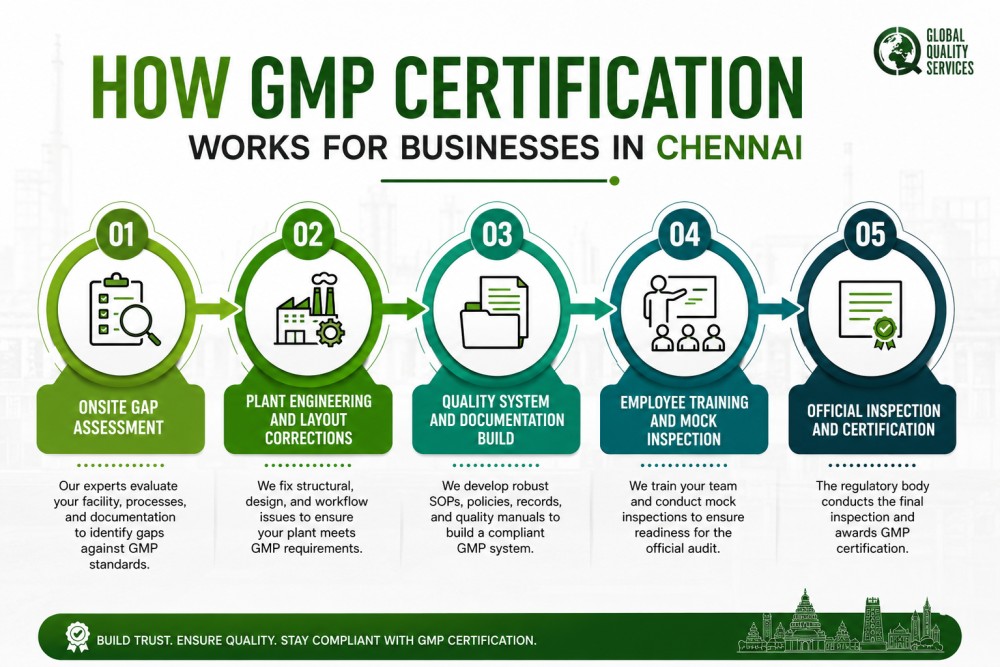
Step 1: Onsite Gap Assessment
A thorough review of your production facility checks physical layouts, air systems, worker movements, cleaning procedures, and current records against statutory codes.
Step 2: Plant Engineering and Layout Corrections
Our specialists advise on factory changes needed for smooth, one-way movement. This setup prevents mix-ups, upgrades air handling units (AHUs), and establishes clean gowning rooms and raw material sampling areas.
Step 3: Quality System and Documentation Build
We write complete plant documentation, including the Site Master File (SMF), Validation Master Plan (VMP), Standard Operating Procedures (SOPs), Batch Manufacturing Records (BMR), Batch Packaging Records (BPR), and Change Control forms.
Step 4: Employee Training and Mock Inspection
Your machine operators, factory staff, and quality officers receive direct training on daily SOPs, hygiene rules, and logbook entries. A trial inspection checks if your workforce is ready for official auditors.
Step 5: Official Inspection and Certification
We assist your team with government portal filings, including the ONDLS portal for WHO-GMP applications, and provide hands-on support while state drug inspectors or private audit teams visit your plant.
Common GMP Gaps Found in Manufacturing Facilities
Many plants around Chennai face audit rejections or delays due to simple, avoidable plant errors. Finding these issues early saves valuable time and operational capital. Here are the most common problem areas discovered during factory audits:
- Weak Air Handling Systems: Missing pressure balances between rooms, unverified temperature controls, or operating without proper HEPA filters in clean zones.
- Faulty Floor Movements: Workers and raw materials moving back and forth through the same doors, creating high risks of cross-contamination.
- Careless Record Keeping: Missing entry logs, backdated paperwork, or failing to protect digital records from unauthorized edits.
- Unvalidated Equipment: Running assembly lines, water purification units, and air handlers without formal installation, operational, and performance testing.
- Outdated Operating Manuals: Using generic SOPs that do not match what operators actually do on the plant floor, along with missing equipment calibration logs.
GMP Certification Cost in Chennai
The total price to secure GMP certification in Chennai depends on factory size, product type, cleanroom levels, and current plant readiness. Overall expenses fall into three clear buckets: professional consultancy fees for gap checks and writing documents, physical renovation costs for civil work or air handling units, and government statutory fees paid to state portals or third-party registrars.
A small food or cosmetic facility needing simple paperwork assistance requires a much smaller budget than a large drug plant undergoing full Revised Schedule M structural upgrades.
Why Choose Global Quality Services for GMP Certification Support in Chennai
Global Quality Services brings years of direct compliance leadership to industrial units across South India. Our engineers and quality leads work side by side with your plant staff to build reliable systems that pass government audits on the first attempt. Here is what sets our advisory team apart:
- Complete Turnkey Advisory: We handle every stage of the project, including cleanroom layout reviews, air system checks, custom document preparation, and audit coordination.
- Up-to-Date Regulatory Knowledge: Our consultants stay fully updated on Revised Schedule M updates, CDSCO joint inspection expectations, WHO-GMP norms, and FSSAI rules.
- Custom Document Writing: We never use generic templates. Every SOP, Site Master File, and validation record is written from scratch to match your specific machinery and product lines.
- Onsite Audit Guidance: Our consultants stay present at your facility during official inspections to help present technical files and assist your staff with auditor queries.
Get Complete GMP Certification Support in Chennai with Global Quality Services
Building a compliant, audit-ready factory does not have to be stressful or confusing. Partnering with Global Quality Services helps clear regulatory obstacles quickly, upgrade plant efficiency, and unlock access to high-value manufacturing contracts.
- Complete an in-depth on-site gap audit to identify layout errors and document needs.
- Receive custom Site Master Files, SOPs, and validation plans built specifically for your factory floor.
- Clear state drug authority, CDSCO, and third-party audits with total confidence.
Reach out to our expert consultants today to review your project goals, book your initial factory assessment, and receive a clear cost estimate for your unit.
Frequently Asked Questions
1. Which local government body oversees pharmaceutical GMP compliance in Chennai?
The Tamil Nadu Drugs Control Department works alongside the central CDSCO body to inspect pharmaceutical factories, process WHO-GMP requests, and issue manufacturing licenses across the state.
2. Can a newly built factory in Chennai apply directly for a WHO-GMP certificate?
No. A new plant must first secure a valid State Manufacturing License from the Tamil Nadu Drugs Control Department before applying for a WHO-GMP certificate or Certificate of Pharmaceutical Product through the ONDLS portal.
3. What is the main difference between an ISO 22716 certificate and a state GMP license for cosmetics?
A state GMP license is a mandatory legal permit required to manufacture and sell cosmetics locally, while ISO 22716 is an international quality standard often demanded by overseas buyers for global exports.
4. Are food and supplement factories in Chennai inspected under the same GMP rules as medicine plants?
No. Food, drink, and supplement factories are audited under FSSAI Schedule 4 hygiene guidelines, HACCP, and ISO 22000 standards, whereas medicine plants follow Revised Schedule M under drug control authorities.
5. What happens if inspectors find critical gaps during an official plant inspection?
If inspectors find major compliance gaps, they issue an inspection observation report detailing corrective actions. The factory must fix the errors, update its procedures, and submit a compliance report within the given timeline before approval is granted.