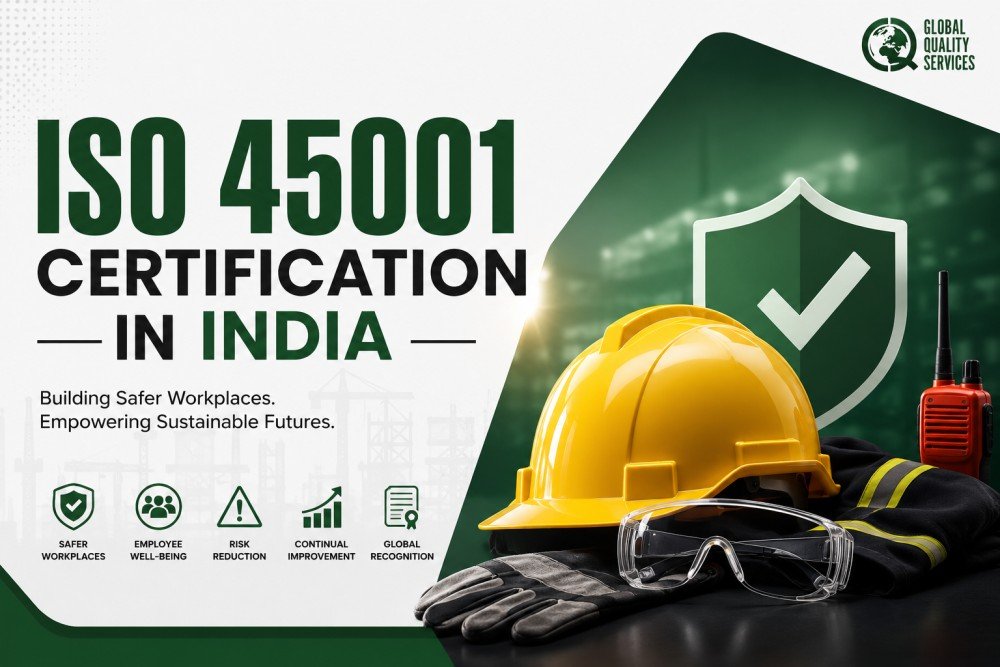
Workplace accidents remain a serious concern in India; as many as 240 industrial accidents in 2024 alone caused over 400 fatalities and more than 850 serious injuries. This alarming trend shows how critical it is for businesses to adopt robust safety standards.
The international standard ISO 45001 offers a proven framework to manage occupational health and safety, reduce risks, and protect employees. With the help of these guidelines, companies turn safety from a worry into a strength. For organizations, hiring a seasoned consultant like Global Quality Services makes the certification process far smoother, faster, and more reliable.
What is ISO 45001 Certification?
ISO 45001 Certification validates that an organization maintains a high-standard OHSMS alignment with global benchmarks. Unlike older safety models that focused primarily on post-incident reactions, ISO 45001 centers on proactive hazard identification, risk prevention, and active management involvement.
The standard integrates employee participation at every level. By embedding clear safety protocols into daily operations, companies shift from basic compliance to establishing a genuine, proactive safety culture.
Why is ISO 45001 Important for Indian Organizations?
ISO 45001 plays a crucial role in strengthening workplace safety, improving legal compliance, and building a healthier workforce. Here’s why it matters for Indian organizations.
-
Minimizing Workplace Incidents: Establishing systematic controls significantly drops the likelihood of site injuries, industrial illnesses, and machine-related accidents.
-
Ensuring Legal and Regulatory Compliance: Indian labor regulations and factory acts enforce strict worker protection laws. ISO 45001 aligns your operational policies directly with statutory safety mandates, protecting your business from penalties and legal friction.
-
Boosting Operational Productivity: Safe work environments build worker confidence, drastically decrease absenteeism, and keep production lines running smoothly without unexpected safety shutdowns.
-
Strengthening Market Reputation: Global buyers, enterprise clients, and supply chain partners prioritize vendors with verified safety standards. Certification instantly elevates your credibility in competitive tenders.
Who Should Get ISO 45001 Certification in India?
While any organization can adopt ISO 45001, specific sectors facing high operational hazards benefit immediately from certification: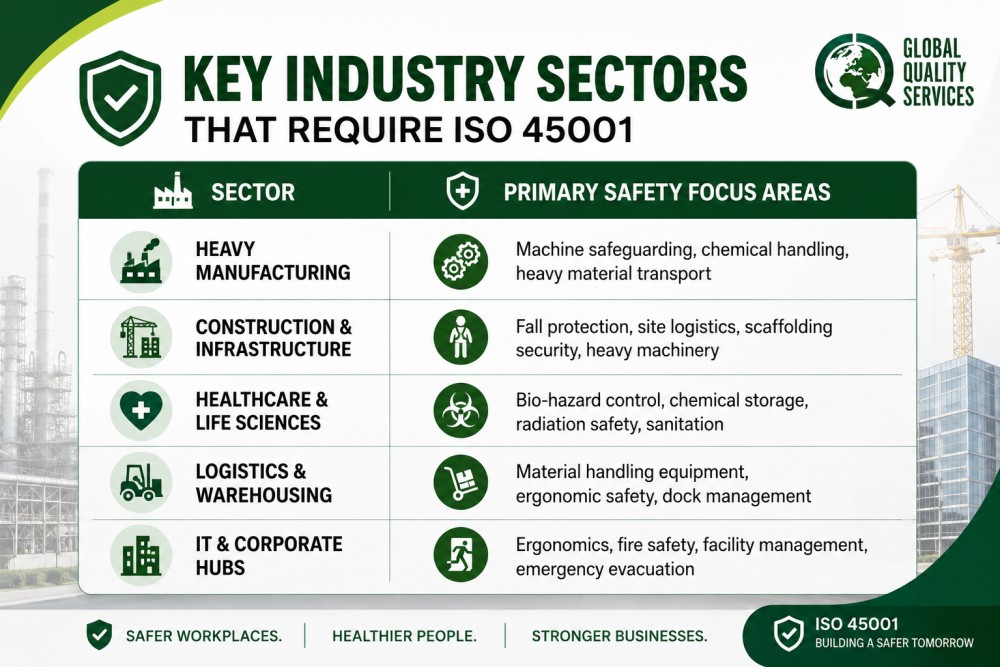
Manufacturing Units
Industries with heavy machinery, chemicals, or production lines benefit significantly from standardized safety practices.
Construction and Infrastructure Companies
These sectors face high accident risks, making ISO 45001 essential for site safety and compliance.
Healthcare and Laboratories
Handling sensitive equipment, chemicals, and biological hazards requires strong controls and safety protocols.
Corporate Offices and IT Parks
Even low-risk environments improve through better ergonomics, emergency preparedness, and structured safety frameworks.
What are the Benefits of ISO 45001 Certification?
Achieving ISO 45001 certification delivers clear commercial and operational returns beyond basic safety compliance:
-
Lower Insurance Premiums: Insurance providers recognize certified companies as lower-risk policyholders, often leading to reduced liability premiums.
-
Improved Resource Efficiency: Clear, standardized safety protocols streamline daily tasks, eliminate redundant procedures, and prevent costly equipment breakdowns caused by operational errors.
-
Competitive Edge in Procurement: Government tenders and multinational corporations often treat ISO 45001 certification as a mandatory pre-qualification standard for vendors.
-
Stronger Workplace Morale: Employees perform better when management demonstrates a tangible commitment to their physical well-being and daily safety.
How to Get ISO 45001 Certification in India?
Getting ISO 45001 certified becomes much easier when you follow a structured approach from start to finish. Here are the steps you need to follow.
Step 1: Initial Gap Analysis: Assess your facility’s current safety setup against ISO 45001 requirements to highlight missing controls and operational gaps.
Step 2: OHSMS Documentation: Create essential safety policies, risk assessment matrices, emergency response plans, and incident recording workflows.
Step 3: Execution and Workforce Training: Conduct structured training sessions across all operational tiers so employees understand their role in maintaining safety standards.
Step 4: Internal Safety Audits: Run comprehensive internal checks to evaluate standard performance, correct non-conformances, and verify system efficiency.
Step 5: Certification Audit: An accredited third-party certification body conducts a thorough documentation review and site inspection to grant formal certification.
Common Challenges While Implementing ISO 45001
Companies frequently run into procedural roadblocks during the adoption phase. Planning for these challenges keeps your timeline on track:
-
Employee Resistance to New Routines: Staff may view extra safety steps as unnecessary hurdles. Involve ground-level employees in safety discussions early and highlight how new protocols protect them directly.
-
Inconsistent Documentation Practices: Missing safety logs or outdated registers disrupt audit progress. Implement simple, standardized digital templates or central logging systems for daily safety checks.
-
Skill Gaps in Internal Auditing: Internal teams may lack the training needed to spot technical compliance issues. Engage qualified external consultants to train your internal audit team and guide initial site inspections.
How Much Does ISO 45001 Certification Cost in India?
ISO 45001 certification costs vary for every business because no two workplaces share the exact same risk profile. Final pricing depends on your team size, total facility count, and operational complexity. High-hazard setups like manufacturing facilities require deeper audits than standard corporate offices, directly impacting overall fees.
Companies with existing safety documentation usually save on preparation, while those building systems from scratch need more setup support. Getting a customized quote tailored to your specific operations ensures an accurate, realistic budget estimate.
How Long Does It Take to Get Certified?
Most organizations complete the ISO 45001 certification process within 6 to 12 weeks. The timeline depends on how prepared your documentation is, how quickly you implement safety processes, and your audit availability. With proper planning and support, the entire journey feels smooth and manageable.
Summary Points
- ISO 45001 improves workplace safety by creating a structured Occupational Health and Safety Management System (OHSMS).
- It supports compliance with Indian labor and safety regulations, reducing legal and operational risks.
- Certification reduces accidents through proactive risk assessments, employee training, and preventive safety controls.
- Strong safety processes help minimize downtime, incident-related costs, and workplace disruptions.
- Rising focus on employee well-being makes ISO 45001 a key trust-building factor for clients, partners, and workers.
Why Choose Global Quality Services for ISO 45001 Certification in India?
With over 26 years of experience, Global Quality Services guides you through every step of the certification journey with expertise and clarity. We simplify documentation, audits, and compliance to ensure a smooth process. Strengthen your workplace safety with trusted professionals. Contact us today to get started.
Frequently Asked Questions
1. Is ISO 45001 mandatory in India?
No, ISO 45001 is not legally mandatory in India. However, it significantly improves compliance with occupational safety regulations, reduces legal and operational risks, and strengthens workplace safety performance across industries.
2. Can small businesses apply for ISO 45001 Certification?
Yes, small and medium businesses can easily adopt ISO 45001. The standard is flexible, scalable, and designed for organizations of all sizes, helping smaller companies improve safety, compliance, and operational efficiency.
3. What documents are required for the certification?
You need key documents such as safety policies, hazard and risk assessments, roles and responsibilities, emergency response plans, employee training records, incident logs, internal audit reports, and continual improvement evidence.
4. Does ISO 45001 replace OHSAS 18001?
Yes, ISO 45001 officially replaces OHSAS 18001. It introduces a stronger risk-based approach, better employee involvement, and improved integration with other management systems like ISO 9001 and ISO 14001.
5. How often do we need surveillance audits?
Surveillance audits are required once every year. These audits verify ongoing compliance, monitor improvements, assess safety performance, and ensure your ISO 45001 management system continues meeting all certification requirements.