Unsafe food remains a major global health concern. According to the World Health Organization (WHO), contaminated food causes an estimated 600 million cases of foodborne illness every year worldwide, affecting nearly one in ten people. These incidents not only harm public health but also create serious financial and reputational risks for food businesses.
In India, regulatory oversight has strengthened as the food industry expands. The Food Safety and Standards Authority of India (FSSAI) has introduced mandatory third-party food safety audits for certain high-risk food businesses to improve compliance and operational hygiene standards.
At the same time, global investment in food safety systems continues to grow. According to Root Analysis, the global food safety testing market is projected to exceed USD 35 billion and may reach up to USD 56 billion by 2035, expanding at a CAGR of around 7–8%.
This is where Food Safety Inspection Services in India play a critical role. Regular inspections help businesses identify risks early, maintain compliance with food safety regulations, and ensure safe food handling across their operations.
This page covers everything you need to know: what an inspection includes, how the process works, which standards apply, which industries need it most, and how frequently your business should be conducting them.
What is a Food Safety Inspection Service?
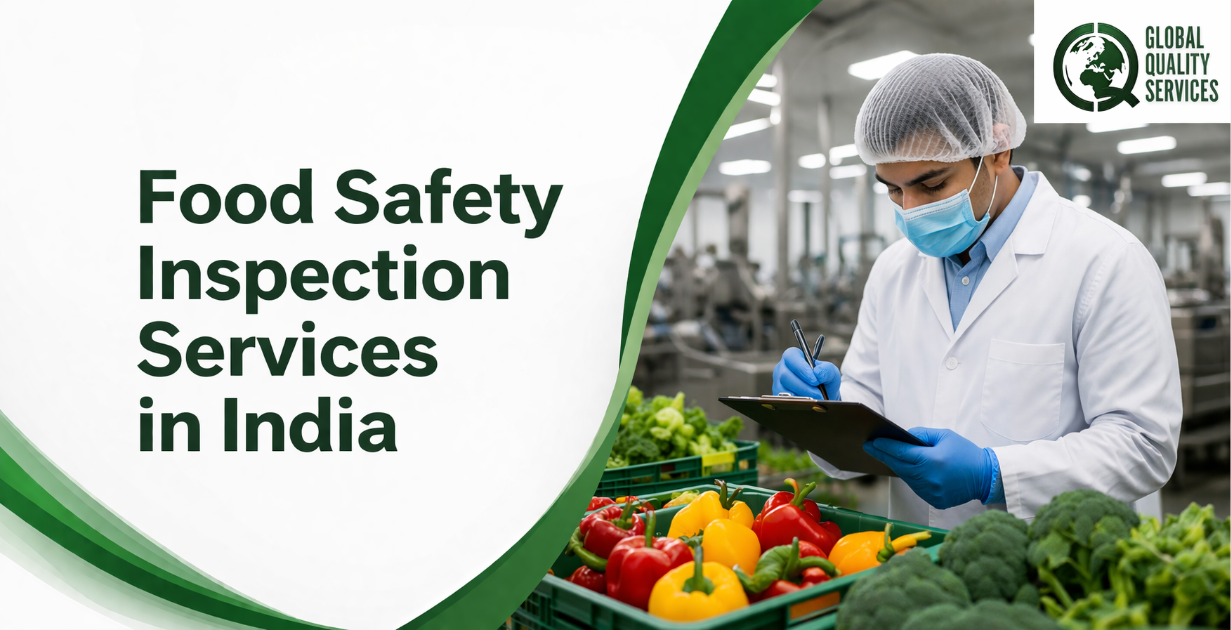
A food safety inspection service is a detailed review of a food facility to ensure that food is prepared, stored, and handled in safe and hygienic conditions. The inspection helps verify that the business follows proper food safety practices and regulatory requirements.
During the inspection, professionals check areas such as cleanliness of the facility, food storage temperatures, equipment sanitation, staff hygiene practices, pest control systems, and important safety records.
In India, food safety inspections generally follow the guidelines set by the Food Safety and Standards Authority of India (FSSAI) to help businesses maintain safe food handling and protect consumer health.
What Does a Food Safety Inspection Service Include?
A food safety inspection involves a comprehensive evaluation of a facility’s operational practices, hygiene systems, and regulatory compliance. The objective is to identify potential risks that could affect food quality or safety and recommend improvements where necessary.
1. Facility Hygiene and Sanitation Assessment
Inspectors evaluate the overall cleanliness of food production and storage areas. Floors, walls, preparation surfaces, and processing environments are examined to ensure they meet hygiene standards required for safe food handling.
2. Food Storage and Temperature Control Evaluation
Proper storage conditions are essential to prevent bacterial growth and food spoilage. Inspectors check refrigeration systems, cold storage units, and temperature monitoring practices to ensure food products are stored safely.
3. Equipment Cleanliness and Maintenance Checks
Food processing equipment must be cleaned and maintained regularly to prevent contamination. Inspections assess sanitation procedures for equipment, utensils, and machinery used in food preparation and processing.
4. Employee Hygiene and Food Handling Practices
Food handlers must follow strict hygiene protocols. Inspectors evaluate staff practices such as handwashing procedures, protective clothing usage, and adherence to food safety protocols during handling and preparation.
5. Pest Control and Contamination Prevention
Pest activity can compromise food safety. Inspections verify that facilities have effective pest management programs and preventive measures in place to avoid contamination risks.
6. Documentation and Traceability Verification
Traceability systems help track raw materials and finished products throughout the supply chain. Inspectors review records related to procurement, storage, production, and distribution to ensure transparency and accountability.
How the Food Safety Inspection Process Works
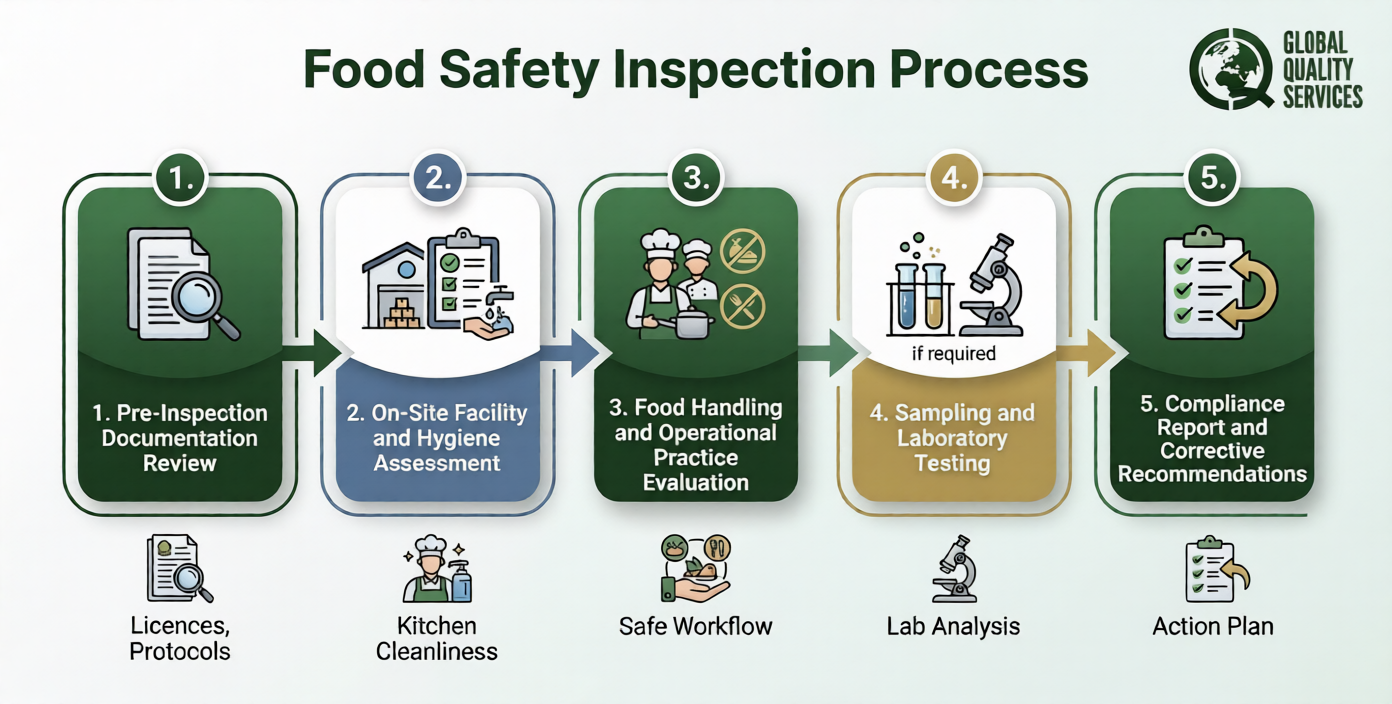
Understanding the process removes uncertainty and helps your team prepare properly. A well-structured inspection follows five defined stages:
Step 1: Pre-Inspection Documentation Review
The process begins with reviewing key documentation such as licenses, food safety procedures, hygiene protocols, and operational records. This helps inspectors understand the facility’s compliance framework before visiting the site.
Step 2: On-Site Facility and Hygiene Assessment
Inspectors conduct a physical evaluation of the premises, observing food preparation areas, processing environments, and storage conditions. The inspection focuses on identifying hygiene risks and operational gaps.
Step 3: Food Handling and Operational Practice Evaluation
Operational workflows are assessed to ensure safe food handling practices are followed throughout the production or preparation process. Inspectors observe staff activities and evaluate whether procedures align with food safety guidelines.
Step 4: Sampling and Laboratory Testing (if required)
In certain cases, food samples may be collected for laboratory testing. Testing helps identify microbiological contamination, chemical residues, or other safety concerns that cannot be detected through visual inspection alone.
Step 5: Compliance Report and Corrective Recommendations
After completing the inspection, a detailed report is prepared summarizing observations and compliance status. The report may include recommendations for corrective actions to improve hygiene standards and operational safety.
Industries We Serve with Food Safety Inspection
Food safety inspections are essential for organizations operating at different stages of the food supply chain. Any business involved in producing, handling, storing, or distributing food products can benefit from regular inspections.
Industries that commonly require inspection services include:
- Food manufacturing facilities producing packaged or processed products
- Food processing plants handling raw materials and ingredients
- Restaurants, hotels, and commercial kitchens are preparing food for consumers
- Food exporters shipping products to international markets
- Catering companies serving large-scale events or institutional clients
- Warehouses and cold storage facilities storing perishable goods
Food Safety Inspection Checklist
During an inspection, professionals evaluate multiple operational factors to determine whether a facility complies with food safety standards. A typical inspection checklist may include:
- Cleanliness and sanitation of food preparation areas
- Temperature monitoring for refrigeration and storage systems
- Proper separation of raw and cooked food products
- Hygiene practices followed by employees handling food
- Cleaning and maintenance procedures for equipment and utensils
- Pest control systems and preventive measures
- Documentation for ingredient sourcing and product traceability
- Waste management and disposal practices
How Often Should Food Businesses Conduct Inspections?
Food businesses should ideally conduct food safety inspections at least once every 3 to 6 months, depending on the type of facility, the level of food handling involved, and regulatory requirements. High-risk environments such as food manufacturing plants, large kitchens, or processing units may require more frequent inspections, sometimes quarterly or even monthly internal checks, to ensure consistent compliance.
In India, regulatory inspections by authorities such as FSSAI may occur periodically, but businesses should not rely solely on these external checks. Conducting regular internal and third-party inspections helps organizations maintain hygiene standards and identify risks before they become serious compliance issues.
Food Safety Inspection Consultants
Food Safety Inspection in Delhi | Food Safety Inspection in Bengaluru
Food Safety Inspection in Noida | Food Safety Inspection in Hyderabad
Food Safety Inspection in Ahmedabad | Food Safety Inspection in Chennai
Food Safety Inspection in Pune | Food Safety Inspection in Mumbai
Why Choose Global Quality Services for Food Safety Inspection?
Food safety inspections require both technical expertise and a structured evaluation methodology. Global Quality Services supports food businesses across India by providing professional inspection services designed to identify risks and strengthen operational safety systems.
Organizations choose Global Quality Services for several reasons:
- Experienced inspection professionals with knowledge of food safety regulations
- Structured inspection processes designed to evaluate hygiene, storage, and operational practices
- Industry-specific expertise across food manufacturing, hospitality, and processing sectors
- Detailed inspection reporting with clear observations and recommendations
- Guidance to help organizations improve compliance and prepare for regulatory reviews
Partner with Experts for Reliable Food Safety Inspection Services in India
Food safety inspections are a critical part of maintaining safe food production and distribution systems. By evaluating hygiene practices, storage conditions, operational procedures, and regulatory compliance, inspections help organizations identify risks before they become serious issues.
Global Quality Services offers Food Safety Inspection Services in India designed to help businesses maintain safe food environments and meet evolving regulatory expectations. With experienced professionals and structured inspection processes, organizations can ensure their facilities operate responsibly while protecting consumer health and maintaining industry credibility.
Frequently Asked Questions
1. What happens if a facility fails a food safety inspection?
If issues are identified during inspection, corrective actions must be implemented to address the risks and improve compliance with food safety standards.
2. What documents are required during a food safety inspection?
Common documents reviewed during inspections include food safety procedures, hygiene protocols, supplier records, traceability documentation, and regulatory licenses.
3. Can food safety inspections help prepare for certification?
Yes. Food safety inspections identify compliance gaps and operational risks, helping businesses prepare for certifications such as HACCP, ISO 22000, or other regulatory food safety requirements.
4. Do small restaurants and cloud kitchens need food safety inspections?
Yes. Small restaurants, cloud kitchens, and catering units must maintain hygiene and safety standards under FSSAI regulations. Regular inspections help ensure safe food handling and regulatory compliance.
5. What documents should be ready during a food safety inspection?
Businesses should maintain FSSAI licenses, food safety procedures, cleaning records, supplier details, temperature logs, and staff hygiene training records for review during inspections.