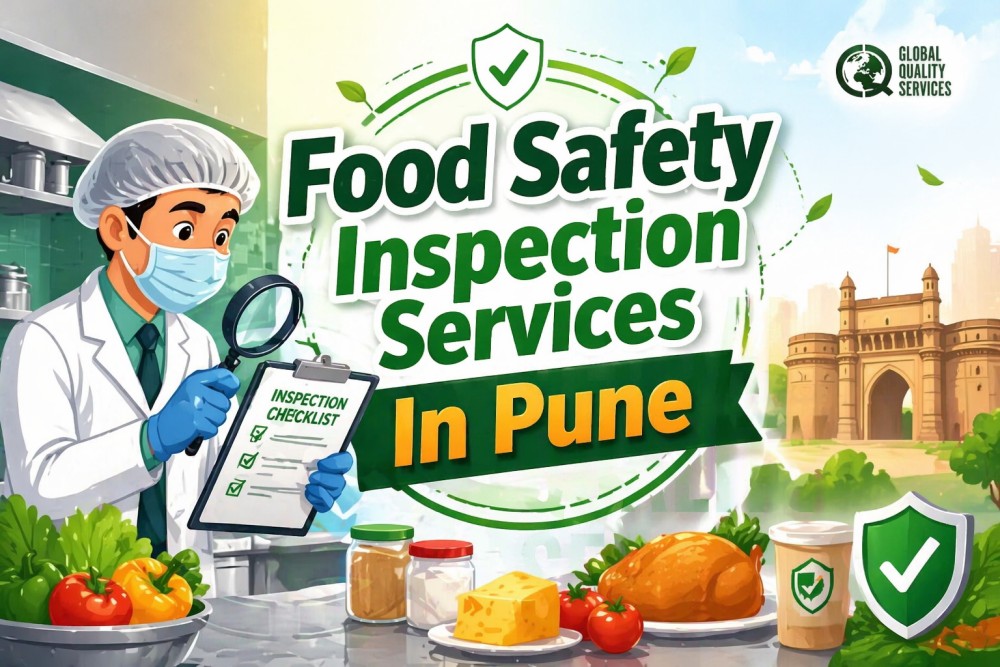
The food industry in Pune is expanding rapidly. With the rise of high-end dining in Koregaon Park and the surge of cloud kitchens in Hinjewadi, maintaining hygiene standards has become a business-critical task.
Recent data from the Food Safety and Standards Authority of India shows that 3,97,009 inspections were conducted across food establishments in FY 2025–26, reflecting a significant increase in regulatory monitoring of food businesses. At the same time, 17.16 percent of the food samples tested during inspections were found non-compliant, which triggered enforcement action and penalties.
These numbers clearly show that food safety compliance is now under stronger scrutiny than ever before. For food businesses in Pune, conducting professional food safety inspections is no longer optional. It is a proactive step that helps identify hygiene gaps, prepare for regulatory audits, and protect customer trust.
Professional food safety inspection services help businesses assess operational risks, review hygiene practices, and ensure compliance with FSSAI regulations before regulators conduct their own inspections.
Why Food Safety Inspections Are Becoming Essential for Pune Food Businesses
The landscape of the food business in Pune has shifted significantly. With the Food Safety and Standards (Licensing and Registration of Food Businesses) Amendment Regulations 2026 now in effect, the focus has moved toward a risk-based inspection framework.
Key Shifts in 2026 Regulations:
- Perpetual validity: Licenses now remain valid indefinitely unless suspended. However, businesses must maintain continuous compliance to keep their license active.
- Higher scrutiny: Food businesses with poor compliance records are flagged by computer-assisted monitoring systems, which can lead to more frequent and unannounced inspections.
- Digital transparency: FSSAI requires digital tracking of hygiene ratings, which makes the food safety performance of businesses publicly visible.
Pune is a major hub for IT professionals and students who are highly conscious of what they consume. A food safety lapse can go viral on social media within minutes, destroying years of brand building. Professional inspections act as a preemptive strike. They help you identify hidden gaps in your supply chain before an official government inspector finds them.
Benefits of Conducting Regular Food Safety Inspections
Regular food safety inspections provide practical operational advantages for food businesses. Key benefits include:
- Avoid Legal Penalties: Fines for non-compliance can now reach up to ₹5 lakh for severe violations.
- Operational Efficiency: Identifying wastage in storage or errors in processing saves significant money.
- Market Advantage: Displaying a high hygiene rating builds trust with B2B corporate clients and health-conscious consumers.
- Insurance & Liability: Documented safety audits can lower insurance premiums and protect you in case of consumer disputes.
Which Food Businesses Need Food Safety Inspections?
Every entity that handles food needs to ensure safety, but specific categories in Pune have higher compliance stakes under the revised 2026 turnover thresholds:
- Manufacturing Units: Large-scale production facilities in MIDC Bhosari or Chakan, processing packaged goods.
- Hotels and Restaurants: Fine dining establishments across Pimpri-Chinchwad and Pune city.
- Cloud Kitchens: Delivery-only models now face tighter source-hygiene oversight.
- Catering Services: Businesses providing bulk meals to IT parks and corporate offices.
- Retail and Warehousing: Cold storage facilities and supermarkets managing perishable inventory.
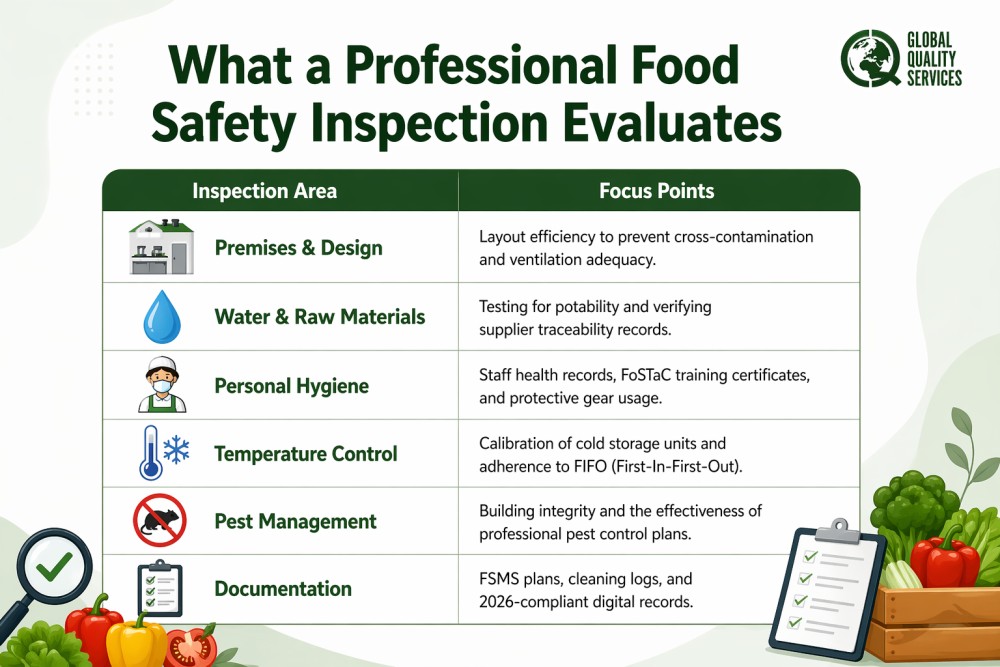
What a Professional Food Safety Inspection Evaluates
A professional inspection is a technical audit of your entire operational ecosystem. Our experts evaluate your facility based on these critical pillars:
Our Structured Food Safety Inspection Process
We follow a systematic approach to ensure nothing is missed. Our methodology is designed to be thorough yet non-disruptive to your daily operations.
Step 1: Initial Gap Analysis
We review your current setup against the latest 2026 FSSAI guidelines. This helps us understand where your documentation or physical setup might fall short.
Step 2: On-Site Physical Audit
Our inspectors visit your facility to observe real-time food handling. We don’t just look at the clean areas; we inspect the blind spots like drainage, high-shelf storage, and staff changing rooms.
Step 3: Risk Categorization
Findings are categorized into Critical, Major, and Minor risks. This allows you to prioritize fixes that could otherwise lead to immediate license suspension.
Step 4: Detailed Actionable Reporting
You receive a comprehensive report with clear steps. We don’t use jargon. If a fridge seal is broken, we tell you exactly how it impacts your safety score and how to fix it.
Common Food Safety Risks Identified During Inspections
Many businesses in Pune operate under the radar until a problem occurs. Frequent risks include:
- Temperature Deviations: Small shifts in refrigeration can lead to rapid bacterial growth in dairy or meat.
- Traceability Gaps: Failing to document where raw materials came from is a major violation under 2026 norms.
- Inadequate Staff Training: Employees often follow old practices that do not meet current hygiene standards.
- Chemical Contamination: Improper storage of cleaning agents near food preparation surfaces.
Why Choose Global Quality Services for Food Safety Inspections in Pune
Food businesses require inspections that go beyond basic compliance checks. They need assessments that help improve real operational practices. Businesses choose professional inspection services because they provide:
- Experienced food safety auditors
- Structured inspection methodology
- Detailed compliance reports
- Clear corrective action guidance
- Industry-specific inspection expertise
- Fast scheduling across Pune
Schedule Food Safety Inspection Services in Pune
The regulatory environment is tightening, and consumer expectations are at an all-time high. Do not wait for a surprise government inspection to find flaws in your system. Contact Global Quality Services today to book a professional food safety audit.
Our team will help you streamline your compliance, train your staff, and ensure your operations meet the highest standards of safety and hygiene. Whether you are a small cafe or a massive manufacturing plant, we provide the expertise needed to keep your doors open and your customers safe.
Frequently Asked Questions
1. What is the difference between a food safety inspection and a food safety audit?
A food safety inspection typically focuses on operational hygiene and compliance with regulations. A food safety audit evaluates the overall food safety management system, including documentation and internal procedures.
2. How often should food businesses conduct food safety inspections?
Many businesses conduct inspections every 6 months or annually. However, high-volume operations such as restaurants or food manufacturing units may benefit from more frequent evaluations.
3. Can food safety inspections help prepare for government audits?
Yes. Professional inspections help businesses identify compliance gaps before regulators conduct their own inspections. This preparation reduces the risk of penalties or operational disruptions.
4. What documents are usually reviewed during a food safety inspection
Inspectors may review cleaning schedules, temperature logs, supplier records, pest control documentation, and staff hygiene training records.
5. Do food safety inspections apply only to large food manufacturers
No. Restaurants, cafes, catering businesses, cloud kitchens, and small food producers all benefit from regular inspections because they handle food that must meet safety standards.