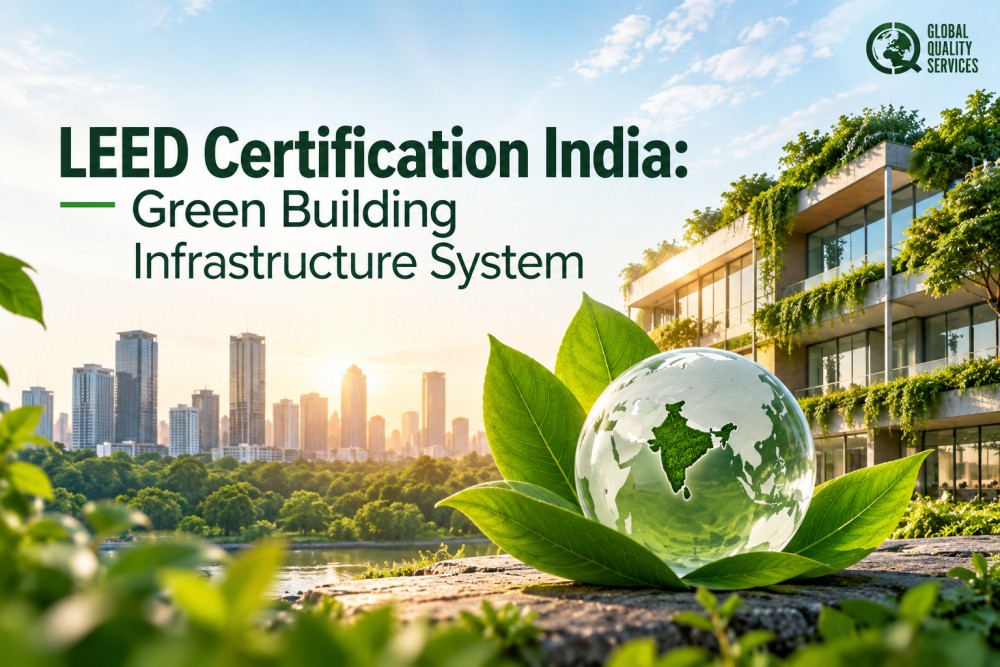
Leadership in Energy and Environmental Design (LEED) serves as a transformative framework for sustainable urban growth across India. Administered globally by the U.S. Green Building Council (USGBC) and Green Business Certification Inc. (GBCI), this rating system evaluates structures on energy efficiency, water conservation, indoor air quality, and overall carbon footprint reduction.
India’s push toward net-zero emissions has turned green real estate into a core commercial strategy. Demonstrating this momentum, India ranked second globally outside the U.S. by registering over 16 million gross square meters of LEED-certified space across 611 projects, as reported by The Times of India. Let us dive deeper into how this green building infrastructure system works, its key rating categories, and why it matters for the future of Indian construction.
What is LEED Certification
LEED Certification in India is the localized application of the globally recognized green building benchmark created by the USGBC. The evaluation system rates commercial real estate, industrial facilities, healthcare institutions, and residential projects on environmental performance throughout their lifecycle.
LEED operates as a point-based framework administered in India by Green Business Certification Inc. (GBCI). Projects meet mandatory prerequisites, earn points across key sustainability areas, and secure a final rating level. Buildings earn points across structured categories to attain four distinct certification tiers:
- LEED Certified: 40–49 points
- LEED Silver: 50–59 points
- LEED Gold: 60–79 points
- LEED Platinum: 80+ points
The LEED India Rating System
The LEED framework provides dedicated rating systems designed for specific building types and project stages:
- LEED BD+C (Building Design and Construction): Tailored for new construction projects or major renovations.
- LEED O+M (Operations and Maintenance): Focuses on existing buildings looking to optimize operational efficiency, energy consumption, and water usage with minimal structural changes.
- LEED ID+C (Interior Design and Construction): Designed for commercial interior fit-outs and tenant spaces.
- LEED ND (Neighborhood Development): Applies to large-scale land development projects, townships, and smart city infrastructure.
Many organizations running operational green building projects also integrate structured management systems such as ISO 14001 certification in India to establish a permanent Environmental Management System (EMS) across their facilities.
What Are the LEED Certification Requirements?
To earn certification, every project must meet mandatory prerequisites across foundational categories before qualifying for credit points. Failing to meet even a single prerequisite disqualifies the building from evaluation.
Mandatory Prerequisites
Minimum Program Requirements (MPRs): The project must sit on permanent land, use reasonable boundary limits, and meet specific gross floor area requirements.
Environmental Activity Benchmarks: Mandatory compliance with baseline energy usage, minimum indoor air performance, environmental tobacco smoke control, and basic water use reduction.
Why LEED Certification Matters in India
India’s construction sector significantly impacts energy use, carbon emissions, and water consumption. Sustainable development now directly influences compliance, competitiveness, and long-term operational performance.
Rising Environmental Regulations
India strengthens environmental norms through agencies such as the Ministry of Environment, Forests, and Climate Change. LEED-certified buildings demonstrate proactive compliance, reducing regulatory risks and improving project approvals in metropolitan and industrial zones. Aligning facilities with recognized standards like ISO 50001 certification further reinforces compliance with energy management directives issued by local electricity boards and energy agencies.
Investor and ESG Expectations
Global investors prioritize ESG (Environmental, Social, Governance) benchmarks. LEED Certification in India enhances ESG ratings, making projects attractive to multinational tenants and institutional investors seeking environmentally responsible assets.
Urban Sustainability Demands
Rapid urbanization in cities like Mumbai, Bengaluru, and Delhi increases pressure on energy grids and water resources. LEED encourages optimized resource management, helping cities meet climate resilience and sustainability goals.
Benefits of LEED Certification
Sustainable buildings deliver measurable business advantages beyond environmental responsibility. LEED certification enhances financial performance, occupant well-being, and long-term asset value.
Reduced Operational Costs
LEED-certified buildings lower electricity and water bills through energy-efficient systems and optimized design. Over time, savings offset certification investments and improve lifecycle cost efficiency.
Enhanced Brand and Marketability
Organizations strengthen their sustainability reputation with LEED Certification in India. Certified buildings attract premium tenants, multinational corporations, and environmentally conscious consumers.
Improved Indoor Environment
LEED promotes better ventilation, lighting, and air quality. Improved indoor environmental quality boosts occupant productivity, reduces health risks, and enhances employee satisfaction.
Step-by-Step Process to Get LEED Certification in India
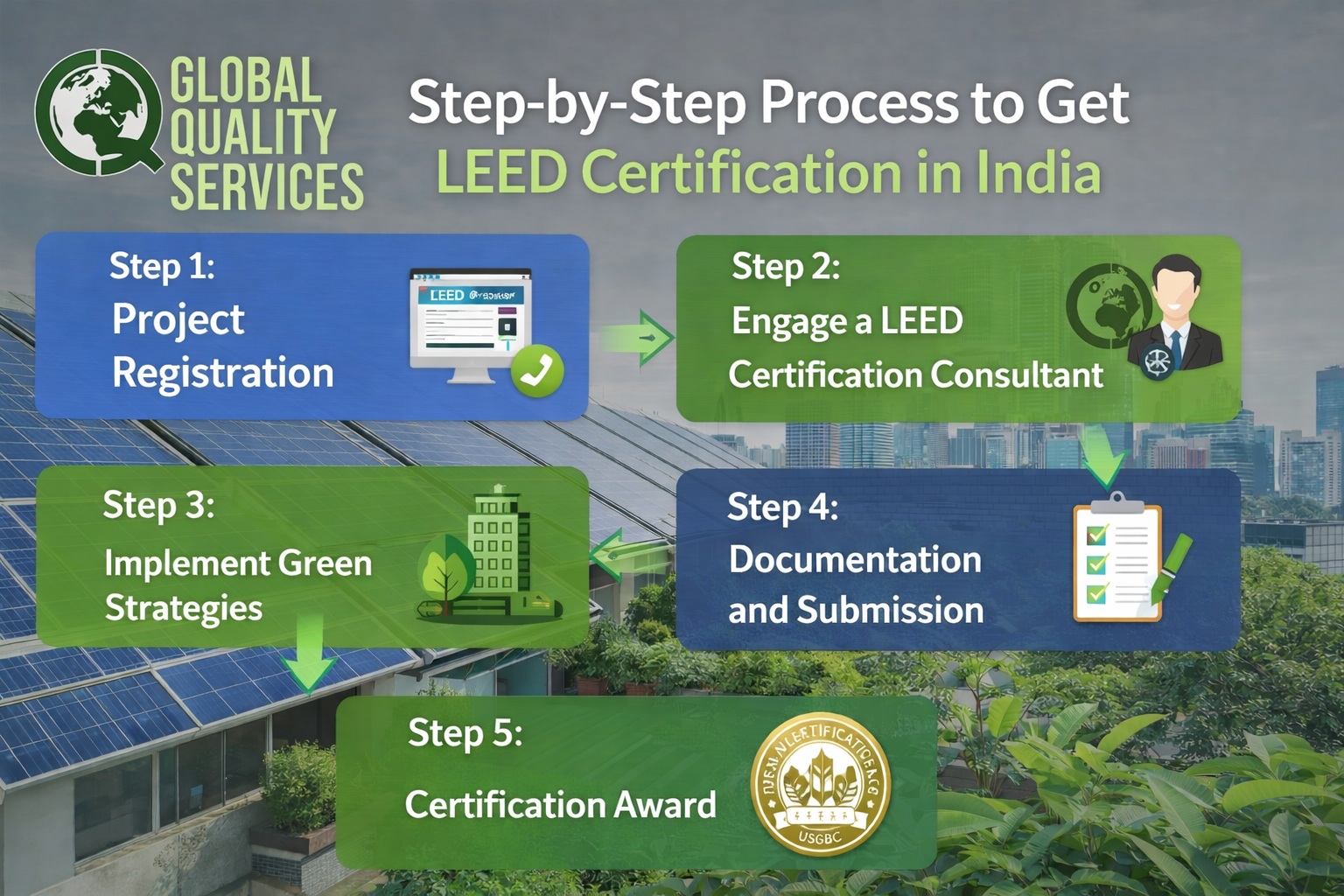
A structured roadmap simplifies the certification journey. Early planning and professional guidance ensure smoother documentation and faster approval timelines.
Step 1: Project Registration
Register your project on the LEED online portal and select the appropriate rating system: Building Design and Construction (BD+C), Interior Design, or Operations and Maintenance.
Step 2: Engage a LEED Certification Consultant
A qualified LEED Certification Consultant conducts a gap analysis, defines achievable credits, prepares documentation, and coordinates with project stakeholders to align sustainability objectives.
Step 3: Implement Green Strategies
Integrate energy modeling, water-efficient fixtures, sustainable materials, and waste management systems during design and construction phases to earn targeted credits.
Step 4: Documentation and Submission
Compile performance reports, energy simulations, and compliance documentation. Submit them for technical review and address any clarifications raised by certification authorities.
Step 5: Certification Award
Upon successful review, the project receives its certification level: Certified, Silver, Gold, or Platinum, validating compliance with global sustainability standards.
What is the Cost of LEED Certification in India
The total investment for LEED certification depends on project size, chosen rating track, structural complexity, and target rating tier. Expenses generally fall into three areas:
- GBCI Administrative Fees: Fixed registration and review fees paid directly to the certification body, calculated per square meter of gross floor area.
- Capital Expenditure (CapEx): Upfront costs for high-efficiency MEP equipment, solar arrays, wastewater treatment plants, and specialized building materials.
- Consultancy and Testing Charges: Fees for energy modeling simulations, building commissioning services, indoor air testing, and documentation management.
How to Increase Your LEED Certification Score
Maximizing credit potential requires early planning and targeted execution across technical categories:
- Integrate Onsite Renewable Power: Maximize rooftop solar installation to secure maximum credits under the Energy & Atmosphere category.
- Target Zero Liquid Discharge (ZLD): Combine rainwater harvesting with advanced onsite sewage treatment plants (STPs) to eliminate municipal water dependency.
- Prioritize Regional Materials: Source construction materials within regional boundaries to reduce transport emissions and earn local sourcing points.
- Conduct Early Energy Modeling: Run building simulations during the concept design phase to identify structural orientations and glass specs that reduce heat gain.
- Engage an Accredited Professional (LEED AP): Involving a certified specialist on the design team automatically earns an Innovation credit while ensuring smooth documentation.
Challenges of LEED Certification
While LEED provides clear benefits, organizations must prepare for technical, financial, and documentation complexities during implementation.
Initial Cost Perception
Developers often perceive green construction as expensive. However, lifecycle cost analysis typically demonstrates that long-term savings outweigh upfront investment.
Documentation Complexity
The certification process demands rigorous documentation, energy simulations, and technical submissions. Without expert support, projects may face delays or missed credits.
Skilled Resource Availability
Successful LEED implementation requires trained architects, engineers, and sustainability experts familiar with performance modeling and compliance protocols.
Why Choose Global Quality Services for LEED Certification in India
Selecting the right partner determines the efficiency and success of your sustainability journey. A reputed consultant like Global Quality Services simplifies compliance and maximizes certification outcomes:
Technical Expertise
Global Quality Services offers experienced sustainability professionals who understand Indian regulatory frameworks and global LEED requirements.
End-to-End Support
From feasibility assessment to final submission, the team manages documentation, audits, coordination, and certification tracking efficiently.
Optimized Credit Strategy
The consultancy identifies high-impact, cost-effective credits that align with your project goals, ensuring maximum return on sustainability investments.
Partnering with Global Quality Services for LEED Certification
Achieving higher certification levels requires technical knowledge, regulatory understanding, and structured project execution. Global Quality Services delivers full support across every phase of green building compliance.
- Technical Expertise: Experienced sustainability professionals handle complex energy modeling, daylight analysis, and credit alignment according to Indian building codes.
- Complete Process Management: From initial feasibility studies and design reviews to document preparation and final GBCI coordination, every step stays organized.
- Strategic Credit Planning: The team identifies practical, cost-effective credit options tailored to your project setup to achieve your target rating efficiently.
With over 26 years of industry experience across quality, environmental, and technical compliance, Global Quality Services helps developers, project managers, and corporations achieve green building certification.
Partner with Global Quality Services for seamless LEED Certification in India. With 26+ years of experience, we simplify compliance and maximize results. Contact us today to start your certification journey.
Frequently Asked Questions
1. What is LEED Certification India
LEED Certification India is a green building rating system that evaluates sustainability performance in energy, water efficiency, materials, and indoor environmental quality.
2. How long does LEED certification take
The process typically takes six to eighteen months, depending on project complexity, documentation readiness, and review timelines.
3. Is a LEED Certification Consultant mandatory?
While not legally mandatory, engaging a LEED Certification Consultant improves credit optimization, documentation accuracy, and approval efficiency.
4. Does LEED increase construction costs?
Initial costs may rise slightly, but operational savings, higher asset value, and tenant demand usually offset the investment.
5. Which sectors benefit from LEED Certification in India
Commercial offices, hospitals, educational institutions, industrial facilities, and residential developments gain financial, regulatory, and reputational advantages through LEED certification.