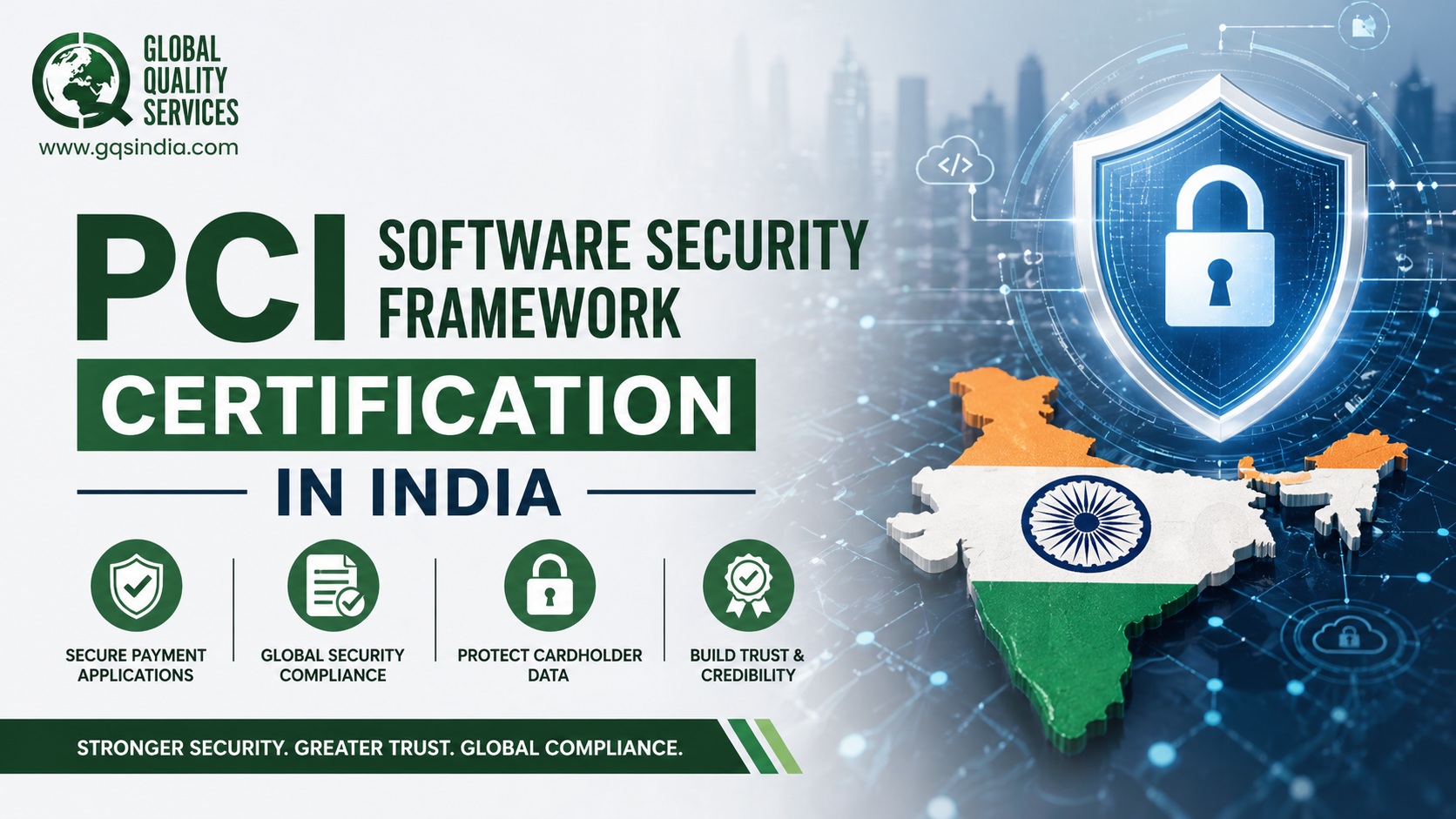
PCI Software Security Framework (PCI SSF) Certification in India helps organizations secure payment applications against evolving cyber threats while meeting global compliance standards. As digital transactions continue to grow, businesses must adopt robust security controls and adhere to secure development practices to protect sensitive cardholder data.
PCI SSF enables companies to build resilient, compliant, and trusted payment software while improving their overall risk management approach. It also enhances credibility in India’s competitive fintech landscape. To achieve certification efficiently and avoid costly gaps, partnering with an experienced consultant becomes highly important.
What is PCI SSF
PCI Software Security Framework (PCI SSF) is a global standard developed to ensure payment applications are secure throughout their lifecycle. It focuses on secure coding, data protection, and risk management to safeguard cardholder information. PCI SSF replaces PA-DSS and helps businesses build compliant, resilient, and trustworthy payment software that meets modern cybersecurity and regulatory requirements.
Why PCI SSF Certification Matters in India
India has witnessed exponential growth in digital transactions through UPI, mobile wallets, and online platforms. Additionally, with enforcement starting in November 2026, India’s new Digital Personal Data Protection Act (DPDP Act) places strict legal obligations on how businesses collect and store customer details.
Failing to secure data can result in massive financial penalties under these new regulations. The DPDP Act introduces non-compliance fines of up to Rupees 250 crores, making robust data security a corporate necessity. PCI SSF certification helps organizations:
- Protect sensitive cardholder data
- Align with global payment security requirements
- Strengthen software development practices
- Build trust with customers, banks, and partners
- Enhance credibility in competitive fintech markets
By adopting PCI SSF, businesses future-proof their payment applications against evolving threats.
Who Should Get PCI SSF Certification?
PCI SSF certification is essential for:
- Payment software developers
- Fintech startups and enterprises
- Payment gateways and service providers
- Independent software vendors (ISVs)
- Organizations handling card data within applications
If your software stores, processes, or transmits payment data, PCI SSF is highly relevant.
PCI SSF Certification Process
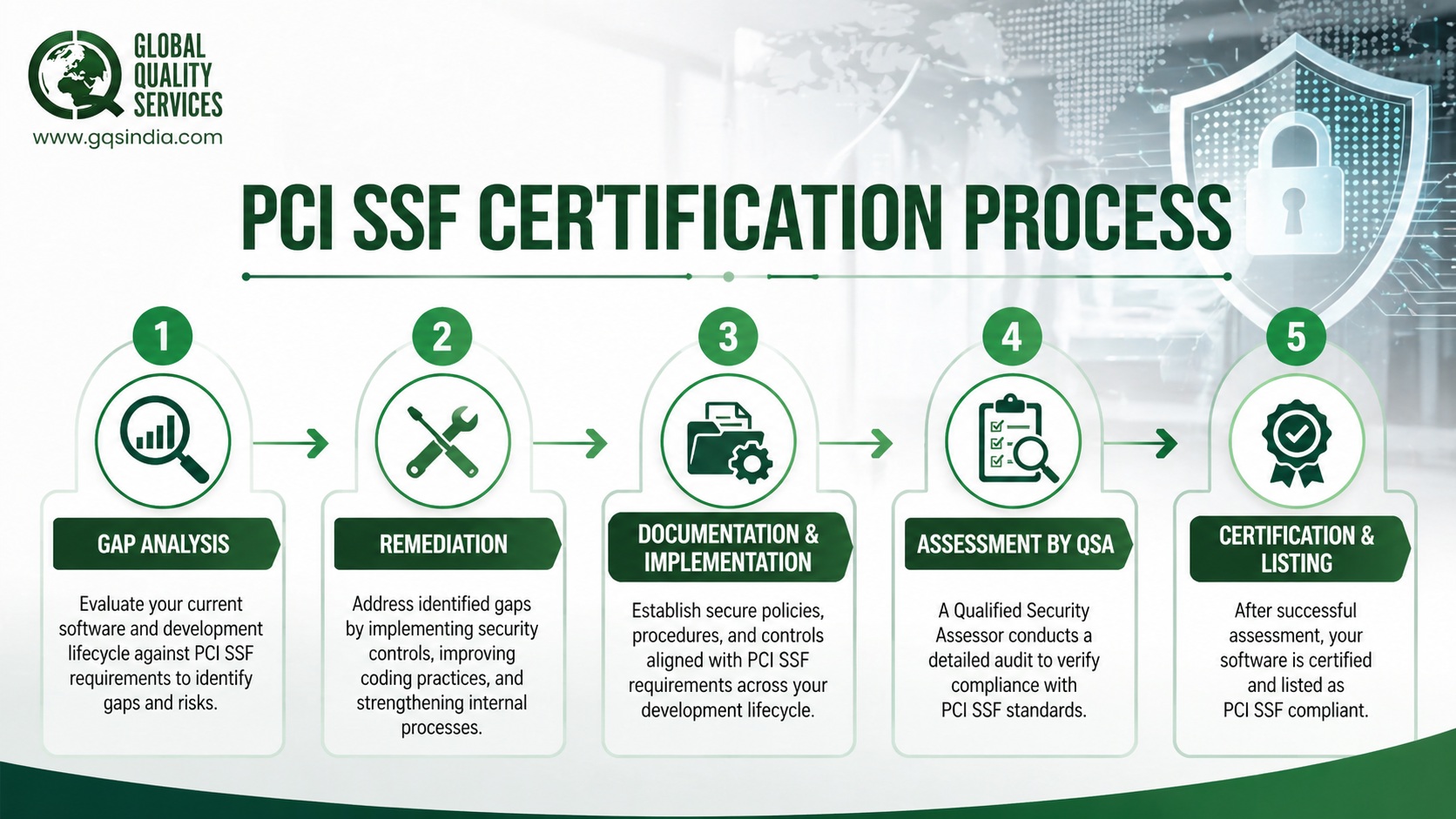
Understanding the certification journey helps you prepare effectively and avoid delays:
- Gap Analysis
Conduct a comprehensive evaluation of your existing software architecture, security controls, and development lifecycle against PCI SSF requirements to identify vulnerabilities, compliance gaps, and areas needing immediate improvement. - Remediation
Implement corrective measures by addressing identified gaps, strengthening security controls, refining coding standards, and enhancing internal processes to align your software development practices with PCI SSF requirements. - Documentation & Implementation
Develop and formalize security policies, procedures, and controls while integrating them into your development lifecycle to ensure consistent application of PCI SSF standards and readiness for assessment. - Assessment by QSA
A Qualified Security Assessor performs a thorough evaluation of your software and processes, validating compliance through detailed testing, evidence review, and verification of implemented security controls. - Certification & Listing
Upon successful completion of the assessment, your software achieves PCI SSF certification and is officially listed as compliant, enhancing credibility, trust, and recognition in the global payment ecosystem.
Key Benefits of PCI SSF Certification
Discover the key benefits of PCI SSF certification to enhance software security, ensure compliance, and build trust across payment ecosystems.
- Improves application security and resilience
- Reduces the risk of data breaches and fraud
- Enhances customer confidence and brand reputation
- Supports regulatory and global compliance
- Strengthens secure software development lifecycle practices
Challenges Businesses Face
While PCI SSF offers significant benefits, organizations often face challenges such as:
- Understanding complex security requirements
- Integrating secure coding into existing workflows
- Managing documentation and audit readiness
- Allocating skilled resources for implementation
This is where expert guidance becomes valuable.
Why Choose Global Quality Services for PCI SSF Certification in India
Choosing Global Quality Services for PCI SSF Certification in India means you get expert guidance, faster compliance, and a smooth certification journey. Our team simplifies complex requirements, supports implementation, and prepares you for successful audits without disrupting operations. We focus on practical, result-driven solutions that deliver real value to your business. Contact us to make your certification journey smooth and reliable.
Frequently Asked Questions
- What is PCI SSF certification in India?
PCI SSF certification in India confirms that payment software complies with global security standards, ensuring the protection of cardholder data and adherence to secure software development and lifecycle practices. - Who needs PCI SSF certification?
Organizations developing, managing, or distributing payment applications, including fintech companies, ISVs, and payment service providers, should obtain PCI SSF certification to ensure security, compliance, and trust in handling cardholder data. - How long does PCI SSF certification take?
PCI SSF certification timelines depend on your organization’s readiness and complexity, typically taking a few months to over six months, including gap analysis, remediation, implementation, and final assessment. - Is PCI SSF mandatory in India?
PCI SSF is not legally required in India, but it is strongly recommended for organizations that handle payment data to meet international security standards and build trust with customers and partners. - What are the main benefits of PCI SSF certification?
PCI SSF certification enhances payment software security, ensures compliance with global standards, reduces cyber risks, builds customer confidence, and strengthens your organization’s credibility in the competitive digital payment ecosystem.