India’s growing demand for electricity is making energy management a business priority, especially for energy-intensive organizations. On April 25, 2026, India recorded an all-time high peak electricity demand of 256.1 GW, according to the Ministry of Power. Electricity consumption also grew by 8.9% during April 2026 compared with the same period in the previous year.
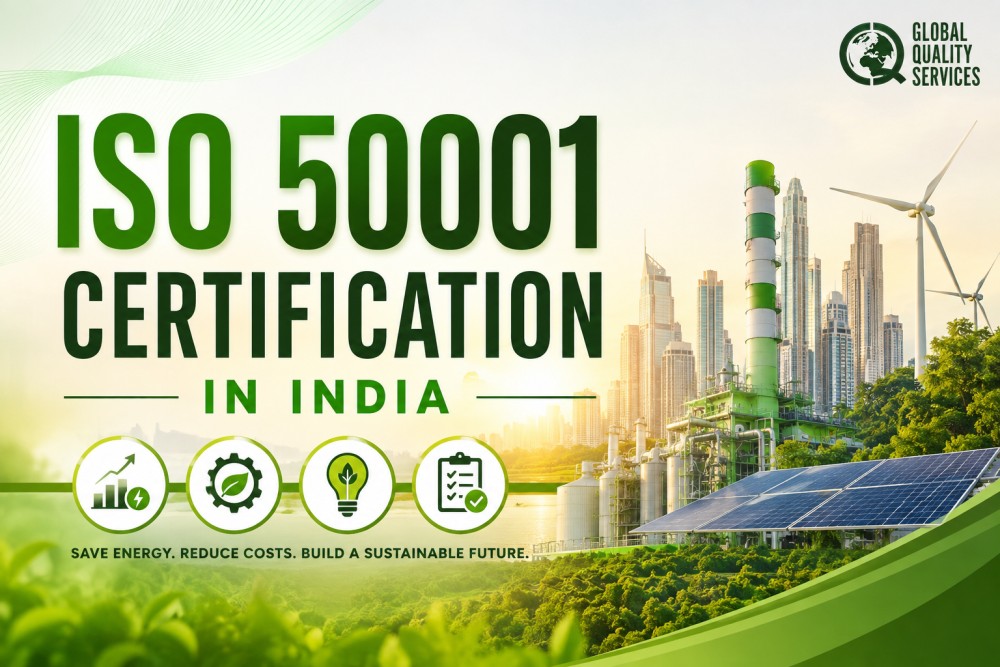
For businesses, this highlights why controlling energy use is becoming more important for cost management, operational efficiency and long-term sustainability. ISO 50001 Certification in India provides a structured way to manage energy use and improve energy performance. The current standard is ISO 50001:2018, which was confirmed as current in 2024 and has Amendment 1:2024 covering climate action changes.
What is ISO 50001?
ISO 50001 is the globally recognized standard for establishing, implementing, maintaining, and improving an Energy Management System. It gives organizations a structured path to measure energy use, identify operational inefficiencies, and set measurable targets for energy reduction. Instead of relying on one-off energy audits, this standard builds continuous energy performance tracking directly into your daily business operations. ISO 50001 uses the same core framework as ISO 9001:2026 (Quality) and ISO 14001:2026 (Environmental). This common setup makes combining policies, audits, and management reviews easy.
Why ISO 50001 Certification Matters for Businesses
Implementing ISO 50001 helps organizations move from reactive energy saving to a planned operational strategy. This section breaks down the core reasons why companies in India adopt this energy management framework.
- Lower Operational Expenses: Systematic tracking identifies energy leaks, operational wastage, and inefficient machinery, lowering monthly power and fuel bills.
- Regulatory Compliance: Helps designated consumers meet mandatory compliance norms set by the Bureau of Energy Efficiency and local state electricity boards.
- ESG and Investor Appeal: Provides verified data on carbon footprint reduction, helping companies satisfy ESG reporting demands from international clients and investors.
- Protection Against Tariff Hikes: Improving energy efficiency builds a buffer against unpredictable commercial electricity tariff increases and fuel price volatility.
Which Industries in India Can Benefit From ISO 50001 Certification?
The ISO 50001 standard applies to any organization that consumes significant amounts of energy, regardless of sector or size. The table below illustrates how different Indian sectors use this standard to optimize operational energy use.
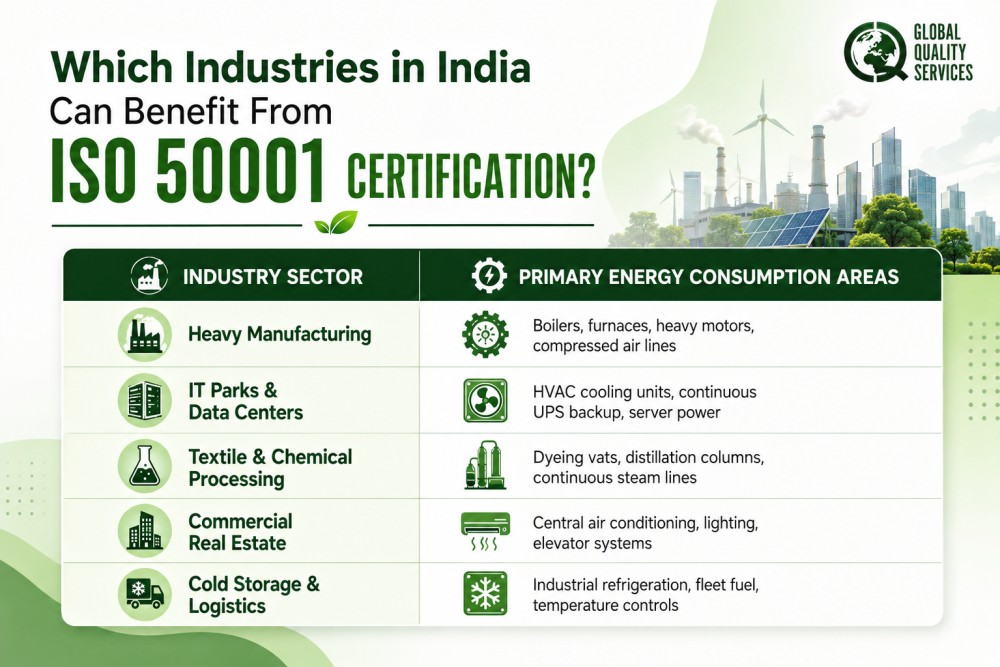
How to Get ISO 50001 Certification in India
Securing ISO 50001 certification requires a clear, step-by-step approach to audit your current usage, document your processes, and complete external verification.
Step 1: Gap Analysis and Energy Baseline Setup
Review existing power metrics, historical electricity bills, and machinery specs to establish a baseline. This baseline serves as the benchmark for measuring future energy savings.
Step 2: Identify Significant Energy Uses and Metrics
Identify the equipment, zones, and processes that consume the highest amount of energy. Establish clear Energy Performance Indicators to monitor efficiency gains over time.
Step 3: EnMS Documentation and Team Training
Draft the required Energy Policy statement, operational control procedures, and energy conservation targets. Train internal plant engineers and facility managers on energy-saving protocols.
Step 4: Internal Energy Audit and Review
Run a full internal audit to check system implementation, identify gaps, and execute corrective actions before the external certification assessment.
Step 5: External Certification Audit
An accredited certification auditor conducts a Stage 1 documentation review followed by a Stage 2 site evaluation. Upon successful verification, your official ISO 50001 certificate is issued.
Documents Required for ISO 50001 Certification
Having your documentation ready speeds up the certification process. The table below lists the essential records your team needs to prepare.
- Energy policy
- Energy review
- Energy baseline
- Energy performance indicators
- Significant energy use records
- Energy objectives and targets
- Energy improvement action plans
- Energy consumption and monitoring records
- Equipment and process information
- Training and awareness records
- Internal audit records
- Management review records
- Corrective action records
Business Benefits of ISO 50001 Implementation
Implementing a formal energy management system delivers both immediate financial returns and long-term operational advantages. The key business gains include:
- Direct Bottom-Line Savings: Most Indian manufacturing facilities achieve a 10% to 30% reduction in utility expenses within the first 12 months.
- Extended Machinery Life: Regular monitoring reduces load stress on industrial motors, compressors, and transformers, preventing unexpected breakdowns.
- Streamlined Multi-Standard Integration: ISO 50001 uses the High-Level Structure (Annex SL), allowing seamless integration with your existing ISO 9001 and ISO 14001 management systems.
- Competitive Bidding Advantage: Having an accredited ISO 50001 certificate improves eligibility scores in government tenders and multinational vendor selections.
Summary Points
- ISO 50001 provides a structured, globally recognized framework that strengthens energy management and improves efficiency across all operational levels.
- It reduces energy waste, operational inefficiencies, and unnecessary costs through better monitoring, performance controls, and data-driven decision-making.
- Certification boosts your credibility with clients, regulators, and stakeholders who value sustainable and energy-efficient business practices.
- It enhances reporting accuracy, supports compliance, and helps teams respond quickly to performance deviations.
- In a world facing rising energy costs, ISO 50001 empowers organisations to stay competitive, responsible, and aligned with long-term sustainability goals.
Why Choose Global Quality Services for ISO 50001 Certification Support in India?
Global Quality Services, a reputed iso 50001 consultant, provides end-to-end consulting, training, and audit support to help organizations achieve ISO 50001 certification quickly and efficiently.
- Practical implementation support: Guidance is aligned with the organization’s actual processes rather than relying only on generic documents.
- End-to-end assistance: Support can cover gap assessment, documentation, implementation, training, internal audits, and certification preparation.
- Industry-focused guidance: Energy management requirements can be applied according to the organization’s activities, processes, and energy use.
- Audit readiness: Teams can prepare the required records and address gaps before the external certification audit.
- India-wide support: Global Quality Services provides consultancy support across multiple Indian cities and regions.
- Continued guidance: Support can continue beyond initial implementation to help organizations maintain and improve their management systems.
Fast-Track Your ISO 50001 Certification in India With Global Quality Services
Lowering energy expenses should not involve complex paperwork or continuous delays. Partner with Global Quality Services to streamline your energy management implementation, satisfy regulatory requirements, and secure your accredited ISO 50001 certification quickly and stress-free.
- Free Initial Gap Assessment: Get an immediate evaluation of your facility’s energy readiness.
- Custom Budget & Timeline: Receive a clear quote with no hidden fees or extra costs.
- Dedicated Audit Support: Work directly with experienced energy auditors throughout the certification journey.
Contact our India consulting team today to request a custom quote and start cutting your operational power expenses.
Frequently Asked Questions
1. What is the validity period of an ISO 50001 certificate in India?
An ISO 50001 certificate is valid for 3 years from the date of issuance. To maintain valid certification, the organization must undergo successful annual surveillance audits in Year 1 and Year 2, followed by a recertification audit in Year 3.
2. What is the difference between a standard Energy Audit and ISO 50001?
A standard energy audit is a one-time assessment that identifies energy leaks at a specific point in time. ISO 50001 is a continuous management framework that embeds energy-saving processes into daily management routines for ongoing efficiency gains.
3. Can ISO 50001 be integrated with ISO 14001 Environmental Management Systems?
Yes. ISO 50001 shares the standard Annex SL high-level structure used by ISO 14001 and ISO 9001. This allows organizations to integrate energy management policies, internal audits, and management reviews into a single operational framework.
4. How long does it take to get ISO 50001 certified in India?
For most small to medium commercial facilities, the complete implementation and audit process takes 3 to 6 weeks. Larger industrial manufacturing plants with multiple energy zones may require 8 to 12 weeks for full deployment.
5. Is ISO 50001 mandatory for businesses operating in India?
ISO 50001 is voluntary. However, it is strongly recommended for heavy power consumers covered under Bureau of Energy Efficiency schemes, and for companies aiming to meet global corporate supply chain compliance standards.