The Indian chemical industry is booming, but expansion brings greater obligations around process safety, environmental impact, employee health & safety, and proper chemical management. This is evident in the Government of India’s report, which states that total production of key chemicals and petrochemicals reached 58.617 million tonnes in FY 2024-25, up from 45.638 million tonnes in FY 2015-16.
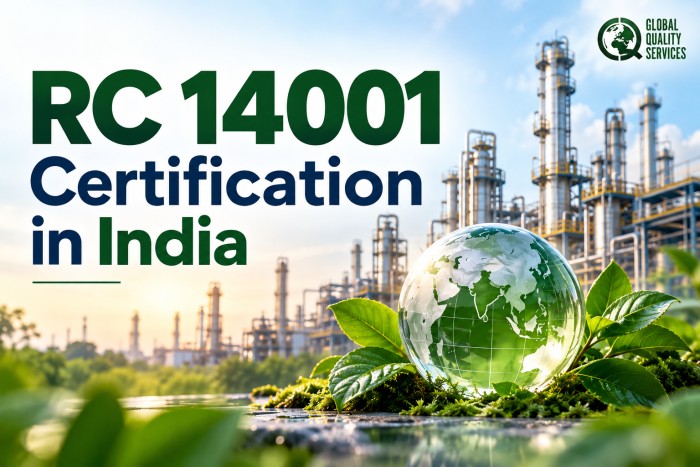
RC 14001 Certification in India for Chemical Companies is a structured framework to manage the EHS&PS obligations associated with manufacturing and distributing chemicals. Besides helping firms manage operations efficiently, it offers credibility as well. For exporters, manufacturers, and chemical organizations working with other businesses across supply chains, RC 14001 can improve risk management.
Read on to learn about the certification requirements, process, advantages, and preparation for obtaining RC 14001 certification in Indian chemical organizations.
What is RC 14001 Certification
Certification against RC 14001 enables chemical organizations to coordinate their environmental, health, safety, security, and product stewardship obligations according to specific standards. The framework is based on the integration of Responsible Care philosophy and the requirements outlined by ISO 14001.
Here’s how it works: RC 14001 Certification allows businesses to conduct themselves in compliance with safety regulations, minimize any potential environmental hazards, and gain greater oversight over chemical operations. The key domains include:
- Environmental management and pollution control
- Employee health and workplace safety
- Chemical and process safety
- Emergency preparedness and response
- Chemical security
- Product stewardship
- Legal and regulatory compliance
- Continual improvement
Why RC 14001 Certification Matters in India
The importance of RC 14001 certification for Indian chemical firms is increasing because of rising stakeholder demands for safety, sustainability, regulation, and proper handling of chemicals. It enables organizations to implement controls, mitigate risks, and gain trust from consumers, regulators, workers, and international purchasers. The concept applies across industries but focuses specifically on chemicals here.
- Compliance with regulations: Ensure your environmental, health & safety, and chemical management processes are compliant with relevant regulations.
- Establish credibility with international customers: Prove to potential international partners that you practice responsible care principles.
- Minimize risks: Detect any hazards early on and enhance controls to prevent incidents from occurring.
- Enhance environmental performance: Minimize waste, emissions, resource consumption, and other negative effects on the environment.
- Ensure employee and community well-being: Implement safety measures at work and emergency response plans.
- Practice responsible chemical management: Practice safe handling, transportation, and management of chemicals.
Key Benefits of RC 14001 Certification
Certification under RC 14001 provides chemical firms with a framework to enhance environmental performance, workplace safety, chemical handling practices, and general corporate responsibility. The certification process goes beyond mere compliance with regulations. Instead, it enables organizations to develop robust internal systems that contribute to sustainable development. The following list details its advantages:
- Environmental Excellence: Aids firms in managing their output of waste, emissions, consumption of energy, and any other impact they make on the environment via a structured management process.
- Health & Safety Improvement: Fosters proper recognition of hazards within work environments and operations to minimize incidents, unsafe behavior, and interruptions in production processes.
- Regulatory Compliance Enhancement: Establishes a framework to recognize all relevant legislation relating to environmental protection, health and safety, and hazardous chemicals.
- Chemical Management Safety: Facilitates best-practice handling, storing, transportation, and usage of chemicals throughout their lifecycle.
- Increased Customer and Community Trust: Assures customers, employees, regulators, and community members about the commitment to responsible chemical management.
- Improved Market Access: Having certification makes it easier for companies to establish credibility with international buyers and suppliers who require responsible environmental and safety management.
- Lower Business Risk: Conducting regular risk assessments, monitoring, auditing, and remediation enables organizations to proactively address potential issues before they turn into costly accidents.
- Streamlined Management Processes: Because RC 14001 is based on ISO 14001 principles, organizations can integrate their environmental management processes within existing processes rather than developing entirely new processes. Companies may also consider other relevant standards like ISO 45001 on occupational health and safety management while developing their management systems.
- Continuous Improvement: Promotes continuous evaluation, improvement, and enhancement of environmental, safety, and chemical management practices
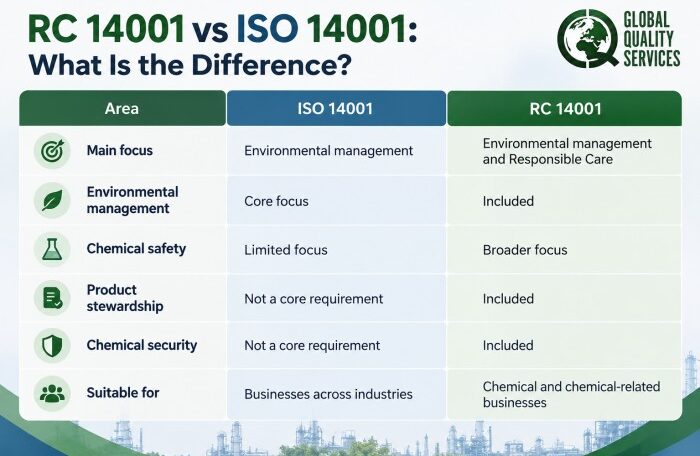
RC 14001 vs ISO 14001: What Is the Difference
Both RC 14001 and ISO 14001 offer frameworks for managing your organization’s impact on the environment, but the RC 14001 standard focuses more specifically on chemical companies and their unique obligations. A quick comparison will illustrate these distinctions better.
Top Industries in India That Benefit from RC 14001
RC 14001 is particularly relevant for industries that manufacture, process, store, transport, or regularly handle chemicals. In India, key sectors that can benefit include:
- Petrochemical and Basic Chemical Manufacturing
- Specialty Chemical Manufacturing
- Pharmaceutical and Pharmaceutical Intermediate Manufacturing
- Agrochemical and Pesticide Manufacturing
- Dyes, Pigments, and Dye Intermediates
- Chemical Storage and Warehousing
- Chemical Transportation and Logistics
- Paints, Coatings, and Adhesives
- Fertilizer Manufacturing
- Industrial Gas Manufacturing and Handling
- Oil and Gas Processing
- Plastic and Polymer Manufacturing
- Chemical Importers and Distributors
- Chemical Blending and Formulation Units
Step-by-Step Process to Get RC 14001 Certification in India
The RC 14001 certification process includes five stages: assessment of your existing systems, development and documentation of an appropriate management system, internal audits, management review, and continuous maintenance of certification post-audit.
Step 1: Initial Assessment and Gap Analysis
Compare your current environmental management practices to RC 14001 criteria. It will help identify any gaps in your processes, insufficient controls, and areas for improvement.
Step 2: Documentation and System Development
Create documentation needed for certification according to Responsible Care and ISO 14001 guidelines. It includes policies, procedures, risk assessments, records, and control measures.
Step 3: Implementing Processes and Employee Training
Implement the developed processes within the appropriate departments. Provide employee training regarding their roles, safety measures, emergency preparedness, chemical management, and other relevant control measures.
Step 4: Internal Auditing and Management Review
Perform an internal audit in order to detect any nonconformances and fix them prior to the certification audit. The management will conduct a review of the entire system, along with the audit results, performance metrics, and preparedness levels.
Step 5: Certification Audit and Continuous Compliance
The certification body performs the external audit. This includes documentation review and on-site inspection. After meeting all necessary requirements, certification is granted. Regular surveillance audits will be conducted subsequently.
Documents Required for RC 14001 Certification
To streamline certification, the following documentation is typically required:
- Environmental policy
- Responsible Care® policy
- Legal compliance register (applicable Indian laws/regulations)
- Risk assessment and hazard analysis
- Operational control procedures
- Training and competency records
- Incident and near-miss report
- Emergency response and preparedness plan
- Internal audit findings and corrective actions
Cost of RC 14001 Certification in India
The cost can vary significantly depending on:
- The size of the company
- Number of sites/facilities
- Volume and risk level of chemicals handled
- Whether you already have ISO 14001, ISO 9001, or ISO 45001
As a rough estimate, the investment in India may range between INR 25 lakh and 1 crore+, depending on complexity and scale (consultant fees, audit costs, implementation).
[Note: These are indicative; actual costs will vary based on the certifying body and scope.]
How Long Does RC 14001 Certification Take?
Typically, the certification journey in India spans 2 to 6 months, depending on:
- How quickly are gaps closed
- Documentation readiness
- Employee training time
- Audit scheduling
If you engage a consulting partner, the process often moves faster and more smoothly.
Certified RC 14001 Services for Major Industrial Locations in India
GQS assists companies pursuing RC 14001 Certification for their facilities across the most prominent locations for chemical manufacturing and industrial activities in India. Here’s where we’re active:
- Pune
- Ahmedabad
- Hyderabad
- Mumbai
- Delhi
- Noida
- Bengaluru
- Chennai
Regardless of whether your plant operates from one of these centers or any other location in India, we can assist in assessing gaps, preparing documentation, implementing standards, educating employees, conducting internal audits, and preparing for a certification audit.
Summary Points
- RC 14001 Certification helps chemical and industrial companies build a strong EH&S management system focused on safety, sustainability, and responsible chemical handling.
- It strengthens compliance with India’s environmental and industrial safety regulations while improving operational control and risk management.
- A structured RC 14001 framework reduces accidents, prevents chemical hazards, and builds trust with clients, employees, and nearby communities.
- RC 14001 boosts credibility, supports smoother audits, and enhances long-term sustainability and performance.
- India’s rising focus on safe chemical operations and global supply-chain expectations make RC 14001 a strategic requirement, not just a certification.
How Global Quality Services Supports Your Company for RC 14001 Certification
GQS offers comprehensive support that guides your company through each step needed to meet RC 14001 requirements—from understanding what the standard demands, implementing systems to meet them, and getting ready for the certification audit.
- Industry-Specific Advice: We know how RC 14001 applies to the challenges unique to your chemical business.
- Comprehensive Guidance: From initial assessment and documentation to implementation and audit preparation.
- Practical Documentation: Documents are crafted with real-world applications in mind.
- Audit Readiness: Discover any areas that require improvement and ensure your staff is ready for the audit.
- Training Your Team: Create awareness among employees on their role in achieving RC 14001 compliance.
Partnering with Global Quality Services for RC 14001 Certification
Obtaining the RC 14001 certification involves more than document preparation. All aspects must align—controls around environmental and occupational health and safety, management of hazardous chemicals, employee training, and audit preparedness among others. GQS provides certification consulting services with over 26 years of industry expertise. We help organizations develop a sustainable management system and prepare for certification.
Partner with Global Quality Services for your journey towards achieving the RC 14001 certification. Reach out to us now for a consultation to gain valuable insights into your needs and preparations.
Frequently Asked Questions
1. Is RC 14001 the same as ISO 14001?
No. ISO 14001 focuses only on environmental management, while RC 14001 includes responsible care principles, covering chemical stewardship, employee safety, and community well-being for a more comprehensive sustainability framework.
2. Is RC 14001 mandatory in India?
RC 14001 is a voluntary in India. However, many chemical and industrial companies adopt it to meet global buyer expectations, enhance sustainability performance, reduce risks, and strengthen credibility with regulators and stakeholders.
3. How long is the certification valid?
RC 14001 certification remains valid for three years. Organisations must undergo successful annual surveillance audits and maintain continuous compliance to ensure long-term system effectiveness and ongoing Responsible Care® performance.
4. Can a company get RC 14001 without ISO 14001?
Yes. RC 14001 can be implemented independently without ISO 14001. It provides a complete framework combining environmental, health, safety, and chemical management practices within a single integrated management system.
5. Who issues RC 14001 Certification in India?
Accredited international certification bodies issue RC 14001. These agencies conduct audits, evaluate compliance with Responsible Care® requirements, and verify that the organisation meets environmental, health, safety, and chemical management standards.