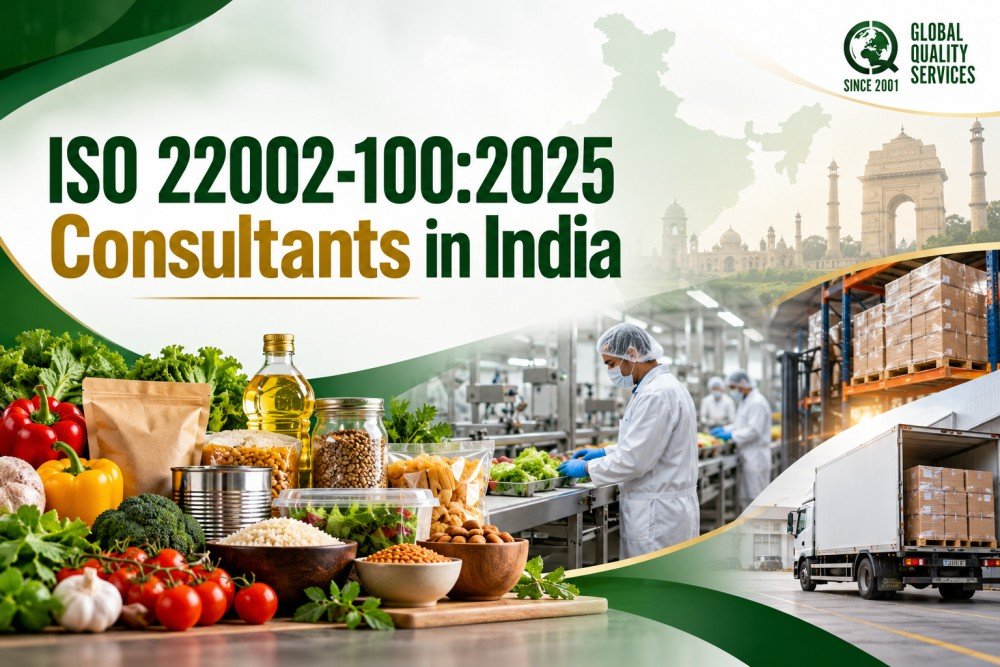
Food safety depends on more than what happens inside a manufacturing plant. It starts with raw material suppliers and continues through processing, packaging, storage, transportation, and delivery. A gap at any stage can affect product safety, customer trust, and business relationships. ISO 22002-100:2025 Consultants in India help businesses establish consistent prerequisite programs (PRPs) across their supply chains and strengthen food safety controls. India’s food processing sector is also expanding.
According to the Ministry of Food Processing Industries, the sector’s gross value added grew at an average annual rate of 6.55% between 2014-15 and 2023-24, highlighting its growing economic importance. For businesses supplying food, feed, or food packaging, reliable safety controls are essential to meet buyer expectations and manage operational risks. Global Quality Services provides consulting support to help organizations understand applicable requirements, address compliance gaps, and prepare their operations for assessment. Read on to understand the framework, its key requirements, and how the right consultant can help your business prepare.
What Is ISO 22002-100:2025
ISO 22002-100:2025 establishes common prerequisite program requirements for food safety across the food, feed, and packaging supply chain. These programs provide the basic operating conditions needed to maintain hygiene, prevent contamination, and control food safety hazards.
The standard supports food safety management systems by bringing common requirements together in one framework. This helps organizations that operate across different supply chain activities maintain consistent practices without unnecessarily duplicating common controls.
ISO 22002-100:2025 works alongside ISO 22000:2018 and applicable sector-specific parts of the ISO 22002 series. The requirements that apply to an organization depend on its activities, products, facilities, and role in the supply chain.
For Indian businesses, effective prerequisite programs can improve daily hygiene, strengthen supplier controls, support product traceability, reduce contamination risks, and improve readiness for customer and certification audits.
Who Needs ISO 22002-100:2025 Consulting in India
Organizations that manufacture, handle, store, transport, sell, or package food and feed products can benefit from expert guidance on implementing common prerequisite programs. Key industries include:
- Food manufacturers
- Animal feed manufacturers
- Food packaging manufacturers
- Warehousing and logistics companies
- Retail and wholesale businesses
- Food ingredient suppliers
- Importers and exporters
- Multi-site organizations
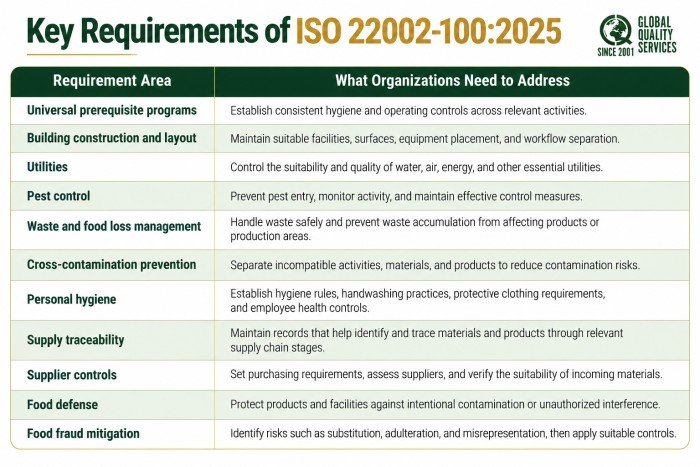
Key Requirements of ISO 22002-100:2025
ISO 22002-100:2025 focuses on the common operating controls needed to support food safety. Organizations should review the following areas when implementing the framework:
Understanding the Framework: Tier 2 Sector Addendum
The framework can be understood through two connected layers.
Tier 1: Common Prerequisite Programs
This layer establishes shared operating conditions that support food safety across the food, feed, and packaging supply chain. It provides a common foundation for hygiene, facility management, contamination prevention, supplier controls, and other essential practices.
Tier 2: Sector Addendum
This layer addresses additional prerequisite programs required for a particular type of operation. Food manufacturing, packaging production, transport and storage, feed production, and retail can involve different risks. Organizations must therefore identify and implement the relevant sector-specific requirements.
The common framework and sector addendum should work together as part of the organization’s food safety management system. Businesses should identify their applicable sector requirements and integrate them into their operating procedures, risk controls, and supporting records.
ISO 22002-100:2025 Implementation and Consulting Process in India
Global Quality Services follows a structured approach to help businesses implement applicable requirements, address operational gaps, and prepare for independent assessment.
Step 1: Review the Scope and Existing Practices
Identify the products, facilities, activities, and supply chain operations covered by the framework. Review current food safety controls and applicable sector requirements.
Step 2: Identify Compliance Gaps
Compare existing arrangements against applicable common prerequisite programs and sector-specific requirements. Record gaps involving hygiene, facilities, suppliers, traceability, and contamination prevention.
Step 3: Develop Required Documentation
Prepare or update relevant procedures, operating controls, supplier records, traceability documents, and food safety plans based on the organization’s actual activities.
Step 4: Implement Controls and Train Employees
Put the required practices into daily operations, communicate responsibilities, and maintain records that demonstrate consistent implementation.
Step 5: Verify Readiness for Assessment
Review implementation evidence, address outstanding gaps, and check readiness for the relevant independent assessment or certification audit.
Related Food Safety Standards and Resources
Organizations implementing common prerequisite programs may also need a broader food safety management system or additional controls for their specific sector.
- ISO 22000 Certification in India: Explore food safety management system requirements and how they support hazard control, operational monitoring, and continual improvement.
- FSSC 22000 Certification Consultants in India: Review a related food safety certification framework for businesses that need a broader management system and scheme-specific requirements.
Why Choose Global Quality Services as Your ISO 22002-100:2025 Consultant in India?
Choosing a reputed consultant means finding a partner who understands your business, not just the standard. Global Quality Services helps organizations approach food safety compliance with clear requirements, practical guidance, and attention to the risks within their operations.
- Years of experience: With over 26 years of experience, we bring our best expertise to our work.
- Reputed consultant: Guidance tailored to your business activities, operating structure, and compliance objectives.
- Food safety expertise: Support in understanding common prerequisite programs and applicable sector-specific requirements.
- Practical compliance guidance: Recommendations that account for real operating conditions rather than paperwork alone.
- Documentation support: Assistance in organizing food safety procedures, records, and supporting evidence.
- Risk-focused approach: Attention to contamination risks, supplier controls, traceability, and food safety responsibilities.
- Business-focused guidance: Support designed to help reduce compliance gaps and improve audit readiness.
- Clear communication: Straightforward explanations of requirements, responsibilities, and corrective actions.
- Support across business locations: Guidance for organizations operating at one site or across multiple facilities.
Work with a Reputed ISO 22002-100:2025 Consultant in India
Food safety gaps can affect production, customer relationships, and access to new markets. Global Quality Services helps businesses identify these gaps, implement suitable controls, and prepare for independent assessment with a clear compliance plan. Our consulting approach focuses on your actual operations, the requirements relevant to your sector, and the evidence needed to demonstrate implementation.
Our presence extends across multiple Indian business hubs, including Delhi, Ahmedabad, Noida, Bangalore, Mumbai, Pune, Chennai, and Hyderabad, allowing us to support organizations across different regions and industries.
Contact Global Quality Services to discuss your business scope, existing food safety practices, and implementation requirements. Get a tailored compliance plan that helps your team address gaps, strengthen supply chain controls, and prepare for the next stage of your food safety objectives.
Frequently Asked Questions
1. What documents should a business maintain for ISO 22002-100:2025?
Businesses should maintain relevant hygiene procedures, cleaning schedules, pest control records, supplier evaluations, traceability records, maintenance logs, and evidence of implemented food safety controls.
2. How does ISO 22002-100:2025 help businesses manage supplier risks?
It supports consistent supplier controls, purchasing requirements, and incoming material checks, helping businesses identify potential risks before materials enter their operations.
3. Can a company with multiple facilities use the same PRP framework?
Yes. Organizations can establish common procedures across facilities while adapting controls to each site’s activities, risks, infrastructure, and applicable sector-specific requirements.
4. How often should prerequisite programs be reviewed?
Organizations should review their programs regularly and whenever significant changes occur in products, equipment, processes, suppliers, facilities, or identified food safety risks.
5. What should businesses consider before selecting an ISO 22002-100:2025 consultant?
Consider the consultant’s food safety knowledge, understanding of sector-specific requirements, experience with similar operations, documentation support, and ability to provide practical guidance throughout implementation.