Mumbai is the culinary heartbeat of India, housing everything from sprawling manufacturing units in Parel to high-end restaurants in Bandra and cloud kitchens across Andheri. Operating a food business here means catering to millions of people daily, which places a massive responsibility on your hygiene standards. However, the regulatory landscape is changing rapidly.
Recent data shows that authorities conducted 397,009 inspections across food establishments nationwide, with nearly 17.16% of food samples found to be non-conforming.
In this high-stakes environment, where over 98% of food businesses now fall under state-level monitoring, a single compliance slip can lead to heavy financial penalties or even criminal convictions.
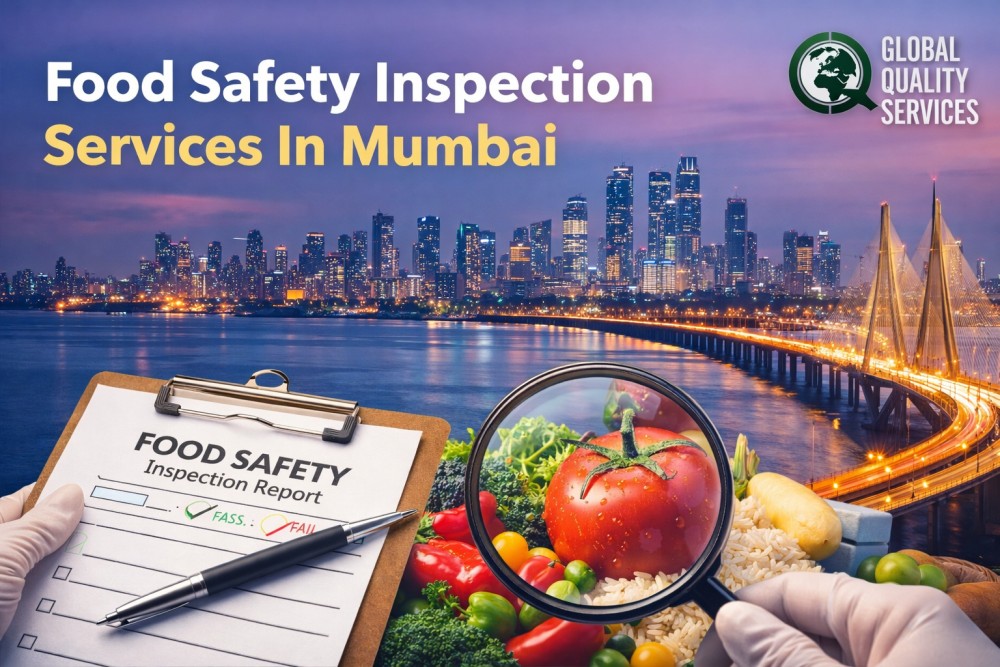
For businesses in Mumbai, these numbers highlight the importance of strong food safety systems. Professional food safety inspection services help identify hygiene risks, verify regulatory compliance, and ensure that food-handling practices meet required standards. A structured inspection not only reduces the risk of regulatory action but also strengthens customer confidence and brand credibility.
Why is Food Safety Compliance Critical for Your Mumbai Business?
Food businesses in Mumbai operate in a highly competitive environment where safety and hygiene directly influence customer trust. Maintaining strong food safety compliance is not just about following rules. Here are the key reasons why food safety inspections are critical:
Prevent Regulatory Penalties
Food businesses must comply with regulations established by the Food Safety and Standards Authority of India. Non-compliance can result in penalties, license suspension, or even closure of operations. Regular inspections help identify gaps before authorities take action.
Protect Customer Health
Unsafe food handling can lead to contamination and foodborne illness. Inspections verify whether hygiene practices, storage conditions, and food preparation procedures meet safety standards. This helps protect consumers and reduces the risk of outbreaks.
Maintain Business Reputation
Food safety incidents can spread quickly through reviews and social media. Even a single hygiene complaint can damage customer confidence. Regular inspections demonstrate that your business takes food safety seriously.
Improve Operational Efficiency
Food safety inspections also highlight operational gaps such as improper storage systems, poor sanitation procedures, or ineffective pest control. Fixing these issues improves overall workflow and reduces food waste.
Support certification and audits
Many food businesses pursue certifications such as ISO 22000 or HACCP to strengthen credibility and meet supply chain requirements. Professional inspections help businesses prepare for these certification audits by ensuring readiness for compliance.
Comprehensive Food Safety Solutions We Provide
Professional inspection services need to cover a wide range of safety requirements. The following solutions are designed to address the full scope of food safety risks across various food industry segments:
Restaurant and Kitchen Hygiene Inspections
Restaurants and cloud kitchens handle large volumes of food every day. Inspections focus on areas such as food preparation practices, storage conditions, staff hygiene, sanitation of kitchen equipment, and temperature control systems. These checks help ensure that food preparation areas remain safe and hygienic.
Food Manufacturing Facility Inspections
Food production facilities require strict monitoring to avoid contamination during large-scale production. Inspections evaluate production lines, raw material handling, sanitation procedures, equipment cleanliness, and cross-contamination risks.
Food Processing Unit Audits
Food processing units often involve multiple stages, including cleaning, processing, packaging, and storage. Inspections review the entire process flow to ensure that safety controls are maintained at every stage.
Retail Food Outlet Inspections
Supermarkets and retail food outlets must maintain safe storage conditions for packaged and fresh food products. Inspections verify storage temperatures, shelf life monitoring, product labeling, and hygienic display conditions.
Supplier And Vendor Safety Audits
Businesses that source food ingredients from suppliers must ensure that vendors follow safe food handling practices. Third-party audits help evaluate supplier hygiene standards and verify compliance with food safety regulations.
Industries We Serve in Mumbai
The requirements for a bakery in Borivali are vastly different from those of a seafood processing unit in Navi Mumbai. We tailor our inspection protocols to suit specific industry needs:
- Restaurants and Cafes: Focusing on temperature control, cross-contamination, and hygiene ratings.
- Cloud Kitchens: Helping high-volume delivery brands maintain standards across multiple locations.
- Food Manufacturing & Processing: Managing complex supply chains and large-scale industrial hygiene.
- Catering Services: Ensuring safety in high-volume meal preparation for corporate offices or events.
- Retail & Supermarkets: Monitoring shelf-life, cold chain integrity, and proper labeling.
Food Safety Standards and Regulations We Evaluate
Food safety inspections must be conducted against recognized regulatory and international standards. These standards provide structured guidelines for maintaining hygiene, preventing contamination, and ensuring food quality.
FSSAI Regulations
The Food Safety and Standards Authority of India regulates food safety compliance for businesses across the country. Inspections verify whether facilities follow FSSAI guidelines related to food handling, sanitation, storage, and licensing requirements.
HACCP Food Safety Management System
Hazard Analysis and Critical Control Points is a preventive approach used to identify potential food safety hazards. Inspections evaluate whether critical control points are properly monitored to prevent contamination.
ISO 22000 Food Safety Management Systems
ISO 22000 provides a framework for implementing structured food safety management practices across the supply chain. Inspections assess whether food businesses maintain documentation, risk control systems, and continuous monitoring processes.
Good Manufacturing Practices
Good Manufacturing Practices define basic hygiene and operational standards for food production facilities. Inspections evaluate equipment maintenance, sanitation procedures, staff hygiene practices, and production environment cleanliness.
Our Food Safety Inspection Process
A systematic inspection process ensures that every aspect of food safety is carefully evaluated. Each stage of the inspection focuses on identifying risks and providing practical recommendations for improvement.
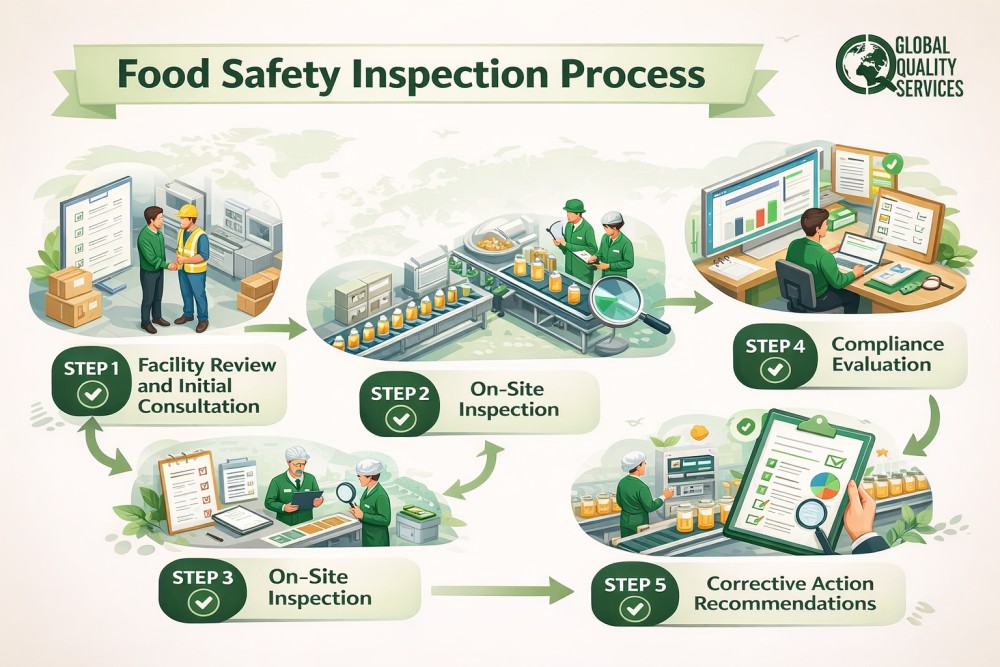
Step 1 Facility Review and Initial Consultation
The process begins with an assessment of the business type, production activities, facility layout, and regulatory requirements. This step helps inspectors understand the operational environment and determine the areas that require detailed evaluation.
Step 2 On-Site Inspection
Inspectors conduct a thorough examination of the facility, including kitchens, storage rooms, production lines, waste disposal areas, and employee hygiene practices. Equipment sanitation, pest control measures, and temperature monitoring systems are also reviewed.
Step 3 Compliance Evaluation
Inspection findings are evaluated against relevant food safety standards and regulatory requirements. Any gaps in compliance are identified along with their potential impact on food safety.
Step 4 Detailed Inspection Report
A structured report is prepared outlining observations, safety risks, and areas that require corrective action. The report helps businesses understand exactly where improvements are needed.
Step 5 Corrective Action Recommendations
Inspectors provide practical guidance on how to address identified issues. This may include changes in hygiene practices, improvements in storage systems, or implementation of additional safety controls.
Why Choose Global Quality Services for Food Safety Inspection in Mumbai
Global Quality Services provides professional inspection support designed to help food businesses maintain strong compliance standards. Key advantages include:
- Experienced food safety inspectors who understand regulatory requirements and industry practices.
- Detailed facility inspections that evaluate hygiene, storage, processing, and handling practices.
- Clear and structured inspection reports that highlight safety risks and corrective actions.
- Practical recommendations that help businesses improve safety systems without disrupting operations.
- Reliable inspection scheduling that supports certification preparation and regulatory compliance.
Request an Expert Inspector With Global Quality Services
Food safety is a critical responsibility for every food business. A professional inspection helps ensure that your operations meet required hygiene standards and regulatory expectations.
If you operate a restaurant, food processing facility, catering business, or retail food outlet in Mumbai, scheduling a professional inspection can help you identify safety gaps and strengthen compliance systems.
Request an expert inspector today to review your facility, evaluate safety practices, and receive practical recommendations that help protect your customers and your business.
Frequently Asked Questions
1. How often should a food business conduct a food safety inspection
Most food businesses benefit from conducting inspections at least once or twice a year. Facilities with high production volumes or complex operations may require more frequent inspections to maintain compliance and hygiene standards.
2. Can small restaurants or cloud kitchens benefit from professional inspections?
Yes. Smaller businesses often have limited internal compliance resources. Professional inspections help identify safety gaps and ensure that daily food handling practices follow proper hygiene standards.
3. How long does a typical inspection take?
The duration depends on the size and complexity of the facility. Small restaurants may take a few hours, while large manufacturing facilities may require a full-day inspection.
4. Do inspections help businesses prepare for certification audits?
Yes. Inspection reports identify compliance gaps that need to be addressed before certification audits, such as ISO 22000 or HACCP assessments.
5. What type of businesses usually work with professional inspection firms?
Restaurants, hotels, food manufacturers, catering companies, food retailers, and cloud kitchen operators often rely on specialized inspection providers to evaluate their food safety systems and ensure regulatory compliance.