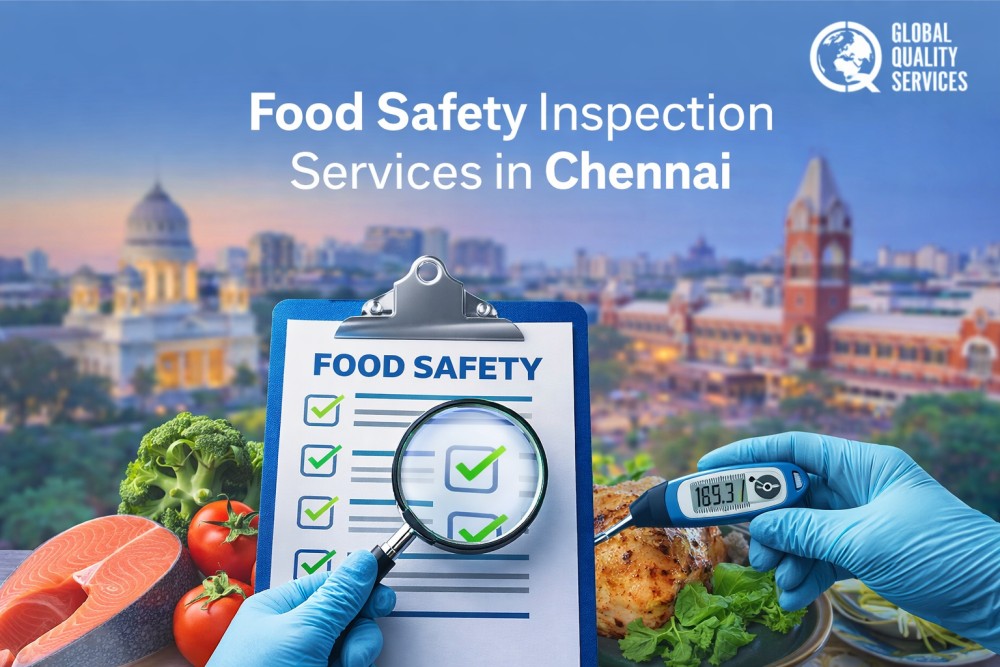
Running a food business in a city like Chennai involves managing high demand alongside strict government regulations. With the local food industry expanding rapidly, the Food Safety and Standards Authority of India (FSSAI) has significantly increased its oversight. In the 2025-2026 period alone, the FSSAI conducted over 397,000 inspections across India and analyzed more than 165,000 food samples. Notably, approximately 17.16% of those samples were non-conforming, resulting in over 154 crore rupees in financial penalties nationwide.
For businesses in Chennai, regular inspections help ensure compliance with FSSAI standards, improve hygiene practices, and prepare establishments for regulatory audits. Professional food safety inspection services provide structured evaluations of kitchens, processing facilities, and storage areas to identify risks before they turn into serious problems.
Whether you operate a restaurant, a food processing unit, or a catering business, professional inspections help maintain operational standards and protect both customers and brand reputation.
Why Food Safety Inspections Are Essential for Businesses in Chennai
In a large food market like Chennai, where thousands of food establishments operate daily, regular inspections help reduce operational risks and support responsible food handling practices. Here is why food safety audits are crucial:
Ensuring Compliance with FSSAI Regulations
Every food business must comply with regulations issued by the Food Safety and Standards Authority of India. These regulations cover sanitation practices, food storage, preparation procedures, and employee hygiene. Food safety inspections help verify that these requirements are followed consistently across operations.
Identifying Food Safety Risks Early
Food safety risks often arise from small operational gaps such as improper refrigeration, cross-contamination, or poor sanitation practices. Inspections help detect these risks early so businesses can take corrective action before they lead to serious safety issues.
Maintaining Hygiene Standards Across Operations
Maintaining high hygiene standards requires continuous monitoring. Inspections review kitchen cleanliness, equipment sanitation, waste disposal practices, and staff hygiene protocols. This helps ensure that hygiene practices remain consistent throughout the facility.
Protecting Business Reputation
A single food safety incident can damage a business’s reputation and reduce customer trust. Regular inspections demonstrate a commitment to responsible food handling and customer safety.
Supporting Staff Awareness and Training
Food safety inspections also help improve internal awareness. Employees learn about proper food handling procedures, hygiene protocols, and safety practices that help maintain compliance.
Industries We Serve in Chennai
Our inspection and consultancy services are tailored to the specific needs of various sectors within the Chennai food ecosystem:
- Hospitality and Catering: From luxury hotels to large-scale industrial canteens and wedding caterers.
- Manufacturing and Processing: Units producing packaged snacks, dairy products, beverages, and ready-to-eat meals.
- Retail and Warehousing: Supermarkets, cold storage facilities, and distribution centers.
- E-commerce and Cloud Kitchens: Online food delivery brands that must display FSSAI numbers and maintain digital compliance.
- Export-Oriented Units: Businesses needing to align with both Indian and international safety standards for global markets.
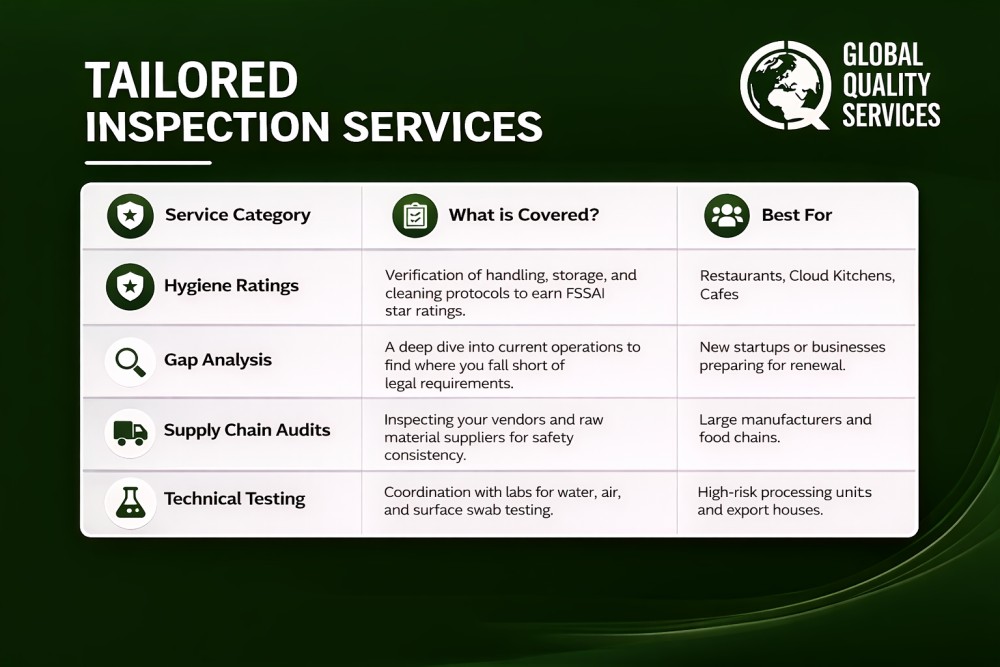
Tailored Inspection Services for Every Sector
Food businesses operate under different operational conditions. A restaurant kitchen faces different challenges compared to a food processing plant or a catering facility. Tailored inspection services ensure that each facility receives an evaluation that reflects its operational realities:
Food Safety Standards and Regulations We Evaluate
Regulations in India are evolving. As of April 1, 2026, the FSSAI has updated turnover thresholds and licensing categories. Our inspection team evaluates your business against these latest benchmarks:
- Schedule 4 Requirements: We check if your daily hygiene and sanitary practices meet the mandatory FSSAI Schedule 4 checklist.
- FSMS Plan Implementation: We help you document and execute your Food Safety Management System (FSMS) plan, which is now a digital requirement for many.
- Labeling and Claims: We review your packaging to ensure nutritional info, allergen declarations, and marketing claims comply with 2026 labeling laws.
- HACCP Principles: For businesses aiming higher, we evaluate Hazard Analysis and Critical Control Points to ensure world-class safety.
Our Step-by-Step Approach to Compliance
Food safety inspections follow a structured evaluation process that helps businesses understand their current compliance level and identify areas for improvement.
Step 1 Initial Consultation
The inspection process begins with an assessment of the business type, operational scale, and regulatory requirements. This helps determine the appropriate inspection framework.
Step 2 Facility Inspection
Inspectors conduct a detailed on-site evaluation of kitchens, food preparation areas, storage facilities, and sanitation practices.
Step 3 Risk Identification
During the inspection process, potential food safety risks are identified. These may include hygiene gaps, improper storage practices, or equipment sanitation issues.
Step 4 Inspection Reporting
Businesses receive a detailed report that outlines observations, compliance gaps, and improvement recommendations.
Step 5 Corrective Action Guidance
Practical recommendations are provided to help businesses improve hygiene practices and strengthen compliance systems.
Why Global Quality Services is Your Trusted Food Safety Partner in Chennai
Global Quality Services brings a professional, B2B-focused approach to every inspection. We don’t treat compliance as a hurdle; we treat it as an opportunity to improve your business efficiency.
Our team consists of certified auditors who are well-versed in the latest 2026 FSSAI reforms. We provide:
- Local Insight: We know the specific regional requirements and office protocols for FSSAI in Chennai.
- Active Support: Our communication is clear and jargon-free, ensuring your staff understands exactly what needs to be done.
- End-to-End Solutions: From initial licensing to complex international certifications, we cover the entire spectrum of food safety.
Ready to Secure Your Food Business License?
Don’t wait for a compliance notice to arrive before you take action. Protecting your brand starts with a proactive approach to safety. Whether you are a small kitchen or a large manufacturing plant, Global Quality Services provides the expert guidance you need to navigate the 2026 regulatory changes seamlessly. Contact us today to schedule your food safety inspection and ensure your business is fully compliant and audit-ready.
Frequently Asked Questions
1. How long does a typical food safety inspection take?
The duration depends on the size and complexity of the facility. Small restaurants may require a few hours, while large food manufacturing facilities may require a full-day inspection.
2. What documents are usually reviewed during a food safety inspection?
Inspectors may review sanitation schedules, temperature monitoring logs, food storage records, pest control reports, and employee hygiene training documentation.
3. Can inspections help businesses prepare for regulatory audits?
Yes. Structured inspections identify compliance gaps and provide recommendations that help businesses prepare for official regulatory evaluations and licensing inspections.
4. What are the most common issues found during food safety inspections?
Common issues include improper temperature control, inadequate sanitation practices, poor food storage organization, and insufficient staff hygiene compliance.
5. How can inspection services support food safety certification preparation?
Inspection professionals evaluate whether operational practices align with recognized food safety frameworks and provide guidance on improvements required for certification readiness.