Reliable food safety is the backbone of any successful food business in a city as vibrant as Hyderabad. As the culinary landscape expands from high-end Gachibowli restaurants to sprawling manufacturing units in Jeedimetla, the focus on hygiene and regulation has never been more intense.
According to the latest 2026 data from the Telangana Food Safety Department, authorities have significantly intensified their enforcement. In just the first quarter of 2026, the department conducted over 11,000 inspections across the state, with a heavy focus on the 1.41 lakh food entities in urban Hyderabad.
Recent drives in April 2026 alone resulted in dozens of improvement notices and the seizure of hundreds of kilograms of non-compliant products due to hygiene lapses. For any food business operator in Hyderabad, professional compliance is now a critical shield against legal penalties and brand damage.
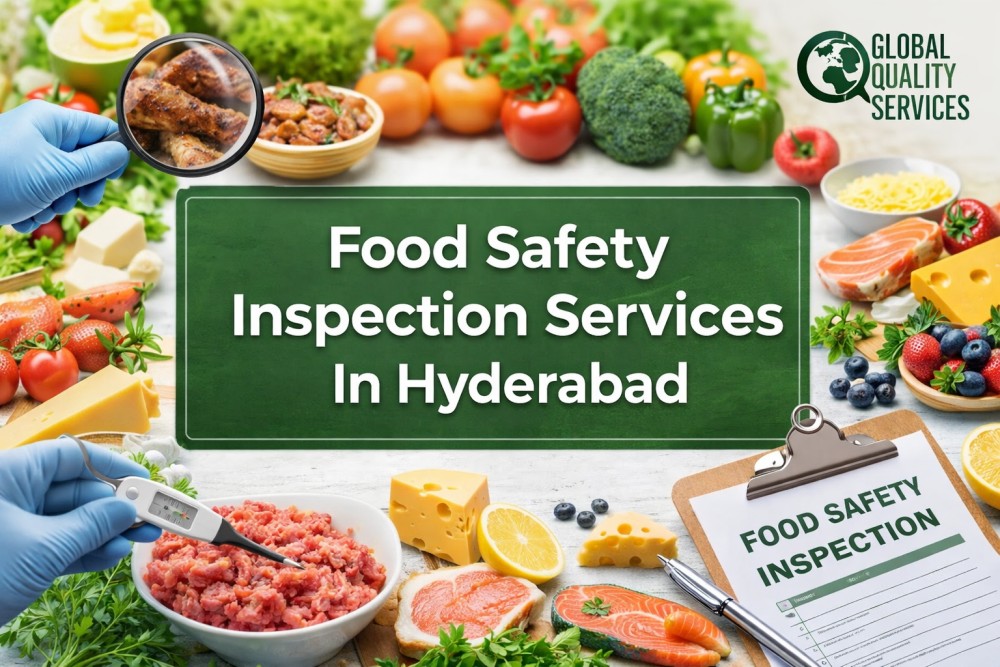
Professional food safety inspection services help you evaluate hygiene practices, operational processes, and regulatory compliance. These inspections provide clear insights into potential risks and offer practical recommendations to strengthen your food safety systems.
Our Comprehensive Food Safety Solutions in Hyderabad
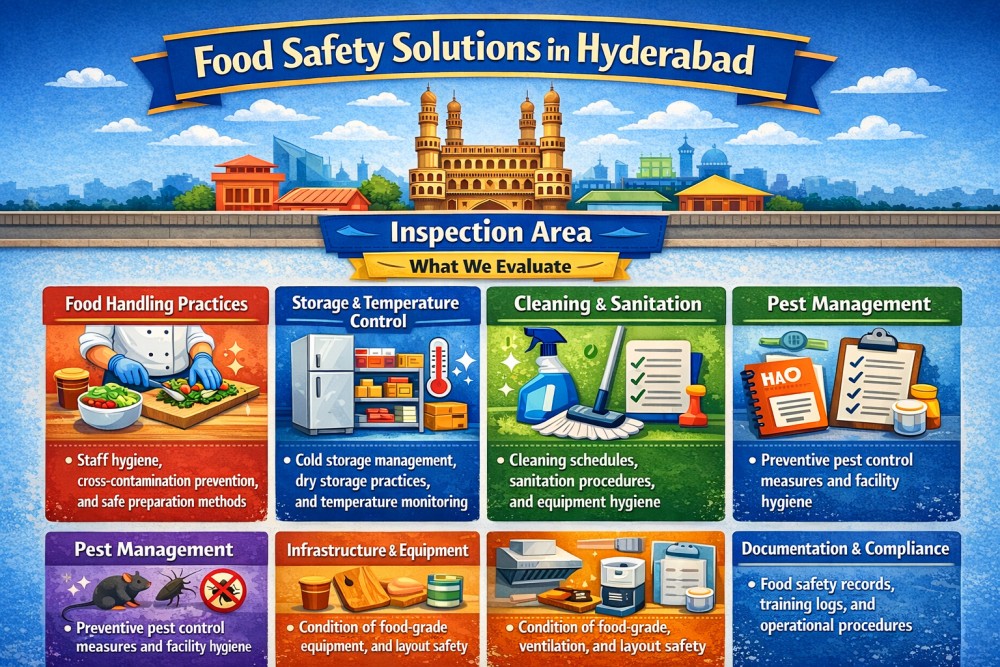
We aim to identify risks, review compliance with regulatory standards, and provide practical steps that help you improve safety practices. Our inspections typically assess the following areas:
Tailored Audits for Every Food Business Segment
Food safety challenges vary widely across industries. A cloud kitchen handling high order volumes faces different operational risks compared to a bakery or a packaged food production unit. For this reason, we design our inspections according to the specific type of food business we evaluate. Typical segments that require food safety inspection services in Hyderabad include:
- Restaurants and Cafés: Restaurant kitchens handle multiple food preparation processes simultaneously. Our inspections focus on safe cooking practices, storage control, and sanitation standards.
- Cloud Kitchens and Delivery Brands: Delivery-focused kitchens operate under tight timelines. We evaluate hygiene practices, packaging procedures, and cross-contamination prevention.
- Hotels and Hospitality Kitchens: Large-scale kitchens require strict operational controls. We assess staff hygiene systems, storage zones, and high-volume food preparation practices.
- Food Manufacturing Units: Manufacturing facilities must maintain strict process control and documentation. We review production flow, quality checks, and equipment sanitation.
- Bakeries and Confectionery Units: These facilities handle ingredients with specific storage requirements. We focus on ingredient handling, preparation areas, and equipment hygiene.
Our 4 Step Compliance Process
Food safety inspections work best when they follow a structured and transparent process. A systematic approach ensures that your business receives clear findings and actionable advice.
Step 1: Initial facility review
The process begins with a preliminary discussion to understand your business operations, facility size, food categories, and existing compliance practices. This stage helps us define the scope of the inspection.
Step 2: On-Site Food Safety Inspection
We conduct a detailed inspection of your facility to review hygiene practices, food handling procedures, storage systems, and sanitation standards. We evaluate your operational processes under real working conditions.
Step 3: Compliance Gap Analysis
We compare our inspection findings with regulatory food safety standards and industry best practices. Our team documents any compliance gaps or operational risks we discover.
Step 4: Detailed Inspection Report and Guidance
You receive a structured report that highlights observations, risk areas, and recommended corrective actions. Our goal is to help you strengthen your food safety systems before regulatory inspections occur.
Common Food Safety Risks Identified During Inspections
Even well-managed food businesses can develop safety risks if they do not review operational controls regularly. Inspections help you identify these issues before they affect product safety or customer health. Some of the most common risks include:
- Improper Food Storage Temperatures: Many food products require strict temperature control. Improper refrigeration or freezer management creates conditions where bacteria grow rapidly.
- Cross-Contamination During Preparation: Using the same surfaces or equipment for raw and cooked foods can spread harmful microorganisms if you do not follow proper hygiene practices.
- Inadequate Cleaning and Sanitation: Irregular cleaning schedules or improper sanitation methods lead to contamination on equipment and food contact surfaces.
- Poor Staff Hygiene Practices: A lack of training or improper hygiene behavior can introduce contaminants into your food preparation areas.
- Pest Management Gaps: Poor waste management or gaps in the facility may allow pests to enter, which compromises food safety.
When Should Your Food Business Schedule a Food Safety Inspection
Waiting for a surprise government inspection is a risky way to run a business. Proactive audits signal a professional operation. Consider a professional inspection in these situations:
- Pre-Licensing: Before you apply for a new FSSAI state or central license to ensure your facility is ready.
- Staff Turnover: When you hire new kitchen staff who are unfamiliar with your safety protocols.
- Facility Changes: If you have recently renovated your kitchen or added new production lines.
- Periodic Health Checks: Quarterly audits are the best way to maintain a high hygiene rating and ensure your team stays disciplined.
Schedule a Professional Food Safety Inspection in Hyderabad
Do not let a single compliance error or a hygiene lapse put your years of hard work at risk. A professional audit is an investment in your brand’s future and the health of your customers.
Global Quality Services helps you navigate the complexities of food safety with ease. Whether you run a small boutique cafe or a large manufacturing unit, our team provides the professional oversight you need to succeed in the Hyderabad market.
Contact our Hyderabad office today to schedule your site inspection and ensure your business remains fully compliant.
Frequently Asked Questions
1. How long does a food safety inspection typically take?
Inspection duration depends on the size of the facility and the complexity of operations. Small kitchens may take two to three hours, while large production facilities may require a full-day assessment.
2. Are food safety inspections mandatory for restaurants in Hyderabad?
Food businesses licensed under FSSAI must comply with food safety regulations and may be inspected by authorities. Independent inspections help restaurants ensure they remain compliant and prepared for regulatory audits.
3. How often should a food business conduct food safety inspections?
Many businesses conduct internal or third-party inspections at least once or twice per year. High-volume food operations may benefit from more frequent reviews to maintain consistent hygiene standards.
4. What qualifications do professional food auditors usually have?
Food auditors often have training in food safety management systems, HACCP principles, and regulatory compliance. Experienced auditors also understand operational risks within different types of food businesses.
5. How can experienced auditors help improve food safety practices?
Experienced auditors provide objective assessments of operational procedures and identify areas where safety controls can be strengthened. Their findings often help management teams improve staff training, sanitation systems, and compliance documentation.