Hyderabad is a major manufacturing hub for pharmaceuticals, medical devices, and packaged goods across Telangana. Manufacturing areas such as Pashamylaram, Genome Valley, Jeedimetla, Patancheru, and Bollaram house thousands of active production plants. Good Manufacturing Practice (GMP) standards set the baseline for quality control, hygiene, and facility management across these units. Compliance ensures that every product batch meets safety requirements before hitting the market.
According to a report published by The Hindu, Telangana’s life sciences market reached a valuation of $145 billion, with the state producing nearly 40 percent of India’s total pharmaceutical output. This rapid industrial growth brings higher scrutiny from regulatory inspectors. Local facilities need proper systems in place to satisfy state inspections and maintain long-term buyer trust.
Why GMP Compliance Is Especially Important for Hyderabad Manufacturers in 2026
Manufacturing plants in Telangana face stricter audit conditions from both state and international health agencies. Understanding local regulatory changes helps plant managers plan necessary upgrades without disrupting daily production. Here are key reasons why GMP certification is important for manufacturers:
- Strict Schedule M Mandates: Drug control departments now actively enforce revised Schedule M guidelines, making facility upgrades mandatory for small and medium pharmaceutical units.
- Access to Export Contracts: Foreign buyers in North America, Europe, and Asia require verified WHO-GMP approval before signing supply deals.
- Lower Product Losses: Standardized batch controls prevent batch contamination, reducing material waste and batch rejections.
- Smoother Regulatory Audits: Following clear operational procedures reduces red flags during routine inspections by the Telangana Drugs Control Administration.
- Stronger Client Trust: Certified plants win more contract manufacturing deals and tender contracts compared to uncertified facilities.
Which Industries in Hyderabad Need GMP Certification or GMP Compliance?
Good Manufacturing Practices apply to any business where product cleanliness and safety directly affect human health. Different sectors follow distinct guidelines tailored to their specific products. Key sectors requiring compliance include:
- Pharma Formulation Units: Facilities making tablets, capsules, liquids, or injectables that need Schedule M or WHO-GMP approval.
- Bulk Drug Manufacturers: Active Pharmaceutical Ingredient (API) plants that require strict raw material handling and solvent controls.
- Nutraceutical Plants: Businesses producing dietary supplements, protein formulations, and health drinks under FSSAI rules.
- Cosmetic Product Manufacturers: Personal care plants implementing ISO 22716 to control microbial exposure and product safety.
- Medical Device Units: Factories making surgical items, diagnostic tools, and disposable medical products under ISO 13485 rules.
GMP Certification Process in Hyderabad
Getting your plant certified involves systematic steps covering physical design, documentation, and worker habits. Taking a step-by-step approach prevents costly mistakes during final regulatory reviews. Here is the 5-step process to achieve compliance:
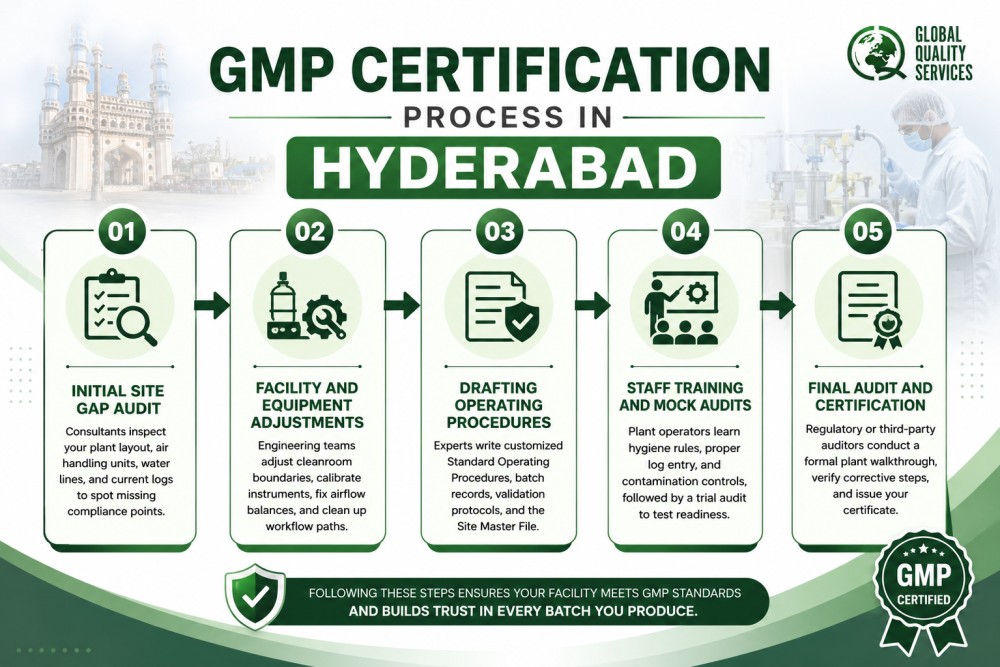
- Initial Site Gap Audit: Consultants inspect your plant layout, air handling units, water lines, and current logs to spot missing compliance points.
- Facility and Equipment Adjustments: Engineering teams adjust cleanroom boundaries, calibrate instruments, fix airflow balances, and clean up workflow paths.
- Drafting Operating Procedures: Experts write customized Standard Operating Procedures, batch records, validation protocols, and the Site Master File.
- Staff Training and Mock Audits: Plant operators learn hygiene rules, proper log entry, and contamination controls, followed by a trial audit to test readiness.
- Final Audit and Certification: Regulatory or third-party auditors conduct a formal plant walkthrough, verify corrective steps, and issue your certificate.
GMP Documentation Required for Hyderabad Businesses
Thorough documentation proves that your facility operates under controlled conditions every day. Inspectors examine these files first to judge your plant’s operational discipline. Prepare these essential documents for your audit:
- Site Master File (SMF) showing plant layouts and equipment lists
- Standard Operating Procedures (SOPs) for every production step
- Batch Production and Control Records (BPCR) for batch tracking
- Validation Master Plan (VMP) covering processes, cleaning, and water systems
- Calibration logs for weighing balances, gauges, and lab instruments
- Quality Control (QC) laboratory test results and raw material logs
- Personnel health files, hygiene records, and training logs
- Corrective and Preventive Action (CAPA) logs for past deviations
Common GMP Compliance Gaps Found in Manufacturing Facilities
Pre-audit checks often uncover basic operational flaws that lead to failed inspections. Addressing these issues early saves time and keeps certification projects on schedule. Common issues found during plant reviews include:
- Unbalanced Air Handling: Incorrect pressure levels between cleanrooms that allow dust or fumes to pass between zones.
- Incomplete Logbooks: Gaps in daily production entries, missing supervisor signatures, or backdated log entries.
- Unvalidated Water Systems: Water lines that lack regular testing for bacteria and chemical purity.
- Uncalibrated Equipment: Using unverified temperature sensors or scales that throw off product proportions.
- Poor Storage Labeling: Unlabeled containers or mixed storage of raw materials, rejected goods, and finished items.
Why Choose Global Quality Services for GMP Certification Support in Hyderabad
Reaching compliance requires clear guidance from specialists who understand both local factory conditions and formal regulatory standards. We provide hands-on consulting to help factory owners build reliable quality systems without unnecessary expense.
Our team works directly on your factory floor alongside your production staff. We avoid complicated jargon and focus on practical steps that work for your plant size, budget, and machinery.
- Experienced Local Team: Our consultants bring years of direct experience with Telangana plant layouts and local regulatory inspections.
- End-to-End Implementation: We guide you from initial floor plan adjustments through document drafting to final inspection closure.
- Customized SOP Writing: We draft clear, practical operating instructions that your workers can follow daily without confusion.
- Proven Client Results: We have successfully prepared hundreds of manufacturing facilities for state, national, and international quality audits.
Get GMP Compliance Support for Your Hyderabad Manufacturing Facility
Upgrading your plant or getting certified does not need to disrupt your daily operations. Working with Global Quality Services gives you direct access to experienced compliance consultants, step-by-step documentation help, and practical floor training. Whether you run an API plant in Pashamylaram or a food unit in Patancheru, we help you meet required standards quickly and smoothly.
- Quick on-site gap evaluation within 48 hours
- Custom documentation and SOP preparation for your plant
- Complete mock audit support to ensure first-time audit success
Contact our team today to discuss your facility goals and request a plant evaluation.
Frequently Asked Questions
1. What factors determine the total cost of GMP certification in Hyderabad?
Total costs depend on your facility size, current cleanroom setup, required machinery upgrades, and the specific certification standard you need. Expenses cover gap audits, equipment calibration, documentation work, and official certification fees.
2. Can a small manufacturing unit in Telangana get GMP certified?
Yes. Small and micro manufacturing units can achieve compliance. The process focuses on good sanitation, clear documentation, basic air quality controls, and proper material handling scaled to your production size.
3. What is the primary role of a Site Master File during an audit?
A Site Master File provides inspectors with an immediate overview of your facility. It includes company details, plant layouts, equipment lists, water system designs, and quality control policies.
4. How often should plant workers undergo GMP training?
Refresher training should happen at least once every six months. New hires must complete basic hygiene and process training before working on the active production floor.
5. What happens if an inspector finds compliance gaps during an official audit?
The auditor issues an observation report detailing specific deficiencies. Your plant receives a set timeframe to complete corrective actions, submit proof, and request a follow-up review.