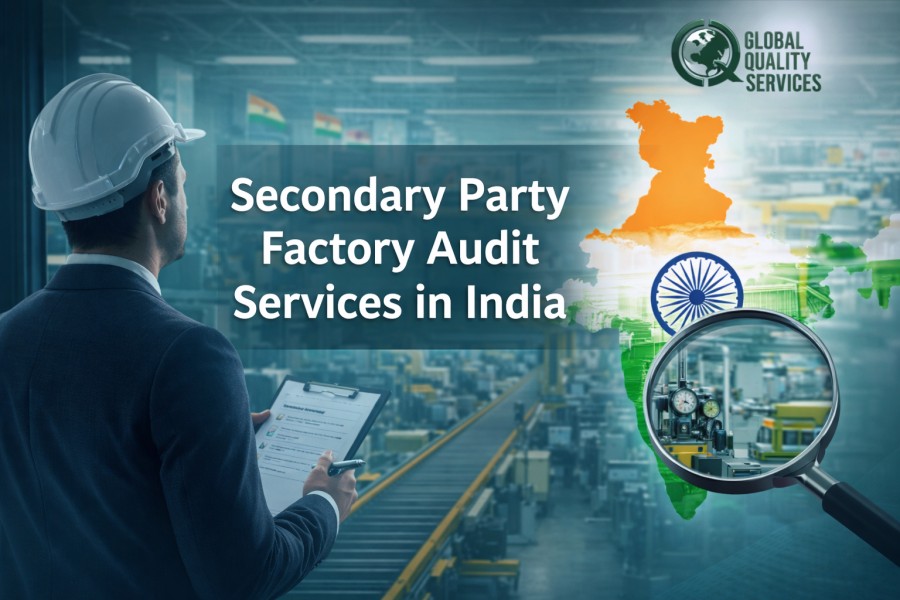
Global supply chains grow more intricate every day. Companies sourcing from overseas must ensure that their manufacturing partners uphold strict quality, compliance, and operational benchmarks. This necessity drives many organizations to perform secondary party factory audits before finalizing or extending supplier contracts.
India is now a powerhouse for global manufacturing. According to the Economic Survey 2025-26, the manufacturing Gross Value Added (GVA) in India climbed by 9.13% during the second quarter of the 2025-26 fiscal year. As the ‘Make in India’ movement pushes exports toward the $800 billion milestone, the task of managing offshore vendors has become more demanding.
By 2024, India’s share of global manufacturing exports hit 1.8%, signaling its expanding role in international production networks. As sourcing volumes rise, businesses must confirm that their partners meet standards for production capacity, regulatory adherence, and ethical labor. Secondary party factory audits offer the verification needed to make informed supply chain choices.
What is a Secondary Party Factory Audit?
A Secondary Party Factory Audit is a focused evaluation of a supplier. The buyer or a specialized organization acting for the buyer performs this assessment.
Unlike third-party audits that focus on general certifications like ISO, second-party audits are tailored to a specific client. The goal is to determine if a supplier can fulfill the buyer’s unique expectations regarding:
- Final product quality
- Volume production capacity
- Internal process controls
- Contractual obligation compliance
- Safety and labor standards
Why Companies Conduct Supplier Factory Audits
Whether you are vetting a new partner or growing an existing partnership, you must confirm the factory can deliver on quality and timelines. Primary reasons for these audits include:
- Supplier Qualification: Buyers check if a vendor has the right infrastructure, skilled staff, and quality systems before signing a deal.
- Risk Mitigation: Audits spot operational or compliance gaps early, preventing expensive supply chain breaks.
- Quality Assurance: Examining quality management systems ensures the factory maintains steady standards.
- Regulatory Compliance: Many sectors demand strict adherence to safety and environmental laws.
- Supply Chain Transparency: Audits provide a clear view of how a factory operates, supporting ethical sourcing goals.
Benefits of Conducting Supplier Factory Audits
Choosing a professional audit before committing to a large order provides several tactical edges:
Improved Supplier Reliability
An audit proves if a factory has the machinery and manpower to finish your project. Reviewing their production habits helps you know if they can hit your delivery dates and volume needs.
Better Quality Control
Auditors watch how a factory handles quality on the floor. This includes checking testing tools and inspection logs. It gives you confidence that the supplier has the systems to catch and stop defects.
Reduced Supply Chain Risk
Audits uncover hidden issues like poor machine maintenance or weak process controls. Identifying these early lets you avoid delays or total product failures later in the cycle.
Compliance Assurance
Audits verify that suppliers follow local and international labor and environmental laws. This protection is vital for brands selling in markets with heavy regulatory oversight.
Stronger Supplier Accountability
When a vendor knows an expert will evaluate them, they tend to keep better records and cleaner processes. This transparency builds a more professional, long-term business bond.
Common Supplier Risks When Sourcing from India
Even with the best intentions, certain local challenges can impact your supply chain:
- Unauthorized Subcontracting: A supplier might take an order they cannot handle and secretly move production to an unvetted, lower-quality facility.
- Inconsistent Raw Materials: Without strict entry checks, a factory may swap high-grade materials for cheaper alternatives to increase their profit.
- Environmental Non-Compliance: India is tightening its pollution laws. If a factory is closed for improper waste disposal, your production stops instantly.
- Labor Fluctuations: Indian manufacturing often faces migration-linked labor shortages during major festivals like Diwali. This can delay shipments if the factory has no backup plan.
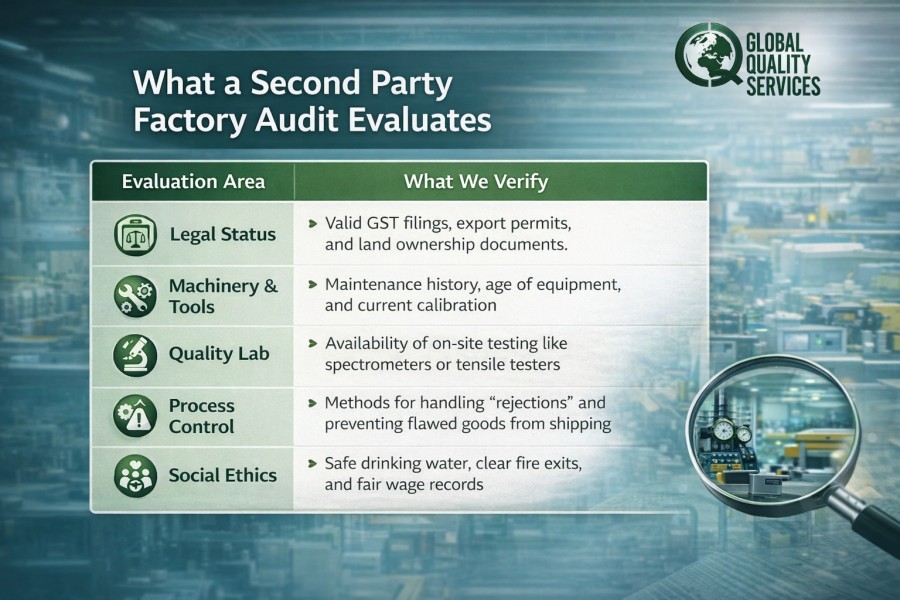
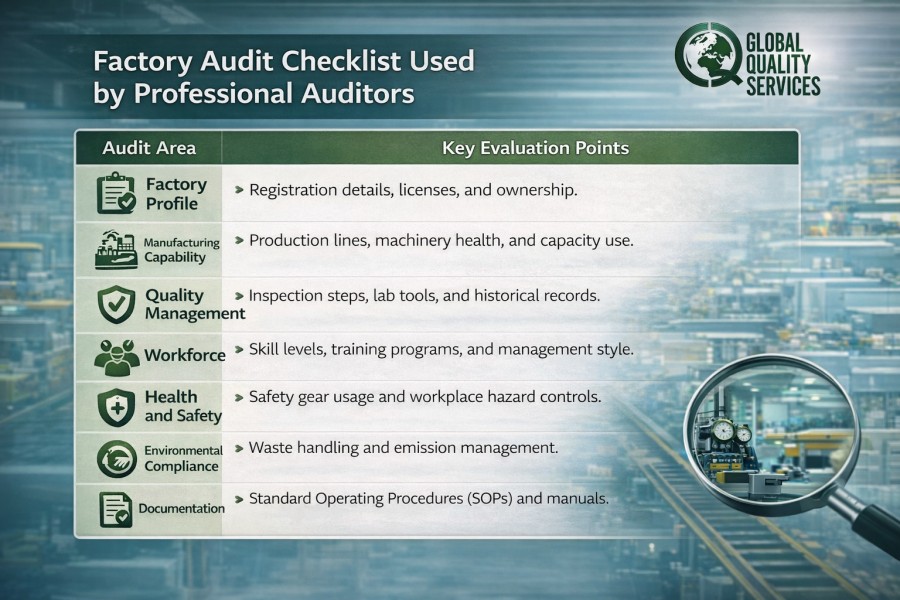
What a Second Party Factory Audit Evaluates
A professional audit examines several vital zones within a production facility:
Our Secondary Party Factory Audit Process
Global Quality Services uses a clear, step-by-step method to provide reliable results;
Step 1: Pre-Audit Planning
We start by discussing your specific goals and product needs. We then create a custom audit plan and checklist for that factory.
Step 2: On-site Factory Inspection
Our auditors visit the site to walk the production floor, inspect warehouses, and check quality stations.
Step 3: Documentation Review
We analyze quality manuals, production reports, and official compliance certificates to ensure everything is in order.
Step 4: Operational Evaluation
Auditors watch the actual production in real-time and speak with staff to confirm they are following proper procedures.
Step 5: Audit Reporting
We deliver a full report detailing all findings and risks. This report helps you decide whether to approve the vendor or demand changes.
Factory Audit Checklist Used by Professional Auditors
We use structured checklists to cover every detail. Key areas include:
Industries Where Secondary Party Audits Are Common
We provide expert auditing across India’s primary manufacturing sectors:
- Heavy Engineering: Focusing on welding quality and structural safety.
- Consumer Electronics: Checking for ESD-safe zones and dust-free assembly.
- Textiles & Decor: Testing for AZO-free dyes and ethical labor standards.
- Pharmaceuticals: Ensuring batch-tracking and strict hygiene controls.
- Automotive Parts: Checking for alignment with IATF quality standards.
Why Choose Global Quality Services for Secondary Party Factory Audits in India
Global Quality Services offers the independent insight you need to manage a complex supply chain. Our audits provide practical data and complete transparency.
Key reasons organizations choose us include:
- Expert auditors with deep manufacturing experience.
- Methods based on global best practices.
- Reports that lead to clear business actions.
- Total coverage of manufacturing hubs across India.
- Clear and active communication during the entire project.
Strengthen Your Supply Chain with Global Quality Services
Your brand depends on reliable partners who meet deadlines and quality goals. Global Quality Services helps you vet those partners through professional audits anywhere in India.
Our teams provide the data you need to source with confidence. If you are buying from India and need to verify a supplier, we are ready to help.
Contact us today to discuss your factory audit requirements.
Frequently Asked Questions
- How does a second-party audit differ from a third-party audit?
A second-party audit is done specifically for a buyer to check a supplier. A third-party audit is an independent review for a general certification like ISO.
- When is the best time to audit a supplier?
You should audit before signing a new vendor, when increasing order sizes, or if you notice quality issues with an existing partner.
- How long does the process take?
Most site visits finish in one day, though the time depends on the factory size and the audit scope.
- Can you customize the audit for my industry?
Yes. We can tailor the checklist to meet specific technical needs or regulatory rules for your sector.
- How do you ensure the audit is accurate?
We use standardized reporting and experienced local auditors to provide an objective view of every facility.