

Startups and SMEs operate in fast-moving environments where growth, quality, and client expectations must align seamlessly. CMMI for Startups and SMEs provides a proven framework to establish process discipline without compromising agility.
By standardizing project management, quality control, and performance measurement, CMMI helps growing organizations deliver consistent results, reduce operational risks, and build enterprise-level credibility. Rather than adding complexity, a tailored CMMI approach strengthens decision-making, supports scalable growth, and positions startups and SMEs as reliable, mature partners in competitive markets.
When to Adopt CMMI for Startups and SMEs
Understanding the right timing is critical. Adopting CMMI too late increases operational risk, while early adoption builds discipline without slowing innovation.
Signs Your Startup Is Ready for CMMI
Startups should consider CMMI when projects increase, delivery becomes inconsistent, or clients request evidence of process maturity. These indicators signal the need for standardized workflows and measurable performance controls.
CMMI Adoption Stage for SMEs
SMEs benefit from CMMI when scaling teams, bidding for enterprise projects, or entering regulated markets. At this stage, structured processes improve predictability, governance, and long-term business credibility.
Simplified Approach to CMMI for Startups
CMMI does not require heavy documentation or rigid processes. A simplified, tailored approach ensures compliance while supporting fast-paced startup environments.
Tailoring CMMI Practices for Startups
CMMI for startups works best when organizations implement only essential practices. Focusing on project planning, quality assurance, and risk management ensures alignment without unnecessary complexity or administrative overhead.
Phased Implementation Strategy
A phased rollout allows startups to implement CMMI incrementally. Teams stabilize core processes first and gradually mature operations, ensuring smoother adoption and higher internal acceptance.
Cost Planning for CMMI Implementation
Cost concerns often prevent startups from adopting CMMI. With the right planning, implementation remains affordable and predictable.
Key Cost Components in CMMI
CMMI costs include training, consulting, internal effort, and appraisal fees. Startups reduce expenses by limiting scope, choosing lower maturity levels, and leveraging existing tools and documentation.
How Startups Can Optimize CMMI Costs
Cost-efficient CMMI implementation focuses on the reuse of current workflows, internal champions, and guided consulting instead of full-scale transformations. This approach balances compliance with financial sustainability.
Benefits of CMMI for Clients
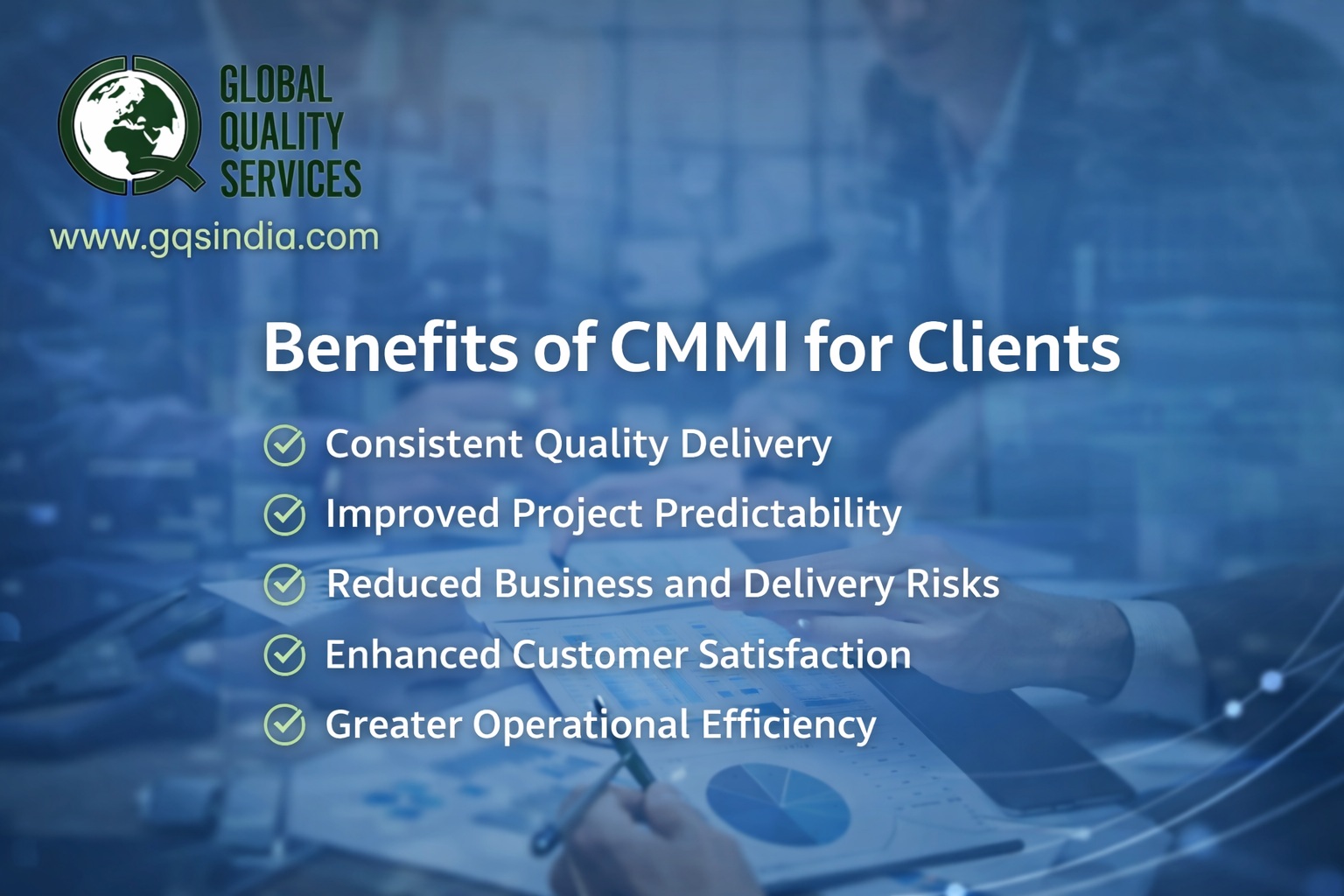
CMMI directly enhances client confidence and delivery reliability, key decision factors for enterprise customers.
Consistent Quality Delivery
CMMI ensures standardized processes, enabling predictable outcomes, reduced defects, and consistently high-quality deliverables that meet defined requirements and client expectations across projects.
Improved Project Predictability
With well-defined processes and metrics, clients experience accurate timelines, controlled costs, and fewer surprises, resulting in better planning, transparency, and confidence in project execution.
Reduced Business and Delivery Risks
CMMI emphasizes risk identification and mitigation, helping clients avoid project delays, scope creep, compliance issues, and operational failures through proactive and structured risk management practices.
Enhanced Customer Satisfaction
Process-driven execution improves communication, requirement management, and service reliability, ensuring clients receive dependable solutions aligned with their goals, leading to stronger trust and long-term relationships.
Greater Operational Efficiency
Optimized workflows and continuous process improvement reduce rework, waste, and inefficiencies, allowing clients to benefit from faster delivery cycles, better resource utilization, and improved return on investment.
CMMI Implementation Timeline for Startups and SMEs
Understanding the CMMI implementation timeline helps startups and SMEs plan resources effectively while achieving certification without disrupting ongoing business operations. Companies can also follow CMMI certification for better coverage.
Typical CMMI Timeline
Most startups achieve CMMI Level 2 or Level 3 within 3 to 6 months. Timelines depend on leadership involvement, team readiness, and disciplined execution of defined practices.
Factors That Influence Certification Speed
Dedicated internal ownership, parallel execution with live projects, and focused documentation significantly reduce delays and ensure timely appraisal readiness.
Why CMMI is a Competitive Advantage for Startups
CMMI gives startups a competitive edge by strengthening delivery reliability, improving client trust, and positioning them as mature, scalable business partners.
Stronger Market Positioning
CMMI helps startups compete with larger organizations by showcasing operational maturity. It strengthens proposals, supports enterprise sales, and improves win rates in competitive tenders.
Scalable and Sustainable Growth
By standardizing processes early, startups avoid future bottlenecks. CMMI enables controlled scaling, better decision-making, and continuous performance improvement without operational chaos.
Summary
CMMI for startups enables structured growth, improved delivery consistency, and stronger enterprise credibility without sacrificing agility. By adopting a tailored and cost-effective CMMI approach, startups can scale operations confidently, meet client expectations, and build long-term trust. Connect with the best CMMI consultant to begin your certification journey with clarity and confidence.
FAQ’s
1. Is CMMI too complex for startups?
No. When tailored correctly, CMMI remains lightweight and practical. Startups implement only essential practices, ensuring structure without slowing innovation or increasing bureaucracy.
2. Which CMMI level should startups target first?
CMMI Level 2 is ideal for startups. It establishes strong project management and quality foundations while remaining achievable within a limited time and budget.
3. Does CMMI require heavy documentation?
CMMI focuses on effectiveness, not volume. Startups document only what is necessary to demonstrate consistency, control, and repeatability in key processes.
4. Can startups manage CMMI alongside ongoing projects?
Yes. CMMI integrates with live projects. Teams implement practices in parallel, ensuring business continuity while improving operational maturity.
5. How does CMMI help in client acquisition?
CMMI increases trust, improves proposal credibility, and reassures clients about delivery reliability, making startups more competitive in enterprise and global markets.