
GLP Certification in India is more than a regulatory requirement; it defines the credibility of your laboratory’s research outcomes. In highly regulated sectors, authorities examine not just results but the systems behind them. Without structured controls, documented procedures, and trained personnel, even strong data can face rejection.
This is where expert guidance becomes critical. The right consultant streamlines implementation, eliminates compliance gaps, and prepares your laboratory for confident regulatory inspection. Choosing the best consultant, like Global Quality Services, ensures accuracy, efficiency, and timely approval, strengthening your organization’s scientific reputation and global acceptance.
What is GLP Certification in India
Good Laboratory Practice (GLP) services establish structured quality systems that safeguard the accuracy, consistency, and regulatory compliance of non-clinical laboratory studies conducted for pharmaceuticals, chemicals, and medical devices. GLP services in India are overseen by the National GLP Compliance Monitoring Authority of India (NGCMA).
Why GLP Certification in India Matters
India’s regulated industries depend on credible research outcomes. GLP Certification ensures accurate data reporting, supports regulatory approvals, strengthens export potential, and enhances trust among stakeholders and global regulatory authorities. Companies can also follow ISO 22000 and ISO 22716 for more coverage.
Who Requires GLP Certification in India
Pharmaceutical manufacturers, contract research organizations, biotechnology companies, agrochemical laboratories, chemical testing facilities, food testing laboratories, and research institutions conducting non-clinical safety studies require GLP Certification in India.
Documentation Required for GLP Certification
Proper documentation forms the backbone of GLP compliance. Laboratories must maintain structured records demonstrating operational control, data integrity, personnel competency, and equipment validation aligned with regulatory expectations.
- Quality Manual
- Standard Operating Procedures (SOPs)
- Study Plans and Study Protocols
- Training Records and Competency Logs
- Equipment Calibration and Maintenance Records
- Method Validation Reports
- Internal Audit Reports
- Corrective and Preventive Action (CAPA) Records
- Master Schedule and Study Reports
- Sample Handling and Archiving Records
Key Benefits of GLP Certification in India
GLP Certification delivers measurable operational and strategic advantages. It strengthens quality systems, improves regulatory acceptance, and enhances business credibility within competitive and highly regulated markets.
Enhanced Data Reliability
GLP establishes standardized procedures and strict documentation controls. Laboratories generate consistent, traceable, and scientifically valid data that regulators and international authorities readily accept for submissions and approvals.
Improved Regulatory Acceptance
Regulatory bodies recognize GLP-compliant laboratories as reliable testing environments. Certification simplifies approval processes, reduces regulatory objections, and strengthens confidence in submitted non-clinical safety data.
Increased Global Market Access
GLP Certification enables laboratories to participate in international studies and export-driven industries. It enhances recognition across global regulatory frameworks and improves collaboration with multinational organizations.
Strengthened Operational Control
GLP enforces structured workflows, defined responsibilities, and documented procedures. This systematic approach minimizes errors, improves accountability, and enhances overall laboratory efficiency.
Competitive Business Advantage
Certified laboratories differentiate themselves in the marketplace. GLP Certification demonstrates commitment to quality, integrity, and regulatory compliance, attracting high-value clients and long-term research partnerships.
Step-by-Step Process for GLP Certification in India
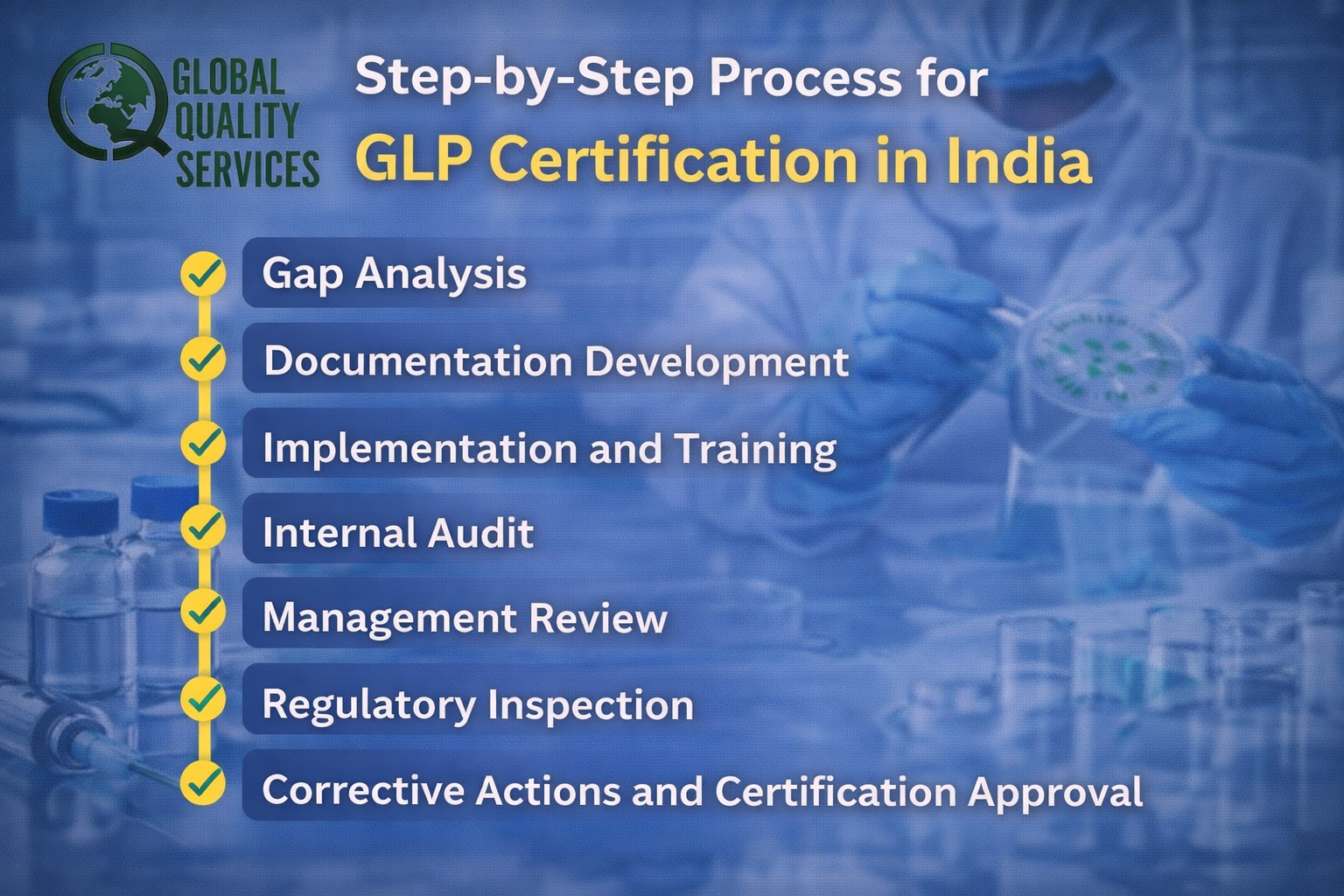
The GLP Certification process follows a structured and systematic approach. Organizations must implement documented controls, train personnel, and undergo regulatory assessment before receiving formal approval.
Gap Analysis
Experts evaluate existing laboratory practices against GLP requirements. This assessment identifies compliance gaps, documentation deficiencies, and operational weaknesses requiring corrective action before certification.
Documentation Development
The organization prepares quality manuals, SOPs, study protocols, and compliance records. Clear documentation ensures traceability, accountability, and alignment with Good Laboratory Practices standards.
Implementation and Training
Laboratories implement documented procedures across all departments. Management conducts structured training programs to ensure personnel understand responsibilities, data integrity requirements, and GLP operational controls.
Internal Audit
Qualified auditors review systems, documentation, and laboratory practices. The internal audit identifies non-conformities and verifies readiness before applying for regulatory inspection.
Management Review
Top management evaluates audit findings, compliance performance, and resource adequacy. Leadership ensures corrective actions are implemented effectively before proceeding to regulatory evaluation.
Regulatory Inspection
The authorized GLP authority conducts an on-site inspection. Inspectors assess facilities, personnel competence, documentation, equipment validation, and overall compliance with GLP principles.
Corrective Actions and Certification Approval
The laboratory addresses any observations raised during inspection. Upon satisfactory compliance verification, the authority grants GLP Certification in India.
Why Choose Global Quality Services for GLP Certification in India
With over 26+ years of industry experience, Global Quality Services delivers structured consulting, comprehensive documentation support, focused training programs, and end-to-end audit preparation. Our expert team ensures seamless implementation and effective regulatory coordination for timely GLP Certification in India. Contact us today to initiate your certification journey with confidence.
FAQ’s
1. What does GLP stand for?
GLP stands for Good Laboratory Practices, a quality framework that governs non-clinical laboratory studies to ensure consistency, traceability, reliability, and regulatory compliance of research data.
2. Is GLP Certification mandatory in India?
GLP Certification becomes mandatory for laboratories conducting regulated non-clinical safety studies intended for national or international regulatory submissions.
3. How long does the GLP Certification process take?
The timeline depends on laboratory readiness and compliance gaps, but most organizations complete implementation and certification within three to six months.
4. Which authority grants GLP Certification in India?
The National GLP Compliance Monitoring Authority under the Department of Science and Technology grants official GLP Certification in India.
5. What is the validity of GLP Certification?
GLP Certification remains valid subject to periodic inspections and continued compliance with Good Laboratory Practices requirements and regulatory standards.