

Summary Points
- ISO 39001 Certification establishes a structured Road Traffic Safety Management System that helps organisations reduce accidents and improve transport safety performance.
- It strengthens driver behaviour, vehicle safety, and operational discipline through risk assessments, defined safety objectives, and continuous monitoring practices.
- Certification boosts compliance with road safety regulations and enhances credibility with clients, regulators, and insurers.
- It reduces operational disruptions, accident-related costs, and long-term liabilities by controlling high-risk traffic activities.
- In a world prioritising safe mobility, ISO 39001 helps organisations create safer roads, protect lives, and build a responsible, future-ready safety culture.
ISO 39001 Certification provides a structured framework that helps organisations improve road traffic safety, reduce accidents, and create safer transport operations. It guides companies to identify risks, implement clear safety controls, train drivers effectively, and monitor performance consistently.
This certification strengthens compliance, builds public trust, and supports long-term operational efficiency. Since the requirements are technical and demand proper implementation, hiring an experienced consultant ensures accurate documentation, smooth execution, and a faster, hassle-free certification process.
What is ISO 39001 Certification?
ISO 39001 Certification confirms that an organisation has a structured Road Traffic Safety Management System that actively reduces accidents and improves transport safety.
It guides businesses to identify risks, set safety objectives, train drivers, and monitor performance effectively. This certification strengthens compliance, enhances operational reliability, and builds a strong culture of safety across all road-related activities.
Understanding ISO 39001
ISO 39001 is an international standard designed to improve Road Traffic Safety (RTS). It guides organisations to identify risks, set safety objectives, monitor performance, and continuously reduce traffic-related incidents.
Why Organisations Adopt It
- Minimises road accidents and fatalities
- Strengthens compliance with traffic laws
- Boosts brand reputation and public trust
- Enhances driver behaviour and fleet safety
- Reduces insurance and operational costs
Why ISO 39001 Matters for Modern Organisations?
This certification plays a crucial role in helping companies lower accident risks, improve transport efficiency, and build a culture of safety across all road operations.
Impact on Road Traffic Safety
ISO 39001 helps you systematically evaluate high-risk road operations, unsafe driving patterns, and accident causes. With structured controls, you ensure safer roads and fewer disruptions.
Industries That Benefit
- Logistics and transport companies
- Taxi, cab, and ride-hailing services
- Public transport bodies
- Delivery and courier fleets
- Construction and infrastructure companies
- Corporate organisations with large employee travel
Key Requirements of ISO 39001 Certification
The standard outlines essential organisational, operational, and monitoring requirements that help you build a safer and more accountable traffic management framework.
Main Requirements Include
- RTS policy defines your commitment
- Risk assessment and performance planning
- Measurable safety indicators
- Driver training and awareness
- Vehicle maintenance protocols
- Data monitoring and accident reporting
- Regular audits and continuous improvement
Documentation Needed
- RTS manual
- Policy statements
- Legal compliance records
- Accident and incident data
- Training and competency records
- Monitoring and evaluation reports
Step-by-Step ISO 39001 Certification Process
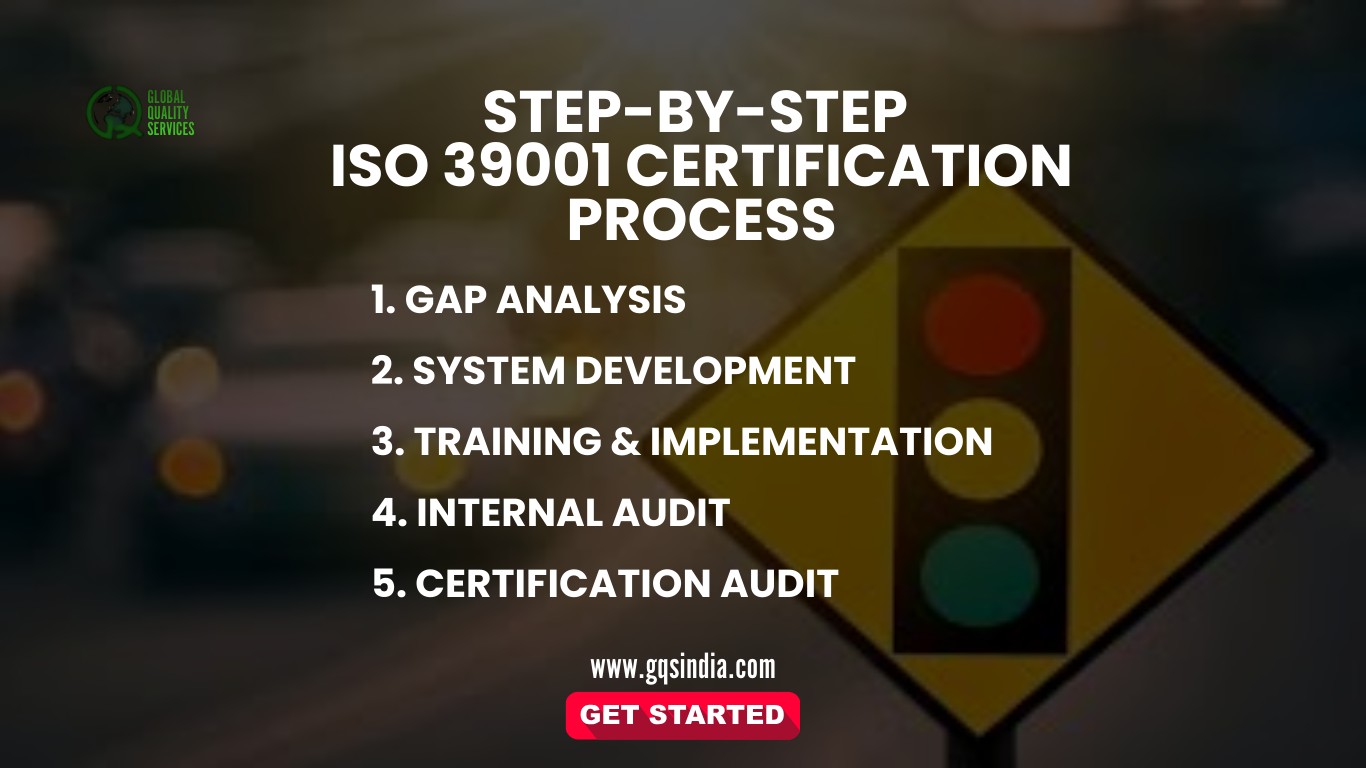
The certification journey follows a structured approach that ensures your organisation develops, implements, and maintains an effective RTS management system.
1. Gap Analysis
You assess your current RTS performance and identify compliance gaps.
2. System Development
Create policies, procedures, controls, and measurable safety indicators.
3. Training & Implementation
Train employees and drivers, implement controls, and enforce safety practices.
4. Internal Audit
Evaluate system effectiveness before the external assessment.
5. Certification Audit
A recognised body audits your compliance and issues the ISO 39001 certificate.
Benefits of ISO 39001 Certification
This certification enables safer roads, cost savings, and improved risk management while strengthening your organisation’s operational reliability.
Key Advantages
- Reduced road accidents and injuries
- Lower vehicle downtime and repair expenses
- Better driver accountability
- Higher compliance with traffic regulations
- Stronger insurance negotiations
- Improved stakeholder trust
Common Challenges and How to Overcome Them
Organisations often struggle with implementation, training, or data tracking, but these challenges can be resolved with the right approach and expertise.
Typical Challenges
- Poor data collection
- Inconsistent driver behaviour
- Limited internal resources
- Weak documentation
- Lack of continuous monitoring
Practical Solutions
- Use digital tools for tracking
- Conduct frequent training
- Align internal teams early
- Establish strong reporting workflows
- Hire consultants for expert guidance
Why Work with Global Quality Services for ISO 39001 Certification?
Global Quality Services simplifies implementation, reduces errors, speeds up certification, and ensures your system fully aligns with the ISO 39001 requirements without operational disruptions.
What Global Quality Services Help With
- Gap assessment
- RTS documentation
- Training & implementation support
- Pre-audit checks
- Faster and smoother certification
Enhance your road safety performance with expert ISO 39001 guidance. Strengthen compliance, reduce risks, and achieve certification smoothly. Contact us today for support.
Frequently Asked Questions (FAQs)
- What documents are required for ISO 39001 Certification?
You need an RTS policy, risk assessment records, incident data, legal compliance documents, driver training records, monitoring reports, internal audit findings, and a continual improvement plan to demonstrate a structured road safety system.
- Does ISO 39001 help reduce insurance costs?
Yes. When organisations reduce accident rates and improve driver safety through ISO 39001 practices, insurers view them as lower-risk, leading to reduced premiums and better negotiation leverage for long-term fleet insurance.
- Can small businesses get ISO 39001 Certification?
Absolutely. Small fleets or service-based businesses can adopt ISO 39001 by implementing scaled-down safety controls, simple monitoring tools, and proper documentation that effectively improve road safety and operational discipline.
- How does ISO 39001 improve driver performance?
It strengthens driver performance through structured training, consistent monitoring, behaviour evaluation, safety reminders, and corrective actions, helping drivers build safer habits and reducing risks during daily operations and long-distance travel.
- What happens after achieving ISO 39001 Certification?
Your organisation must maintain continuous monitoring, update safety objectives, conduct regular audits, review driver performance, and improve procedures, ensuring the road traffic safety system stays effective and compliant long term.