
India is rapidly emerging as a global leader in sustainable construction, with LEED certification gaining remarkable traction across commercial, industrial, and institutional real estate. In 2025, India ranked second worldwide outside the United States with approximately 16 million gross square metres of LEED-certified building space, reflecting the accelerating adoption of energy-efficient and environmentally responsible design practices.
This surge highlights India’s commitment to green infrastructure and climate action, making the role of a LEED Certification Consultant indispensable for navigating compliance, documentation, and strategic optimisation.
What is LEED Certification
LEED Certification in India refers to the Indian implementation of the global green building rating system developed by the U.S. Green Building Council (USGBC).
LEED evaluates buildings on energy efficiency, water conservation, indoor environmental quality, sustainable materials, and innovation. Projects earn points and achieve certification levels: Certified, Silver, Gold, or Platinum.
How LEED Works in India
In India, projects register under the LEED rating system and comply with region-specific environmental benchmarks. Accredited professionals guide documentation, performance modeling, and audits. Certification validates that the project meets internationally recognized sustainability standards while aligning with Indian climate and regulatory conditions.
Why LEED Certification Matters in India
India’s construction sector significantly impacts energy use, carbon emissions, and water consumption. Sustainable development now directly influences compliance, competitiveness, and long-term operational performance.
Rising Environmental Regulations
India strengthens environmental norms through agencies such as the Ministry of Environment, Forests, and Climate Change. LEED-certified buildings demonstrate proactive compliance, reducing regulatory risks and improving project approvals in metropolitan and industrial zones.
Investor and ESG Expectations
Global investors prioritize ESG (Environmental, Social, Governance) benchmarks. LEED Certification in India enhances ESG ratings, making projects attractive to multinational tenants and institutional investors seeking environmentally responsible assets.
Urban Sustainability Demands
Rapid urbanization in cities like Mumbai, Bengaluru, and Delhi increases pressure on energy grids and water resources. LEED encourages optimized resource management, helping cities meet climate resilience and sustainability goals.
Benefits of LEED Certification
Sustainable buildings deliver measurable business advantages beyond environmental responsibility. LEED certification enhances financial performance, occupant well-being, and long-term asset value.
Reduced Operational Costs
LEED-certified buildings lower electricity and water bills through energy-efficient systems and optimized design. Over time, savings offset certification investments and improve lifecycle cost efficiency.
Enhanced Brand and Marketability
Organizations strengthen their sustainability reputation with LEED Certification in India. Certified buildings attract premium tenants, multinational corporations, and environmentally conscious consumers.
Improved Indoor Environment
LEED promotes better ventilation, lighting, and air quality. Improved indoor environmental quality boosts occupant productivity, reduces health risks, and enhances employee satisfaction.
Step-by-Step Process to Get LEED Certification in India
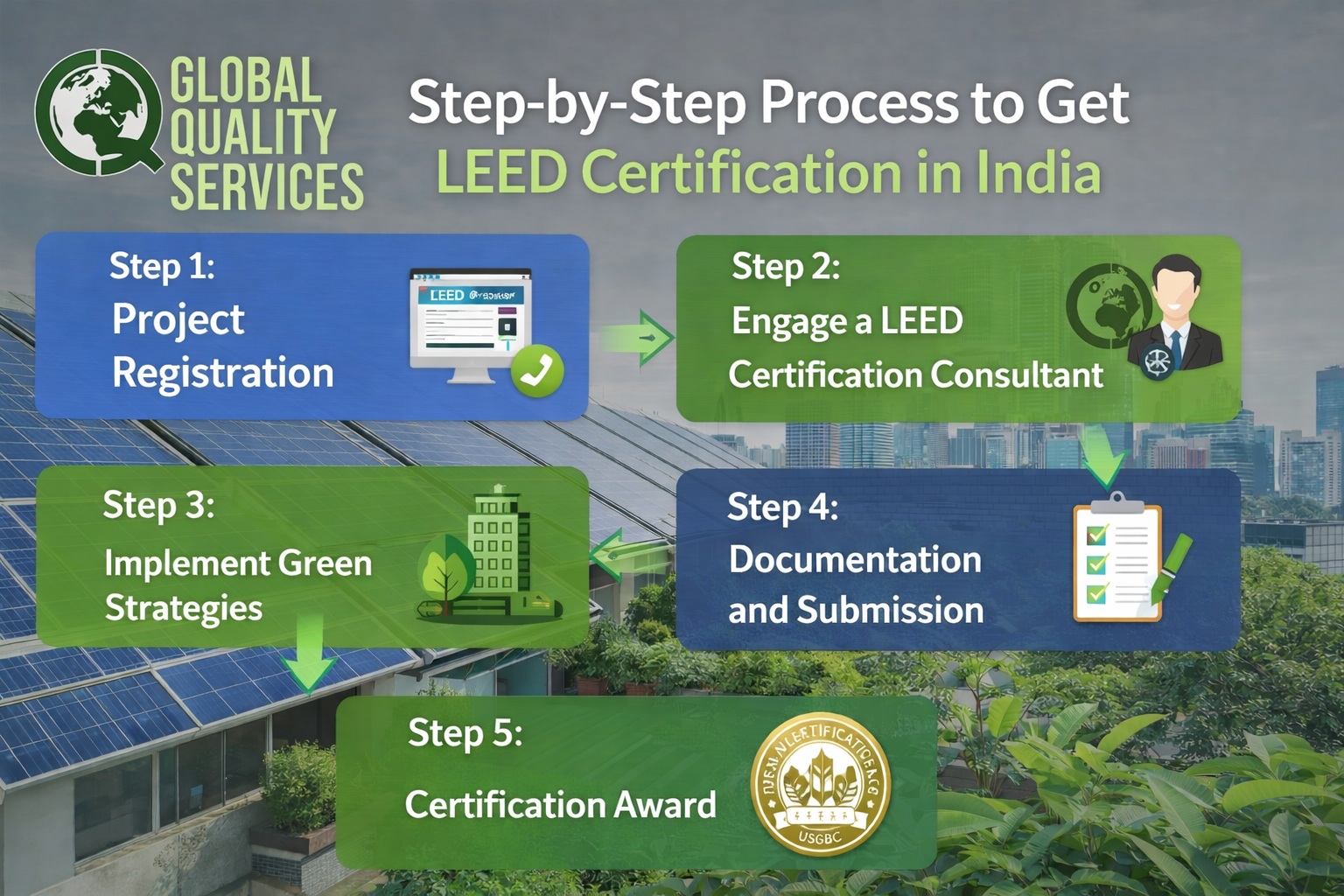
A structured roadmap simplifies the certification journey. Early planning and professional guidance ensure smoother documentation and faster approval timelines.
Step 1: Project Registration
Register your project on the LEED online portal and select the appropriate rating system: Building Design and Construction (BD+C), Interior Design, or Operations and Maintenance.
Step 2: Engage a LEED Certification Consultant
A qualified LEED Certification Consultant conducts gap analysis, defines achievable credits, prepares documentation, and coordinates with project stakeholders to align sustainability objectives.
Step 3: Implement Green Strategies
Integrate energy modeling, water-efficient fixtures, sustainable materials, and waste management systems during design and construction phases to earn targeted credits.
Step 4: Documentation and Submission
Compile performance reports, energy simulations, and compliance documentation. Submit them for technical review and address any clarifications raised by certification authorities.
Step 5: Certification Award
Upon successful review, the project receives its certification level: Certified, Silver, Gold, or Platinu,m validating compliance with global sustainability standards.
Challenges of LEED Certification
While LEED provides clear benefits, organizations must prepare for technical, financial, and documentation complexities during implementation.
Initial Cost Perception
Developers often perceive green construction as expensive. However, lifecycle cost analysis typically demonstrates that long-term savings outweigh upfront investment.
Documentation Complexity
The certification process demands rigorous documentation, energy simulations, and technical submissions. Without expert support, projects may face delays or missed credits.
Skilled Resource Availability
Successful LEED implementation requires trained architects, engineers, and sustainability experts familiar with performance modeling and compliance protocols.
Why Choose Global Quality Services for LEED Certification in India
Selecting the right partner determines the efficiency and success of your sustainability journey. Experienced consultants simplify compliance and maximize certification outcomes.
Technical Expertise
Global Quality Services offers experienced sustainability professionals who understand Indian regulatory frameworks and global LEED requirements.
End-to-End Support
From feasibility assessment to final submission, the team manages documentation, audits, coordination, and certification tracking efficiently.
Optimized Credit Strategy
The consultancy identifies high-impact, cost-effective credits that align with your project goals, ensuring maximum return on sustainability investments.
Partner with Global Quality Services for seamless LEED Certification in India. With 26+ years of experience, we simplify compliance and maximize results. Contact us today to start your certification journey.
FAQ’s
- What is LEED Certification India
LEED Certification India is a green building rating system that evaluates sustainability performance in energy, water efficiency, materials, and indoor environmental quality. - How long does LEED certification take
The process typically takes six to eighteen months, depending on project complexity, documentation readiness, and review timelines. - Is a LEED Certification Consultant mandatory
While not legally mandatory, engaging a LEED Certification Consultant improves credit optimization, documentation accuracy, and approval efficiency. - Does LEED increase construction costs
Initial costs may rise slightly, but operational savings, higher asset value, and tenant demand usually offset the investment. - Which sectors benefit from LEED Certification India
Commercial offices, hospitals, educational institutions, industrial facilities, and residential developments gain financial, regulatory, and reputational advantages through LEED certification.