
To achieve ISO 18606 Certification in India, businesses must design packaging that meets specific technical, environmental, and recyclability criteria effectively.
Summary Points
- ISO 18606 certification supports recyclable packaging and circular economy goals
- Helps meet Indian waste management and EPR requirements
- Improves brand credibility and customer trust
- Enhances compliance with global packaging standards
- Reduces the environmental impact of packaging waste
- Strengthens export and international trade readiness
ISO 18606 Certification in India is becoming essential for businesses that use or manufacture packaging. This standard focuses on packaging recoverable through recycling. With rising environmental regulations and customer awareness, companies must prove that their packaging supports a circular economy.
ISO 18606 helps brands meet sustainability goals while staying compliant with global expectations. It also improves brand trust, export readiness, and regulatory alignment. For Indian manufacturers, importers, and brand owners, this certification is no longer optional. It is a strategic step toward responsible packaging and long-term business growth.
What is ISO 18606 Certification
ISO 18606 is an international standard that defines requirements for packaging that can be recovered through material recycling. It ensures that packaging materials are recyclable at scale without harming the recycling process or the environment.
Key Objective of ISO 18606
- Reduce packaging waste
- Promote recyclable packaging design
- Support circular economy practices
- Ensure compatibility with recycling systems
Why ISO 18606 Certification in India Matters
India is tightening its environmental and waste management regulations. Businesses must align with sustainable packaging norms to remain compliant and competitive. Below are the reasons why ISO 18606 certification matters in India.
Growing Regulatory Pressure
Indian authorities are enforcing Extended Producer Responsibility (EPR). ISO 18606 supports EPR compliance by validating recyclability claims.
Rising Consumer Expectations
Consumers prefer brands that use recyclable and eco-friendly packaging. Certification builds confidence and transparency.
Export and Global Trade Benefits
Many global buyers demand ISO-aligned packaging. ISO 18606 Certification in India improves international market access.
Who Needs ISO 18606 Certification in India?
This certification is relevant for all organizations involved in packaging. Below given are the industries who should take this certification for better growth.
Applicable Industries
- Packaging manufacturers
- FMCG brands
- Food and beverage companies
- Pharmaceutical packaging suppliers
- E-commerce and retail brands
ISO 18606 Certification Requirements
Packaging Design Requirements
Use recyclable materials
Avoid hazardous substances
Enable easy material separation
Recycling Compatibility
Packaging must not disrupt recycling streams
Materials should be widely recyclable
Documentation and Evidence
Material composition details
Recycling test reports
Compliance records
ISO 18606 Certification Process in India
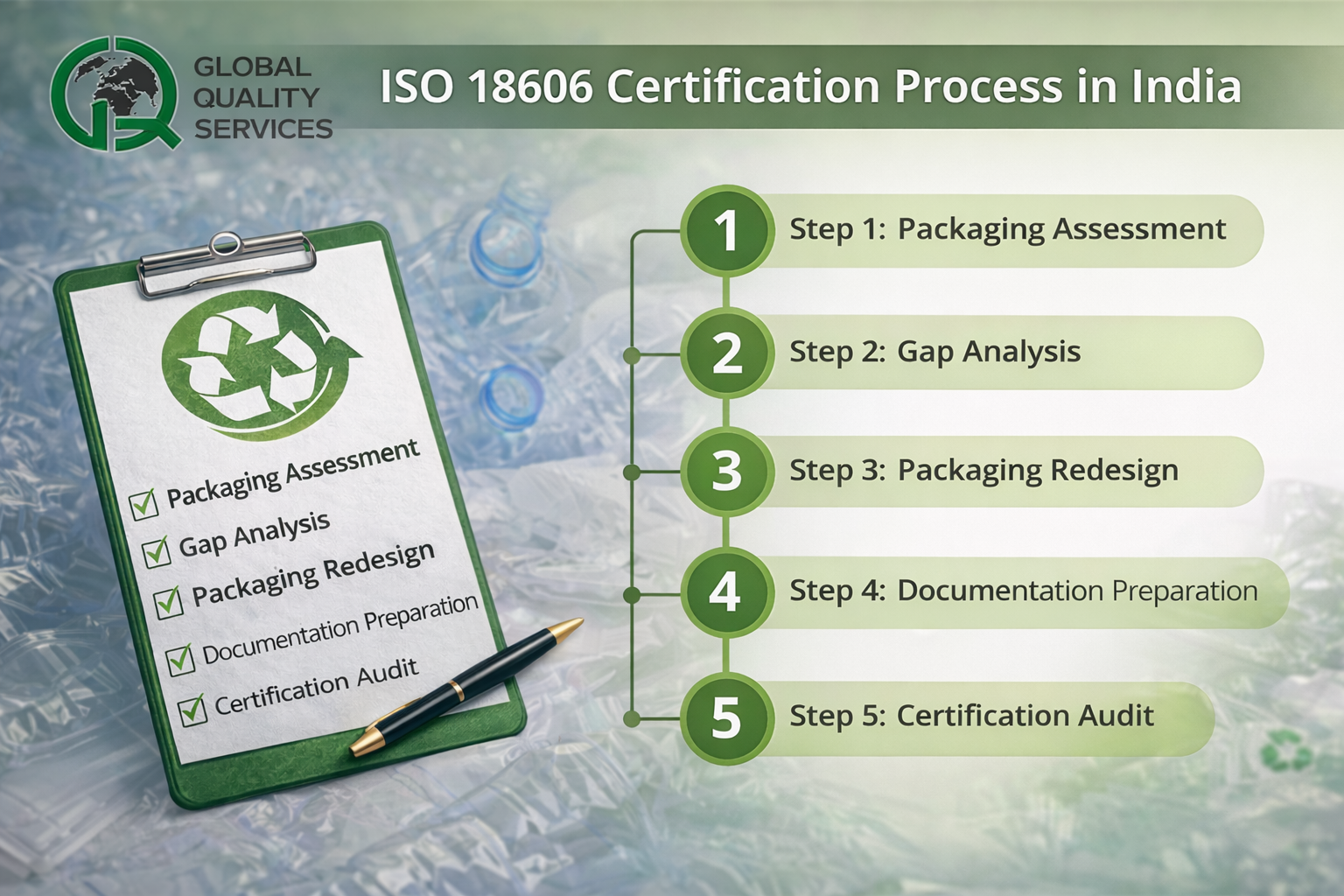
The ISO 18606 Certification Process in India follows a clear, step-by-step approach that helps businesses achieve recyclable packaging compliance efficiently and confidently.
Step 1: Packaging Assessment
In this step, you carefully review your current packaging materials, structure, and design. You check whether the packaging meets ISO 18606 requirements for recyclability and aligns with existing recycling systems.
Step 2: Gap Analysis
Here, you identify gaps between your current packaging and ISO 18606 standards. This includes checking material choices, additives, labels, and design elements that may reduce or block recycling efficiency.
Step 3: Packaging Redesign
Based on the gap analysis, you update the packaging design. You replace non-recyclable materials, simplify structures, and improve material compatibility to ensure the packaging can be effectively recycled.
Step 4: Documentation Preparation
You prepare all required technical documents. This includes material specifications, recyclability test reports, supplier declarations, and process records that clearly prove compliance with ISO 18606 guidelines.
Step 5: Certification Audit
An accredited certification body conducts a detailed audit. The auditor verifies documents, reviews packaging compliance, and confirms recyclability claims before issuing the ISO 18606 certification.
Benefits of ISO 18606 Certification in India
ISO 18606 Certification in India helps businesses improve packaging sustainability, meet regulatory expectations, and strengthen brand credibility in competitive markets.
Environmental Benefits
Reduced landfill waste
Improved recycling rates
Business Advantages
Strong sustainability positioning
Better compliance with EPR rules
Increased brand credibility
Market Growth
Easier entry into global markets
Preferred supplier status
ISO 18606 vs Other Packaging Standards
ISO 18606 focuses specifically on packaging that can be recovered through recycling. Other packaging standards may address reuse, energy recovery, or compostability. Businesses choose ISO 18606 when recyclability is the primary goal. It suits brands aiming to support circular economy practices while ensuring packaging materials work efficiently within existing recycling systems.
Common Challenges in ISO 18606 Certification
Many businesses face practical challenges during ISO 18606 certification, especially when aligning existing packaging designs with strict recyclability and documentation requirements.
- Complex packaging materials
- Lack of recyclability data
- Inconsistent supplier documentation
- Working with experienced consultants helps overcome these issues efficiently.
Cost of ISO 18606 Certification in India
The cost of ISO 18606 Certification in India varies widely based on your business size, packaging complexity, certification body, and audit requirements. Generally, you can expect certification costs to range from ₹30,000 to ₹2,00,000 INR for most small to medium packaging businesses. Larger or more complex operations may incur higher fees due to extended audits and documentation needs. These figures are approximate and can vary based on testing, consultancy support, and certification body fees.
Certification expenses include audit fees, documentation support, and any necessary corrective actions. Planning ahead and working with experienced consultants can help manage and budget these costs effectively.
Why Choose Global Quality Services for ISO 18606 Certification
compliance, reduced risk, and confident progress toward sustainable, recyclable packaging standards globally recognized.
- 26+ years of certification and compliance experience
- End-to-end ISO 18606 certification support
- Deep expertise in packaging and recyclability standards
- Strong understanding of Indian and global regulations
- Faster turnaround with practical guidance
Start your ISO 18606 journey with experts who deliver clarity, speed, and compliance for your business growth today nationwide support. Contact us to make your journey smooth and reliable.
Frequently Asked Questions
1. Does ISO 18606 certification apply to multi-layer or composite packaging?
Yes, it can apply if each layer supports recyclability. However, multi-layer packaging often needs additional testing to prove it does not hinder recycling processes.
2. Can startups and small businesses apply for ISO 18606 certification?
Yes, startups and small businesses can apply. The standard scales well for smaller operations and helps young brands build early sustainability credibility.
3. Is laboratory testing mandatory for ISO 18606 certification?
Testing is not always mandatory. However, certification bodies may request recyclability or material compatibility tests to validate technical compliance claims.
4. How often do companies need to renew ISO 18606 certification?
Certification typically requires periodic surveillance or reassessment. Renewal cycles depend on the certification body and any changes in packaging materials or design.
5. Does ISO 18606 certification cover packaging labels and inks?
Yes, the standard considers labels, inks, and adhesives. These components must not negatively impact the recycling process or contaminate recycled materials.