

Artificial intelligence is becoming central to business growth in India, yet structured governance is critical for trust and compliance. An ISO 42001 implementation roadmap guides organisations in building an AI Management System (AIMS) that mitigates risk, formalises documentation, and prepares for audits.
India is rapidly adopting AI: a recent report highlights that 89% of Indian organisations have widely adopted AI or consider it essential to operations, outpacing global peers. As AI scales across sectors from fintech to healthcare, ISO 42001 provides a practical, standards-based path to responsible AI governance.
What is the Step-by-Step Plan for ISO 42001 Implementation
A structured roadmap ensures systematic deployment of an Artificial Intelligence Management System aligned with ISO 42001 requirements.
Conduct Gap Assessment and Define Scope
Evaluate existing AI governance practices against ISO 42001 clauses. Identify missing controls, define AIMS scope, assign responsibilities, and establish measurable objectives aligned with organizational strategy.
Develop Policies and Governance Structure
Create documented AI policies covering ethics, bias management, accountability, lifecycle oversight, and compliance. Establish governance committees and reporting mechanisms to ensure executive oversight and operational alignment.
Implement Controls and Operational Processes
Deploy technical and procedural safeguards, including model validation, data protection controls, risk registers, and monitoring dashboards. Integrate controls into daily workflows to ensure consistent compliance.
What Documentation is Required for ISO 42001 Implementation
Proper documentation demonstrates governance maturity and audit readiness.
AI Governance Policies and Procedures
Document AI usage policies, risk management methodology, accountability matrix, and escalation procedures. Ensure policies reflect organizational objectives and regulatory requirements.
Risk Assessment and Control Records
Maintain structured risk registers, treatment plans, mitigation strategies, and monitoring results. Documentation must show traceability between identified risks and implemented controls.
Monitoring and Performance Evidence
Retain audit logs, validation reports, training records, and management review minutes. Evidence demonstrates that controls operate effectively and continuously improve.
How Does Risk Management Work in ISO 42001 Implementation
Risk management in ISO 42001 implementation systematically identifies, evaluates, and mitigates AI-related risks to ensure responsible, compliant, and controlled deployment.
Identify AI-Specific Risks
Assess risks such as algorithmic bias, privacy breaches, cybersecurity threats, model inaccuracies, and regulatory non-compliance impacting operational stability.
Evaluate and Prioritize Risks
Use structured impact-likelihood matrices to prioritize risks. Align risk treatment with business objectives and compliance obligations.
Implement Risk Mitigation Measures
Apply technical safeguards, policy adjustments, training programs, and monitoring systems. Assign risk owners and track effectiveness regularly.
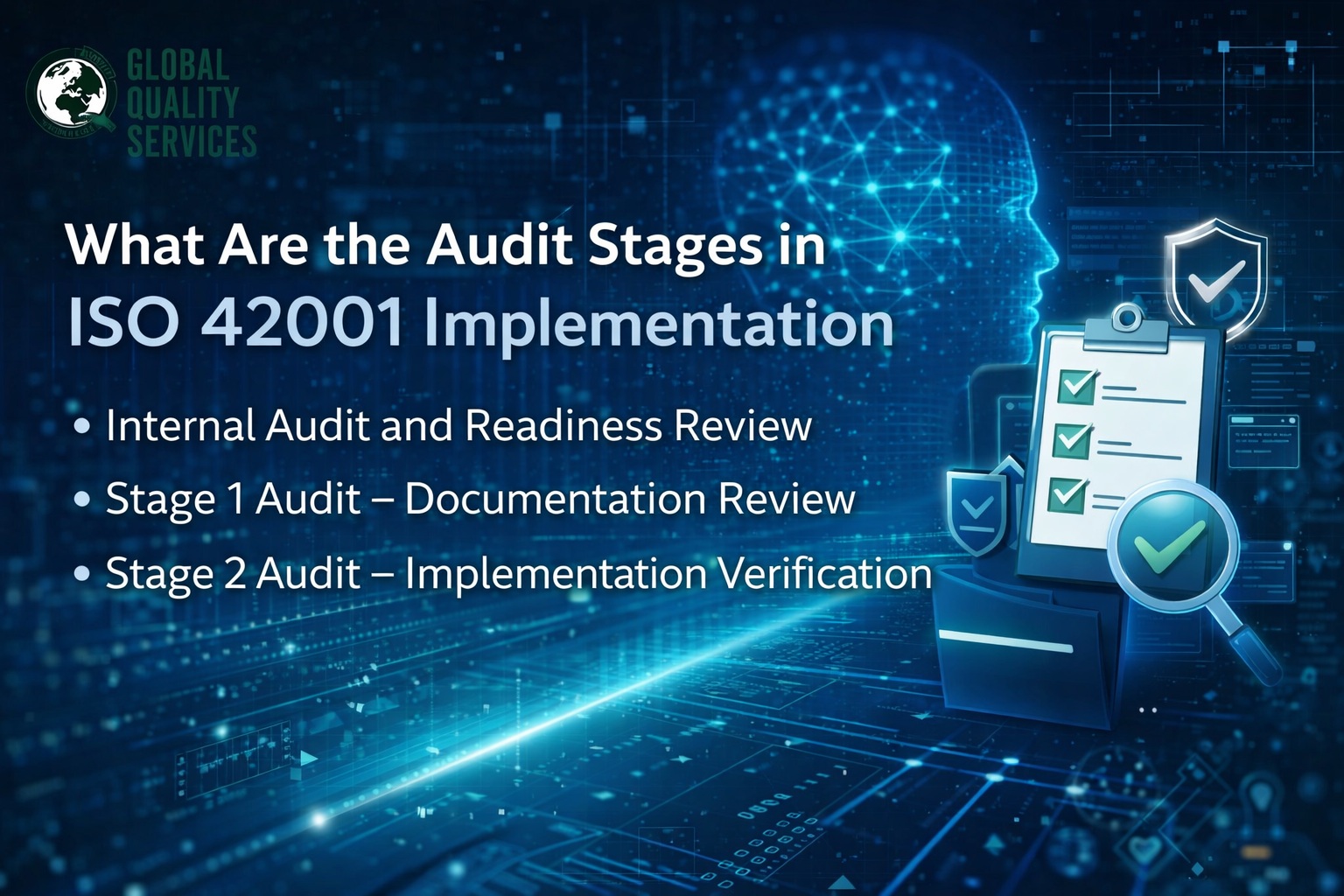
What Are the Audit Stages in ISO 42001 Implementation
Certification requires structured internal and external audits.
Internal Audit and Readiness Review
Conduct internal audits to verify documentation completeness and control effectiveness. Address non-conformities before engaging certification bodies.
Stage 1 Audit – Documentation Review
Certification body evaluates AIMS scope, policies, procedures, and readiness. Documentation must meet ISO 42001 clause requirements.
Stage 2 Audit – Implementation Verification
Auditors assess practical implementation, interview teams, and verify operational controls. Successful evaluation results in certification approval.
What is the Timeline for ISO 42001 Implementation
Implementation duration varies based on organization size and AI complexity.
Small and Medium Organizations (3–6 Months)
Organizations with limited AI deployment can complete gap analysis, documentation, control implementation, and audits within six months.
Large Enterprises (6–9+ Months)
Enterprises managing multiple AI systems require phased rollout, cross-department coordination, and extensive risk validation processes.
Continuous Improvement Phase
Post-certification, organizations maintain compliance through monitoring, internal audits, and periodic management reviews.
Why Should You Hire ISO 42001 Consultants for Implementation
Expert guidance simplifies complex requirements, accelerates compliance, reduces audit risks, and ensures your ISO 42001 implementation stays structured and efficient.
Expert Gap Analysis and Roadmap Design
Consultants provide structured assessments, tailored implementation plans, and clause-by-clause guidance aligned with business objectives.
Documentation and Template Support
They deliver standardized templates, risk frameworks, and compliance checklists customized for efficient implementation.
Audit Preparation and Training
Consultants conduct mock audits, staff training, and remediation planning to enhance certification success rates.
How Much Does ISO 42001 Implementation Cost in India
In India, ISO 42001 implementation costs typically range from ₹3 lakh to ₹10 lakh+, depending on organisation size, AI complexity, documentation readiness, and consultancy involvement.
Smaller teams with minimal AI systems lean toward the lower end, while larger enterprises with multiple AI models and extensive controls fall at the higher end. Prices vary based on certification body fees, consultant support, and audit charges. Always get detailed quotes from accredited bodies before planning your budget.
How Can Your Organization Start ISO 42001 Implementation Today
Start by assessing your current AI systems, governance controls, and risk exposure against ISO 42001 requirements. Define the scope of your Artificial Intelligence Management System, assign internal responsibilities, and secure leadership commitment.
Then develop clear policies, document processes, and plan a phased implementation timeline to move confidently toward certification readiness. Companies can also follow ISO 27001 for better safety and security.
Summary
FAQ’s
- How long does ISO 42001 implementation take?
Typically 3–9 months, depending on organization size, AI complexity, documentation readiness, and resource availability. - Is ISO 42001 mandatory in India?
ISO 42001 is voluntary but increasingly essential for AI governance credibility and regulatory preparedness. - What is the difference between ISO 27001 and ISO 42001?
ISO 27001 focuses on information security, while ISO 42001 governs artificial intelligence management systems and AI-specific risks. - Who needs ISO 42001 implementation?
AI developers, technology companies, fintech firms, healthcare providers, and enterprises deploying AI systems benefit significantly. - Does ISO 42001 improve stakeholder trust?
Yes. It demonstrates structured AI governance, transparency, risk control, and commitment to responsible AI practices.