India has become a global hub for IT outsourcing and software services, making strong information security practices essential for export-oriented companies. According to industry data, India’s IT exports reached about $224 billion in FY2025, highlighting the country’s dominant role in global digital services.
At the same time, international clients increasingly expect structured cybersecurity frameworks before outsourcing projects. This is where ISO 27001 for IT Export Companies becomes crucial, as it helps Indian IT firms protect sensitive data, manage security risks, and demonstrate compliance with global security standards demanded by US and EU clients.
Why ISO 27001 is Important for IT Companies in India
Indian IT companies frequently work with international clients and manage confidential project data. Strong information security practices are essential to maintain trust and protect digital assets.
ISO 27001 certification helps IT companies in India establish a formal Information Security Management System (ISMS), enabling them to identify risks, implement security controls, and ensure consistent protection of client information.
Why US and EU Clients Prefer ISO 27001 Certified IT Companies in India
Global organizations prioritize vendors that follow internationally recognized security standards. ISO 27001 certification reassures US and EU clients that Indian IT companies can securely manage sensitive data.
- Ensures strong data protection and cybersecurity practices
- Meets vendor security requirements in enterprise procurement
- Supports compliance with GDPR and international privacy laws
- Demonstrates structured risk management processes
- Builds long-term trust for outsourcing partnerships
ISO 27001 and RFP Eligibility for Indian IT Service Providers
Many international companies include strict cybersecurity requirements in their Request for Proposal (RFP) processes. ISO 27001 certification helps Indian IT service providers meet these expectations by demonstrating strong information security management practices. It assures potential clients that the organization can securely handle sensitive data, comply with global security standards, and manage risks effectively while delivering outsourcing services.
Security Audit Expectations for Indian IT Companies
International clients and enterprise partners often conduct detailed security audits before selecting IT vendors in India. These audits evaluate how companies protect sensitive information, manage access controls, and respond to security incidents. Organizations are expected to maintain proper documentation, risk management processes, and employee security awareness programs. Implementing ISO 27001 helps IT companies prepare for such audits by establishing structured security policies, monitoring systems, and compliance practices that align with global cybersecurity expectations.
Documentation Required for ISO 27001 in IT Companies
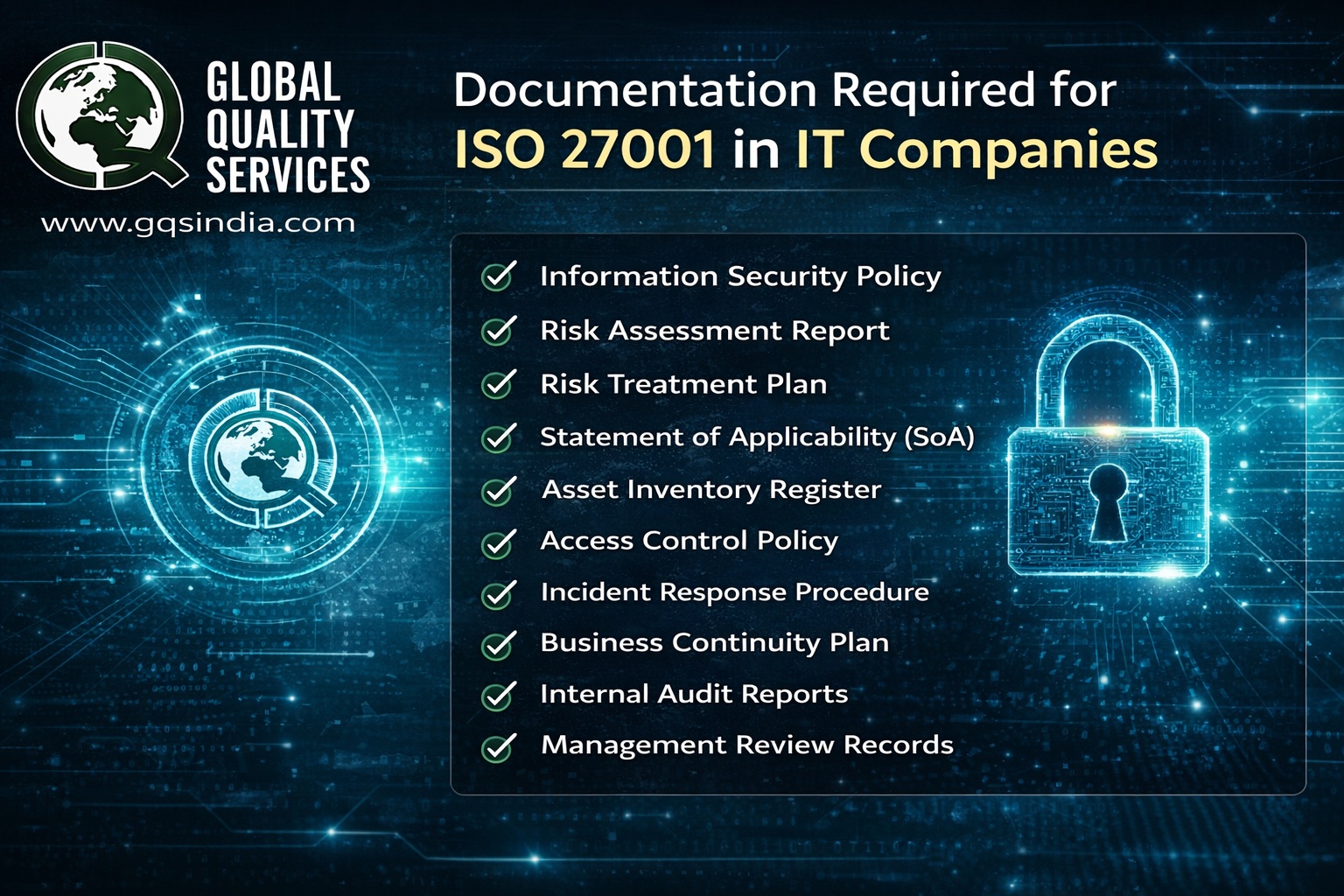
Proper documentation forms the foundation of ISO 27001 compliance. It demonstrates how organizations manage information security risks and implement structured controls.
- Information Security Policy
- Risk Assessment Report
- Risk Treatment Plan
- Statement of Applicability (SoA)
- Asset Inventory Register
- Access Control Policy
- Incident Response Procedure
- Business Continuity Plan
- Internal Audit Reports
- Management Review Records
Key Benefits of ISO 27001 for IT Companies in India
Implementing ISO 27001 offers multiple advantages for Indian IT organizations working with domestic and international clients.
- Stronger Client Trust
- Access to Global Outsourcing Contracts
- Improved Cybersecurity Risk Management
- Compliance with Data Protection Regulations
- Competitive Advantage in the Indian IT Market
Relationship Between ISO 27001 and DPDP Compliance in India
India’s Digital Personal Data Protection (DPDP) Act requires organizations to safeguard personal data and implement responsible data processing practices.
ISO 27001 supports DPDP compliance by establishing security policies, access control mechanisms, data classification systems, and breach management processes that help protect personal data handled by IT companies.
Steps to Get ISO 27001 Certification for IT Companies in India
Organizations must implement a structured Information Security Management System to achieve ISO 27001 certification.
Conduct a Gap Analysis
Companies evaluate their existing information security practices against ISO 27001 requirements to identify gaps that need improvement. This step helps organizations understand missing policies, controls, or documentation so they can align their systems with ISO 27001 standards before beginning formal implementation.
Perform Risk Assessment
Organizations identify sensitive information assets, analyze potential threats, and assess vulnerabilities that could affect data security. Based on this evaluation, companies create a risk treatment plan that outlines specific actions and controls required to mitigate security risks effectively.
Develop Information Security Policies
Companies establish formal policies that define how information is protected across the organization. These policies typically cover data classification, access control, incident response procedures, employee security awareness, acceptable use guidelines, and business continuity measures.
Implement Security Controls
Organizations deploy both technical and administrative security controls to protect information assets. These may include encryption, multi-factor authentication, network monitoring systems, access restrictions, employee training programs, and procedures designed to prevent unauthorized data access.
Certification Audit
An accredited certification body conducts a comprehensive audit to assess whether the organization’s Information Security Management System complies with ISO 27001 requirements. After successful verification of policies, controls, and documentation, the organization receives ISO 27001 certification.
Summary
ISO 27001 helps IT export companies in India strengthen information security, protect client data, and meet international outsourcing requirements. It improves global credibility, ensures regulatory compliance, and prepares organizations for security audits. To implement the standard effectively and achieve certification smoothly, partnering with an experienced consultant like Global Quality Services is highly recommended.
FAQ’s
1. Why do IT companies in India need ISO 27001 certification?
ISO 27001 helps Indian IT companies protect client data, manage cybersecurity risks, comply with global security expectations, and qualify for international outsourcing projects.
2. Is ISO 27001 mandatory for IT companies in India?
ISO 27001 is not legally mandatory in India, but many international clients require it as a security assurance before outsourcing IT services.
3. How long does ISO 27001 certification take for IT companies in India?
Most IT companies complete ISO 27001 implementation within three to six months depending on company size, documentation readiness, and existing security controls.
4. What documents are required for ISO 27001 certification?
Organizations must maintain information security policies, risk assessment reports, risk treatment plans, asset inventories, incident response procedures, and access control documentation.
5. Does ISO 27001 help Indian IT companies work with international clients?
Yes. ISO 27001 demonstrates strong information security practices, helping Indian IT companies gain trust from US, EU, and global clients.