
As India rapidly expands its digital economy, cybersecurity and compliance have become critical priorities for organizations. According to a report highlighted by The Times of India, India recorded over 265 million cyberattacks in 2025, showing the scale of threats targeting businesses and digital systems.
In such a high-risk environment, Corrective Action Planning under ISO 27001 is critical for identifying security gaps, resolving audit nonconformities, and strengthening the overall Information Security Management System (ISMS) to protect sensitive business data.
A structured corrective action process ensures organizations not only fix existing issues but also prevent them from recurring. This strengthens compliance, improves security practices, and helps businesses maintain long-term ISO 27001 certification.
What is Corrective Action Planning in ISO 27001
Corrective Action Planning in ISO 27001 is the process of identifying non-conformities, analyzing root causes, and implementing actions to prevent recurrence and continuously improve the Information Security Management System (ISMS).
When audits identify a non-conformity, organizations must analyze the cause and implement corrective actions to strengthen and continuously improve their Information Security Management System (ISMS).
For Indian organizations, this process is especially important because many sectors, such as IT services, fintech, and outsourcing, operate under strict security and compliance requirements.
Why Corrective Action Planning is Important for Businesses in India
Strong corrective action processes help organizations maintain compliance and protect sensitive information in an evolving cyber risk environment.
Root Cause Analysis
Root cause analysis identifies the underlying reason behind a non-conformity instead of only fixing the surface issue. Indian organizations conducting ISO 27001 audits must investigate process gaps, policy weaknesses, or implementation failures to prevent the same issue from appearing again.
Evidence Submission
During ISO audits, companies must submit documented evidence demonstrating how corrective actions were implemented. Proper documentation, updated procedures, and training records help auditors verify that the organization has addressed the non-conformity effectively.
Avoiding Repeat Non-Conformities
If the same issue repeatedly appears in multiple audits, it indicates ineffective corrective actions. Businesses must implement stronger process improvements and monitoring mechanisms to ensure the issue does not recur in future assessments.
Surveillance Audit Impact
Surveillance audits conducted annually verify whether corrective actions remain effective. If unresolved non-conformities persist, organizations may face certification risks, making continuous monitoring and improvement essential for maintaining ISO 27001 certification.
Benefits of Corrective Action Planning in ISO 27001
A well-structured corrective action planning system improves information security performance and strengthens compliance frameworks.
Improved Information Security Controls
Corrective actions help organizations identify and close gaps in existing security policies, procedures, and technical controls. By addressing these weaknesses promptly, businesses can strengthen their Information Security Management System (ISMS), reduce vulnerabilities, and significantly lower the risk of data breaches or operational disruptions.
Stronger Regulatory Compliance
Organizations in India must comply with evolving cybersecurity and data protection regulations. Corrective action planning ensures businesses address compliance gaps, align internal processes with regulatory expectations, and demonstrate strong governance practices required by international standards and regulatory authorities.
Continuous Improvement of ISMS
ISO 27001 promotes continual improvement within the Information Security Management System. Corrective action planning enables organizations to regularly evaluate security practices, update policies, refine operational procedures, and enhance controls to adapt to evolving cybersecurity risks and organizational requirements.
Enhanced Organizational Accountability
Assigning clear responsibilities for corrective actions ensures accountability across teams responsible for information security and compliance. This structured approach improves communication, strengthens governance, and ensures that departments collaborate effectively to resolve issues identified during audits or security assessments.
How to Implement Corrective Action Planning in ISO 27001
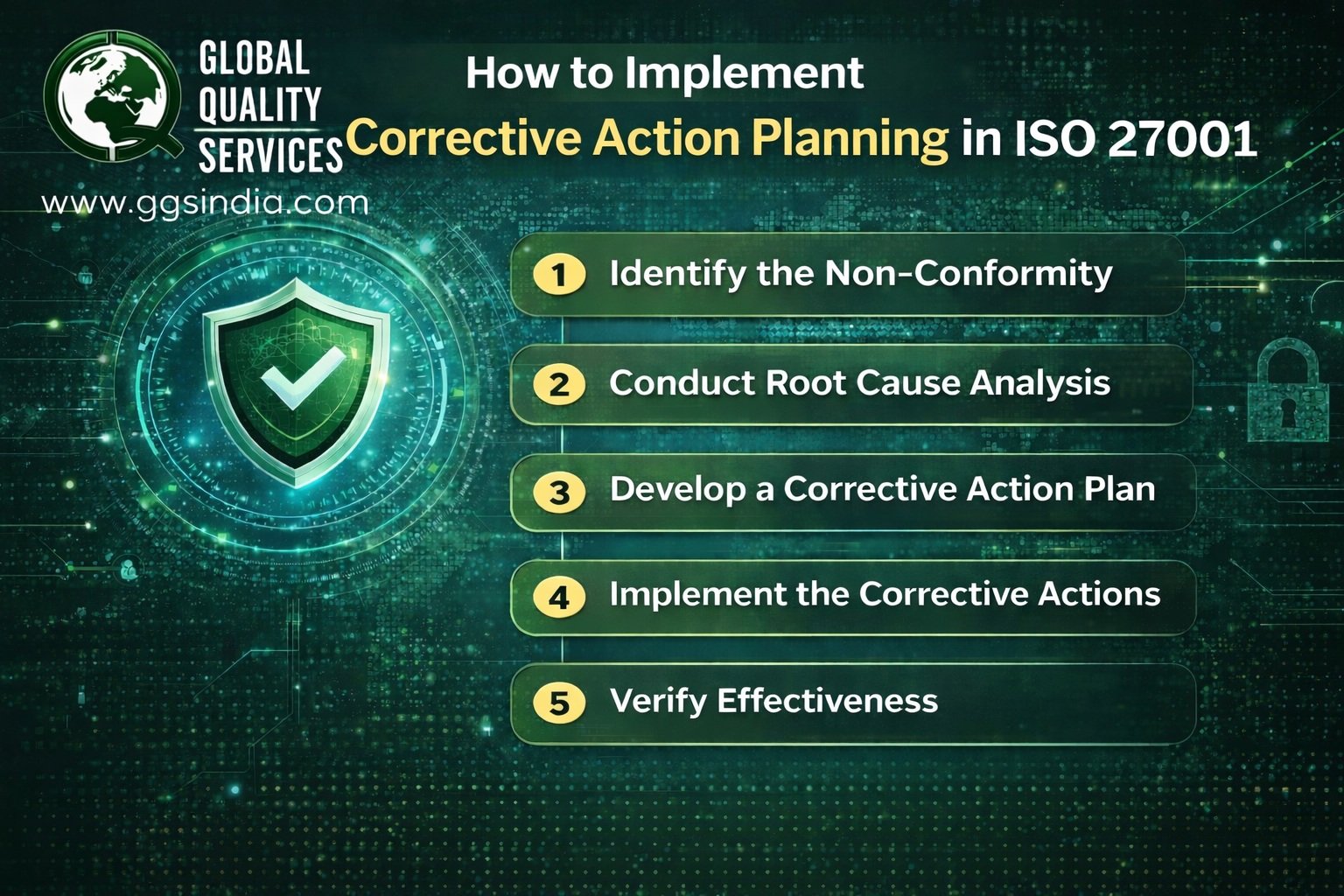
A structured corrective action process helps organizations address audit findings efficiently and maintain certification requirements.
Identify the Non-Conformity
Organizations must first identify and properly document the non-conformity found during an internal or external audit. This includes clearly describing the issue, identifying the affected process, and referencing the specific ISO 27001 clause to ensure accurate tracking and corrective action planning.
Conduct Root Cause Analysis
Once the non-conformity is identified, organizations must investigate the underlying reason behind the issue. Techniques such as the “5 Whys” method, process mapping, or risk analysis help determine whether the problem arises from policy gaps, insufficient training, or operational weaknesses.
Develop a Corrective Action Plan
After identifying the root cause, organizations should create a structured corrective action plan. This plan outlines the necessary steps to resolve the issue, assigns responsibilities to relevant teams, sets deadlines, and defines how the effectiveness of the corrective action will be monitored.
Implement the Corrective Actions
The organization must implement the corrective actions according to the approved plan. This may include updating policies, revising procedures, conducting employee training, strengthening monitoring systems, or modifying security controls to effectively eliminate the root cause of the non-conformity.
Verify Effectiveness
After corrective actions are implemented, organizations must verify whether the measures successfully resolved the issue. This is usually done through internal audits, management reviews, or performance monitoring to ensure the non-conformity does not recur.
Challenges Indian Organizations Face in Corrective Action Planning
Implementing corrective action planning is not always straightforward. Many Indian organizations face practical challenges when identifying root causes, documenting actions, and ensuring improvements effectively prevent repeat non-conformities.
Limited Documentation Practices
Many organizations fail to maintain clear and organized records of corrective actions, including root cause analysis and implementation evidence. Poor documentation makes it difficult for auditors to verify compliance during certification or surveillance audits.
Lack of Security Awareness
Employees often overlook the importance of corrective actions because they lack proper awareness of ISO 27001 requirements. Without adequate training and communication, teams may delay implementing necessary security improvements across departments.
Resource Constraints
Many small and medium-sized businesses in India operate with limited cybersecurity expertise and compliance resources. This can make it challenging to investigate non-conformities properly and implement structured corrective action processes.
Why Businesses Should Work with Global Quality Services for Corrective Action Planning
Working with an experienced consultancy like Global Quality Services helps organizations manage corrective action planning in ISO 27001 efficiently and accurately. Their experts assist in identifying root causes, preparing proper documentation, implementing corrective measures, and ensuring compliance with audit requirements.
Professional guidance also helps prevent repeat non-conformities and certification delays. Contact Global Quality Services today to receive expert support for ISO 27001 corrective action planning and compliance.
Frequently Asked Questions
1. What is corrective action planning in ISO 27001?
Corrective action planning in ISO 27001 is the process of identifying the root cause of a non-conformity found during an audit and implementing structured measures to eliminate the issue and prevent it from occurring again within the Information Security Management System.
2. What triggers corrective action planning in ISO 27001?
Corrective action planning is triggered when internal audits, external certification audits, risk assessments, or surveillance audits identify non-conformities, security gaps, or process failures that require investigation and corrective implementation.
3. How long does corrective action implementation usually take?
The implementation period depends on the severity of the non-conformity and organizational processes. In most cases, businesses complete corrective actions within 30 to 90 days before submitting evidence to auditors.
4. Is corrective action planning mandatory for ISO 27001 certification?
Yes. Corrective action planning is a mandatory requirement under ISO 27001. Organizations must address audit findings, document corrective measures, and verify effectiveness to maintain certification and ensure continuous improvement of the ISMS.
5. Why should Indian businesses hire an ISO 27001 consultant for corrective actions?
ISO 27001 consultants help Indian organizations identify root causes quickly, prepare audit evidence, implement corrective measures efficiently, and reduce the risk of certification delays or repeat non-conformities during surveillance audits.