
Noida rapidly solidifies its status as a major IT and cloud technology hub, making cloud privacy protection a top priority for local businesses. Securing ISO 27018 Certification in Noida establishes robust controls to safeguard Personally Identifiable Information (PII) within public cloud environments.
Cyber threats continue to surge, and according to The Economic Times, the average organizational cost of a data breach in India reached an all-time high of ₹25.5 crore. Partnering with Global Quality Services ensures seamless compliance, precise gap remediation, and complete protection for your cloud data.
What is ISO 27018 Certification
ISO 27018 is the international standard specifically designed to protect Personally Identifiable Information (PII) stored in public cloud environments. If your business stores customer names, financial details, or personal data in the cloud, this framework ensures you handle that information with absolute confidentiality and regulatory rigor.
What are the Reasons Noida Businesses Need ISO 27018 Certification
As a thriving IT, SaaS, and cloud operations hub, Noida hosts businesses managing massive volumes of sensitive client data daily.
- Protects Personally Identifiable Information (PII) in the Cloud
ISO 27018 establishes rigid security controls explicitly designed to protect customer personal data stored within public cloud environments. It guarantees that sensitive client data remains encrypted, isolated, and safe from unauthorized access. - Ensures Alignment with Indian and Global Privacy Regulations
Adopting this standard helps Noida enterprises comply with India’s Digital Personal Data Protection (DPDP) Act alongside global frameworks like GDPR. This proactive alignment safeguards your business against severe legal penalties and regulatory scrutiny. - Prevents Unauthorized Data Use for Advertising
The framework enforces strict contractual boundaries that block public cloud service providers from mining your business data for marketing purposes. Your organization retains complete, uncompromised ownership and control over all hosted information assets. - Builds Market Advantage and Wins Enterprise Contracts
Achieving ISO 27018 certification serves as verifiable proof to international clients that your organization maintains world-class cloud privacy standards. This trust factor significantly accelerates sales cycles and helps win high-value global enterprise deals.
Step-by-Step Process to Get ISO 27018 Certified
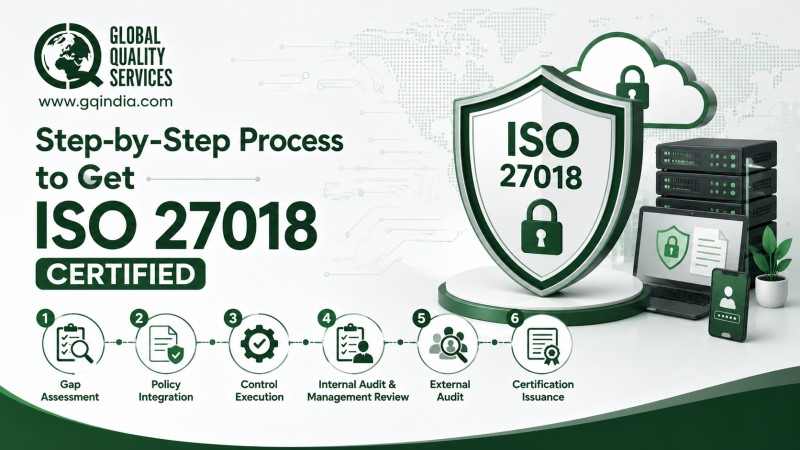
Achieving ISO 27018 certification requires a structured approach to ensure your public cloud environment protects personally identifiable information effectively.
Step 1: Gap Assessment
An initial evaluation identifies existing vulnerabilities by comparing your cloud privacy practices against ISO 27018 requirements. This pinpoints specific operational gaps and technical deficiencies needing remediation before formal auditing.
Step 2: Policy Integration
Organization-wide cloud privacy policies must be drafted and integrated directly into your existing information security management system (ISMS). This ensures policies govern data processing, customer transparency, and sub-processor management.
Step 3: Control Execution
Technical and operational controls are deployed to protect data at rest and in transit. Practices such as PII encryption, data minimization, strict access limitations, and breach notification mechanisms are implemented.
Step 4: Internal Audit & Management Review
Independent internal audits test control effectiveness and verify regulatory alignment across cloud operations. Management reviews the audit results to resolve nonconformities and ensure operational readiness for certification.
Step 5: External Audit
An accredited certification body conducts a comprehensive two-stage evaluation of your cloud privacy environment. Auditors review documentation, test controls, and interview key personnel to confirm total compliance.
Step 6: Certification Issuance
Once all findings are successfully remediated, the certification body issues your formal ISO 27018 certificate. Regular annual surveillance audits maintain continuous compliance and safeguard long-term data privacy trust.
Key Requirements for ISO 27018
Implementing ISO 27018 requires cloud service providers to deploy robust controls that protect customer PII and maintain strict processing transparency.
- Consent & Purpose Limitation: Ensure customer PII is processed exclusively for agreed contractual purposes and never used for marketing or commercial profiling without explicit consent.
- Data Erasure & Return: Establish clear mechanisms to return, sanitize, or permanently delete customer data upon contract termination or on request.
- Sub-processor Transparency: Disclose all third-party vendors and geographic locations involved in processing or storing customer PII.
- Breach Notification: Maintain automated protocols to promptly notify affected data controllers in the event of a security incident or unauthorized access.
- Technical Security Controls: Mandate strong data protection measures, including end-to-end encryption for data in transit and at rest, as well as operational log sanitization.
- Independent Auditability: Provide customers with documentation, audit reports, and evidence demonstrating ongoing operational compliance.
Industries That Need ISO 27018 Certification
Any cloud-based entity handling personal, financial, health, or corporate client data in Noida benefits from ISO 27018 compliance:
- SaaS & B2B Software Providers: HR Tech, CRM, ERP, and Enterprise SaaS platforms storing end-user records.
- Fintech & Payment Gateways: Cloud payment processors and digital lending applications processing sensitive customer PII.
- Healthtech & Telemedicine: Cloud-based Electronic Health Record (EHR) platforms and diagnostic software.
- EdTech Platforms: Online learning systems handling student, parent, and institutional data.
- IT Service Providers & Managed Cloud Services: Managed Service Providers (MSPs), public cloud hosting facilities, and data infrastructure vendors.
Why Choose Global Quality Services for ISO 27018 Certification in Noida
Partnering with Global Quality Services ensures a seamless path to ISO 27018 certification in Noida. With over 26 years of industry experience, our expert consultants deliver tailored gap analysis, robust PII documentation, and hands-on audit support to protect your cloud data and maintain compliance.
A leading ISO 27001 and TUV SUD Singapore certified management consulting company, SCMC has provided professional certification, compliance, and business improvement solutions to organizations across various industries, helping them achieve international standards and operational excellence. Ready to elevate your cloud privacy standards? Contact Global Quality Services today to schedule your consultation and fast-track your ISO 27018 certification!
Frequently Asked Questions
- What is the core purpose of ISO 27018 Certification?
ISO 27018 provides a specialized framework for public cloud service providers to protect Personally Identifiable Information (PII) and ensure customer data privacy across cloud operations.
2. Is ISO 27001 required before getting ISO 27018 certified?
Yes, ISO 27018 builds directly upon ISO 27001. Your organization must either possess or concurrently implement an ISO 27001 Information Security Management System (ISMS) to achieve compliance.
3. How long does ISO 27018 certification remain valid?
The certification stays valid for three years. Maintaining active certified status requires passing annual surveillance audits and completing a full recertification audit prior to standard expiration.
4. Does ISO 27018 satisfy Indian DPDP Act requirements?
Yes, implementing ISO 27018 controls aligns your cloud infrastructure with key principles of India’s Digital Personal Data Protection Act, including data minimization, explicit consent, and mandatory breach notifications.
5. How long does it take for a Noida company to get certified?
The certification timeline generally takes between 6 to 12 weeks, depending on your organization’s existing cloud security infrastructure, documentation readiness, and the scope of PII processing operations.