Packaging has become an important part of how businesses approach environmental responsibility. For manufacturers and brands, choosing packaging is no longer limited to factors such as cost, durability, appearance, and product protection. Companies are increasingly expected to understand what happens to packaging after it has served its purpose and whether the selected material is compatible with its intended recovery route.
This is particularly relevant for businesses operating in Noida and the wider National Capital Region. The area has a strong base of manufacturing, electronics, consumer products, food processing, plastics, packaging, and supporting industries. Uttar Pradesh’s industrial development programs also identify plastics and packaging, food processing, electronics, and other manufacturing activities among sectors being promoted across the state.
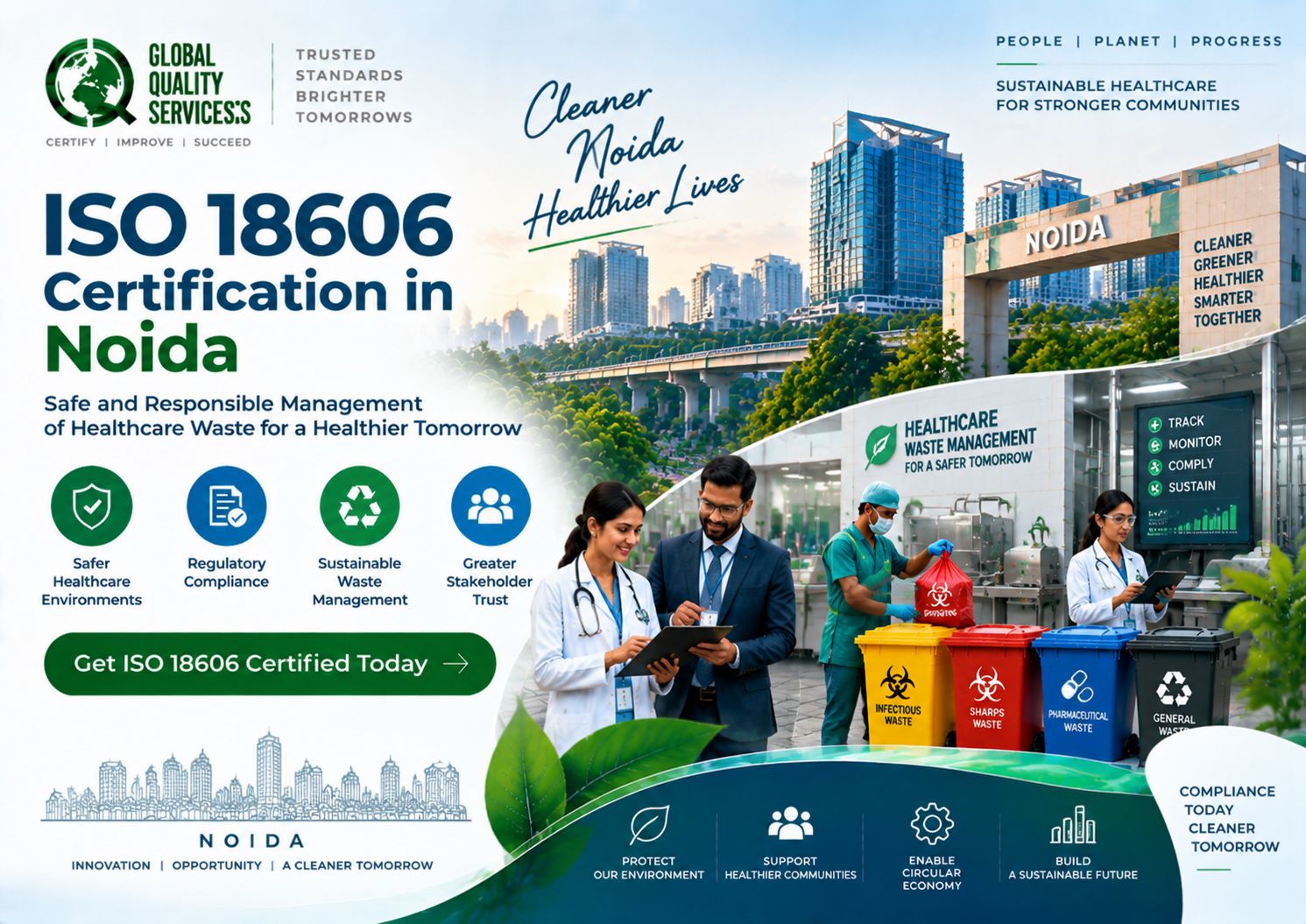
ISO 18606 Certification in Noida provides a structured basis for evaluating packaging that is intended for organic recycling. The standard focuses on whether packaging components meet applicable requirements for biodegradation, disintegration during biological treatment, effects on the biological process, and effects on the quality of the resulting compost. ISO 18606:2013 was reviewed and confirmed in 2024 and remains the current edition.
What Is ISO 18606 Certification?
ISO 18606:2013 is titled Packaging and the environment. The standard is particularly important because organic recycling cannot be determined simply by describing a package as biodegradable, compostable, or environmentally friendly. The packaging needs to be evaluated against relevant technical requirements associated with its intended biological treatment route.
ISO 18606 considers packaging components individually. ISO explains that packaging is considered recoverable by organic recycling only when the individual components meet the applicable requirements, unless components can be easily separated before disposal and assessed separately.
This makes ISO 18606 relevant to organizations that want a more technically grounded approach to packaging sustainability.
Why ISO 18606 Matters for Businesses in Noida
Noida’s industrial ecosystem includes companies involved in manufacturing, electronics, food processing, plastics, consumer goods, and other sectors where packaging plays an important role. Businesses may manufacture packaging themselves, purchase packaging from suppliers, or specify packaging as part of their finished products.
For such organizations, packaging decisions can affect more than the appearance and protection of a product. Material composition, coatings, labels, adhesives, inks, and other components can influence what happens when the packaging enters its intended recovery route.
An organization may therefore need to move beyond a simple question such as whether a material is “eco-friendly.” A more useful approach is to understand the intended organic recycling process and establish whether the relevant packaging components satisfy the applicable requirements.
Understanding Organic Recycling Under ISO 18606
Organic Recycling Is More Than Simply Biodegradation
One of the most important aspects of ISO 18606 is the distinction between biodegradation and the broader concept of organic recycling.
Organic recycling involves controlled biological treatment of biodegradable components to produce compost and, in the case of anaerobic digestion, potentially methane. Landfilling and littering are not considered organic recycling routes.
Therefore, an organization should not assume that a packaging material is suitable for organic recycling merely because it can eventually biodegrade under some conditions.
Packaging Components Need to Be Considered
A package may contain several components rather than a single material. For example, the main packaging structure may be accompanied by labels, coatings, adhesives, closures, or other elements.
ISO 18606 addresses the individual components because the overall packaging outcome can depend on what happens to each component during biological treatment.
Where components can be physically separated before disposal, ISO allows the separated components to be considered individually for organic recycling.
This component-based approach can be particularly useful for packaging manufacturers and product companies reviewing existing packaging designs.
What Does ISO 18606 Assess?
Biodegradation
Biodegradation is one of the technical characteristics considered under ISO 18606. The organization needs to establish whether the relevant packaging component can undergo biological degradation under the applicable conditions associated with the intended treatment process.
This helps differentiate technically supported packaging claims from broad environmental statements that may not explain how a material behaves during actual biological treatment.
Disintegration During Biological Treatment
Biodegradation alone does not provide the complete picture. ISO 18606 also addresses disintegration during biological waste treatment, including composting.
The packaging must be considered in relation to the physical breakdown expected during the relevant treatment process. This is important because packaging that does not appropriately disintegrate may create problems even if some level of biological degradation is possible.
Impact on the Biological Process
The standard also considers whether packaging components can have negative effects on the biological process.
This encourages organizations to examine packaging from the perspective of the complete treatment system rather than evaluating only the material itself.
Impact on Compost Quality
The final outcome of organic recycling also matters.
ISO 18606 addresses potential negative effects on the quality of the resulting compost, including the presence of high levels of regulated metals and other substances that may be hazardous to the environment.
For organizations making environmental packaging claims, this provides an important technical consideration when selecting and evaluating materials.
ISO 18606 Certification Process in Noida
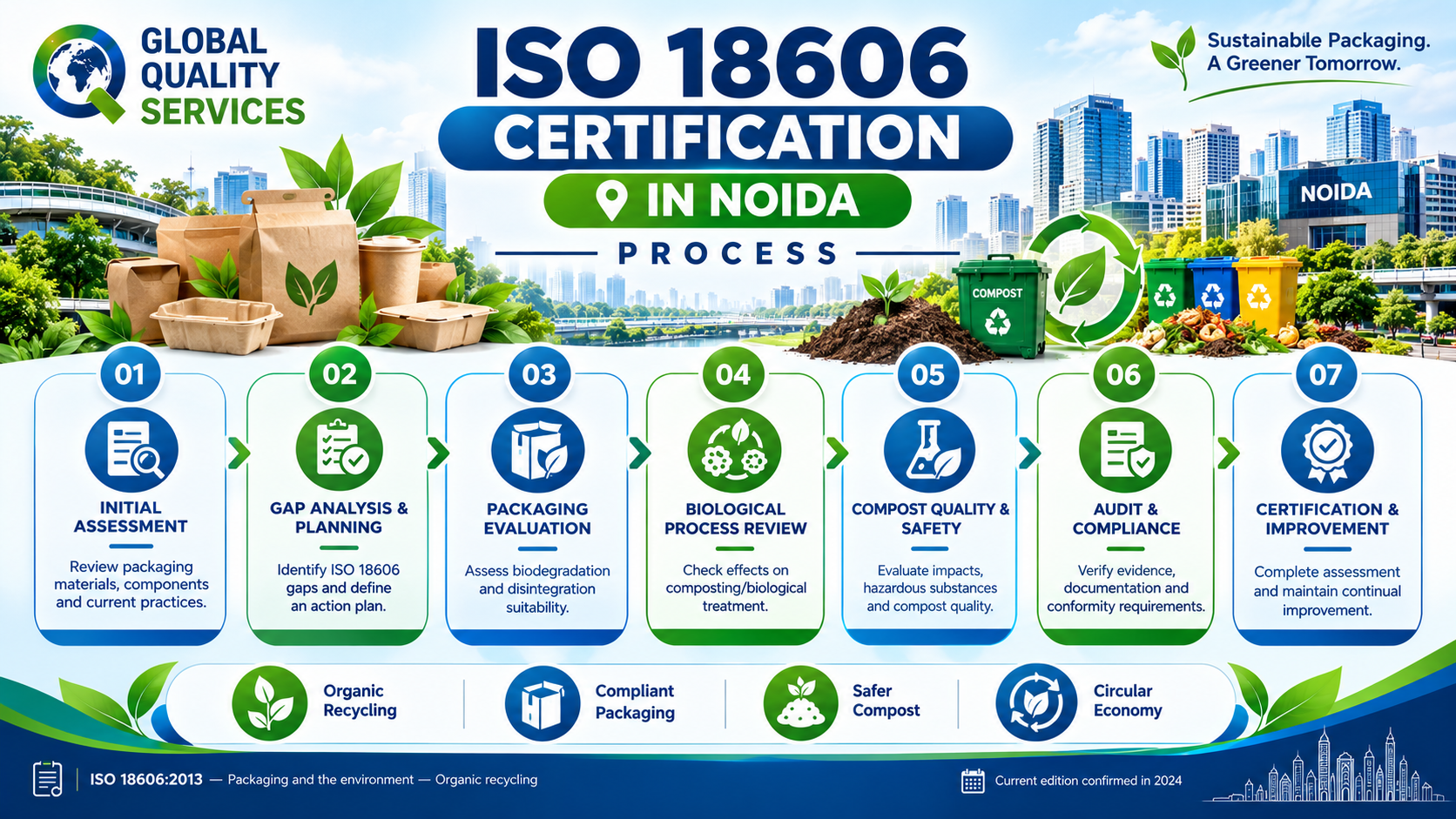
The process for 18606 certification involves the following steps:
Understanding the Packaging Scope
The process should begin by identifying the packaging covered by the assessment. This includes understanding the products, packaging formats, individual components, materials, intended organic recycling route, and responsibilities of the organization within the packaging supply chain.
A clearly defined scope makes it easier to determine which requirements and supporting evidence are relevant.
Reviewing Existing Packaging Information
The next stage involves reviewing available technical information. Material specifications, supplier declarations, test reports, component details, packaging designs, technical data, and other relevant records may need to be examined.
This stage can reveal whether the organization already has sufficient evidence to demonstrate conformity or whether additional evaluation is necessary.
Identifying and Addressing Gaps
Any gaps between the existing packaging arrangements and applicable ISO 18606 requirements can then be identified.
For example, an organization may have incomplete information about individual packaging components, insufficient supplier documentation, unclear material specifications, or inadequate evidence relating to biological treatment characteristics.
Addressing such gaps before the formal assessment can make the overall process more systematic.
Assessment and Certification
Once the relevant requirements have been addressed and supporting evidence is available, the organization can proceed with the applicable conformity assessment or certification arrangement.
The exact route depends on the organization’s packaging scope and the certification or assessment scheme being used. ISO itself develops and publishes the standard; certification is performed by independent conformity assessment organizations where certification is applicable.
Who Needs ISO 18606 Certification in Noida?
Let us know more about who needs ISO 18606 in Noida:
Packaging Manufacturers
Packaging manufacturers in Noida can use ISO 18606 as a reference when developing or evaluating packaging intended for organic recycling. The standard can help bring greater consistency to material specifications, component evaluation, testing, and technical documentation.
Food and Beverage Companies
Food and beverage businesses frequently depend on packaging for product protection, transportation, storage, and consumer use. Companies seeking packaging solutions compatible with organic recycling can evaluate relevant packaging components against the requirements of ISO 18606.
Consumer Product Manufacturers
Consumer product companies may have packaging requirements extending across primary, secondary, and other packaging formats. Understanding the intended recovery route can help organizations make more informed packaging decisions.
Retail and E-Commerce Businesses
Retailers and e-commerce companies may not manufacture packaging themselves, but they can influence packaging specifications through procurement requirements and supplier selection. ISO 18606 can therefore be relevant when evaluating packaging supplied by external manufacturers.
Benefits of ISO 18606 Certification in Noida
Understanding the benefits of ISO 18606 certification in Noida can help you keep your business compliant to the latest laws:
Stronger Packaging Decisions
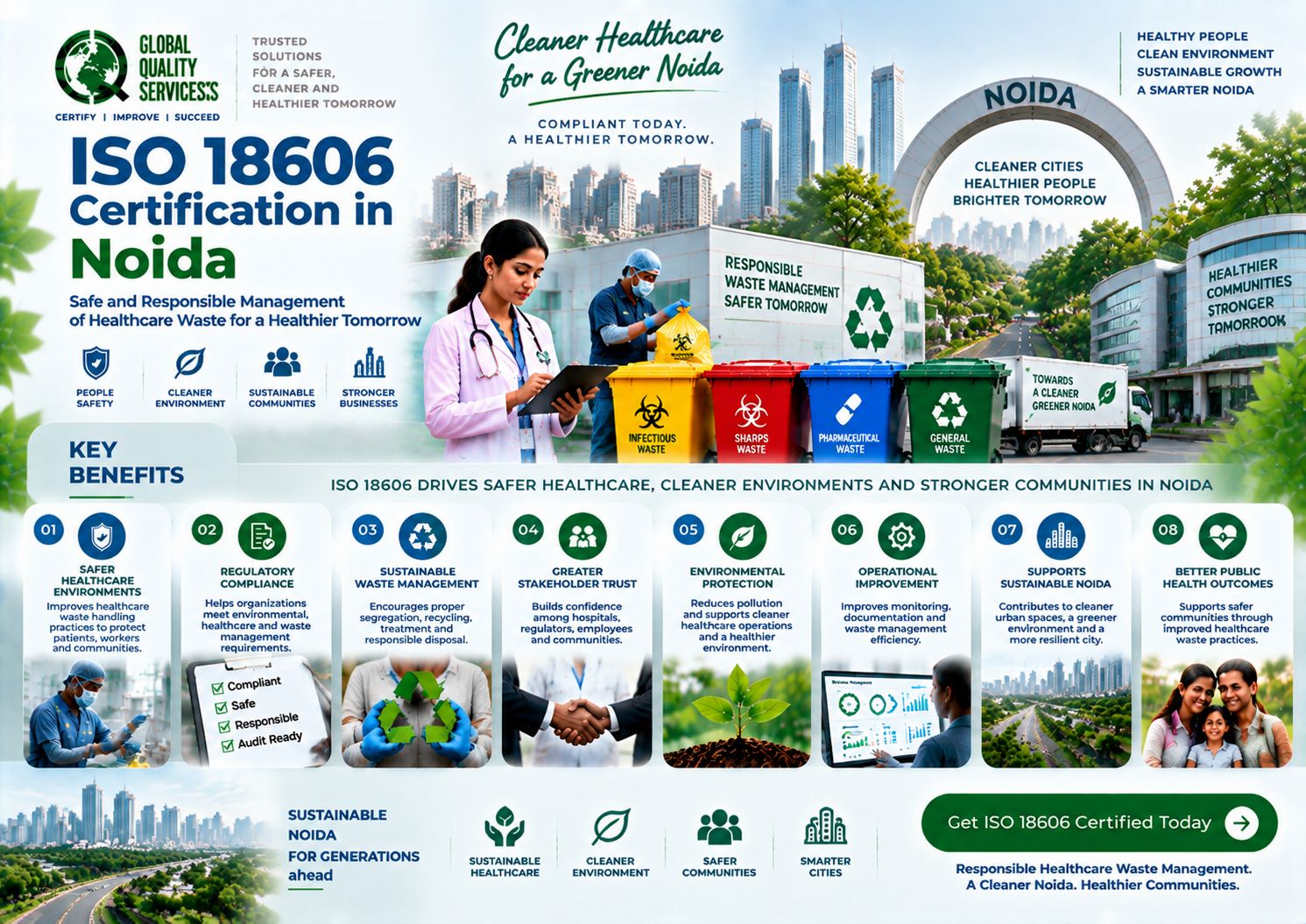
ISO 18606 can help organizations make packaging decisions using defined technical considerations rather than relying solely on general sustainability claims.
Better Supplier Evaluation
For organizations purchasing packaging, the standard can provide a useful framework for discussions with suppliers about material composition, packaging components, technical evidence, and intended recovery routes.
Greater Environmental Credibility
Where the applicable requirements have been properly assessed and demonstrated, conformity with ISO 18606 can provide stronger technical support for an organization’s packaging sustainability objectives.
Improved Product Life-Cycle Thinking
ISO 18606 encourages businesses to consider packaging beyond its immediate function. The end-of-life route becomes part of the packaging discussion, helping organizations connect packaging design with recovery considerations.
Why Choose GQS for ISO 18606 Certification in Noida?
Global Quality Services provides ISO consultancy and certification-related support to organizations across India. GQS works with businesses on ISO-related requirements, documentation, implementation, certification readiness, and post-certification assistance.
For organizations pursuing ISO 18606 Certification in Noida, GQS can help understand the applicable requirements, review the organization’s packaging scope, identify gaps, and prepare the relevant arrangements for assessment.
The objective is not simply to place an environmental label on packaging. A meaningful ISO 18606 assessment requires an understanding of the actual packaging components, intended organic recycling route, technical evidence, and applicable requirements.
GQS can help your organization understand the applicable ISO 18606 requirements and prepare for the relevant assessment based on your packaging scope and business needs.
Frequently Asked Questions About ISO 18606 Certification in Noida
Is ISO 18606 a certification standard?
ISO 18606 is an international standard specifying requirements and procedures for packaging suitable for organic recycling. The phrase “ISO 18606 Certification” is commonly used when an organization seeks third-party conformity assessment against applicable requirements. ISO itself does not issue individual certificates.
Is ISO 18606 the same as biodegradable packaging certification?
No. ISO 18606 is broader than simply determining whether packaging is biodegradable. It addresses biodegradation, disintegration during biological treatment, possible effects on the biological process, and possible effects on the quality of resulting compost.
Does ISO 18606 apply to every type of packaging?
No. The standard specifically addresses packaging intended for organic recycling. The suitability of a particular packaging format should be evaluated based on its components and intended recovery route.
Can packaging with multiple components be assessed under ISO 18606?
Yes. ISO 18606 specifically addresses individual packaging components. Where components can be easily physically separated before disposal, separated components may be considered individually for organic recycling.
Is ISO 18606:2013 still current?
Yes. ISO states that ISO 18606:2013 was reviewed and confirmed in 2024 and remains the current edition.