Packaging is no longer judged only by its strength, appearance, shelf life, or ability to protect a product. As businesses move toward more responsible packaging choices, the question is also becoming: What happens to the packaging after use?
For manufacturers and brands in Hyderabad, this question is particularly relevant across food processing, pharmaceuticals, retail, consumer products, e-commerce, and packaging manufacturing. Companies supplying products in markets where sustainability and responsible packaging are increasingly important need reliable ways to demonstrate that packaging is designed with its intended recovery route in mind.
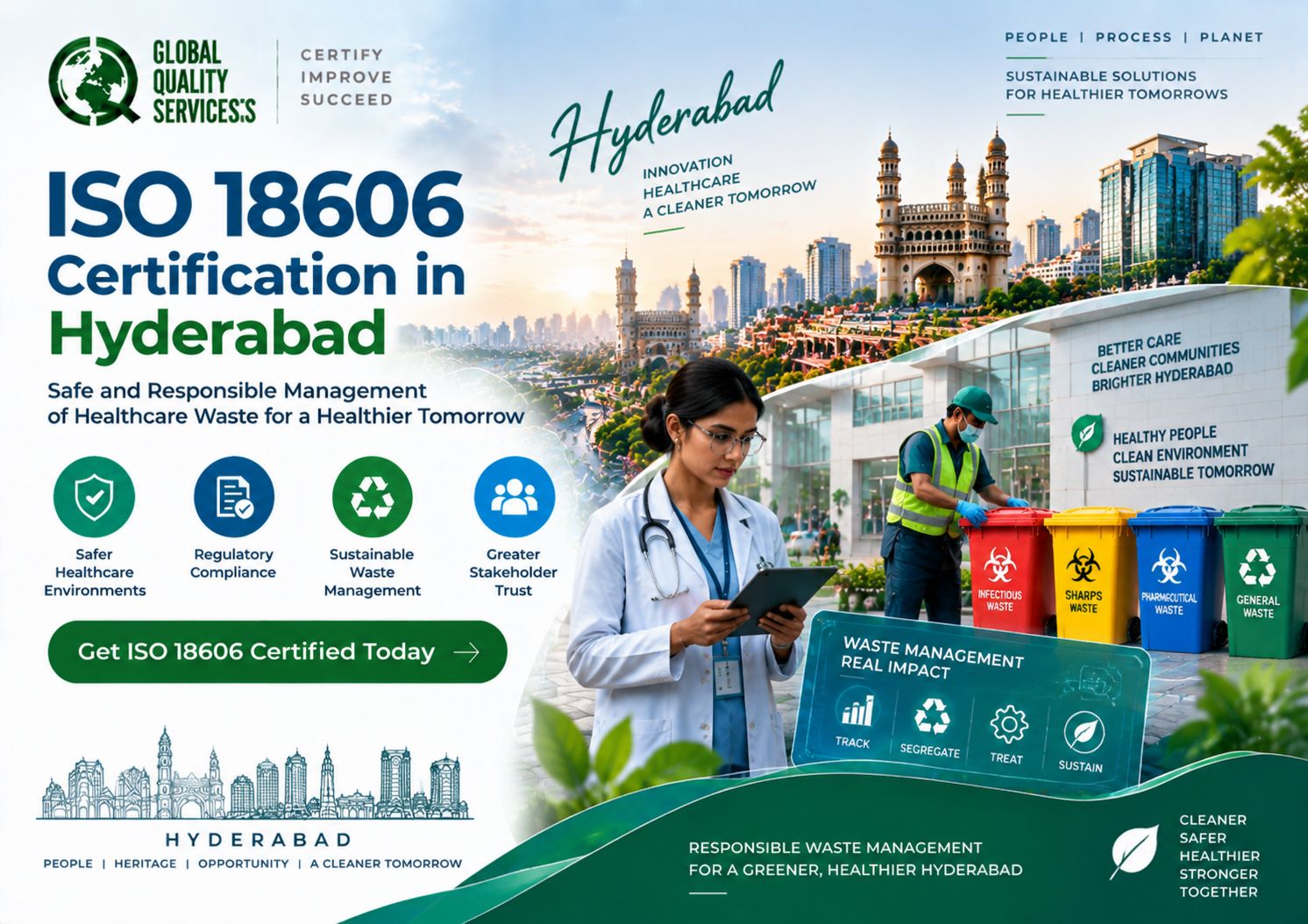
ISO 18606 Certification in Hyderabad provides a structured approach for demonstrating that applicable packaging is suitable for organic recycling when the requirements of the standard are met. ISO 18606:2013 specifically addresses packaging intended for organic recycling and remains the current edition following its 2024 review.
What Is ISO 18606 Certification?
ISO 18606:2013 is an international standard titled Packaging and the environment: Organic recycling. It establishes requirements for packaging that is suitable for organic recycling.
The standard does not simply ask whether a package is described as “eco-friendly” or “biodegradable.” It looks at whether packaging components can appropriately enter an organic recycling process and whether they meet relevant requirements associated with biological treatment.
ISO identifies four important areas for each packaging component: biodegradation, disintegration during biological waste treatment, potential negative effects on the biological process, and potential negative effects on the quality of the resulting compost.
This distinction is important because a package may contain several different components. ISO 18606 explains that packaging is considered recoverable by organic recycling only when the individual components meet the applicable requirements, unless components can be physically separated before disposal.
Why ISO 18606 Matters for Businesses in Hyderabad
Hyderabad has a broad industrial and commercial base that includes packaging-related manufacturing, food businesses, pharmaceuticals, consumer products, printing, and other sectors that place packaged goods on the market. Telangana’s Industries Department lists packaging materials among industrial activities associated with the Hyderabad district, while government industry records also identify businesses involved in cardboard, corrugated packaging, plastic processing, and other packaging-related activities in and around Hyderabad.
This creates a practical need for organizations to understand the environmental characteristics of the packaging they manufacture, specify, purchase, or place on the market.
Hyderabad also operates within a regulatory environment where waste management and the environmental impact of plastics are increasingly important. The Greater Hyderabad Municipal Corporation identifies solid waste management as one of its civic responsibilities and has promoted reduced dependence on environmentally problematic plastic products.
For organizations working with packaging, ISO 18606 can therefore support a more structured approach to organic recycling suitability rather than relying only on environmental claims.
What Does ISO 18606 Cover?
Let us have a look at what does ISO 18606 cover:
Packaging Components and Organic Recycling
ISO 18606 focuses on packaging intended for organic recycling. This can include packaging designed to enter biological treatment routes such as composting or other applicable organic recycling processes.
The standard considers the packaging component itself and its behavior during the intended biological treatment process. This makes material selection, packaging construction, and supporting technical evidence important parts of an assessment.
Biodegradation and Disintegration
Biodegradation and disintegration are related but different considerations.
A material may need to demonstrate that it can undergo biological degradation under the relevant conditions, while disintegration considers whether the packaging breaks down appropriately during the biological treatment process.
Both characteristics are important when evaluating whether packaging is suitable for its intended organic recycling route.
Effects on Biological Treatment
Packaging should not create unacceptable negative effects on the biological process into which it is intended to enter.
ISO 18606 therefore considers potential impacts associated with the treatment process rather than focusing only on how quickly a packaging material disappears.
Quality of the Resulting Compost
Another important consideration is the quality of the resulting compost.
ISO 18606 addresses potential negative effects on compost quality, including concerns relating to regulated metals and other substances that may be hazardous to the environment.
This helps organizations look beyond the packaging itself and consider what happens after the material enters an organic recycling process.
Who Can Benefit from ISO 18606 Certification in Hyderabad?
ISO 18606 can be relevant to organizations involved in the design, manufacture, specification, supply, or use of packaging intended for organic recycling.
Packaging manufacturers can use the standard to establish a structured basis for evaluating relevant packaging materials and components. Food and beverage companies can assess packaging associated with products that may be suitable for organic recycling. Consumer goods manufacturers, retailers, e-commerce companies, and brand owners may also need to understand whether packaging supplied under their specifications supports the intended recovery route.
The standard can also be useful for organizations purchasing packaging from external suppliers. A documented assessment approach can help procurement and sustainability teams ask more meaningful questions about packaging composition and end-of-life characteristics.
ISO 18606 and ISO 18601: How Are They Connected?
ISO 18606 does not operate completely in isolation.
ISO identifies ISO 18601 as the standard containing the procedure for applying ISO 18606. ISO 18601 provides general requirements and procedures for the use of the ISO 1860X family of packaging and environmental standards and applies to suppliers responsible for placing packaging or packaged goods on the market.
Understanding this relationship is important when developing an assessment approach. Instead of looking at ISO 18606 as a standalone environmental label, organizations should consider the relevant packaging requirements within the wider ISO 1860X framework.
ISO 18606 Certification Process in Hyderabad
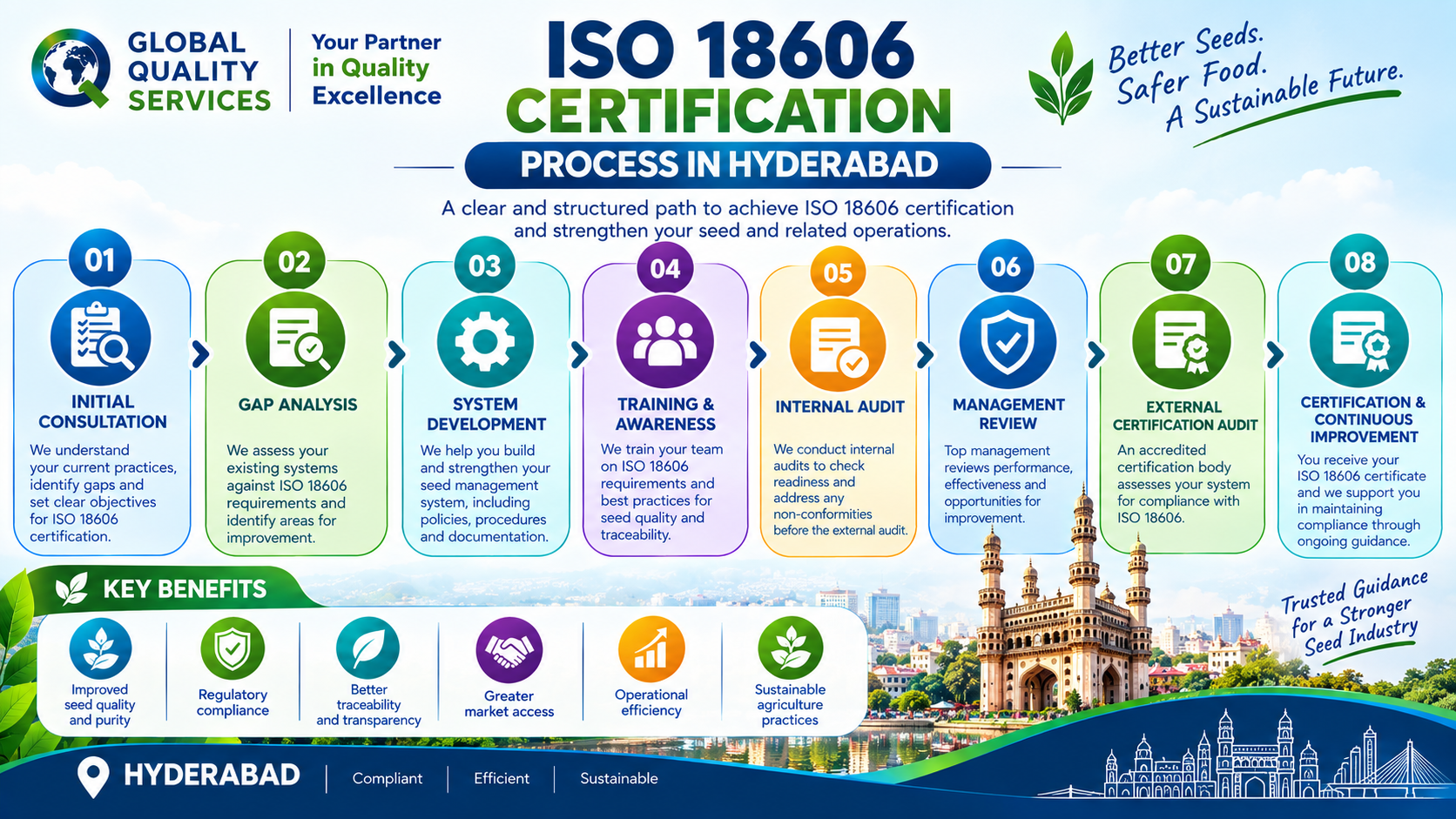
The process begins by understanding the organization’s packaging scope and identifying which products, materials, and packaging components are intended for organic recycling.
GQS can then review the organization’s existing packaging specifications, material information, supplier documentation, technical records, and relevant evidence against the applicable requirements.
The next stage involves identifying gaps. This may include insufficient material information, unclear component specifications, missing technical evidence, inadequate supplier controls, or uncertainty about the intended organic recycling route.
Once the gaps are understood, the organization can establish or improve the required controls and supporting documentation. Where applicable, technical testing and evaluation can provide evidence for relevant packaging characteristics.
An assessment or conformity evaluation can then be conducted against the applicable ISO 18606 requirements. Any identified nonconformities or gaps are addressed before the final certification or conformity assessment stage, depending on the applicable assessment scheme.
The exact assessment route should be determined according to the organization’s packaging scope, applicable conformity requirements, and the certification or assessment arrangement being used.
Benefits of ISO 18606 Certification for Hyderabad Businesses
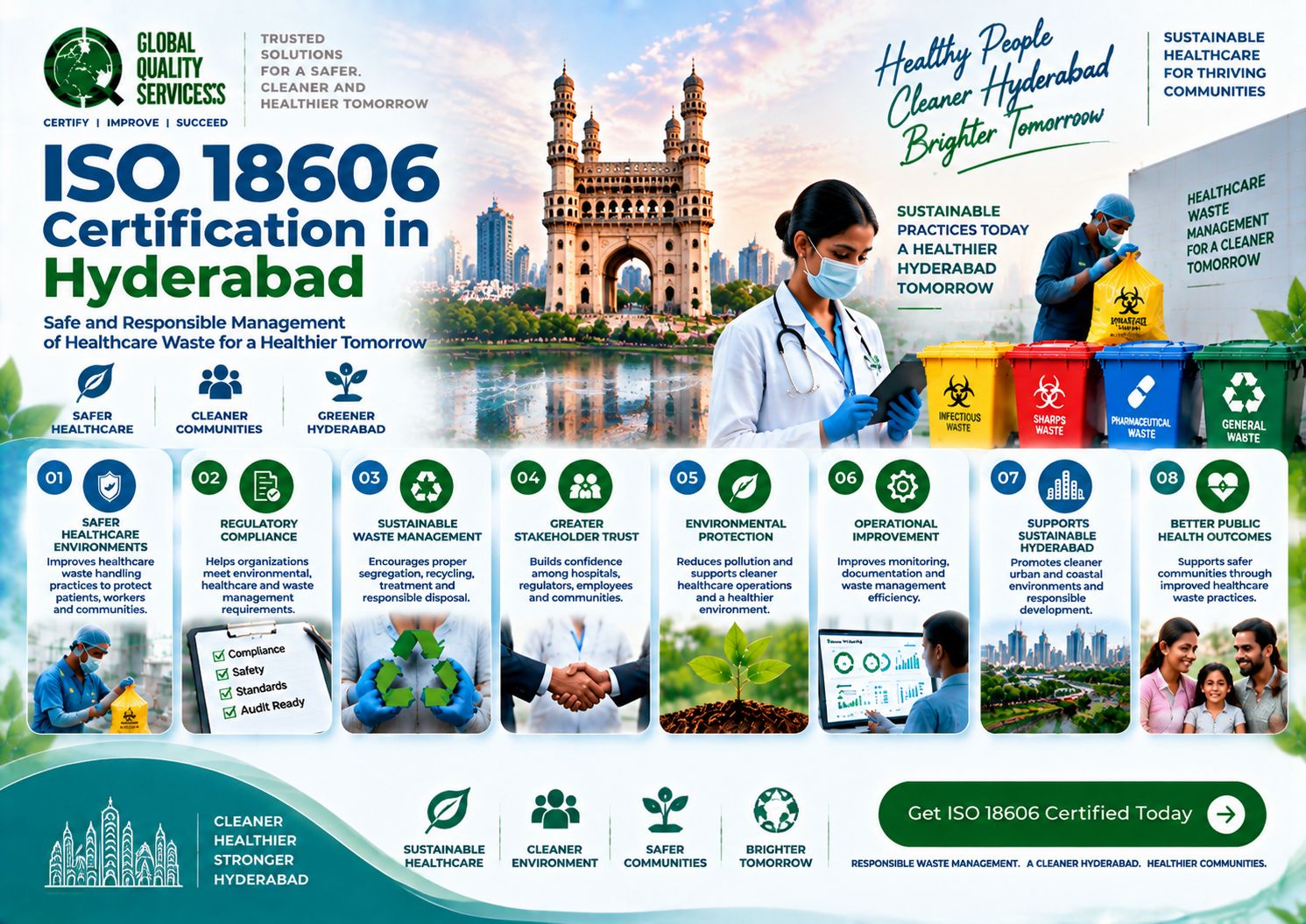
ISO 18606 can help organizations establish a more credible technical basis for evaluating packaging intended for organic recycling.
For packaging manufacturers, this can support better material and component decisions. For product manufacturers and brands, it can strengthen packaging specifications and supplier discussions. For businesses selling packaged products, it can provide documented evidence to support responsible packaging initiatives where the applicable requirements are satisfied.
The standard can also encourage organizations to examine packaging as part of the broader product life cycle. Instead of considering packaging only up to the point of sale, companies can evaluate what is intended to happen after the package has been used.
Another benefit is improved consistency. When packaging decisions are based on defined requirements and supporting evidence, organizations are less dependent on informal environmental claims or assumptions about how a material will behave after disposal.
Why Choose GQS for ISO 18606 Certification in Hyderabad?
Global Quality Services provides ISO consultancy and certification-related support to organizations across India. GQS works with organizations through the stages required for ISO certification, including implementation support, certification readiness, and post-certification assistance.
For an organization pursuing ISO 18606 Certification in Hyderabad, GQS can help clarify the applicable requirements, review the existing packaging-related arrangements, identify gaps, and prepare the organization for the relevant assessment.
The focus should be on understanding the actual packaging system and its intended organic recycling route rather than treating certification as a generic environmental claim.
Packaging sustainability requires more than replacing one material with another. Organizations need to understand how packaging components behave within their intended recovery route and whether the complete packaging arrangement supports the desired outcome.
ISO 18606 Certification in Hyderabad gives businesses a structured reference for evaluating packaging intended for organic recycling. With the right assessment approach, Hyderabad-based manufacturers, brands, packaging suppliers, and product companies can strengthen their packaging decisions and build greater confidence in the environmental characteristics of applicable packaging.
If your organization is evaluating compostable or organically recyclable packaging, GQS can help you understand the applicable ISO 18606 requirements and prepare for the relevant assessment.
Frequently Asked Questions About ISO 18606 Certification in Hyderabad
Is ISO 18606 a packaging certification standard?
ISO 18606 establishes requirements for packaging suitable for organic recycling. The term “ISO 18606 certification” is commonly used when organizations seek third-party conformity assessment against the applicable requirements, but ISO itself does not issue certificates.
Does ISO 18606 apply only to biodegradable packaging?
No. ISO 18606 should not be treated simply as a general “biodegradable packaging” standard. It addresses packaging intended for organic recycling and considers biodegradation, disintegration, effects on biological treatment, and effects on resulting compost.
Is ISO 18606:2013 still valid?
Yes. ISO states that ISO 18606:2013 was last reviewed and confirmed in 2024 and remains the current version.
Can food packaging companies in Hyderabad use ISO 18606?
Yes, where their packaging falls within the intended scope of the standard and is designed for an applicable organic recycling route. The organization’s specific packaging materials, components, and intended recovery process should be evaluated before determining applicability.
How can GQS help with ISO 18606 Certification in Hyderabad?
GQS can support organizations by reviewing the applicable requirements, understanding the packaging scope, identifying gaps in existing arrangements and documentation, and preparing the organization for the relevant assessment or certification process.