ISCC PLUS Certification in Bengaluru helps organizations demonstrate the verified sustainability characteristics and traceability of renewable, bio-based, circular, and recycled feedstocks used within their supply chains.
Bengaluru’s industrial base is unusually diverse. The city combines electronics and ESDM, aerospace and defense, biotechnology, pharmaceuticals, automotive and engineering, manufacturing, and technology-driven businesses. Karnataka’s official investment profile identifies these among Bengaluru Urban’s major industries and lists industrial locations including Peenya, Bommasandra, Electronics City, Jigani, Hardware Park, Aerospace Park, and Kumbalgodu.
This makes ISCC PLUS relevant to more than conventional chemical or polymer businesses. A Bengaluru organization may encounter ISCC PLUS requirements when it purchases recycled polymers, bio-based materials, renewable feedstocks, circular inputs, or other eligible alternative materials for use in manufacturing.
Global Quality Services (GQS) provides ISCC PLUS consultancy and certification-readiness support in Bengaluru, including scope assessment, chain-of-custody preparation, supplier controls, material traceability, mass-balance review, documentation, and audit preparation. The formal certification audit is conducted by an applicable independent ISCC cooperating Certification Body.
What Does ISCC PLUS Certification Mean for a Bengaluru Organization?
ISCC PLUS certification demonstrates that an organization has established controls for the sustainability characteristics and traceability of eligible alternative feedstocks within its certified scope.
ISCC describes ISCC PLUS as a voluntary certification system for validating sustainability characteristics of alternative feedstocks and supporting their tracking through the supply chain. The scheme provides three chain-of-custody approaches: physical segregation, controlled blending, and mass balance.
The important point is that certification is not simply about declaring that a product is “green” or “sustainable.”
The organization needs evidence.
That evidence may need to connect:
Supplier → Feedstock → Receipt → Storage → Production → Inventory → Certified Output → Customer
The exact controls depend on the certification scope and selected chain-of-custody method.
Which Bengaluru Businesses Can Use ISCC PLUS?
ISCC PLUS can be relevant to Bengaluru businesses that manufacture, process, trade, store, or incorporate eligible alternative feedstocks into products covered by the scheme.
The city’s industrial diversity creates several potential applications.
Electronics and ESDM
Bengaluru is a major electronics and technology manufacturing location, with official state sources identifying electronics and electronic equipment among the city’s industrial sectors.
ISCC PLUS does not certify an electronics product simply because it is manufactured in Bengaluru. Its relevance arises when eligible alternative materials form part of the certified supply chain.
For example, a manufacturer or component supplier may need to demonstrate the controlled use of recycled or bio-based polymer inputs in selected products.
Aerospace and Defense Manufacturing
Bengaluru has a substantial aerospace and defense manufacturing ecosystem.
Where manufacturers or suppliers introduce eligible recycled, renewable, or bio-based materials into their supply chains, ISCC PLUS may provide a framework for demonstrating the sustainability characteristics of those inputs.
The certification scope should be based on the actual material and product flow rather than the industry label.
Biotechnology and Pharmaceuticals
Biotechnology and pharmaceuticals are major Bengaluru industries.
Companies operating in these sectors may encounter relevant applications where bio-based materials, renewable inputs, packaging materials, chemicals, or other eligible feedstocks are incorporated into products or supporting supply chains.
Automotive and Auto Components
Bengaluru’s automotive and auto-component ecosystem creates potential applications for organizations using recycled polymers, bio-based materials, or other alternative inputs.
ISCC PLUS can become relevant when a manufacturer needs independently verified evidence regarding the sustainability characteristics of those materials.
Plastics and Polymer Manufacturing
Plastic and polymer manufacturers can be particularly relevant to ISCC PLUS where recycled or bio-based feedstocks are incorporated into production.
The organization must establish how those materials are received, controlled, transformed, accounted for, and allocated to certified outputs.
Packaging Manufacturers
Packaging businesses supplying customers with recycled or bio-based products may use ISCC PLUS to establish documented traceability and support applicable sustainability claims.
What Are the Main ISCC PLUS Compliance Requirements?
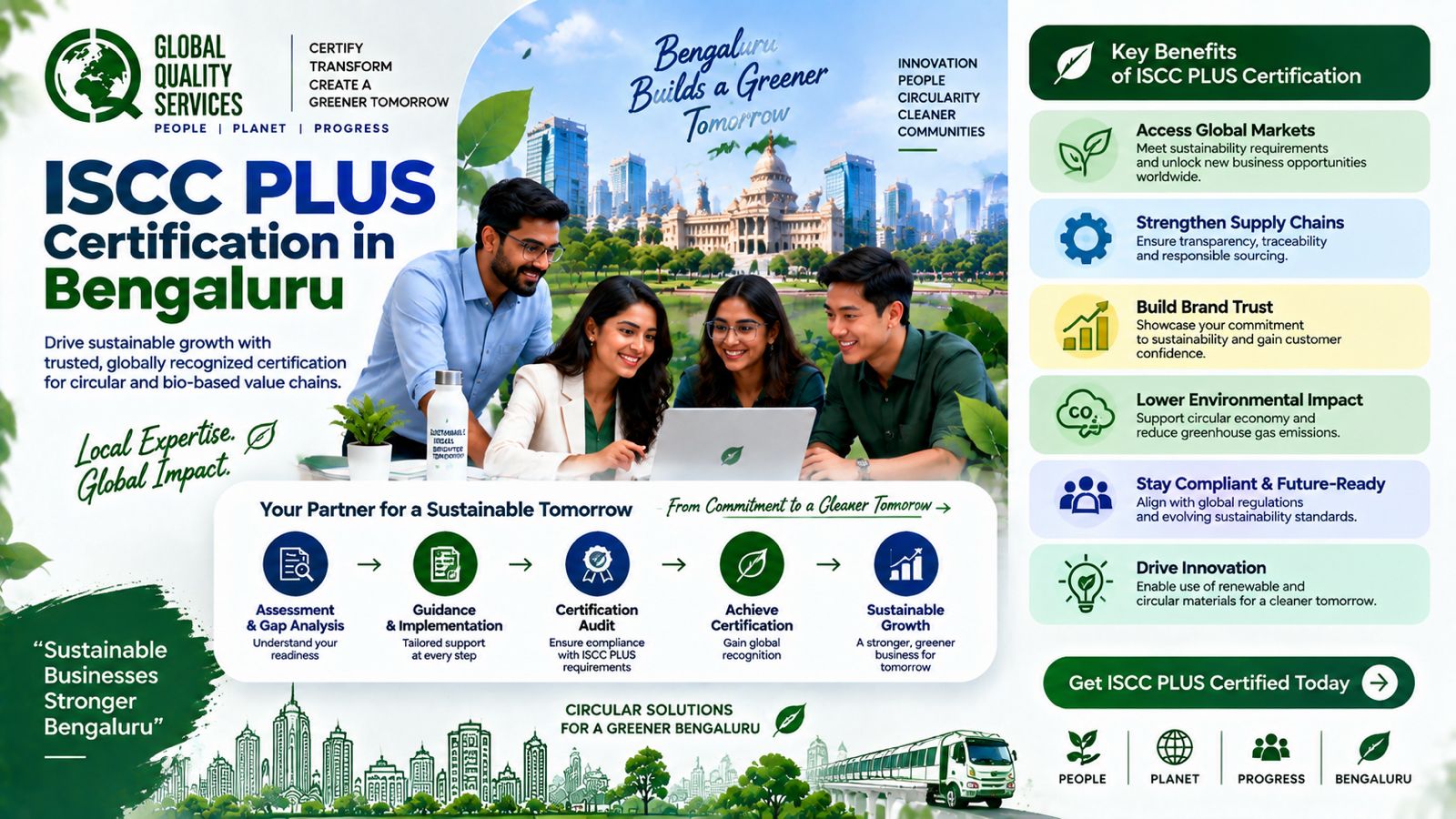
The core compliance task is to establish a traceable and auditable connection between eligible inputs, operational processes, certified outputs, and sustainability information.
Depending on the scope, Bengaluru organizations may need controls covering:
- Supplier qualification and documentation
- Alternative feedstock identification
- Incoming material verification
- Material traceability
- Storage controls
- Production records
- Inventory reconciliation
- Chain-of-custody accounting
- Mass-balance calculations where applicable
- Sustainability Declarations
- Customer and sales documentation
- Internal responsibilities
- Record retention
- Management system controls
- Correct use of sustainability claims
ISCC PLUS also covers sustainability requirements relating to areas such as environmental protection, social responsibility, labor and human rights, and compliance with applicable legal requirements.
The exact requirements need to be assessed against the applicable ISCC documents and the organization’s certification scope rather than treated as one universal checklist.
What Is Changing Under ISCC PLUS 203-2?
Bengaluru companies preparing for certification should build their systems around the current ISCC PLUS chain-of-custody requirements rather than relying indefinitely on older procedures.
ISCC PLUS 203-2 Chain of Custody was published on November 13, 2025. ISCC states that it is valid from that date and becomes mandatory from January 1, 2027. The document addresses physical segregation, controlled blending, and mass balance requirements.
This matters for an organization starting certification preparation during 2026.
A system that works under an older document may need adjustment before the new requirements become mandatory.
Areas worth reviewing include:
Chain-of-Custody Selection
The organization should clearly identify the approach being used for each relevant material flow.
Mass-Balance Methodology
Where mass balance is selected, the accounting methodology needs to correspond with the applicable ISCC requirements.
Input and Output Records
The organization should be able to reconcile relevant quantities and sustainability characteristics.
Attribution
Where applicable, the organization needs to understand how sustainability characteristics from certified inputs can be attributed to outputs.
ISCC’s current materials also discuss attribution approaches within the development of circular supply chains.
Sustainability Declarations
The organization needs to maintain appropriate evidence supporting certified material transactions and information passed through the supply chain.
How Should Bengaluru Companies Prepare Their Supplier Controls?
Supplier control should begin before the certified material reaches the Bengaluru facility because traceability depends on reliable information entering the organization.
Procurement teams should know:
- Which suppliers provide eligible alternative materials.
- What sustainability information is required.
- What documentation must accompany the material.
- How incoming quantities are verified.
- How supplier information is recorded.
- How discrepancies are handled.
This is particularly important where a Bengaluru manufacturer has a large supplier network.
A company sourcing materials through multiple vendors cannot rely on a general supplier declaration alone. The relevant material, quantity, sustainability characteristic, transaction, and supporting documentation need to remain connected.
What Records Should Be Ready for an ISCC PLUS Audit?
An organization should be able to provide objective evidence showing how certified materials and sustainability characteristics move through its system.
Depending on the scope, this can include:
Purchasing Evidence
Purchase orders, invoices, supplier information, contracts, specifications, and relevant sustainability documentation.
Goods Receipt Records
Documents confirming the material received, quantity, date, supplier, and relevant identification.
Inventory Records
Stock movements should correspond with actual material transactions and the selected chain-of-custody system.
Production Records
Production information should support the relationship between inputs and outputs.
Mass-Balance Records
Where applicable, the organization should maintain calculations showing relevant inputs, outputs, stock, conversions, and allocations.
Sales Records
Customer transactions should support the certified quantities and sustainability information communicated downstream.
Sustainability Declarations
Relevant declarations need to be managed and retained according to applicable ISCC requirements.
The objective is to make the material flow reconstructable during an audit.
How Does ISCC PLUS Certification Work in Bengaluru?
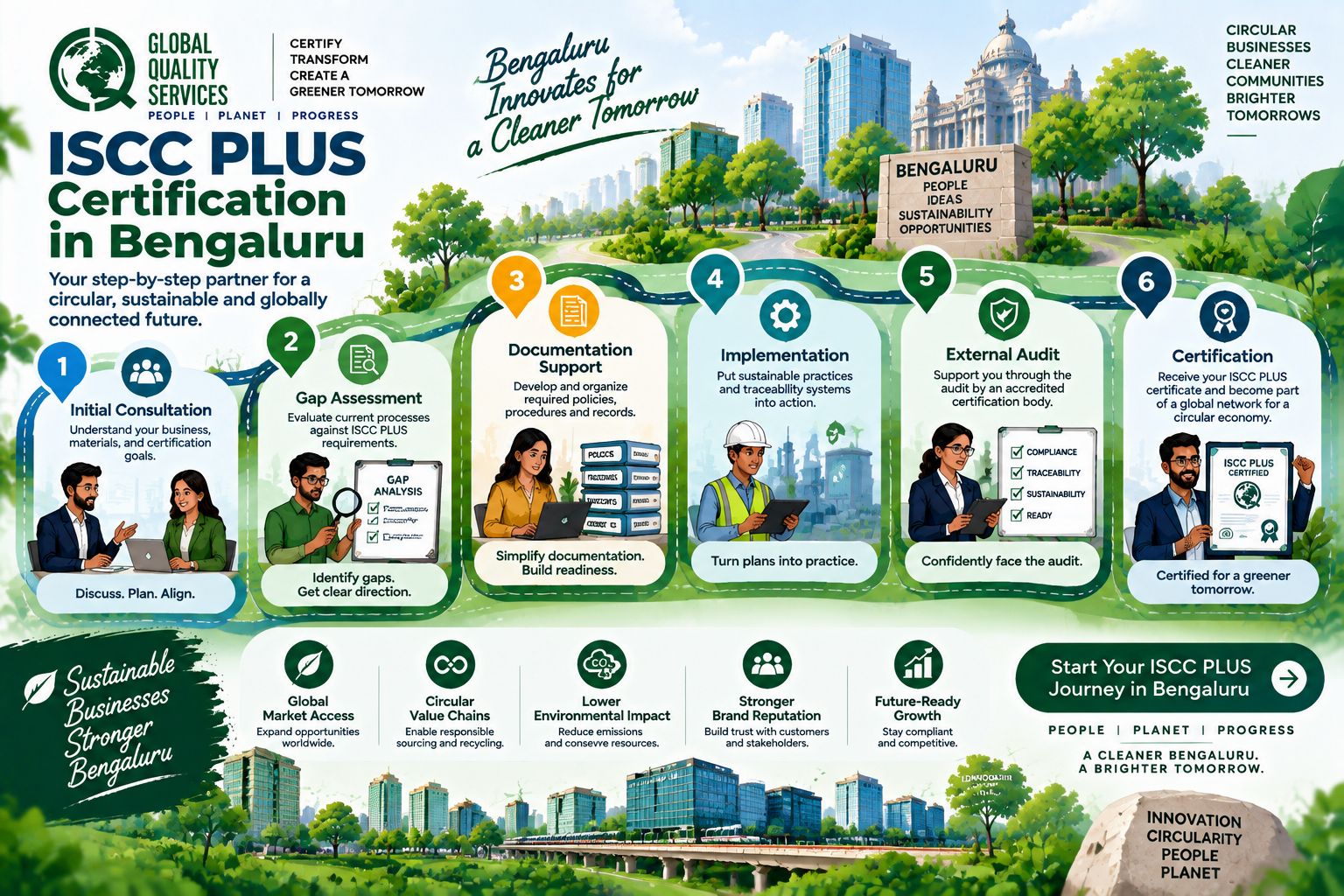
The certification process starts with determining the applicable scope and requirements, followed by implementation, evidence generation, and an independent certification audit.
1. Define the Business Activity
Identify whether the organization is a processing unit, trader, storage facility, or another relevant ISCC PLUS System User.
2. Identify Alternative Feedstocks
Determine which renewable, bio-based, circular, recycled, or other eligible materials are involved.
3. Establish the Certification Scope
Identify the relevant site, activities, products, material flows, and supply-chain relationships.
ISCC states that each site handling alternative materials must hold a valid ISCC PLUS certificate, with certificates issued per site and valid for 12 months.
4. Select the Chain-of-Custody Method
Determine whether physical segregation, controlled blending, or mass balance is appropriate.
5. Map the Material and Information Flow
Connect suppliers, receipts, storage, production, inventory, sales, and sustainability information.
6. Establish the Required Controls
Develop or strengthen procedures for traceability, supplier management, inventory, accounting, sustainability information, and claims.
7. Conduct a Readiness Review
GQS can assess the system against applicable requirements and identify gaps before the independent audit.
8. Complete the Certification Audit
The formal certification activity is conducted by an applicable ISCC cooperating Certification Body.
ISCC’s current Certification Body framework specifically emphasizes technical competence in areas such as traceability, chain of custody, and mass balance.
What Makes ISCC PLUS Different From a General Sustainability Certification?
ISCC PLUS focuses specifically on verified sustainability characteristics and traceability within relevant alternative-feedstock supply chains.
A general environmental or sustainability management system may address broad organizational practices.
ISCC PLUS addresses a more specific question:
- Can the organization demonstrate what happened to the eligible material and its sustainability characteristics as it moved through the certified supply chain?
- That distinction matters for Bengaluru manufacturers using recycled polymers, bio-based materials, circular feedstocks, or other eligible alternatives.
- The certification is therefore closely connected to procurement, production, inventory, transaction records, and customer documentation.
How Can GQS Help With ISCC PLUS Certification in Bengaluru?
GQS helps Bengaluru organizations translate ISCC PLUS requirements into practical controls that can work within their existing operations.
For organizations already operating ERP, warehouse management, production planning, or quality systems, the preparation can be structured around existing records wherever those records can satisfy the applicable requirements.
Why Choose GQS for ISCC PLUS Consultancy in Bengaluru?
GQS takes a process-based approach that connects ISCC PLUS requirements with the organization’s actual material and transaction flows.
For an electronics company in Electronics City, the certification challenge may involve alternative polymer or packaging materials.
For a pharmaceutical or biotechnology company, it may involve eligible bio-based materials and supplier documentation.
For a manufacturer in Peenya or Bommasandra, the focus may be on production records, inventory reconciliation, and mass balance.
For an aerospace supplier, the issue may be demonstrating traceability for a specific alternative material within a complex customer supply chain.
The preparation should therefore be based on the organization’s actual operations rather than a generic ISCC document package.
Start ISCC PLUS Certification Preparation in Bengaluru
The first step is to establish exactly what alternative materials are being used, where they come from, how they move through the facility, and what sustainability claim the organization needs to support.
From there, the certification scope and appropriate chain-of-custody method can be determined.
Organizations beginning preparation in 2026 should also account for the transition to ISCC PLUS 203-2, which becomes mandatory from January 1, 2027.
A properly scoped readiness review can help identify documentation, traceability, accounting, supplier, and operational gaps before the independent certification audit.
FAQs About ISCC PLUS Certification in Bengaluru
Is ISCC PLUS certification mandatory?
ISCC PLUS is a voluntary certification scheme. However, a customer, supply-chain requirement, procurement program, or particular market may require a supplier to demonstrate certified sustainability characteristics.
Can electronics companies in Bengaluru obtain ISCC PLUS certification?
Potentially, yes. ISCC PLUS is not an electronics-specific certification, but an electronics manufacturer can be relevant where eligible alternative materials form part of its certified supply chain.
Is mass balance compulsory under ISCC PLUS?
No. ISCC PLUS provides different chain-of-custody options, including physical segregation, controlled blending, and mass balance. The appropriate approach depends on the organization’s material flow and certification scope.
What is changing from January 2027?
ISCC PLUS 203-2 Chain of Custody, published in November 2025, becomes mandatory from January 1, 2027. Organizations preparing for certification should therefore ensure their systems are aligned with the applicable current requirements.
Does GQS issue the ISCC PLUS certificate?
GQS provides consultancy and certification-readiness support. The formal ISCC PLUS audit and certification are conducted by an applicable ISCC cooperating Certification Body. ISCC maintains competence and approval requirements for Certification Bodies.