In India, managing electronic waste is becoming increasingly urgent as e-waste volumes continue to grow rapidly. Recent government data shows e-waste surged by over 72% from 2019-20 to 2023-24, reaching about 1.75 million metric tonnes, with nearly 57% still untreated annually. With this backdrop, R2v3 certification India is emerging as a vital benchmark for formal recyclers.
It helps organizations adopt globally recognized recycling practices, strengthen environmental governance, and build trust with international markets, especially as responsible recycling gains strategic importance in India’s evolving regulatory landscape.
What is R2v3 Certification
R2v3 certification is an internationally recognized standard for responsible electronics recycling. It sets strict requirements for environmental protection, data security, worker safety, and downstream due diligence.
The standard ensures e-waste recyclers manage materials safely, prevent illegal exports, and maintain traceability throughout the recycling chain, supporting global compliance and sustainability goals.
Why R2v3 Certification Matters in India
R2v3 certification matters in India because the country is witnessing rapid growth in electronic consumption and e-waste generation. For recyclers, it goes beyond regulatory compliance and strengthens operational credibility. It aligns recycling practices with global standards, supports adherence to Indian E-Waste (Management) Rules, and enhances trust among international buyers. Ultimately, R2v3 positions Indian recyclers as responsible, transparent, and export-ready partners in the global electronics recycling ecosystem.
Why It Is Important:
- Strengthens environmental compliance and governance
- Enhances data security and material traceability
- Improves credibility with global clients and OEMs
- Supports export readiness and international market access
- Reduces regulatory and reputational risks
- Promotes structured and sustainable recycling operations
Environmental Compliance Requirement
Environmental compliance forms the backbone of R2v3 certification. Recyclers must:
- Identify and manage hazardous materials
- Ensure safe storage and segregation
- Prevent soil, water, and air contamination
- Maintain worker health and safety protocols
- Comply with Indian environmental regulations
Facilities must demonstrate adherence to environmental permits, waste handling regulations, and occupational safety requirements. Non-compliance can delay certification approval.
Documentation Requirements
Documentation under R2v3 is systematic and audit-driven. Key documents include:
- Environmental policy and objectives
- Risk assessments
- Data sanitization procedures
- Downstream vendor qualification records
- Shipment tracking logs
- Corrective action reports
Recyclers must maintain traceability from collection to final disposition. For exporters, documentation is critical to prove lawful transboundary movement under international waste regulations.
Strong document control improves transparency and reduces audit non-conformities.
R2v3 Audit Process
The R2v3 audit process evaluates compliance, documentation accuracy, operational controls, and environmental performance before certification approval through an independent third-party assessment.
R2v3 Audit Process Steps:
- Application Submission
Submit certification application and required organizational details to an accredited certification body. - Stage 1 Audit – Documentation Review
Auditors assess policies, procedures, risk assessments, and compliance records to verify readiness. - Stage 2 Audit – On-Site Assessment
Conduct facility inspections, employee interviews, and operational verification of recycling and data security processes. - Identification of Non-Conformities
Auditors issue observations or non-conformities requiring corrective action. - Corrective Action Closure
Implement and submit evidence of corrective actions within the defined timeline. - Certification Decision
Upon successful compliance verification, the certification body grants R2v3 certification. - Surveillance Audits
Periodic audits ensure continued compliance and performance improvement.
Export Benefits of R2v3 Certification
R2v3 certification strengthens export credibility, ensuring responsible recycling practices while meeting international buyer expectations and cross-border compliance requirements.
Key Export Benefits:
- Enhances acceptance in the US, EU, and global markets
- Builds trust with international OEMs and corporate clients
- Demonstrates verified downstream due diligence
- Improves data security assurance for overseas customers
- Reduces export compliance risks and shipment rejections
- Strengthens brand reputation in global supply chains
- Supports long-term contracts with multinational buyers
Implementation Steps for Indian Recyclers
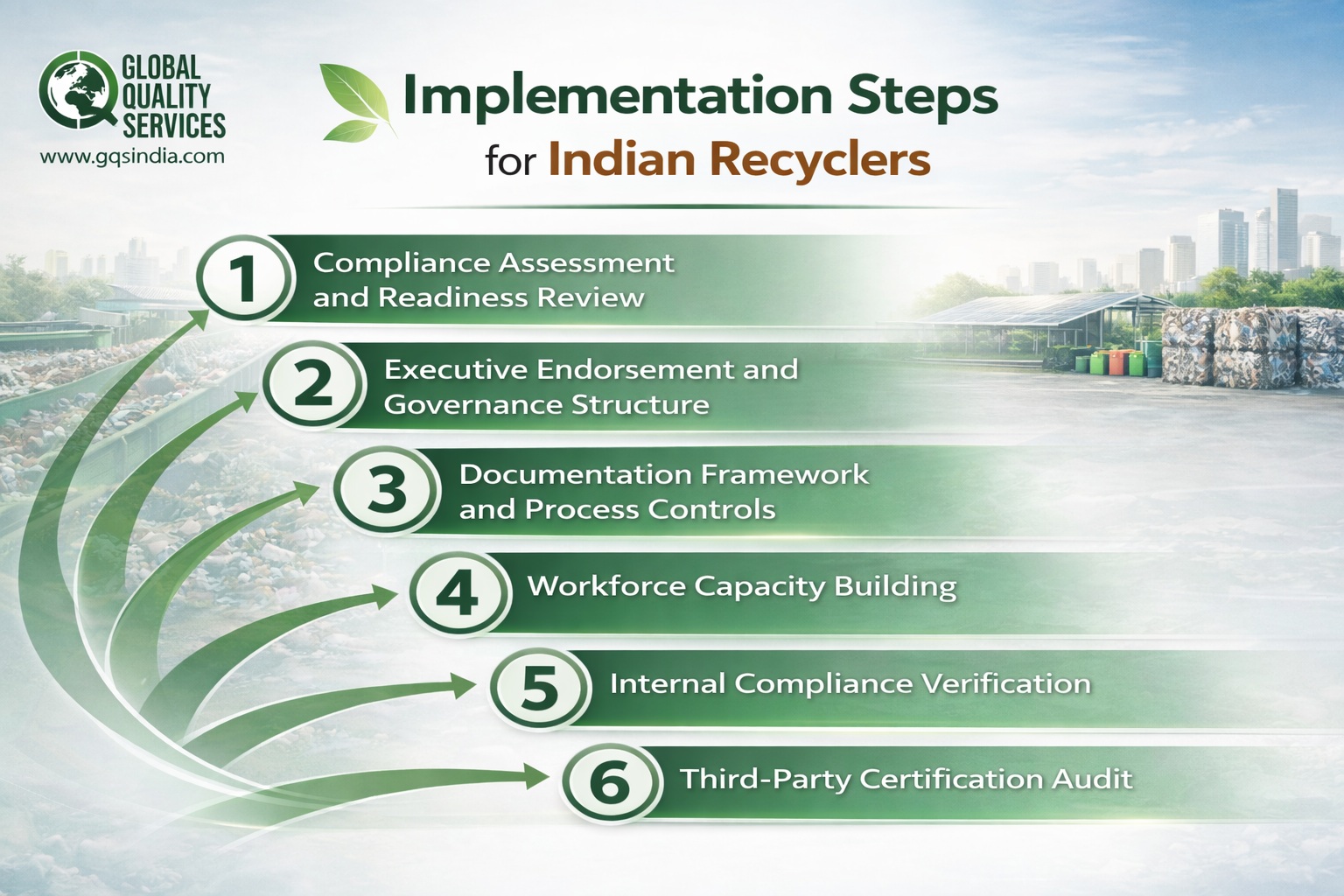
Successful R2v3 certification in India requires structured planning, regulatory alignment, operational discipline, and systematic execution across recycling processes and export controls.
1. Compliance Assessment and Readiness Review
Begin with a systematic evaluation of current operational practices against R2v3 standard requirements. Examine environmental controls, downstream vendor qualification, material traceability, data destruction practices, and export documentation. Identify operational gaps and prepare a structured action plan outlining corrective measures, ownership, and realistic implementation timelines.
2. Executive Endorsement and Governance Structure
Secure formal approval from top management to initiate R2v3 implementation. Allocate adequate budget, appoint a responsible compliance lead, and establish a governance framework that clearly defines accountability. Leadership involvement is essential to embed environmental stewardship, risk mitigation, and continual improvement into daily recycling operations.
3. Documentation Framework and Process Controls
Develop comprehensive policies covering environmental management systems, workplace safety, secure data sanitization, and downstream due diligence. Standardize procedures for collection, segregation, storage, dismantling, shipment tracking, and export compliance. Ensure documentation aligns with Indian statutory obligations and international best practices in responsible recycling.
4. Workforce Capacity Building
Provide structured training programs for plant operators, supervisors, and administrative personnel. Focus on hazardous waste handling, documentation accuracy, traceability protocols, and secure data destruction standards. A well-informed workforce reduces compliance risks and strengthens audit preparedness.
5. Internal Compliance Verification
Conduct a detailed internal audit to evaluate implementation effectiveness. Review records, inspect operational areas, verify environmental safeguards, and interview relevant staff members. Address identified non-conformities through documented corrective actions prior to scheduling the external audit.
6. Third-Party Certification Audit
Engage an accredited certification body authorized to conduct R2v3 audits in India. The audit process typically includes a documentation review (Stage 1) followed by an on-site verification (Stage 2). Demonstrate compliance through operational evidence, records, and management interviews. Timely closure of audit observations ensures successful certification approval.
FAQ’s
- What is R2v3 certification?
R2v3 certification is an international responsible recycling standard ensuring environmental compliance, data security, and lawful electronics export management for certified recyclers and refurbishers. - Is R2v3 mandatory in India?
R2v3 certification is not legally mandatory in India but often required by international buyers, OEMs, and exporters to ensure responsible recycling practices. - How long does R2v3 certification take?
Implementation typically takes three to six months, depending on facility readiness, documentation maturity, and corrective actions required before certification audit. - What is the validity of R2v3 certification?
R2v3 certification remains valid for three years, subject to annual surveillance audits conducted by accredited third-party certification bodies. - Does R2v3 help with export approvals?
Yes, R2v3 strengthens export credibility by demonstrating compliance with international environmental regulations, downstream traceability, and responsible electronics recycling standards. - How much does R2v3 certification cost in India?
Costs vary based on facility size, scope, audit duration, and consultancy support but typically include implementation, audit, and surveillance expenses.
Conclusion
For recyclers and exporters in India, R2v3 certification is not merely a regulatory requirement—it serves as a strategic differentiator. It reinforces environmental management practices, enhances data protection controls, and increases access to international markets.
Organizations seeking to scale exports, build stronger stakeholder trust, and comply with globally recognized electronics recycling standards can leverage R2v3 as a forward-looking investment in operational excellence and long-term growth. Connect with the best consultant for better growth.