Bengaluru’s manufacturing sector continues to expand across electronics, aerospace, automotive, and engineering. The Times of India reported that Karnataka cleared 17 projects worth ₹29,679 crore in September 2026, strengthening industrial activity.
As supplier networks grow, businesses need reliable factory inspections and second-party audits to verify quality, processes, capacity, and compliance.
Hiring an experienced consultant helps companies assess suppliers objectively and make informed sourcing decisions. Whether your supplier operates in Peenya, Bommasandra, Electronic City, Jigani, Whitefield, or another industrial area around Bengaluru, a structured factory audit can give your procurement and quality teams clearer evidence before making important supplier decisions.
What is a Second-Party Audit
A second-party audit is an audit conducted by a customer or an auditor representing the customer to evaluate a supplier against agreed requirements.
The audit can examine:
- Quality management practices
- Manufacturing processes
- Product specifications
- Raw material controls
- Production capacity
- Equipment and maintenance
- Process controls
- Inspection and testing
- Traceability
- Documentation
- Worker competence
- Health and safety practices
- Environmental controls
- Corrective actions
- Delivery and supplier performance
A second-party audit does not replace a third-party certification audit. Instead, it allows a customer to check whether a supplier meets its own requirements, contractual conditions, or applicable standards.
Why Do Businesses Need Factory Inspections in Bengaluru?
Choosing a supplier based only on quotations, certificates, or presentations can leave important questions unanswered. A physical factory inspection gives buyers an opportunity to see how the supplier actually operates.
An audit team can review production areas, speak with responsible personnel, examine records, observe processes, and verify evidence.
This can help businesses:
- Evaluate new suppliers before approval
- Verify existing supplier performance
- Check production capabilities
- Review quality controls
- Identify process gaps
- Verify manufacturing capacity
- Assess material traceability
- Review testing and inspection practices
- Check corrective action effectiveness
- Reduce supplier-related quality risks
- Support supplier development
- Maintain documented supplier evaluations
Supplier audits can also cover manufacturing, engineering, processing, logistics, and other supply-chain activities.
What Does a Factory Inspection in Bengaluru Cover?
The inspection scope depends on your products, industry, supplier requirements, and audit objectives. A typical factory assessment may include the following areas.
1. Factory Infrastructure and Facilities
Auditors review the production facility, storage areas, utilities, workplace organisation, material movement, and general operating conditions.
They may also check whether the available infrastructure matches the supplier’s production commitments.
2. Manufacturing Process Review
Auditors observe actual production activities and compare them with documented procedures or customer requirements.
They may review:
- Production flow
- Work instructions
- Process parameters
- Machine settings
- In-process inspections
- Operator controls
- Process monitoring
- Final production stages
3. Raw Material and Supplier Controls
The audit checks how the factory receives, identifies, stores, and controls incoming materials.
Auditors may review supplier approval records, incoming inspection results, material certificates, identification systems, and storage conditions.
4. Quality Control and Testing
Auditors examine how the factory checks product quality during production and before dispatch.
This may include:
- Inspection plans
- Testing procedures
- Sampling methods
- Measuring equipment
- Calibration records
- Test results
- Final inspection records
- Non-conforming product controls
5. Equipment and Maintenance
Production equipment can directly affect product quality and consistency.
The inspection may review preventive maintenance schedules, breakdown records, machine condition, maintenance responsibilities, and equipment availability.
6. Traceability and Documentation
Traceability helps businesses connect finished products with materials, production batches, inspection results, and relevant records.
Auditors can check whether the factory maintains appropriate identification and documentation throughout production.
7. Worker Competence
A factory may have good equipment but still face quality problems when employees lack appropriate training or process knowledge.
The audit can review training records, job responsibilities, operator qualifications, and competency requirements.
8. Health, Safety and Environmental Practices
Depending on the audit scope, auditors can review workplace safety practices, emergency arrangements, waste handling, environmental controls, and relevant legal or customer requirements.
Second-Party Supplier Audit vs Factory Inspection
These terms often overlap, but they can serve different purposes.
| Aspect | Factory Inspection | Second-Party Audit |
| Main purpose | Check factory condition or capability | Evaluate supplier against customer requirements |
| Scope | Can focus on specific areas | Usually follows defined audit criteria |
| Performed by | Customer or appointed inspector | Customer or representative |
| Focus | Facility, products, processes, equipment | Supplier performance and compliance |
| Outcome | Inspection findings | Audit findings and corrective actions |
| Follow-up | Depends on scope | Often includes corrective-action verification |
A business can combine both approaches when it wants a detailed supplier assessment before approval or during periodic supplier monitoring.
When Should You Conduct a Second-Party Factory Audit?
There is no single schedule that suits every supplier. Audit frequency should reflect supplier criticality, previous performance, risk, and business requirements.
You may consider an audit when:
Before Approving a New Supplier
An initial factory assessment can help your procurement team understand the supplier’s capabilities before entering a long-term relationship.
Before Placing a Large Order
A factory inspection can help verify whether the supplier has suitable production capacity, equipment, quality controls, and manpower.
After Repeated Quality Problems
If a supplier repeatedly delivers defective products, an on-site audit can help identify process-level issues.
After Major Process Changes
New machinery, facilities, production lines, materials, or manufacturing processes may justify a fresh assessment.
During Periodic Supplier Reviews
Regular audits can help buyers track supplier performance and verify that previously identified issues remain under control.
How Does a Second-Party Factory Audit Work?
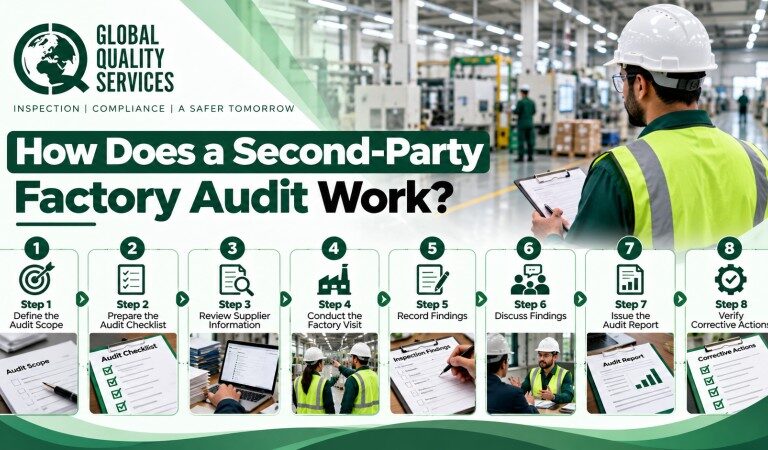
A structured audit helps auditors collect consistent evidence and gives suppliers clear expectations.
Step 1: Define the Audit Scope
The customer identifies the supplier, products, processes, locations, standards, contractual requirements, and specific areas for review.
Step 2: Prepare the Audit Checklist
The auditor develops questions and checkpoints based on customer requirements, applicable standards, product specifications, and supplier risks.
Step 3: Review Supplier Information
Relevant procedures, previous audit reports, quality records, certificates, production information, and corrective-action records may be reviewed before the site visit.
Step 4: Conduct the Factory Visit
Auditors inspect the facility, observe manufacturing activities, interview employees, review records, and collect objective evidence.
Step 5: Record Findings
The audit team documents conformities, non-conformities, observations, and improvement opportunities based on available evidence.
Step 6: Discuss Findings
The auditor discusses significant findings with supplier representatives during the closing meeting.
Step 7: Issue the Audit Report
The final report records the audit scope, evidence, findings, and relevant recommendations or corrective-action requirements.
Step 8: Verify Corrective Actions
Where required, the auditor reviews evidence submitted by the supplier and verifies whether corrective actions address the identified issues. This follow-up approach forms part of common second-party audit processes.
Key Industries That Can Benefit From Factory Audits in Bengaluru
Bengaluru’s industrial ecosystem supports a wide range of manufacturing activities. Supplier audits can therefore serve businesses across several sectors.
Electronics and Electrical Manufacturing
Audits can assess component controls, assembly processes, testing, traceability, and production quality.
Automotive and Engineering
Auditors can review machining, assembly, process controls, inspection systems, maintenance, and supplier quality practices.
Aerospace and Defence
Depending on customer requirements, audits can examine process controls, traceability, documentation, special processes, and quality systems.
Pharmaceutical and Healthcare Products
Audits may focus on manufacturing controls, hygiene, documentation, material controls, testing, and applicable quality requirements.
Food and Beverage
Factory assessments can review production hygiene, raw materials, process controls, storage, sanitation, and product quality practices.
Consumer Products
Businesses can use supplier audits to assess manufacturing capability, product specifications, inspection systems, packaging, and delivery controls.
What are the Benefits of Second-Party Factory Audits
Make Better Supplier Decisions
Audit evidence gives procurement and quality teams more information before approving or continuing a supplier relationship.
Identify Process Weaknesses
An on-site assessment can reveal gaps that may not appear during document reviews.
Improve Supplier Accountability
Clear audit findings give suppliers specific areas to address and track.
Strengthen Quality Control
Regular supplier assessments can encourage better process monitoring, inspection, testing, and documentation.
Reduce Supply Chain Disruptions
Reviewing production capacity, equipment, materials, and process controls can help identify potential issues before they affect deliveries.
Support Supplier Development
Audits can highlight practical improvement opportunities and create a basis for constructive discussions with suppliers.
Maintain Audit Records
Detailed reports create documented evidence of supplier evaluation, findings, corrective actions, and follow-up activities.
Why Choose Global Quality Services for Factory Inspection and Second-Party Audits in Bengaluru
With Global Quality Services, you get practical support for factory inspections and second-party audits in Bengaluru. Our team assesses manufacturing processes, quality controls, equipment, documentation, traceability, and supplier practices based on your audit requirements.
We help you identify gaps, verify supplier capabilities, and make informed sourcing decisions. Contact Global Quality Services for clear findings, detailed reports, and professional audit support tailored to your business needs.
Frequently Asked Questions
1. What is a second-party audit of a factory?
A second-party factory audit evaluates a supplier on behalf of its customer against defined quality, process, contractual, technical, or compliance requirements.
2. What does a factory inspection in Bengaluru include?
A factory inspection can cover production processes, equipment, raw materials, quality controls, testing, documentation, traceability, worker competence, safety, and facility conditions.
3. When should businesses conduct supplier audits?
Businesses can audit suppliers before approval, after quality problems, before major orders, following significant process changes, or during periodic supplier performance reviews.
4. Can second-party audits cover different industries?
Yes. Audit criteria can be tailored for electronics, automotive, engineering, aerospace, pharmaceuticals, food processing, consumer products, and other manufacturing sectors.
5. What happens after a second-party factory audit?
The auditor issues a report documenting findings and evidence. Where required, the supplier submits corrective actions, and the customer or auditor verifies their implementation.