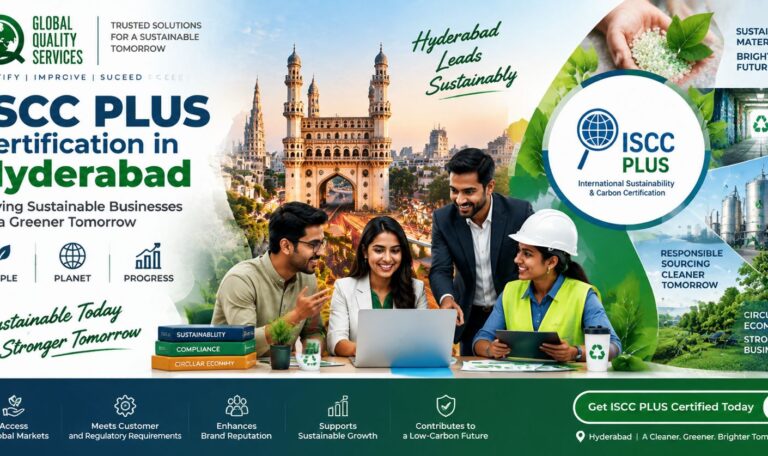
Businesses in Delhi that use recycled, bio-based, or other alternative raw materials may need to show where these materials come from and how they move through the supply chain. ISCC PLUS Certification in Delhi provides a recognized framework for tracking these materials and verifying their sustainability characteristics.
ISCC PLUS is a voluntary certification scheme that supports circular and bio-based supply chains. It covers alternative feedstocks and provides different chain-of-custody options, including physical segregation, controlled blending, and mass balance. Global Quality Services (GQS) helps Delhi organizations understand the requirements, prepare their systems and records, and get ready for the certification audit.
What Is ISCC PLUS Certification?
ISCC PLUS is a sustainability certification system for organizations working with alternative raw materials. These materials can include recycled materials, waste-derived materials and bio-based feedstocks. The certification focuses on areas such as:
- Traceability of materials
- Supplier information
- Chain of custody
- Material quantities
- Sustainability characteristics
- Records and documentation
- Correct use of ISCC claims
Every relevant site in the certified supply chain needs to meet the applicable requirements. ISCC states that certificates are issued per site and are valid for 12 months.
Why Is ISCC PLUS Important for Delhi Businesses?
ISCC PLUS can help Delhi companies demonstrate that alternative materials are being properly tracked through their operations.

This can be particularly useful for manufacturers and suppliers working with customers that ask for documented sustainability information. Delhi has a large network of industrial areas and manufacturing units. Government records list industrial areas such as Okhla, Patparganj, Narela, Bawana, Wazirpur, Naraina, Mayapuri, Lawrence Road and Badli.
The Bawana industrial area also includes businesses across sectors such as electronics, electrical goods, auto parts, printing and packaging, plastics, petroleum-based products and chemicals.
Which Businesses Can Use ISCC PLUS in Delhi?
ISCC PLUS may be relevant to organizations that handle eligible alternative feedstocks or materials within their supply chain.
Plastic and Packaging Companies
Plastic manufacturers, converters and packaging companies may use recycled or alternative materials and need to maintain clear records of material flows.
Chemical Companies
Chemical manufacturers and processors may use alternative feedstocks in their production processes and need to demonstrate traceability.
Recycling Companies
Recycling businesses may need to maintain clear information about incoming materials, processing activities and outgoing certified products.
Printing and Paper Businesses
Companies working with paper, packaging and related materials may consider ISCC PLUS when their products or raw materials fall within the applicable certification scope.
Manufacturing Companies
Manufacturers supplying products to customers with sustainability requirements may need documented information about certified materials used in their products.
What Are the Main ISCC PLUS Requirements?
The requirements are mainly about knowing what material enters your organization, where it comes from, how it is handled, and what happens to it afterward.
Supplier Records
Your organization should be able to identify suppliers and maintain the required sustainability information for incoming certified materials.
Material Traceability
Records should allow the movement of certified materials to be followed through the relevant stages of the supply chain.
Chain of Custody
The organization must select and correctly apply an applicable chain-of-custody method.
Quantity Records
The quantities of certified inputs and outputs need to be properly recorded and controlled.
Supporting Documents
Purchase documents, delivery records, sustainability information, production records and sales documents may form part of the evidence reviewed during the audit.
Which Chain-of-Custody Method Can a Delhi Company Use?
ISCC PLUS provides three main options: physical segregation, controlled blending and mass balance.
Physical Segregation
Certified and non-certified materials are kept physically separate throughout the relevant stages.
Controlled Blending
Different materials can be combined under defined conditions while maintaining the required information and controls.
Mass Balance
Certified and non-certified materials can move through the same system while the certified characteristics and quantities are carefully accounted for.
The correct method depends on the company’s materials, production process and supply chain.
How Does Mass Balance Work?
Mass balance allows certified and non-certified materials to be processed within the same system while keeping track of the certified quantities and sustainability characteristics.
For Delhi companies using this approach, accurate input, production, stock and sales records are particularly important.
ISCC PLUS 203-2 is currently valid and becomes mandatory from 1 January 2027. Until 31 December 2026, the applicable transition requirements continue to apply.
What Records Should a Delhi Company Keep?
A company should maintain records that make its certified material flows easy to verify.
These may include:
- Supplier and purchase records
- Delivery documents
- Sustainability information
- Production records
- Stock records
- Material balance calculations
- Sales and dispatch records
- Certified product information
- Internal procedures and responsibilities
The exact records depend on the organization’s scope and selected chain-of-custody method.
How Does ISCC PLUS Certification Work?

The certification process normally starts by identifying the correct scope and understanding the applicable ISCC PLUS requirements.
Step 1: Identify the Scope
The organization identifies its site, activities, materials and relevant supply-chain processes.
Step 2: Review the Requirements
The existing procedures, supplier controls, traceability records and material accounting are reviewed.
Step 3: Prepare the System
Any gaps are addressed and the required documents, records and controls are put in place.
Step 4: Certification Audit
An applicable ISCC Certification Body conducts the certification audit.
Step 5: Certification and Ongoing Control
Once the applicable requirements are met, the certification process can be completed. The organization must continue maintaining the required controls and records.
What Should Delhi Companies Check Before the Audit?
Before the audit, it is useful to check whether the information in different records matches.
For example, the quantity purchased from a supplier should be consistent with receiving records and the organization’s material accounting. Production and sales records should also support the certified quantities being claimed.
Simple and consistent records can make the audit process easier.
Why Choose Global Quality Services?
Preparing for ISCC PLUS requires more than creating documents. Your material records, supplier information, production data and claims need to work together.
GQS helps organizations build a practical system around their actual operations instead of creating unnecessary paperwork.
The focus is on making the requirements easier to understand, identifying gaps early and helping your team prepare for the certification audit.
If your Delhi organization works with recycled, bio-based or other eligible alternative materials, ISCC PLUS may provide a structured way to demonstrate sustainability characteristics and traceability.
GQS can help you understand the applicable requirements, prepare your documentation and get your organization ready for the certification process.
Frequently Asked Questions
Is ISCC PLUS mandatory in Delhi?
No. ISCC PLUS is a voluntary certification scheme. However, a customer, supply-chain requirement or market may require a company to demonstrate ISCC PLUS certification.
Which companies in Delhi can apply for ISCC PLUS?
Companies handling eligible alternative feedstocks can consider ISCC PLUS. This may include manufacturers, processors, recyclers, traders, storage facilities and other relevant supply-chain organizations.
Is ISCC PLUS only for plastic companies?
No. ISCC PLUS can apply to different supply chains involving eligible alternative feedstocks, including recycled and bio-based materials.
Can GQS issue the ISCC PLUS certificate?
GQS provides consultancy and certification-readiness support. The formal certification audit and certification decision are handled by an applicable ISCC Certification Body.
What is changing in ISCC PLUS?
ISCC PLUS 203-2 Chain of Custody is already valid and becomes mandatory from 1 January 2027. Organizations preparing for certification should therefore consider the current and upcoming requirements when designing their traceability and chain-of-custody systems.