
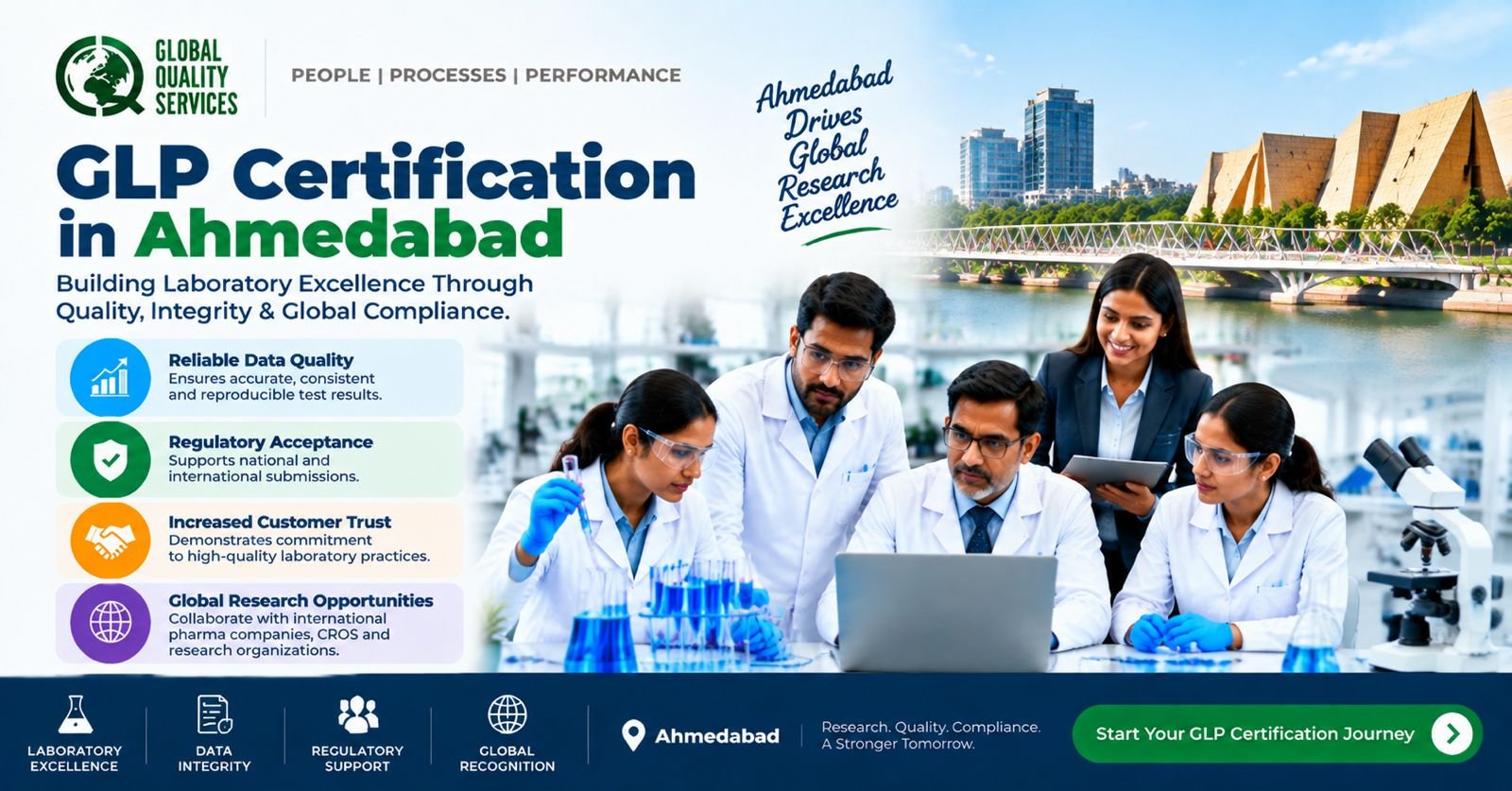
Ahmedabad has a strong pharmaceutical, contract research, chemical, and laboratory testing ecosystem extending across areas such as Gota, S.G. Highway, Moraiya, Sanand, Changodar, and the Ahmedabad-Bavla industrial corridor. For organizations conducting applicable non-clinical health and environmental safety studies in this region, Good Laboratory Practice (GLP) provides a structured framework for controlling study activities, laboratory procedures, data, quality assurance, and records.
GLP Certification in Ahmedabad helps eligible test facilities demonstrate that they conduct applicable studies through defined, controlled systems. In India, the National GLP Compliance Monitoring Authority (NGCMA) under the Department of Science & Technology oversees the national GLP compliance monitoring program.
Why Is GLP Relevant to Ahmedabad’s Pharmaceutical and Research Sector?
GLP is particularly relevant to Ahmedabad because the wider region includes pharmaceutical companies, CROs, research organizations, analytical laboratories, and chemical manufacturers that may conduct or commission studies requiring controlled and traceable safety data.
NGCMA states that GLP certification in India is voluntary and that eligible test facilities conducting safety studies for submission to regulatory authorities can apply for certification in specified areas of expertise. These records include areas such as toxicity studies, mutagenicity, analytical and clinical chemistry, bioanalysis, DMPK, and other specialized studies.
What Does GLP Compliance Cover?
GLP compliance covers the systems used to control the complete lifecycle of an applicable non-clinical study, from study planning through final reporting and archiving.
- Organization and Responsibilities
- Facilities and Equipment
- Standard Operating Procedures
- Study Plans and Study Conduct
- Raw Data and Data Integrity
- Quality Assurance
- Reporting and Archiving
This makes GLP particularly relevant for laboratories operating across Ahmedabad’s wider pharmaceutical and research belt, not just within the city’s central areas.
What Is the GLP Certification Process in Ahmedabad?
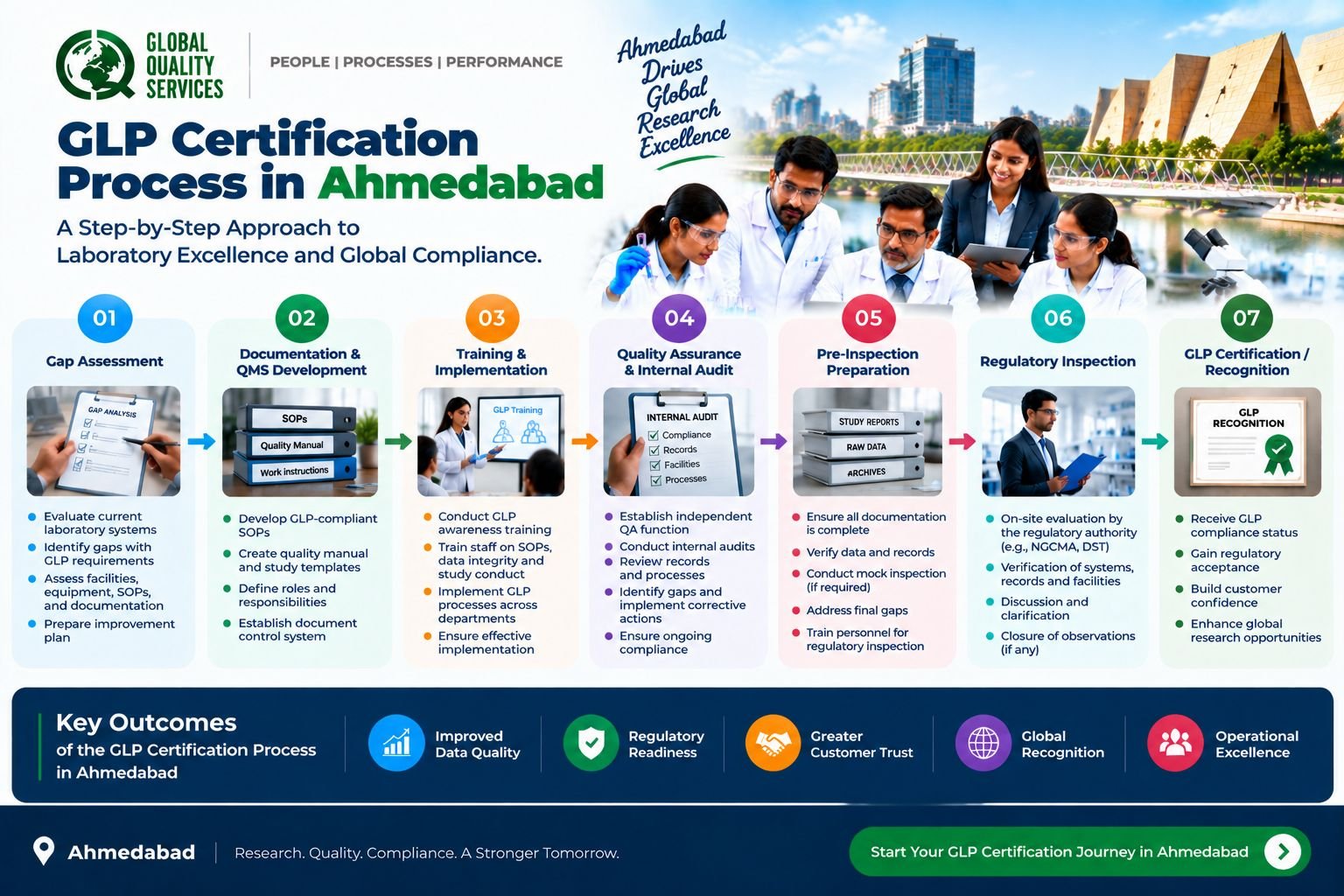
The GLP certification process begins with determining the applicable scope and preparing the test facility for the NGCMA inspection and evaluation.
Identify the Applicable GLP Scope
The facility must first determine which GLP areas apply to its activities. This can include physicochemical testing, toxicity, mutagenicity, environmental toxicity, residue studies, analytical and clinical chemistry, or other specialized studies listed within the NGCMA program.
Conduct a GLP Gap Assessment
A gap assessment reviews the existing laboratory system against the applicable GLP requirements. The review should cover responsibilities, personnel, facilities, equipment, SOPs, study documentation, QA, raw data, electronic records, deviations, reporting, and archiving.
Develop and Strengthen Documentation
Address gaps identified during the assessment through appropriate procedures, SOPs, forms, and records. Documentation should reflect how the laboratory actually operates. Creating procedures that are not followed in practice can create additional compliance problems during an inspection.
Implement the GLP System
Personnel need to work according to approved procedures, maintain appropriate records,s and understand their responsibilities. Equipment controls, document control, study records, QA activities, and data-integrity controls should operate consistently rather than remain only documented policies.
Conduct Internal Readiness Reviews
Internal reviews can identify unresolved issues before the formal inspection. The review can examine study files, raw data, SOP implementation, equipment records, QA records, personnel training,g and other evidence relevant to the proposed certification scope.
Apply and Prepare for NGCMA Inspection
NGCMA’s published process includes submitting the prescribed application, a pre-inspection,n and a final inspection. The Technical Committee on GLP reviews the final inspection report before the competent authority makes the certification decision.
NGCMA also maintains separate documents covering its application process, terms and conditions, inspection procedures, document and record control, inspection-result evaluation, and other certification-related procedures.
Maintain GLP Compliance
GLP certification requires continuing system control. NGCMA states that certification is valid for three years, with surveillance at 18 months and reassessment in the third year to maintain certification.
Which Areas Around Ahmedabad Can GLP Certification Support Cover?
GLP consultancy and readiness support can support organizations across Ahmedabad and its surrounding pharmaceutical and industrial corridors.
Gota and S.G. Highway
Gota and the S.G. Highway corridor have become an important business and research area, with pharmaceutical and CRO activity across the wider Ahmedabad region. Organizations conducting applicable studies can assess whether GLP requirements apply to their activities and intended regulatory use of data.
Moraiya and the Ahmedabad-Sanand Corridor
Moraiya is particularly relevant to the pharmaceutical and research ecosystem south-west of Ahmedabad. NGCMA records include a GLP-certified Zydus Research Center facility in Moraiya, with listed areas including toxicity, mutagenicity, analytical and clinical chemistry, DMPK, and safety pharmacology.
Changodar and Matoda
The Changodar-Matoda area forms another important part of Ahmedabad’s pharmaceutical and industrial belt. NGCMA records include Accuprec Research Labs in this area, with listed GLP expertise in analytical testing, bioanalysis, method validation, toxicokinetic studies, toxicity and mutagenicity studies, and other activities.
Sanand and the Ahmedabad-Bavla Industrial Belt
Sanand and the surrounding Ahmedabad-Bavla corridor include manufacturing, pharmaceutical, and industrial activities. Organizations performing applicable non-clinical safety studies in this wider belt can assess their GLP requirements based on study scope and intended regulatory submissions.
Ahmedabad-Gandhinagar Research Corridor
The broader Ahmedabad-Gandhinagar region also supports pharmaceutical, biotechnology, analytical,l and research activities. For organizations operating across this corridor, assess GLP requirements based on the actual studies and test systems involved rather than the organization’s industry classification.
What Are the Benefits of GLP Certification for Ahmedabad Laboratories?
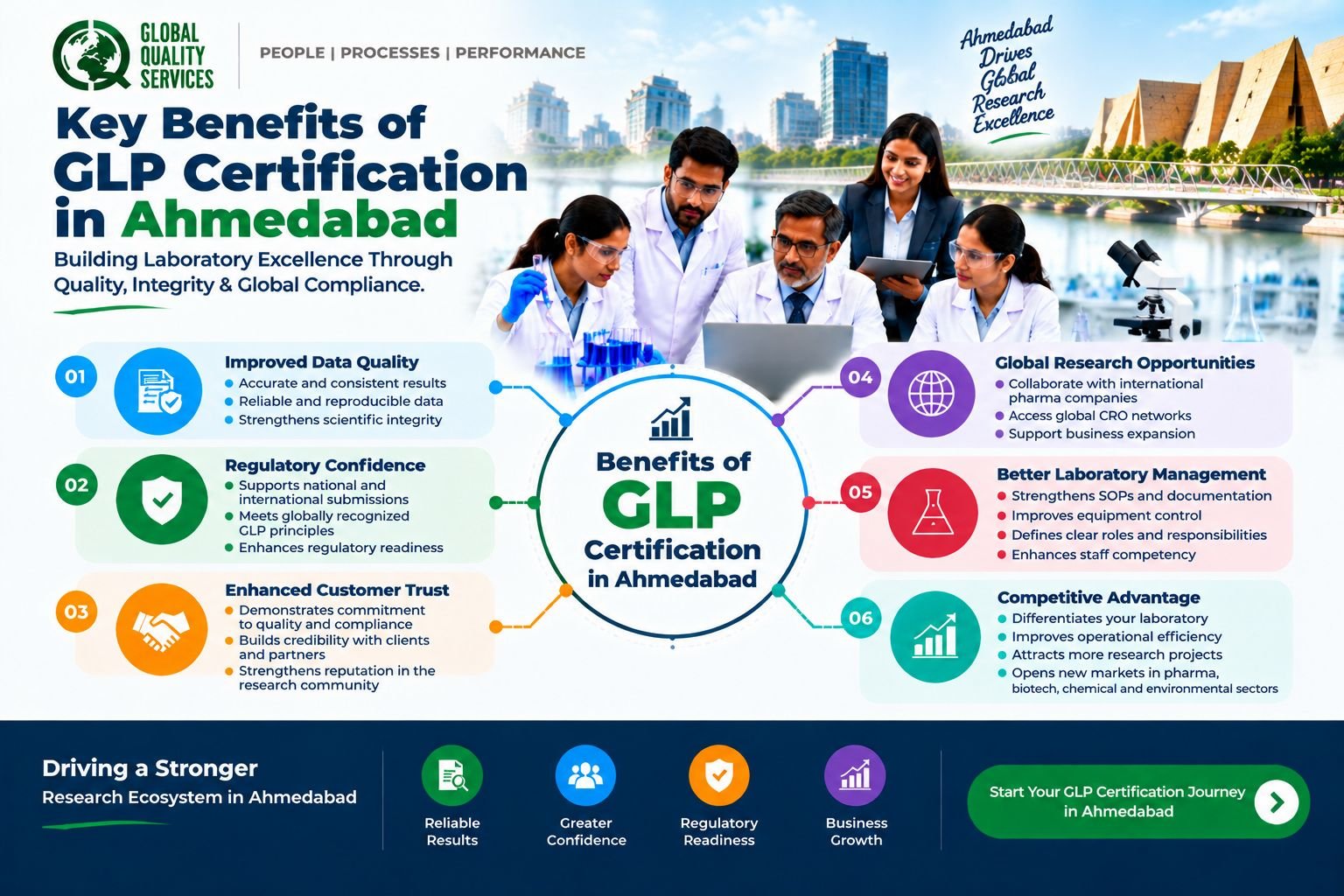
GLP certification provides a structured quality framework for generating and maintaining reliable non-clinical safety data within the approved scope of a test facility.
Better Control of Laboratory Activities
Defined responsibilities, SOPs, equipment controls, and documented study procedures help establish consistency across laboratory operations.
Improved Data Traceability
Controlled raw data, study documentation,nn and archived records make it easier to trace how study results were generated and reconstruct key study activities.
Stronger Quality Assurance
An independent QA function provides structured oversight of applicable studies and laboratory processes.
Greater Regulatory Confidence
A documented GLP system demonstrates that applicable studies have been performed within a recognized quality framework.
Support for Applicable International Regulatory Submissions
India’s national GLP program is based on OECD GLP principles. This is relevant for organizations generating applicable safety data for regulatory submissions in India and other jurisdictions participating in the OECD Mutual Acceptance of Data framework.
How GQS Helps with GLP Certification Readiness in Ahmedabad
With over 26+ years of industry experience, Global Quality Services delivers structured consulting, comprehensive documentation support, focused training programs, and end-to-end audit preparation. Our expert team ensures seamless implementation and effective regulatory coordination for timely GLP Certification in Ahmedabad. Contact us today to initiate your certification journey with confidence.
FAQs About GLP Certification in Ahmedabad
Is GLP certification mandatory for laboratories in Ahmedabad?
GLP certification under the NGCMA program is voluntary. However, organizations conducting applicable safety studies should determine whether GLP requirements are relevant to their studies and intended regulatory submissions.
Which Ahmedabad laboratories can apply for GLP certification?
Eligible test facilities conducting applicable non-clinical safety studies for submission to regulatory authorities can apply. The NGCMA program covers areas including physical-chemical testing, toxicity, mutagenicity, environmental toxicity, residue studies, analytical and clinical chemistry, and specialized GLP studies.
Is GLP certification different from GLP training?
Yes. GLP training provides knowledge to individuals, while GLP certification under the NGCMA program evaluates an eligible test facility’s compliance with applicable GLP requirements.
How long is GLP certification valid in India?
NGCMA states that GLP certification is valid for three years, with surveillance at 18 months and reassessment in the third year to maintain certification.
Can GQS help a laboratory in Ahmedabad prepare for GLP certification?
Yes. GQS can support eligible facilities through GLP gap assessment, documentation and SOP support, system implementation guidance, QA and data-control reviews, and inspection readiness. The applicable NGCMA process handles formal certification.