
Chennai has a strong manufacturing base covering automotive, electronics, engineering, aerospace, and industrial equipment. Areas such as Sriperumbudur, Oragadam, Ambattur, Irungattukottai, Vallam-Vadagal, Pillaipakkam, and Gummidipoondi host a wide range of manufacturing operations. The city’s industrial activity is also attracting major investments. In September 2026, Daimler Truck announced an additional ₹4,000 crore investment linked to its Chennai operations in Oragadam, strengthening its engineering, R&D, and manufacturing capabilities.
With so many suppliers operating across Chennai and its industrial corridors, buyers cannot rely only on paperwork when evaluating factories. Factory inspections and second-party audits give businesses a closer look at production practices, quality controls, equipment, materials, traceability, and supplier capabilities. Hiring an experienced inspection consultant helps businesses verify these areas on-site and make better-informed supplier decisions.
What is a Second-Party Factory Audit?
A second-party factory audit is an assessment carried out by a buyer, customer, or an appointed consultant at a supplier’s facility.
Instead of simply reviewing certificates or supplier declarations, the audit team visits the factory and checks how the supplier actually operates.
Depending on your requirements, a second-party audit in Chennai can examine:
- Manufacturing and production processes
- Quality control procedures
- Raw material management
- Incoming and final inspections
- Production capacity
- Machinery and equipment
- Calibration practices
- Product testing
- Material traceability
- Storage and handling
- Worker competency
- Health and safety practices
- Environmental controls
- Documentation and records
- Corrective action practices
This approach gives procurement and quality teams practical information before they commit to a supplier or continue an existing business relationship.
Why Do Businesses Need Factory Inspections in Chennai?
Choosing a supplier based only on quotations, certificates, or company presentations can leave important questions unanswered.
A factory visit gives you the opportunity to see the production floor, speak with relevant personnel, review records, and compare actual practices with your requirements.
This becomes particularly useful in Chennai’s manufacturing corridors, where suppliers support automotive, electronics, engineering, aerospace, and other industrial sectors. Invest India lists major manufacturing clusters around Oragadam, Sriperumbudur, Irungattukottai, Vallam-Vadagal, Pillaipakkam, and Gummidipoondi.
Businesses can use second-party audits to:
- Evaluate a new supplier before onboarding
- Check an existing supplier’s performance
- Verify manufacturing capabilities
- Review quality systems
- Assess production capacity
- Check material traceability
- Identify process weaknesses
- Investigate recurring quality problems
- Verify corrective actions
- Support supplier development
- Reduce avoidable supply chain risks
What Does a Factory Inspection in Chennai Cover?
A factory inspection should match your product, industry, purchase requirements, and supplier risks. A consultant can structure the inspection around the areas that matter most to your business.
1. Factory Infrastructure and Production Facilities
The inspection team reviews the factory layout, production areas, storage facilities, utilities, cleanliness, material movement, and general working conditions.
For suppliers located in areas such as Ambattur, Oragadam, Sriperumbudur, or Gummidipoondi, this helps buyers understand whether the facility can support the expected production requirements.
2. Manufacturing Process
Auditors follow the manufacturing process from incoming materials through production and final output.
They may examine:
- Production controls
- Work instructions
- Process parameters
- In-process inspections
- Production records
- Rework procedures
- Defect handling
- Final inspection
The objective is to understand whether the supplier follows controlled and repeatable processes.
3. Raw Material and Supplier Controls
Raw materials can directly affect the quality of the finished product.
A factory inspection can review how the supplier receives, identifies, stores, verifies, and issues materials for production. Auditors may also check supplier approval records and incoming inspection practices.
4. Quality Control and Testing
The audit team reviews how the factory identifies and controls quality issues.
This may include checking inspection plans, testing equipment, sampling methods, inspection records, rejected products, and corrective actions.
Where required, auditors can also verify whether testing equipment has appropriate calibration records.
5. Equipment and Maintenance
Production equipment needs proper maintenance to support consistent output.
Auditors can review preventive maintenance schedules, breakdown records, equipment condition, maintenance procedures, and operator checks.
This is especially relevant when suppliers manufacture precision components, automotive parts, machinery, or electronic products.
6. Traceability and Documentation
Traceability helps businesses connect finished products with their materials, batches, production records, and inspection results.
During an audit, consultants can review batch identification, serial numbers, production records, inspection reports, and document-control practices.
7. Employee Competence and Workplace Practices
People directly influence production quality.
The audit can examine employee training, job responsibilities, competency records, work instructions, and awareness of quality requirements.
Auditors may also review workplace safety practices relevant to the factory’s operations.
Factory Inspection vs Second-Party Audit
Although businesses sometimes use these terms interchangeably, they can have different purposes.
| Aspect | Factory Inspection | Second-Party Audit |
| Main purpose | Check factory, product, or process condition | Evaluate supplier against defined requirements |
| Focus | Physical and operational checks | Supplier systems, processes, and performance |
| Scope | Can be narrow or product-specific | Usually broader and requirement-driven |
| Timing | Before, during, or after production | Often during supplier qualification or periodic review |
| Outcome | Inspection findings | Audit findings and corrective actions |
In practice, businesses can combine both approaches when they need a detailed supplier evaluation.
When Should You Conduct a Second-Party Audit in Chennai?
There is no single schedule that works for every supplier. The timing should depend on your supplier relationship, product risk, purchase value, and previous performance.
Consider conducting an audit:
- Before Selecting a New Supplier: A pre-qualification audit helps you understand whether the supplier has the facilities, processes, people, and capacity required for your orders.
- Before Placing a Major Order: A factory visit can help verify whether the supplier can handle the expected production volume and quality requirements.
- After Repeated Quality Problems: If defects continue appearing in delivered products, an on-site audit can help identify where the problem starts.
- After Major Process Changes: A supplier audit can help you review changes involving equipment, production locations, materials, processes, or key personnel.
- During Periodic Supplier Reviews: Regular audits help buyers maintain visibility into important suppliers and track whether earlier findings have been addressed.
How Does a Second-Party Factory Audit Work?
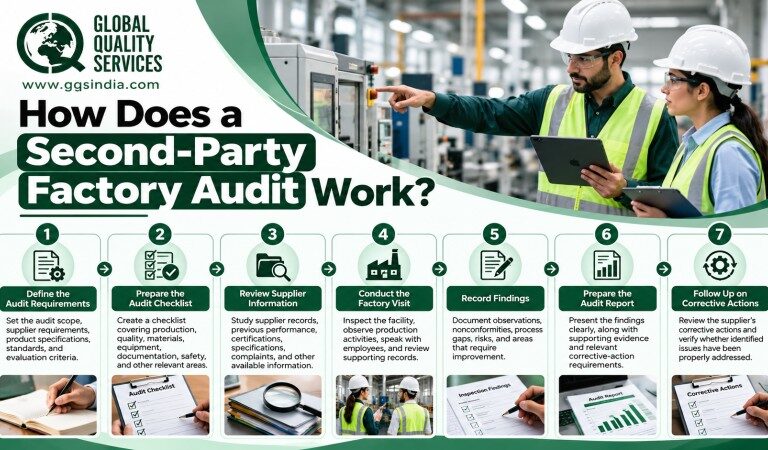
A second-party factory audit follows a structured process that helps buyers evaluate supplier capabilities, identify gaps, and verify compliance with requirements.
Step 1: Define the Audit Requirements
Start by defining the audit scope, supplier requirements, product specifications, applicable standards, and evaluation criteria. This gives auditors clear direction and keeps the assessment focused.
Step 2: Prepare the Audit Checklist
Create a practical checklist covering production processes, quality controls, materials, equipment, documentation, safety practices, and other requirements specific to the supplier and product.
Step 3: Review Supplier Information
Review supplier records, previous audit results, certifications, product specifications, customer complaints, performance history, and other available information before visiting the factory.
Step 4: Conduct the Factory Visit
Visit the supplier’s facility to inspect operations, observe production activities, discuss processes with employees, examine equipment, and verify information through supporting records.
Step 5: Record Findings
Document audit observations, nonconformities, process gaps, quality concerns, operational risks, and improvement areas with clear evidence collected during the factory assessment.
Step 6: Prepare the Audit Report
Prepare a clear audit report summarizing findings, supporting evidence, identified gaps, and relevant corrective-action requirements. The report should help the buyer understand supplier performance.
Step 7: Follow Up on Corrective Actions
Review the supplier’s corrective actions against identified findings and verify whether the actions address the root causes and resolve the reported issues effectively.
Which Industries in Chennai Can Use Factory Audits
Chennai’s diverse manufacturing ecosystem makes supplier audits relevant across several industries. Invest India’s Chennai manufacturing profile highlights automotive and auto components, electronics, heavy engineering, aerospace and defence, medical technology, and other industrial activities.
- Automotive and Auto Components: Manufacturers can audit suppliers of components, assemblies, raw materials, tooling, and other automotive products.
- Electronics and Electrical Products: Audits can review assembly processes, component controls, testing, ESD practices, traceability, and quality inspections.
- Aerospace and Defence: Supplier assessments can focus on manufacturing controls, documentation, traceability, inspection, and process discipline.
- Heavy Engineering: Businesses can evaluate machinery, fabrication, welding, machining, material controls, testing, and maintenance practices.
- Medical and Healthcare Products: Supplier audits can examine production controls, material handling, cleanliness, documentation, inspection, and traceability.
- Industrial Equipment: Manufacturers can assess suppliers involved in machinery, components, fabricated parts, electrical systems, and industrial assemblies.
Why is Supplier Auditing Important in Chennai’s Industrial Corridors?
Chennai’s manufacturing activity extends well beyond the city centre. Major industrial locations include Sriperumbudur, Oragadam, Irungattukottai, Vallam-Vadagal, Pillaipakkam, and Gummidipoondi. These areas support automotive, electronics, engineering, aerospace, power, and other manufacturing activities.
For businesses managing suppliers across different industrial locations, physical audits can create a consistent way to evaluate factories. Instead of depending on different supplier reports, procurement and quality teams can assess suppliers against defined criteria.
What are the Benefits of Second-Party Factory Audits
A second-party factory audit gives buyers practical insights into supplier performance, helping them identify weaknesses, improve controls, and reduce supply chain risks.
Better Supplier Visibility
You can see how the supplier actually operates instead of relying entirely on documents and declarations.
Early Identification of Quality Risks
Auditors can identify weak inspection controls, poor traceability, material segregation problems, and process gaps before they affect your orders.
Stronger Supplier Selection
Audit findings give procurement teams additional evidence when comparing supplier capabilities, processes, production controls, and actual factory conditions.
Improved Product Consistency
Regular supplier assessments encourage better control over manufacturing and inspection processes, helping suppliers maintain more consistent production practices.
Reduced Supply Chain Risk
Understanding supplier capacity, processes, and controls helps buyers identify operational weaknesses earlier and address concerns before they disrupt production or deliveries.
Why Choose Global Quality Services for Factory Inspection and Second-Party Audits in Chennai?
Global Quality Services helps businesses conduct structured factory inspections and second-party supplier audits across Chennai and its major industrial areas.
Our team can assess manufacturing processes, quality controls, raw materials, equipment, testing, documentation, traceability, and supplier practices based on your requirements. Whether you are evaluating a supplier in Ambattur, Sriperumbudur, Oragadam, Irungattukottai, or another Chennai industrial location, we can tailor the audit around your products and business objectives.
With clear findings and detailed reports, Global Quality Services helps procurement and quality teams understand supplier capabilities and make informed business decisions.
Frequently Asked Questions
1. What is a second-party audit of a factory in Chennai?
A second-party factory audit evaluates a supplier against buyer-defined requirements. It can cover manufacturing processes, quality controls, documentation, equipment, traceability, and corrective actions.
2. Which areas of Chennai can factory inspections cover?
Factory inspections can cover industrial locations such as Ambattur, Sriperumbudur, Oragadam, Irungattukottai, Pillaipakkam, Vallam-Vadagal, Gummidipoondi, and surrounding manufacturing areas.
3. What industries can benefit from second-party audits in Chennai?
Automotive, electronics, aerospace, engineering, industrial equipment, medical technology, and other manufacturing businesses can use second-party audits to evaluate their suppliers.
4. When should a company conduct a supplier factory audit?
Companies can conduct audits before supplier selection, before major orders, after quality problems, following process changes, or as part of periodic supplier evaluations.
5. What does a second-party factory audit report include?
An audit report generally records the audit scope, areas assessed, findings, supporting evidence, nonconformities, observations, and corrective actions requiring follow-up.