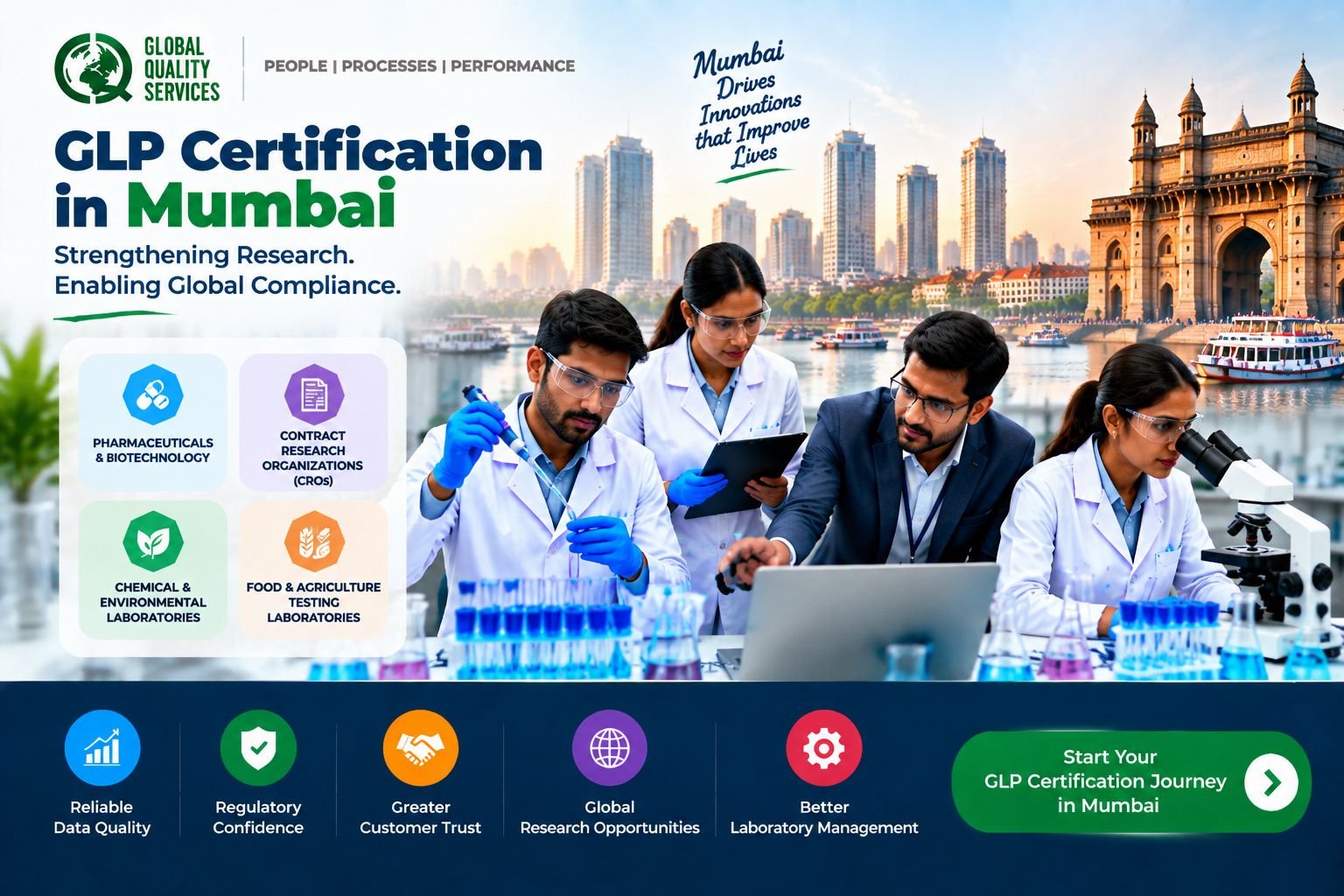
GLP Certification in Mumbai is relevant to test facilities conducting applicable non-clinical safety studies for pharmaceuticals, chemicals, agrochemicals, and other regulated products.
Mumbai’s wider industrial region has a strong concentration of pharmaceutical, chemical, biotechnology, testing, and research activity. GQS helps eligible facilities assess their GLP requirements, identify gaps, strengthen systems, and prepare for the applicable certification process.
Why GLP Certification Matters for Mumbai Laboratories
Mumbai is supported by a large industrial and scientific ecosystem that extends well beyond the city itself. The Mumbai Metropolitan Region connects pharmaceutical and research activity with established industrial locations across Thane and Navi Mumbai.
Maharashtra also has major chemical zones at Taloja, Dombivli, Kalyan-Bhiwandi, Taloja, Tarapur, Ambernath, and TTC, creating a significant local ecosystem for organizations handling chemicals and related testing activities.
For facilities generating safety data for regulatory purposes, GLP provides a structured framework for controlling study activities, documentation, quality assurance, raw data, reporting, and archiving.
Which Industries Need GLP Certification in Mumbai?
GLP Certification may be relevant to organizations and test facilities generating non-clinical health or environmental safety data for regulatory purposes.
Pharmaceutical and Biotechnology
Pharmaceutical and biotechnology organizations conducting applicable preclinical or non-clinical safety studies may need GLP controls covering study planning, personnel, facilities, data, QA, reporting, and archives.
Chemical and Agrochemical
Chemical and agrochemical organizations may require GLP certification for eligible safety studies conducted to generate data for regulatory authorities.
Contract Research Organizations
CROs conducting applicable studies for pharmaceutical, chemical, agrochemical, or other clients can require a controlled GLP framework covering study responsibilities and documentation.
Toxicology and Safety Testing
Toxicology laboratories conducting applicable toxicity or safety studies need appropriate controls for study conduct, raw data, quality assurance, reporting, and record retention.
Environmental Testing and Research
Facilities conducting applicable environmental toxicity, residue, bioaccumulation, or related studies may need to assess their GLP certification requirements.
NGCMA specifically identifies toxicity, mutagenicity, environmental toxicity, residue studies, physical-chemical testing, bioaccumulation, and analytical and clinical chemistry among its GLP areas of expertise.
Benefits of GLP Certification in Mumbai
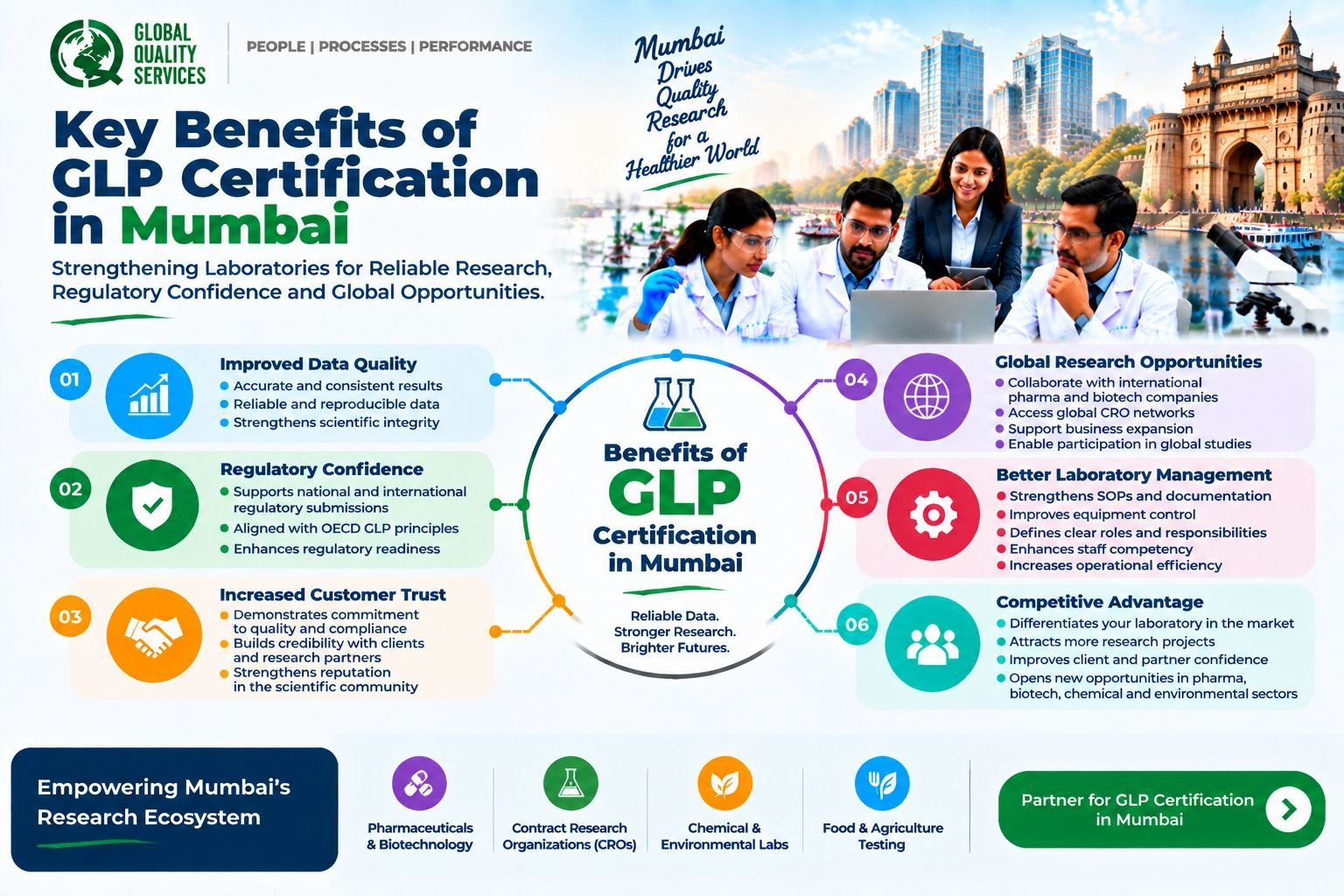
GLP Certification helps eligible test facilities demonstrate that applicable safety studies are conducted through controlled and documented processes.
Better Control Over Study Data
GLP establishes controls for raw data, study records, reporting, and archiving, making important study information easier to trace and reconstruct.
Stronger Quality Assurance
A defined QA system provides independent oversight of applicable study activities and helps identify issues that require corrective action.
Consistent Laboratory Practices
Controlled SOPs, responsibilities, equipment records, and study plans help laboratories maintain consistent practices across different studies and personnel.
Greater Regulatory Readiness
A GLP-compliant system can support facilities generating safety data intended for submission to regulatory authorities, subject to the relevant authority’s requirements and the study scope.
Areas We Cover for GLP Certification in Mumbai
GQS supports organizations across Mumbai and the surrounding industrial areas where eligible testing, research, pharmaceutical, and chemical facilities operate.
- Andheri and Kurla: These established Mumbai industrial locations have long-standing manufacturing and laboratory activity. NGCMA records also identify a GLP-certified test facility on the Kurla-Andheri Road, demonstrating the relevance of GLP activity within this part of Mumbai.
- Thane: Thane has a diverse industrial and research ecosystem, including laboratories and organizations involved in pharmaceutical, chemical, environmental, and analytical testing. Facilities conducting applicable safety studies can assess their GLP certification requirements.
- Navi Mumbai and TTC Industrial Area: TTC is one of Maharashtra’s recognized chemical zones and includes extensive industrial activity across the Navi Mumbai region. NGCMA records have also included GLP-certified facilities in the Thane-Belapur Road area.
- Taloja: Taloja is one of Maharashtra’s established chemical zones. Chemical and related testing facilities operating here may need to assess GLP requirements when generating safety data for regulatory purposes.
- Dombivli and Kalyan-Bhiwandi: These are recognized chemical and industrial zones in Maharashtra. Facilities involved in chemical testing, safety studies, and related research can evaluate whether their activities fall within the applicable GLP certification scope.
- Ambernath: Ambernath is another established chemical zone within Maharashtra’s industrial network. Eligible laboratories conducting relevant non-clinical safety studies can seek support for GLP certification preparation.
- Tarapur: Tarapur is a major industrial and chemical location in Maharashtra. Organizations conducting applicable chemical, environmental, or safety studies can assess their facility against the relevant GLP requirements.
What Is the GLP Certification Process in Mumbai?
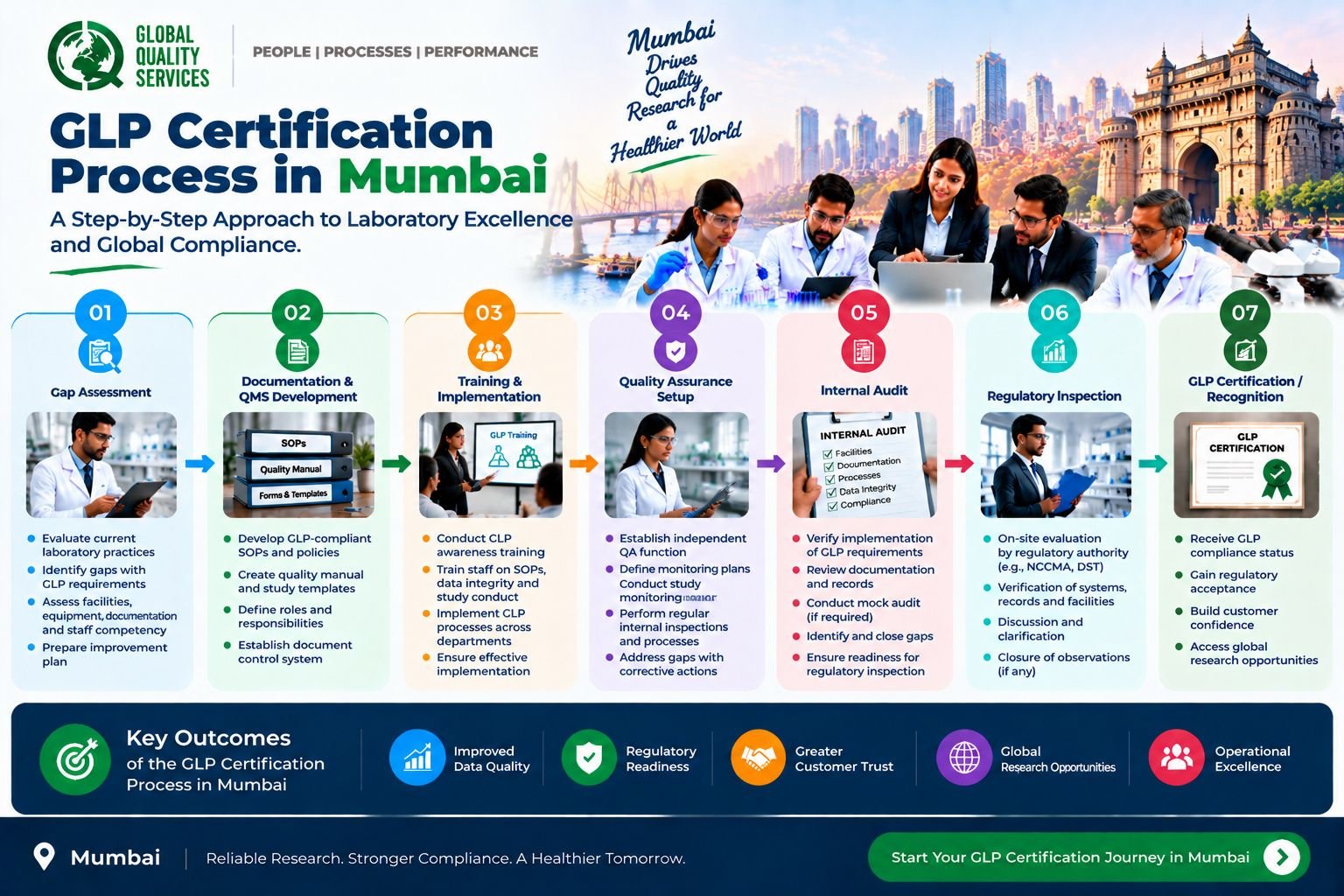
The certification process starts with determining whether the facility and its studies fall within the applicable NGCMA scope.
1. Assess the GLP Scope
Review the studies conducted, test facility activities, products involved, and intended regulatory use.
2. Conduct a Gap Assessment
Review the existing quality system, SOPs, personnel responsibilities, equipment, QA, study records, data controls, and archives.
3. Implement Required Improvements
Strengthen the identified areas and ensure procedures are implemented in laboratory operations.
4. Prepare for Inspection
Review records and implementation evidence before the applicable inspection.
NGCMA states that the certification process includes application, pre-inspection, final inspection, technical review, and a final certification decision. Certification is voluntary and is valid for three years, with surveillance at 18 months.
How Can Global Quality Services Help with GLP Certification in Mumbai?
Global Quality Services helps eligible Mumbai-area test facilities prepare for GLP Certification by reviewing their existing systems against applicable requirements. GQS can support gap assessment, SOP and documentation development, study-record controls, data-integrity review, QA readiness, and inspection preparation. The approach is tailored to the facility’s actual studies, laboratory operations, and proposed GLP certification scope.
FAQs About GLP Certification in Mumbai
Is GLP Certification mandatory in Mumbai?
NGCMA describes GLP Certification as voluntary. However, organizations should determine whether GLP compliance is required or expected for their specific studies and regulatory submissions.
Who provides GLP Certification in India?
The National GLP Compliance Monitoring Authority (NGCMA), under the Department of Science and Technology, administers the national GLP compliance monitoring and certification program.
Can GQS issue the GLP certificate?
No. GQS provides preparation and consultancy support. Formal GLP Certification is handled through the applicable NGCMA program.
Which Mumbai industries should consider GLP Certification?
Pharmaceutical, biotechnology, chemical, agrochemical, CRO, toxicology, and relevant environmental testing facilities may need to assess GLP applicability based on their study activities.
Does GLP Certification apply only to laboratories in Mumbai city?
No. Eligible facilities across the wider Mumbai region and surrounding industrial areas can assess GLP applicability based on their activities and proposed certification scope.