
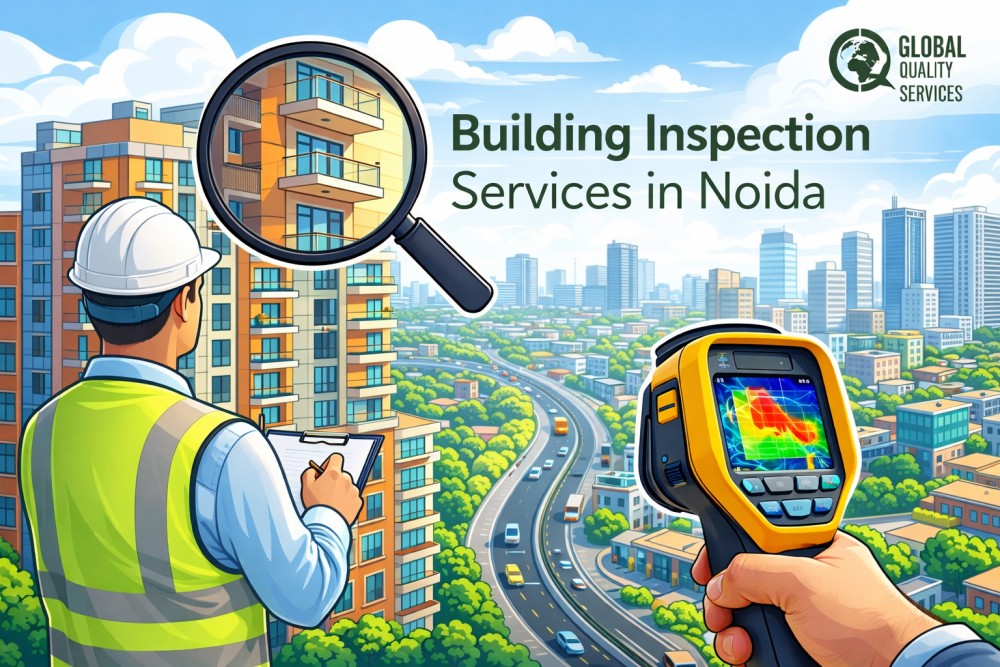
Rapid urban development has transformed Noida into one of the fastest-growing commercial and residential hubs in the NCR region. With new high-rise apartments, industrial facilities, warehouses, and office complexes coming up every year, maintaining structural safety has become a critical responsibility for property owners and developers.
Industry data shows that the building inspection services market in India was valued at about USD 1.11 billion in 2025 and is expected to reach USD 1.68 billion by 2031, driven by growing urban infrastructure and stricter safety standards.
Safety inspections are also becoming more important as cities expand. In multiple municipal surveys across India, hundreds of buildings have been identified as unsafe and require structural audits to confirm safety and recommend repairs.
For property owners in Noida, professional building inspections help identify structural risks early, verify construction quality, and ensure the building remains safe for occupants and operations. The following sections explain why building inspection is important, what services are included, and how a professional inspection is carried out.
Why Building Inspection is Important for Properties in Noida
Buildings experience continuous stress from weather conditions, structural loads, material aging, and usage patterns. Over time, these factors can weaken structural components or create hidden defects. Regular building safety inspections ensure these issues are identified before they become serious risks.
- Financial Security: Identifying a major structural flaw before you close a deal can save you millions in future repairs. It gives you the leverage to ask the builder for rectifications before you move in.
- Safety Standards: Faulty wiring and poor plumbing are the leading causes of accidents in high-rise buildings. A professional audit pinpoints these risks early.
- Legal Compliance: With the latest 2025 building safety guidelines in Uttar Pradesh, owners are now more responsible for the structural health of their premises. An official report keeps you on the right side of the law.
- Future Proofing: Regular checks prevent minor issues from becoming major structural failures, helping maintain the long-term market value of your asset.
Comprehensive Residential Inspection (PDI)
A residential inspection focuses on evaluating the condition and safety of homes, apartments, and residential complexes. This type of inspection is particularly important before purchasing a property or handing over a newly constructed home. A typical residential inspection evaluates several aspects of the property:
- Structural elements: Engineers assess beams, columns, slabs, foundations, and load-bearing components to ensure structural stability.
- Walls and flooring condition: Inspection identifies cracks, signs of settlement, water damage, and material deterioration.
- Waterproofing and leakage detection: Bathrooms, terraces, and roofs are checked for seepage issues that may damage the structure over time.
- Electrical and plumbing systems: Inspectors verify installation quality and identify safety risks or faulty systems.
- Construction quality verification: The inspection confirms whether the property meets expected construction standards.
Industrial and Commercial Audits
Industrial and commercial buildings operate under heavier loads and more complex usage conditions compared to residential properties. Manufacturing equipment, storage loads, and continuous operations can gradually impact structural strength.
Industrial building inspections evaluate several critical factors.
- Load-bearing capacity of structural elements
- Condition of industrial flooring and foundations
- Structural safety of warehouses and storage facilities
- Compliance with safety and operational standards
- Integrity of steel structures and industrial roofing systems
For factories, warehouses, and commercial buildings, periodic inspections are important to prevent operational disruptions and ensure worker safety.
Our Building Inspection Process
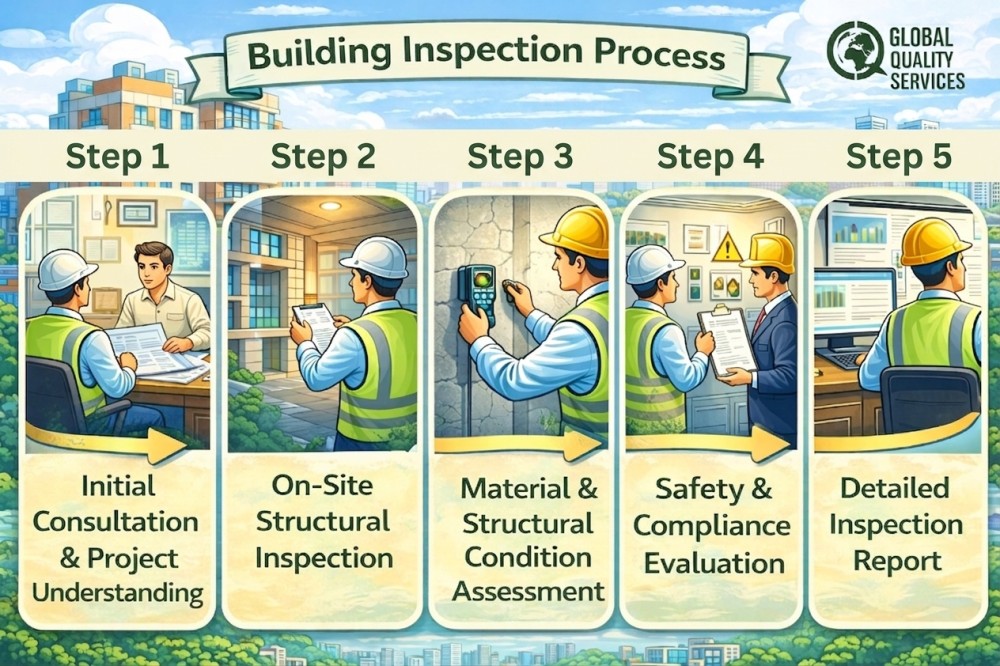
We believe in a transparent and data-driven approach. Our process is designed to give you a clear picture of your property’s health without any guesswork:
Step 1. Initial Consultation and Project Understanding
The process begins with understanding the property type and inspection requirements. Engineers review project details such as building age, usage type, construction drawings if available, and previous maintenance records. This step helps define the scope of inspection and determine which areas require deeper evaluation.
Step 2. On-Site Structural Inspection
The inspection team conducts a detailed physical assessment of the building. This includes examining structural components such as beams, slabs, columns, foundations, and load-bearing walls. Inspectors also check visible signs of structural stress, including cracks, corrosion, deflection, or uneven settlement.
Step 3. Material and Structural Condition Assessment
Where required, non-destructive testing techniques may be used to evaluate material quality and structural strength. These tests help identify internal issues that may not be visible during visual inspection.
Step 4. Safety and Compliance Evaluation
Inspectors review whether the building follows relevant construction standards and safety practices. This includes reviewing fire safety access, structural modifications, and maintenance conditions. Compliance evaluation is particularly important for commercial and industrial properties.
Step 5. Detailed Inspection Report
After completing the inspection, engineers prepare a comprehensive report. This report includes observations from the inspection, identified structural risks, recommended repair or maintenance actions, and photographs and documentation for reference. The report gives property owners a clear understanding of the building condition and recommended next steps.
Industries and Property Types We Serve
Our expertise spans the diverse real estate landscape of Noida. We provide tailored solutions for various sectors.
- Residential Sector: High-rise apartments and independent villas in Greater Noida and Noida.
- Commercial Spaces: Corporate offices and IT parks in Sector 62.
- Industrial Facilities: Manufacturing plants and small-scale workshops in Phase II.
- Storage Hubs: Modern warehouses and cold storage units.
Why Choose Professional Building Inspection Experts in Noida
Professional inspections go beyond visual checks and provide a reliable structural assessment. Working with qualified building inspection experts offers several advantages, such as:
- Experienced engineering professionals: Certified engineers understand structural behavior and can identify early signs of damage or design issues.
- Detailed inspection methodology: Professional inspections follow systematic procedures to ensure every structural component is evaluated.
- Accurate and transparent reporting: Property owners receive clear documentation of inspection findings and recommended actions.
- Use of modern inspection tools: Advanced inspection techniques help identify hidden structural problems that are not visible on the surface.
- Practical maintenance recommendations: Instead of generic advice, inspection reports provide actionable steps to improve building safety and longevity.
Secure Your Investment with Global Quality Services
When it comes to the safety of your family or your business, there is no room for compromise. Global Quality Services provides the most thorough building inspection solutions in Noida. Our certified engineers bring years of experience in structural auditing and safety compliance. We help you identify risks before they become liabilities so you can invest with total confidence.
Get in touch with us today to schedule your building audit and protect your property with the best in the industry.
Frequently Asked Questions
1. How long does a home inspection take in Noida?
For a standard flat, the process usually takes between three and five hours, depending on the size and current condition of the property.
2. Can an inspection detect leaks that are not visible yet?
Yes, we use moisture meters and thermal cameras that can sense temperature changes caused by dampness behind walls long before a patch appears on the surface.
3. Does a professional report help with RERA complaints?
Yes. A technical report from a recognized firm like Global Quality Services provides solid evidence if you need to escalate a construction quality issue to RERA.
4. How often should an industrial building be audited?
For most active factories, we recommend a structural and electrical audit every 3 years to ensure continued safety and compliance with local laws.
5. What is the cost of a building inspection in Noida?
The pricing depends on the total square footage and the type of property. We offer customized quotes for residential and industrial clients based on their specific needs.