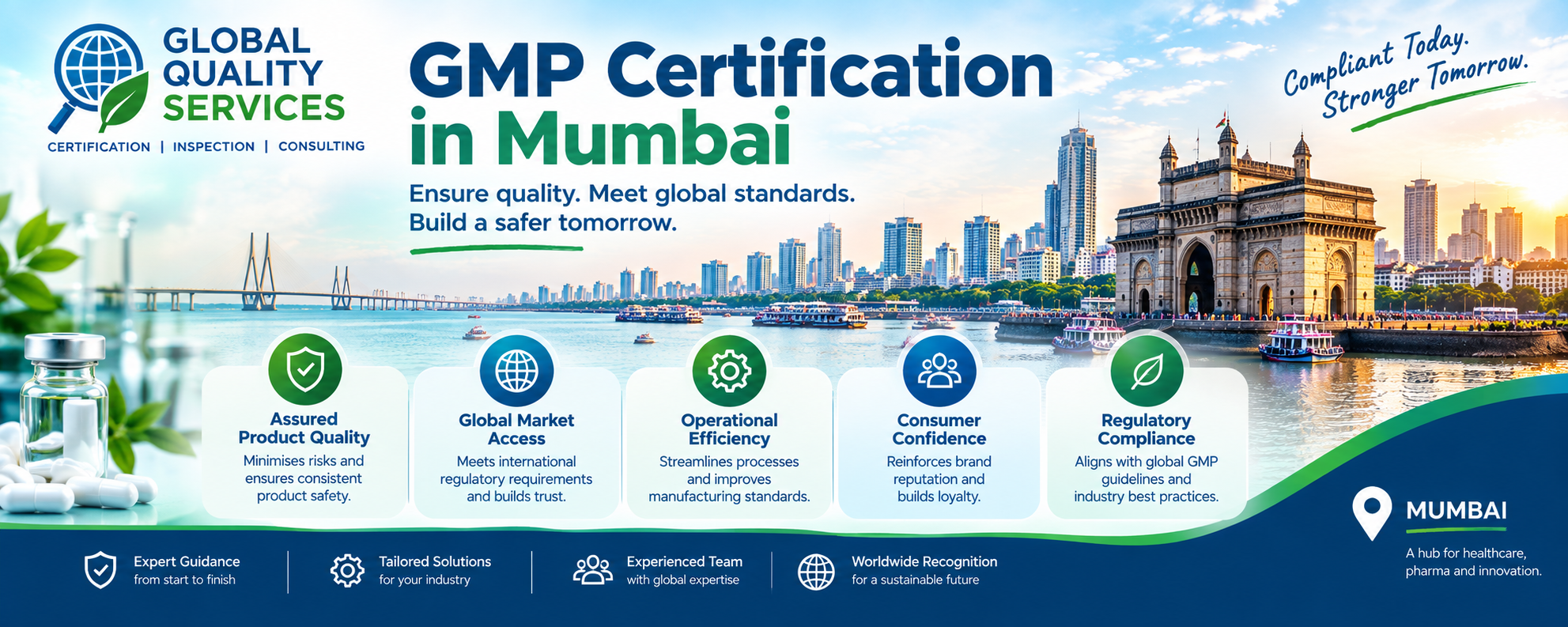
GMP Certification in Mumbai helps manufacturers establish controlled, hygienic, and consistent production practices that support the quality, safety, and intended performance of their products. Good Manufacturing Practices are especially important for pharmaceutical, API, healthcare, food, cosmetic, and other regulated manufacturing operations where product quality can be affected by premises, equipment, personnel, materials, production processes, testing, storage, and documentation.
For pharmaceutical manufacturers, GMP requirements in India are addressed through the Drugs and Cosmetics framework and Schedule M. The current GMP provisions require appropriate premises, equipment, trained personnel, documented procedures, qualification and validation, quality control, storage, and other controls needed to consistently produce products of the required quality.
Global Quality Services helps Mumbai-based organisations understand applicable GMP requirements, identify gaps, improve their systems, and prepare for the relevant audit or regulatory inspection.
What Is GMP Certification in Mumbai?
GMP certification demonstrates that a manufacturing organisation has established and implemented manufacturing and quality-control practices appropriate to its applicable GMP requirements.
GMP is not simply about testing the finished product. It covers the complete manufacturing environment and the controls used to prevent contamination, mix-ups, errors, and quality failures.
For pharmaceutical manufacturers, Schedule M covers areas such as premises, materials, production, quality control, equipment, documentation, sanitation, personnel, and related manufacturing controls.
The exact certification or inspection requirements depend on the product category, applicable regulator, market, and type of manufacturing operation.
Why Is GMP Certification Important for Mumbai Manufacturers?
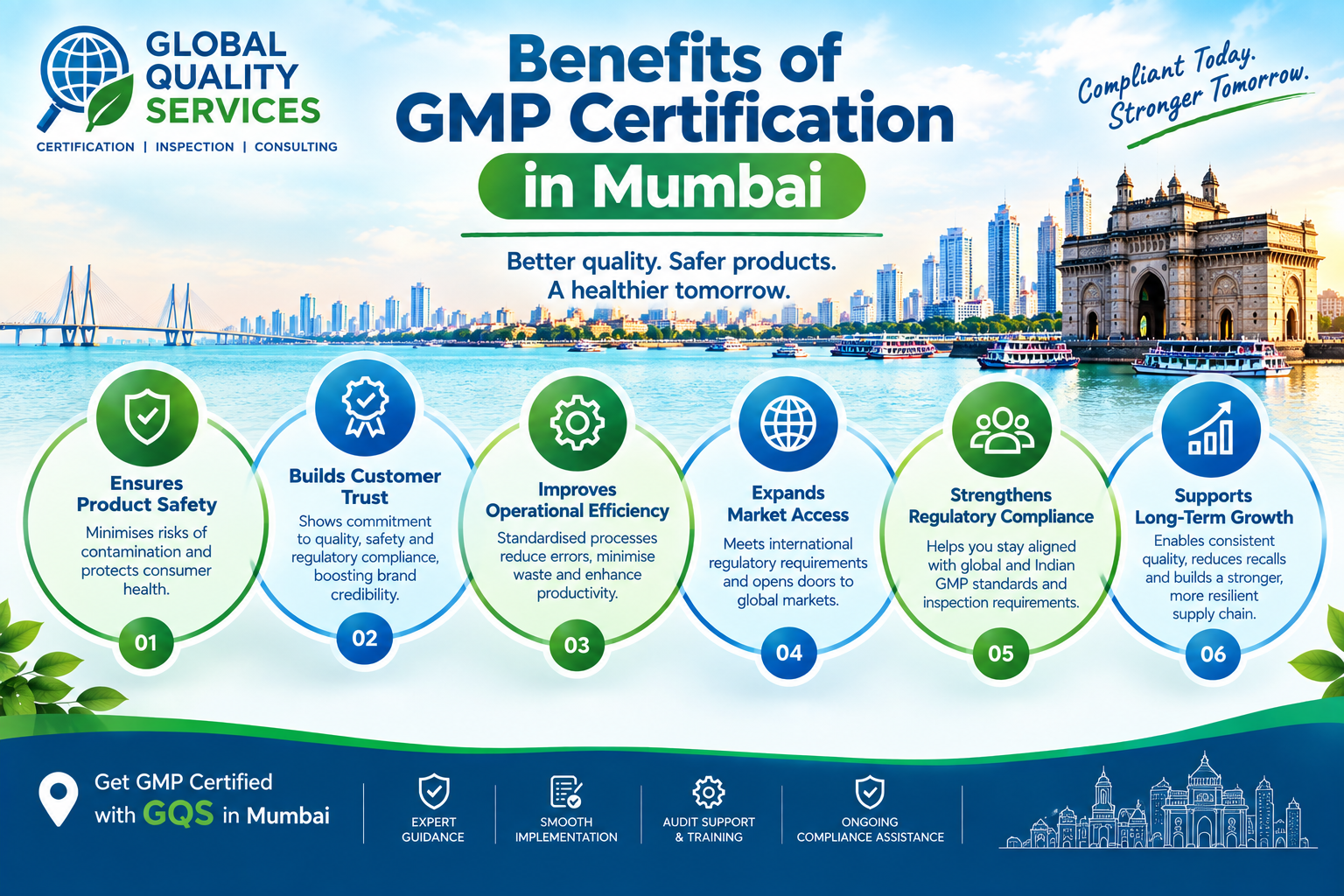
GMP helps Mumbai manufacturers create consistent production processes and reduce risks that could affect product quality and consumer safety.
Consistent Manufacturing
GMP requires manufacturing processes to be clearly defined, controlled, and reviewed. This helps organisations produce products consistently according to established specifications.
Better Quality Control
GMP connects production activities with quality-control systems. Sampling, testing, specifications, records, and release procedures can be managed through a structured quality system.
Reduced Contamination and Mix-Up Risks
Appropriate premises, equipment, hygiene practices, material controls, and production procedures help reduce the possibility of contamination or product mix-ups.
Stronger Documentation
GMP places significant importance on documented procedures and records. Proper documentation provides evidence that manufacturing activities have been performed according to approved requirements.
Improved Regulatory Readiness
A well-implemented GMP system can help organisations prepare for regulatory inspections and customer audits. India’s CDSCO maintains GMP inspection guidance and requirements for regulated manufacturing facilities.
What Does GMP Certification Require?
GMP requires organisations to control the people, premises, materials, equipment, processes, testing, documentation, and quality systems that can affect product quality.
Premises and Equipment
Manufacturing premises should be suitably designed, maintained, and controlled for the activities being performed. Equipment should be appropriate for its intended use and maintained in a controlled condition.
Personnel and Hygiene
Employees involved in manufacturing and quality activities need appropriate qualifications, training, responsibilities, and hygiene practices.
Production Controls
Manufacturing processes should follow approved procedures and instructions. Critical activities need appropriate controls to ensure that products consistently meet their specifications.
Quality Control
Quality-control activities should be established for relevant materials, intermediates, and finished products. Appropriate laboratories, personnel, equipment, testing methods, and records form part of the control system.
Documentation and Records
GMP requires reliable documentation covering relevant manufacturing and quality activities. Records should provide evidence of what was performed, when it was performed, and by whom.
Qualification and Validation
Where applicable, equipment, systems, processes, cleaning procedures, analytical methods, and other critical activities need to be qualified or validated to demonstrate that they work as intended.
What Is the GMP Certification Process in Mumbai?
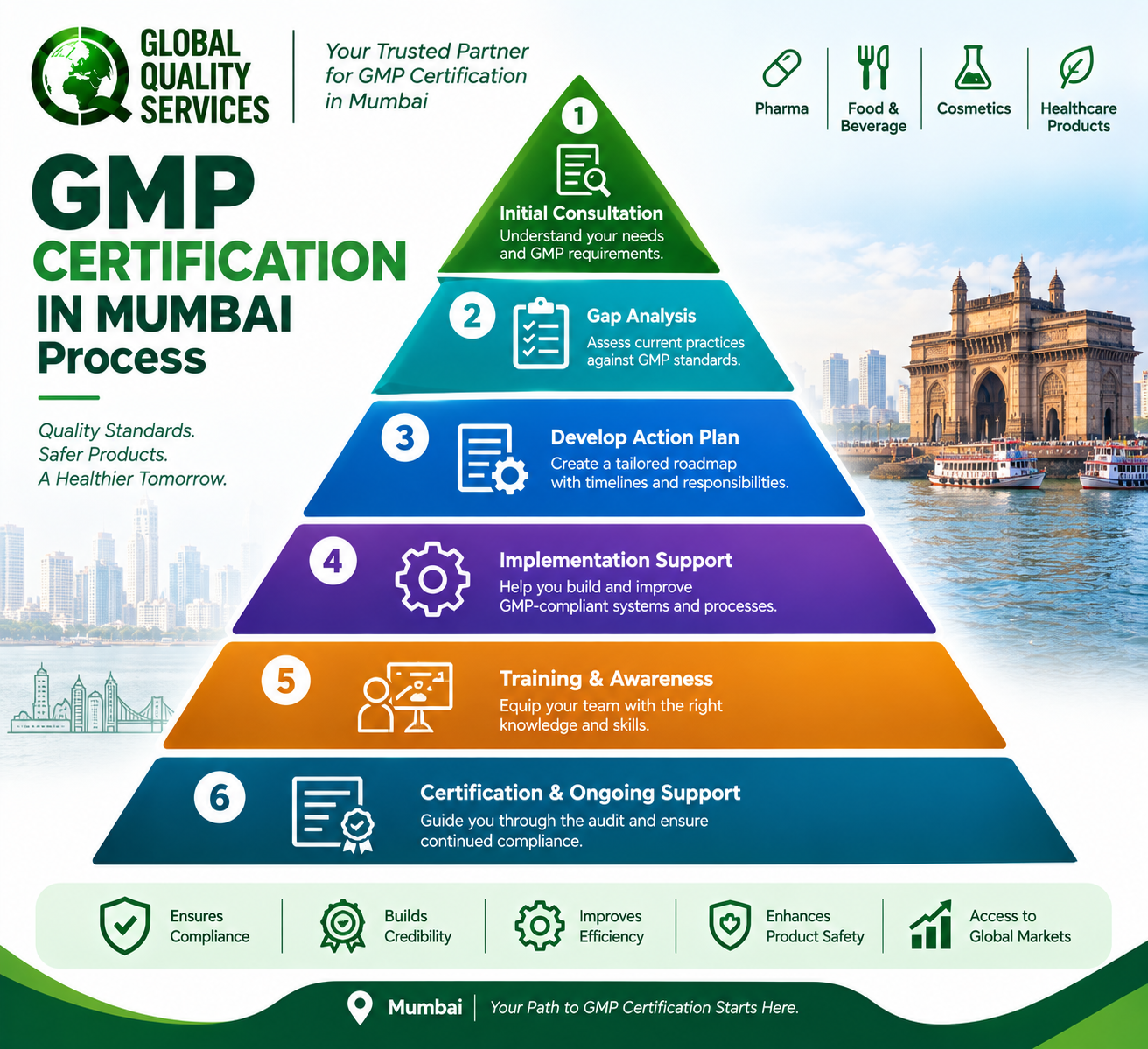
The GMP certification process normally starts with a review of the organisation’s existing manufacturing and quality systems, followed by gap correction, implementation, and the applicable audit or regulatory inspection.
Gap Assessment
Existing manufacturing practices, facilities, documentation, personnel controls, quality systems, equipment, and records are reviewed against the applicable GMP requirements.
GMP System Development
Where gaps are identified, appropriate procedures, controls, records, responsibilities, and quality practices are developed or improved.
Implementation
The organisation implements the revised GMP controls across its relevant manufacturing and quality operations. Employees need to understand and follow the applicable procedures.
Internal Review
An internal review helps identify remaining weaknesses before the formal audit or inspection. Corrective actions can then be completed and supported with appropriate evidence.
Audit or Inspection
The applicable certification body, customer, or regulatory authority conducts the relevant assessment or inspection depending on the type of GMP requirement involved.
Corrective Action and Closure
Any identified deficiencies are addressed through corrective actions. Evidence of implementation may be reviewed before the assessment is considered complete.
Who Needs GMP Certification in Mumbai?
GMP can be relevant to manufacturers whose products or processes are subject to GMP requirements from regulators, customers, certification programmes, or target markets.
Mumbai and the wider Maharashtra region have significant pharmaceutical, healthcare, food, cosmetic, chemical, and manufacturing activity. The applicable GMP requirements depend on the organisation’s product and regulatory category.
For pharmaceutical manufacturers, the Central Drugs Standard Control Organization maintains the Drugs Rules and GMP provisions, while the Food and Drug Administration, Government of Maharashtra is the state’s principal regulatory authority for medicines, food, and cosmetics.
Areas We Cover in Mumbai
GMP consultancy and certification-readiness support can be provided across Mumbai and major surrounding manufacturing and pharmaceutical locations.
This includes Andheri, Powai, Goregaon, Malad, Bhandup, Mulund, Thane, Navi Mumbai, Vashi, Turbhe, Taloja, Panvel, and other industrial areas across the Mumbai Metropolitan Region.
Support can be tailored to pharmaceutical, API, healthcare, cosmetic, food, and other manufacturing facilities based on their applicable GMP requirements.
What Government Rules Apply to GMP in Mumbai?
GMP requirements for regulated products operate alongside Indian and Maharashtra regulatory requirements and are not a substitute for statutory compliance.
For pharmaceutical manufacturing, India’s Drugs Rules, 1945 contain GMP requirements, including Schedule M. CDSCO’s current regulatory material identifies GMP as part of the quality-management framework intended to ensure pharmaceutical products are consistently produced and controlled according to appropriate quality standards.
The revised Schedule M was notified through the Government of India’s December 28, 2023 notification, with subsequent regulatory provisions concerning implementation and compliance.
In Maharashtra, the Food and Drug Administration is responsible for implementing and enforcing key legislation relating to medicines, food, and cosmetics, including the Drugs and Cosmetics Act and Rules.
The exact regulatory obligations should therefore be determined according to the organisation’s product category, manufacturing licence, facility, and target market.
How Can Global Quality Services Help?
Global Quality Services helps Mumbai manufacturers prepare for GMP requirements by identifying gaps and strengthening the systems needed for consistent and controlled manufacturing.
Our consultancy can cover GMP gap assessment, documentation review, SOP development, quality-system improvement, personnel training support, production controls, documentation and records, validation-related requirements, internal review, corrective-action planning, and audit readiness.
The approach is based on the organisation’s actual manufacturing activities. This helps ensure that GMP procedures are practical, properly implemented, and supported by evidence rather than being limited to documentation.
FAQs About GMP Certification in Mumbai
Is GMP certification mandatory in Mumbai?
GMP requirements may be mandatory for certain regulated manufacturing activities, but the exact requirement depends on the product and applicable regulatory framework. Pharmaceutical manufacturers, for example, are subject to GMP requirements under India’s Drugs Rules and applicable Schedule M provisions.
Is GMP only for pharmaceutical companies?
No. GMP principles and requirements are used across different regulated manufacturing sectors, although the applicable requirements differ by product and industry.
How long does GMP certification take?
The timeframe depends on the facility, product category, existing quality system, documentation, level of implementation, and audit or inspection requirements. A gap assessment can provide a more realistic preparation timeline.
Does GMP certification replace ISO 9001?
No. GMP and ISO 9001 have different purposes. ISO 9001 provides requirements for a general quality management system, while GMP focuses specifically on controls needed to manufacture products consistently and appropriately for their intended use.
Can GQS provide GMP consultancy in Mumbai?
Yes. Global Quality Services provides GMP consultancy and certification-readiness support, including gap assessment, documentation, implementation guidance, internal review, corrective-action support, and preparation for the applicable audit or inspection.