Bengaluru’s fast-growing technology and fintech ecosystem makes software security a critical business priority. The city recorded cybercrime losses of ₹558.02 crore during the first seven months of 2026, according to Bangalore Mirror. This figure highlights why companies handling payment software need stronger security controls, vulnerability management, and secure development practices.
PCI Software Security Framework validation helps eligible software vendors assess payment software and lifecycle security against PCI SSC requirements. For Bengaluru-based businesses, hiring an experienced PCI SSF consultant can simplify scope definition, gap assessment, documentation, and assessment preparation.
What is PCI Software Security Framework Certification
PCI Software Security Framework, or PCI SSF, is a PCI Security Standards Council framework designed for software vendors involved in payment environments.
It consists of two key standards:
- PCI Secure Software Standard – focuses on the security of payment software.
- PCI Secure Software Lifecycle Standard – focuses on integrating security throughout the software development lifecycle.
PCI SSC explains that the Secure Software Standard addresses the secure design and management of payment software and protection of payment transaction integrity and cardholder data.
The Secure SLC Standard, meanwhile, covers security throughout design, development, deployment, and maintenance.
Which PCI SSF Standard Applies to Your Business
The right standard depends on what your Bengaluru-based organization develops and how it manages software security.
PCI Secure Software Standard
This standard applies to software vendors that develop payment software supporting or facilitating payment transactions. It examines whether the software incorporates appropriate security controls and protects payment-related information.
It can be relevant to organizations developing:
- Payment applications
- Payment processing software
- E-commerce payment solutions
- POS-related applications
- Payment gateways
- Fintech applications
- Software used in payment environments
- SaaS products that meet the applicable eligibility criteria
PCI SSC also confirms that eligible SaaS products can undergo validation to the Secure Software Standard.
PCI Secure Software Lifecycle Standard
The Secure SLC Standard focuses on the organization’s software development lifecycle rather than only the finished software product.
It addresses security practices across areas such as:
- Software design
- Secure development
- Testing
- Deployment
- Maintenance
- Vulnerability management
- Security processes
- Development controls
PCI SSC describes the standard as helping vendors integrate security throughout the software lifecycle and develop software that is secure by design.
Why Do Bengaluru Businesses Need PCI SSF Validation?
Bengaluru has a large ecosystem of software developers, fintech companies, SaaS providers, digital payment platforms, and technology service providers. Many businesses build applications that support payment-related activities.
For these companies, security cannot stop at penetration testing before launch. Development practices, application architecture, vulnerability handling, change management, and security testing also matter.
PCI SSF validation can help businesses:
- Identify weaknesses in payment software.
- Strengthen secure development practices.
- Improve software security controls.
- Establish documented security processes.
- Address vulnerabilities systematically.
- Demonstrate alignment with PCI SSC requirements.
- Build greater confidence among customers and payment partners.
However, PCI SSC notes that whether a business must use software validated to the Secure Software Standard depends on individual payment-brand requirements rather than PCI SSC itself.
What Does PCI Software Security Assessment Cover?
The assessment depends on the applicable PCI SSF standard and the scope of the software or lifecycle being assessed.
A typical assessment can examine areas such as:
1. Software Security Architecture
Assessors review how the application handles security-sensitive functions and payment-related processes. They examine whether the software architecture addresses relevant security risks.
2. Sensitive Assets
Organizations need to understand which assets require protection and how their software handles them. PCI SSC’s newer requirements place additional focus on sensitive assets and the Sensitive Asset Identification Document (SAID).
3. Secure Development Practices
The assessment can examine how developers incorporate security into software design, coding, testing, deployment, and maintenance activities.
4. Vulnerability Management
Businesses need processes for identifying, assessing, addressing, and tracking vulnerabilities throughout the relevant software lifecycle.
5. Security Testing
Testing activities help demonstrate whether security controls work as intended and whether identified weaknesses receive appropriate attention.
6. Change and Release Management
Assessors may review how organizations control software changes, releases, updates, and security-related modifications.
7. Documentation and Evidence
Companies need appropriate records to demonstrate how they implement applicable requirements. Clear documentation makes the assessment process more structured and easier to verify.
PCI SSF Certification Process in Bengaluru
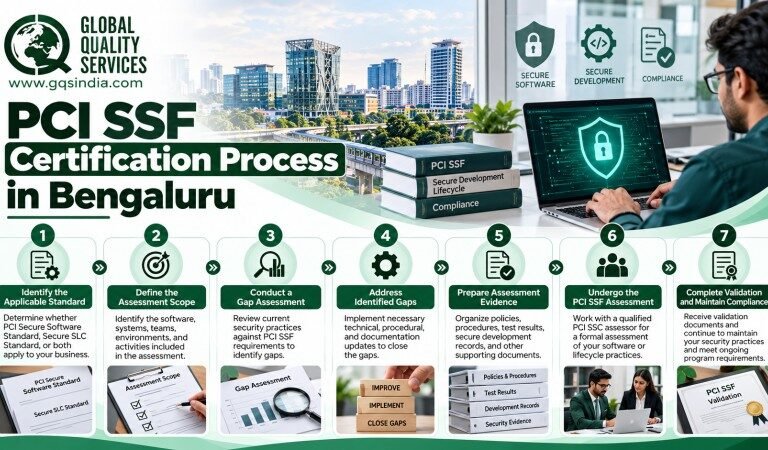
If your company plans to pursue PCI SSF validation, the process generally starts with defining the correct assessment scope.
Step 1: Identify the Applicable Standard
Determine whether your business needs assessment against the Secure Software Standard, Secure SLC Standard, or both.
Step 2: Define the Assessment Scope
Identify the software, development processes, teams, systems, environments, and supporting activities that fall within the assessment.
Step 3: Conduct a Gap Assessment
Review existing security practices against the applicable PCI SSF requirements. This helps identify areas that require attention before the formal assessment.
Step 4: Address Identified Gaps
Update policies, procedures, development practices, technical controls, documentation, testing activities, and other relevant areas based on the assessment findings.
Step 5: Prepare Assessment Evidence
Organize documents, records, technical evidence, development information, testing results, and other supporting material required for assessment.
Step 6: Undergo the PCI SSF Assessment
Engage a qualified PCI SSC Secure Software or Secure SLC Assessor, depending on the applicable assessment. PCI SSC specifically requires vendors seeking Secure Software assessment to engage a qualified assessor from its SSF assessor list.
Step 7: Complete Validation and Maintain Compliance
After addressing assessment requirements, the applicable validation documentation is completed. Businesses then need to maintain their security practices and meet applicable ongoing program requirements.
PCI SSF Version 2.0: What Bengaluru Software Companies Should Know
PCI SSC released version 2.0 of the Secure Software Lifecycle Standard on September 28, 2026. The revised standard aligns with version 2.0 of the Secure Software Standard and introduces updated requirements, including additional focus on sensitive assets and digital tools. PCI SSC also notes that the updated requirements address the use of artificial intelligence within Secure SLC processes.
This update matters for Bengaluru software companies planning a new assessment or reviewing an existing Secure SLC program. Businesses should check the current PCI SSC documentation and applicable transition requirements before starting their assessment.
What Documents Are Needed for PCI SSF Assessment?
Documentation depends on the applicable standard and assessment scope. However, businesses may need evidence related to:
- Software architecture
- Secure development procedures
- Security policies
- Vulnerability management
- Security testing
- Change management
- Release management
- Incident handling
- Development environments
- Access controls
- Security training
- Software inventory
- Sensitive asset identification
- Test results
- Remediation records
Your assessor determines the evidence required based on the applicable PCI SSF requirements and assessment scope.
Who Needs PCI SSF Certification in Bengaluru?
PCI SSF can be relevant to Bengaluru organizations that develop or maintain software used in payment environments.
Potentially relevant businesses include:
- Fintech companies
- Payment software developers
- Payment gateway providers
- E-commerce technology companies
- SaaS providers
- Digital payment platforms
- POS software developers
- Banking technology providers
- Financial technology startups
- Software product companies
- Technology companies supporting payment transactions
Eligibility should always be assessed against the current PCI SSC program requirements rather than assuming that every fintech or software company requires PCI SSF validation.
Benefits of PCI Software Security Framework Validation
PCI SSF validation offers practical security benefits, helping businesses strengthen software protection, improve development practices, manage vulnerabilities, and build customer confidence.
Stronger Payment Software Security
The assessment encourages businesses to examine how their software handles security-sensitive functions and payment-related information.
Better Secure Development Practices
The Secure SLC Standard helps organizations integrate security into development rather than treating it as a final-stage activity.
Improved Vulnerability Management
A structured approach helps development teams identify, address, document, and track security weaknesses.
Greater Customer Confidence
Validated software can give customers and business partners additional information about the security practices surrounding the product.
Better Security Documentation
The assessment process encourages companies to maintain evidence supporting their security controls and development practices.
Why Choose Global Quality Services for PCI SSF in Bengaluru?
Global Quality Services can support Bengaluru-based organizations with PCI SSF consulting and assessment preparation. Our team can help you understand the applicable requirements, define the assessment scope, identify gaps, organize documentation, and prepare your software security processes for assessment.
Whether your business operates from Whitefield, Electronic City, Koramangala, HSR Layout, Manyata Tech Park, or another Bengaluru technology hub, we can tailor the consulting approach to your software environment and business requirements. Contact Global Quality Services today for structured PCI SSF guidance, practical gap assessment, documentation support, and assessment preparation.
Frequently Asked Questions
1. What is PCI Software Security Framework certification in Bengaluru?
PCI SSF validation assesses payment software or software lifecycle practices against applicable PCI SSC requirements through a qualified Software Security Framework Assessor.
2. Which companies in Bengaluru need PCI SSF validation?
Fintech companies, payment software developers, SaaS providers, payment platforms, and software vendors supporting payment environments may need or benefit from PCI SSF validation.
3. What is the difference between PCI Secure Software and Secure SLC?
The Secure Software Standard focuses on payment software security, while Secure SLC focuses on integrating security throughout the software development lifecycle.
4. How can a Bengaluru company prepare for PCI SSF assessment?
Start by defining scope, reviewing applicable requirements, conducting a gap assessment, addressing weaknesses, organizing evidence, and engaging a qualified PCI SSC SSF assessor.
5. Is PCI SSF mandatory for every fintech company?
No. PCI SSC states that payment-brand requirements determine whether businesses must use software validated to the Secure Software Standard, not PCI SSC itself.