Pune’s technology ecosystem is creating demand for secure payment software across fintech, SaaS, and digital businesses. KPMG reports that Pune is home to more than 500 Global Capability Centres, spanning over 20 industries.
As payment applications handle sensitive card data, businesses need strong software security controls and development practices. PCI Software Security Framework validation helps eligible software vendors assess payment software security against PCI SSC requirements.
Hiring an experienced PCI SSF consultant can simplify scope definition, identify gaps, organize evidence, and prepare your team for an independent audit.
What is PCI Software Security Framework
The PCI Software Security Framework is a PCI Security Standards Council program designed to address security in payment software and its development lifecycle.
It includes two main standards:
PCI Secure Software Standard
The Secure Software Standard focuses on the security of payment software. It covers software design and management practices that help protect payment transactions and payment card data. PCI SSC specifically identifies software vendors developing payment software as its intended audience.
PCI Secure Software Lifecycle Standard
The Secure SLC Standard focuses on integrating security throughout the software lifecycle. This includes design, development, deployment, and maintenance, helping vendors build and maintain software with security considered throughout the lifecycle. Businesses should select the applicable standard based on their software, development practices, and assessment objectives.
Why Do Pune Businesses Need PCI SSF Validation?
Payment software faces security risks at different stages, from development and deployment to maintenance and updates. A structured assessment helps businesses examine these practices against defined PCI SSC requirements.
For Pune-based software and technology companies, PCI SSF can help with:
- Reviewing payment software security practices
- Identifying weaknesses in software development processes
- Strengthening vulnerability management
- Improving security testing practices
- Organising security documentation and evidence
- Demonstrating validated security practices to relevant stakeholders
- Supporting secure software development throughout the product lifecycle
Pune’s expanding technology ecosystem also makes software security increasingly relevant for companies serving national and international customers. The city has been highlighted as a growing technology and IT hub alongside its established manufacturing base.
Who Can Benefit From PCI SSF Certification in Pune?
PCI SSF is particularly relevant to businesses that develop payment software or software commonly used in payment environments.
Fintech Companies
Fintech businesses often develop applications and platforms that support digital payments. PCI SSF validation can help them demonstrate that relevant software follows defined security requirements.
Payment Software Developers
Companies developing payment applications can assess their products against the PCI Secure Software Standard and address security requirements before validation.
Payment Gateway Providers
Payment gateway providers can review the security of software involved in payment transaction flows and demonstrate validated practices where applicable.
SaaS Companies
Some SaaS products may operate within payment environments. Businesses should assess whether their particular software falls within the applicable PCI SSF scope.
E-Commerce Technology Companies
E-commerce platforms and technology providers that develop or support payment-related software can use PCI SSF requirements to strengthen software security practices.
POS Software Developers
Companies developing point-of-sale software can evaluate relevant payment software against applicable PCI Secure Software requirements.
What Does PCI SSF Assessment Cover?
The exact assessment scope depends on the applicable PCI SSF standard and the software being assessed. However, businesses typically need to examine areas such as:
- Software security architecture
- Security-sensitive assets
- Secure development practices
- Vulnerability management
- Security testing
- Software changes and releases
- Security documentation
- Development processes
- Security responsibilities
- Evidence supporting implemented controls
PCI SSC’s current Secure Software materials focus on protecting payment transactions and sensitive payment data, while Secure SLC addresses security throughout the software lifecycle.
PCI SSF Certification Process in Pune
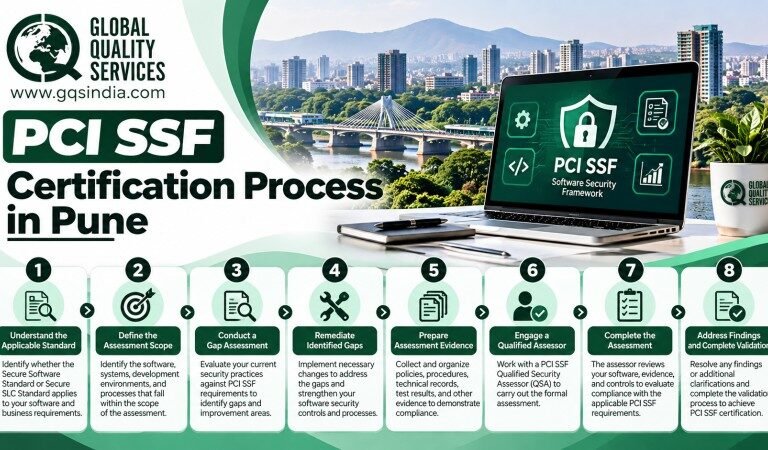
The assessment process should follow a structured approach. Working with the right consultant can help your internal team understand requirements and organise the assessment efficiently.
Step 1: Understand the Applicable Standard
First, identify whether the Secure Software Standard or Secure SLC Standard applies to your business. The two standards address different areas and do not automatically require assessment against each other.
Step 2: Define the Assessment Scope
Clearly identify the software, development environment, teams, processes, and supporting systems included in the assessment. A defined scope prevents unnecessary work and keeps the assessment focused.
Step 3: Conduct a Gap Assessment
Review your existing security practices against the applicable PCI SSF requirements. This helps your team identify missing controls, documentation gaps, process weaknesses, and areas requiring improvement.
Step 4: Remediate Identified Gaps
Address the gaps found during the review. Your team may need to strengthen development practices, update procedures, improve security testing, enhance vulnerability management, or create missing documentation.
Step 5: Prepare Assessment Evidence
Organise policies, procedures, technical records, test results, security documentation, development records, and other evidence that demonstrates how your organisation meets the applicable requirements.
Step 6: Engage a Qualified Assessor
PCI SSC states that businesses seeking Secure Software or Secure SLC assessment should engage a qualified Software Security Framework Assessor from the PCI SSC assessor list.
Step 7: Complete the Assessment
The qualified assessor independently evaluates the applicable software or lifecycle practices against the relevant PCI SSF requirements and assessment procedures.
Step 8: Address Findings and Complete Validation
If the assessment identifies findings, the organisation addresses them and supplies the required evidence or clarifications. The assessor then completes the applicable validation process.
What Documents are Needed for PCI SSF Assessment
Your documentation will depend on the applicable standard, scope, and software environment. Businesses should generally organise evidence around their security and development practices.
Potential evidence may include:
- Software architecture documents
- Secure development procedures
- Security policies
- Vulnerability management records
- Security testing reports
- Code review records
- Change management procedures
- Release management records
- Incident management procedures
- Access control records
- Security training records
- Software inventories
- Sensitive asset documentation
- Remediation records
- Test results
A consultant can help your team map available evidence to applicable requirements before the formal assessment.
Benefits of PCI Software Security Framework Certification in Pune
A PCI SSF assessment can give Pune businesses a clearer understanding of their software security practices.
Stronger Payment Software Security
The assessment encourages organisations to examine how their software protects payment transactions and sensitive payment-related information.
Better Secure Development Practices
Businesses can identify weaknesses in development processes and introduce stronger security practices throughout software design, development, testing, and maintenance.
Improved Vulnerability Management
A structured assessment can highlight weaknesses in vulnerability identification, remediation, and ongoing security management.
Better Security Documentation
PCI SSF requires organisations to demonstrate how their practices work. Preparing this evidence can help teams maintain clearer and more consistent security documentation.
Greater Stakeholder Confidence
Validated payment software can give customers, partners, and other stakeholders clearer evidence of the software’s security practices. PCI SSC maintains listings for validated payment software and qualified Secure SLC vendors.
PCI Secure Software vs Secure SLC: What is the Difference
| Area | Secure Software Standard | Secure SLC Standard |
| Main focus | Payment software security | Secure software lifecycle |
| Primary audience | Payment software vendors | Software vendors developing software used in payment environments |
| Focus | Product security | Development and lifecycle security |
| Lifecycle coverage | Security of the payment software | Design, development, deployment, and maintenance |
| Assessment | Secure Software Assessment | Secure SLC Assessment |
PCI SSC describes these as separate standards within the PCI Software Security Framework. A vendor does not automatically need assessment against both standards.
Industries That May Need PCI Software Security Framework Certification in Pune
PCI SSF becomes relevant when a company develops software that supports or facilitates payment transactions. Pune has a strong technology and software ecosystem, so several types of businesses may work with payment-related applications. However, PCI SSF does not automatically apply to every company in these sectors. Its relevance depends on the software, its role in payment transactions, and the applicable PCI SSC requirements.
E-Commerce Software Providers
Online shopping platforms rely on payment applications to support secure checkout and transactions. A software weakness can affect payment functionality and expose sensitive information. PCI SSF can help eligible software vendors strengthen payment application security and follow structured secure development practices.
Fintech Companies
Pune’s fintech companies develop digital wallets, payment applications, transaction platforms, and other financial technology solutions. These products often support sensitive payment activities. PCI SSF can help eligible vendors identify software security gaps, improve controls, and build stronger payment-related applications.
Hospitality and Restaurant Technology Providers
Hotels, restaurants, and food businesses increasingly use POS, ordering, reservation, and payment software. These applications support everyday transactions and customer interactions. PCI SSF can help eligible technology providers strengthen payment functionality and address security weaknesses within their software.
Payment Gateway Providers
Payment gateways connect merchants with payment processing networks, making software security an important consideration. PCI SSF can help eligible gateway software providers review payment-related functionality, identify vulnerabilities, and demonstrate structured security practices.
Retail Technology Companies
Retailers depend on POS and payment-integrated software to manage sales and customer transactions. Software weaknesses can affect checkout operations and payment security. PCI SSF can help eligible retail technology vendors strengthen payment software and build greater confidence among merchants using their solutions.
Mobile Payment Application Developers
Mobile payment apps make transactions convenient, but developers must consider security throughout development and maintenance. PCI SSF can help eligible vendors build security into payment applications from the beginning rather than addressing vulnerabilities only after deployment.
Banking and Financial Software Providers
Banking and financial technology companies use specialized applications for transactions and payment-related activities. PCI SSF can help eligible software vendors strengthen these applications and integrate security into development, testing, deployment, and maintenance activities.
Payment Processing Software Companies
Payment processors depend on software to support transaction authorization, routing, and management. Weaknesses in these applications can create security concerns. PCI SSF can help eligible vendors address applicable software security requirements and strengthen vulnerability management practices.
SaaS Payment Platforms
Cloud-based platforms can support payment services for multiple customers through shared software environments. This makes consistent security practices important. Where the software falls within the applicable PCI SSF scope, validation can help vendors demonstrate stronger payment software security and development practices.
Point-of-Sale (POS) Software Companies
POS software supports payment acceptance across retail stores, restaurants, hotels, and other businesses. Eligible POS software vendors can use PCI SSF to address security risks within payment functionality and strengthen security throughout the software development process.
Payment SDK and API Providers
Payment SDKs and APIs allow developers to add payment capabilities to their applications. Security weaknesses in these components can affect the applications that depend on them. PCI SSF can help eligible providers strengthen payment-related software security and demonstrate disciplined development practices.
Why Do These Industries Need PCI SSF in Pune?
The key point is that PCI SSF does not automatically apply to every company operating in these industries. PCI SSC specifically describes the Secure Software Standard for software vendors developing payment software that supports or facilitates payment transactions.
For Pune-based technology companies, identifying the correct PCI SSF requirements early can make the assessment process much clearer. A PCI SSF consultant can review your software, help define the applicable scope, identify security gaps, organize evidence, and prepare your team for assessment by a qualified PCI SSC assessor.
PCI SSF Version 2.0: What Pune Businesses Should Know
PCI SSC released version 2.0 of the Secure Software Lifecycle Standard in September 2026. The updated standard aligns with version 2.0 of the Secure Software Standard and introduces additional requirements concerning sensitive assets and digital tools, including consideration of artificial intelligence within Secure SLC processes.
Existing organisations should therefore review the applicable version and transition requirements with their qualified assessor rather than relying on older assessment information.
Why Choose Global Quality Services for PCI SSF Support in Pune?
Global Quality Services helps Pune businesses prepare for PCI SSF assessment with practical consulting support. Our team can help you understand the applicable standard, define scope, conduct a gap assessment, organise documentation, identify evidence gaps, and prepare your internal teams for assessment.
We support businesses across Hinjewadi, Kharadi, Baner, Viman Nagar, Magarpatta, Pimpri-Chinchwad, and other Pune business locations.
Our approach focuses on making the assessment process easier to understand and helping your team address requirements before engaging the qualified assessor.
Frequently Asked Questions
1. What is PCI SSF certification in Pune?
PCI SSF validation assesses eligible payment software or software lifecycle practices against PCI SSC requirements through a qualified Software Security Framework Assessor.
2. Which Pune companies can use PCI SSF validation?
Payment software vendors, fintech technology companies, SaaS providers, payment gateways, and developers supporting payment environments may consider PCI SSF validation for relevant products.
3. What is the difference between PCI Secure Software and Secure SLC?
The Secure Software Standard focuses on payment software security, while the Secure SLC Standard focuses on integrating security throughout the software development lifecycle.
4. How can a Pune company prepare for PCI SSF assessment?
Start by identifying the applicable standard, defining scope, reviewing requirements, conducting a gap assessment, addressing weaknesses, organising evidence, and engaging a qualified assessor.
5. Is PCI SSF mandatory for every fintech company?
No. PCI SSC explains that payment brands determine compliance obligations and whether entities must use software validated under the Secure Software Standard.