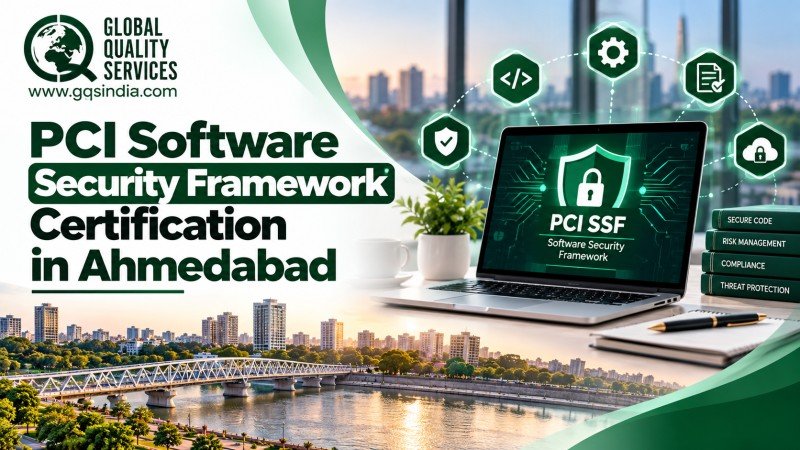
Ahmedabad’s growing technology and fintech ecosystem makes secure payment software increasingly important. In FY 2025–26, UPI processed ₹314 lakh crore worth of transactions, highlighting the scale of India’s digital payment ecosystem. Payment software companies need strong controls to protect sensitive information and reduce security risks.
PCI Software Security Framework Certification in Ahmedabad helps organizations assess and strengthen payment software security. A qualified consultant can simplify requirement interpretation, identify gaps, prepare evidence, and guide your team through assessment readiness.
What is PCI Software Security Framework Certification
PCI Software Security Framework is a collection of security standards developed by the PCI Security Standards Council for payment software.
The framework includes the PCI Secure Software Standard and the PCI Secure Software Lifecycle (Secure SLC) Standard. The Secure Software Standard focuses on building secure payment software, while Secure SLC addresses security throughout software design, development, deployment, and maintenance.
The PCI Secure Software Standard focuses on protecting the integrity and confidentiality of payment-related data stored, processed, or transmitted through software.
It is important to understand that PCI SSF is not the same as PCI DSS certification. PCI DSS primarily addresses environments that store, process, or transmit payment account data, while PCI SSF focuses specifically on payment software security.
Why Does PCI SSF Matter for Software Companies in Ahmedabad
Ahmedabad has a growing technology and business ecosystem, with companies developing applications for retail, fintech, payment processing, e-commerce, and other digital services.
If your software participates in payment transactions, security needs to become part of development rather than an afterthought.
PCI SSF can help organizations:
- Identify security weaknesses in payment software.
- Strengthen secure software development practices.
- Protect sensitive payment-related information.
- Improve security testing and vulnerability management.
- Demonstrate alignment with PCI SSC security requirements.
- Build greater confidence among customers and business partners.
- Create more consistent security practices across software development.
The PCI SSC states that secure payment software plays an important role in supporting reliable payment transactions and protecting payment card data.
Who Needs PCI Software Security Framework Certification
The PCI Secure Software Standard is intended for software vendors that develop payment software used to support or facilitate payment transactions.
This may include organizations developing:
- Payment applications
- Point-of-sale software
- E-commerce payment applications
- Payment processing software
- Mobile payment applications
- Transaction management platforms
- Software used within payment environments
- Other applications that facilitate payment transactions
The exact applicability depends on the software and how it participates in payment processing. A PCI SSF consultant in Ahmedabad can help your organization determine which requirements and assessment approach apply to your product.
PCI Secure Software Standard vs Secure SLC Standard
PCI SSF includes two important security standards, and companies should understand the difference before starting an assessment.
PCI Secure Software Standard
This standard focuses on the security of payment software itself. It establishes security requirements for designing and managing software that supports payment transactions.
The assessment looks at areas such as software security controls, protection of sensitive data, vulnerability handling, and security testing.
PCI Secure Software Lifecycle Standard
The Secure SLC Standard focuses on integrating security throughout the software lifecycle.
It covers security practices across activities such as:
- Software design
- Development
- Testing
- Deployment
- Maintenance
- Vulnerability management
PCI SSC describes Secure SLC as a standard designed to help software vendors build security into the software lifecycle and maintain secure products over time.
Key Areas Covered Under PCI SSF
A PCI Software Security Framework assessment examines different aspects of software security. Your organization should prepare both technical controls and supporting evidence.
Secure Software Design
Your development team should consider security requirements during software architecture and design. Security should influence decisions about authentication, authorization, data handling, interfaces, and application functionality.
Account Data Protection
Payment applications must handle sensitive payment information carefully. Controls should address how relevant data gets stored, processed, transmitted, and protected within the software.
Authentication and Access Controls
Strong authentication and access controls help prevent unauthorized users from accessing sensitive functions or information.
Review administrator access, privileged accounts, authentication mechanisms, session management, and authorization controls before assessment.
Threat and Vulnerability Management
Software teams need processes for identifying, evaluating, and addressing vulnerabilities.
Regular security testing can help developers identify weaknesses before attackers exploit them.
Secure Software Development
Security should become part of the development process instead of remaining solely with the cybersecurity team.
Developers should understand secure coding practices, security requirements, testing procedures, and vulnerability remediation responsibilities.
Security Testing
Security testing helps identify weaknesses that ordinary functional testing may overlook.
Depending on the applicable requirements, organizations may need evidence from vulnerability assessments, penetration testing, code reviews, or other security testing activities.
Incident Response
Your organization should know what happens when someone discovers a security incident or software vulnerability.
Define responsibilities, escalation procedures, investigation processes, communication requirements, and remediation activities.
PCI SSF Certification Process in Ahmedabad
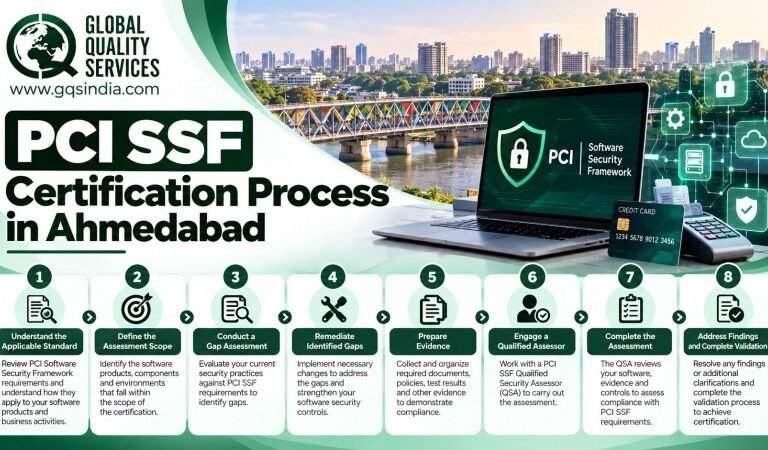
The exact assessment process depends on the applicable PCI SSF standard and the software being assessed. However, organizations generally need to move through several practical stages.
Step 1: Understand the Applicable Standard
First, determine whether the PCI Secure Software Standard, Secure SLC Standard, or another PCI SSC program applies to your product.
Understanding the scope early prevents your team from preparing unnecessary documentation or overlooking relevant requirements.
Step 2: Define the Assessment Scope
Identify the software, versions, development processes, environments, interfaces, and security functions that fall within the assessment scope.
Documenting the scope clearly helps your team maintain consistency throughout the assessment.
Step 3: Conduct a Gap Assessment
A consultant can compare your existing controls and processes against the applicable PCI SSF requirements.
The gap assessment identifies areas that need corrective action before the formal assessment.
Step 4: Remediate Identified Gaps
Your technical and management teams then address the identified weaknesses.
This may involve improving access controls, updating development procedures, strengthening security testing, improving vulnerability management, or revising documentation.
Step 5: Prepare Evidence
PCI SSF assessment requires more than written policies. Your organization should maintain appropriate evidence demonstrating that security controls operate as required.
Evidence may include technical configurations, testing records, development procedures, vulnerability reports, logs, policies, and other relevant documentation.
Step 6: Engage a Qualified Assessor
Software vendors seeking assessment against the PCI Secure Software Standard should engage a qualified Secure Software Assessor from the PCI SSC’s listed Software Security Framework Assessors.
The PCI SSC maintains a qualification program for SSF Assessor companies and their professionals.
Step 7: Complete the Assessment
The qualified assessor evaluates the software and supporting processes against the applicable requirements.
Your organization may need to answer questions, demonstrate controls, submit evidence, and address assessment findings.
Step 8: Address Findings and Complete Validation
If the assessment identifies gaps, your team must address the applicable findings.
Once the assessment requirements have been satisfied, the appropriate validation documentation can be completed according to the relevant PCI SSC program.
Industries That Need PCI Software Security Framework Certification in Ahmedabad
PCI SSF becomes relevant when a company develops software that supports or facilitates payment transactions. Different industries use payment software in different ways, but they all face one common concern—keeping payment functionality secure. Here are some industries where PCI SSF can play an important role.
E-Commerce Software Providers
Online shopping platforms depend heavily on secure checkout and payment functionality. A vulnerability in payment software can expose sensitive information or interrupt transactions. PCI SSF helps e-commerce software providers build stronger security into their payment applications and demonstrate reliable software security practices.
Fintech Companies
Fintech businesses often develop digital wallets, payment applications, transaction platforms, and financial technology solutions. Their software handles sensitive payment activities every day. PCI SSF helps fintech companies identify software vulnerabilities, strengthen security controls, and build payment products that customers and business partners can trust.
Hospitality and Restaurant Technology Providers
Hotels and restaurants increasingly use digital POS, ordering, reservation, and payment applications. These systems process transactions while supporting day-to-day operations. PCI SSF helps eligible software vendors strengthen payment functionality and reduce security weaknesses that could affect customers or payment transactions.
Payment Gateway Providers
Payment gateways sit between merchants and payment networks, making software security a critical part of their operations. PCI SSF helps gateway providers protect payment-related functionality, identify vulnerabilities, and demonstrate that they follow recognized secure software practices.
Retail Technology Companies
Retail businesses use POS and payment-integrated software to manage sales and customer transactions. A software weakness can create problems during checkout and affect sensitive payment information. PCI SSF helps eligible retail software vendors strengthen payment security and give merchants greater confidence in their products.
Mobile Payment Application Developers
Mobile payment applications make transactions convenient, but they also introduce security considerations across development and maintenance. PCI SSF helps developers build security into payment applications from the development stage instead of addressing vulnerabilities only after deployment.
Banking and Financial Software Providers
Banks and financial institutions rely on specialized software for payment processing and transaction-related activities. PCI SSF helps eligible software vendors strengthen payment-related applications and demonstrate that security remains part of development, testing, and maintenance.
Payment Processing Software Companies
Payment processors depend on software to authorize, route, manage, and support transactions. Any weakness can affect transaction security and reliability. PCI SSF helps these vendors strengthen application security, manage vulnerabilities, and address applicable payment software security requirements.
SaaS Payment Platforms
Cloud-based payment platforms serve multiple customers through shared software environments. This makes consistent security practices particularly important. PCI SSF helps eligible SaaS payment vendors demonstrate that they have incorporated appropriate security controls into their payment software and development processes.
Point-of-Sale (POS) Software Companies
POS software directly supports payment acceptance in stores, restaurants, hotels, and other businesses. PCI SSF helps eligible POS software vendors address security risks within their payment functionality and build stronger protection into the software lifecycle.
Payment SDK and API Providers
Developers often rely on payment SDKs and APIs to add payment capabilities to their applications. If these components contain security weaknesses, they can affect applications that depend on them. PCI SSF helps eligible SDK and API providers strengthen payment-related software security and demonstrate better development practices.
Why Do These Industries Need PCI SSF
The important point is that PCI SSF does not automatically apply to every company in these industries. Its relevance depends on whether the organization develops software that supports or facilitates payment transactions.
For Ahmedabad-based software companies, understanding this distinction early can save time and prevent unnecessary compliance work. A PCI SSF consultant can review your software, determine the applicable requirements, identify security gaps, and help your team prepare for the assessment.
Common Challenges During PCI SSF Assessment
Many organizations struggle with PCI SSF because they treat it as a documentation exercise. In practice, the assessment can involve both technical and organizational work.
Common challenges include:
- Unclear assessment scope
- Incomplete software inventories
- Weak vulnerability management processes
- Limited security testing evidence
- Inconsistent secure coding practices
- Poor documentation of development activities
- Gaps in access management
- Inadequate incident response procedures
- Difficulty mapping existing controls to PCI SSF requirements
- Lack of evidence showing that controls operate consistently
A structured preparation process can help your development, security, and compliance teams work from the same requirements.
Benefits of PCI Software Security Framework Certification in Ahmedabad
PCI SSF certification helps Ahmedabad businesses strengthen payment software security, build customer confidence, improve compliance practices, and manage vulnerabilities effectively.
Stronger Payment Software Security
PCI SSF encourages organizations to address security during software development and maintenance, helping reduce weaknesses that could affect payment transactions.
Better Customer Confidence
Demonstrating alignment with recognized payment software security requirements can give customers and business partners greater confidence in your software.
Improved Development Practices
Security requirements can encourage development teams to adopt more consistent practices for coding, testing, vulnerability management, and software maintenance.
Better Vulnerability Management
PCI SSF encourages organizations to identify and address software vulnerabilities through defined security processes.
Support for Business Opportunities
Some customers and partners may expect payment software vendors to demonstrate recognized security practices before entering into business relationships.
Greater Security Visibility
The assessment process can help management understand where software security controls work well and where teams need additional improvements.
How Long Does PCI SSF Certification Take
The timeline depends on your software architecture, assessment scope, existing controls, documentation, and the number of findings requiring remediation.
An organization with mature security processes may move through preparation more efficiently. Companies starting from limited security documentation may need additional time for gap remediation and evidence development.
A consultant can assess your current readiness and create a practical project timeline before the formal assessment begins.
Why Choose Global Quality Services for PCI SSF Consulting in Ahmedabad
Global Quality Services can help your organization approach PCI SSF requirements with a structured and practical process.
With PCI SSF consulting in Ahmedabad, your team can receive support with gap assessment, requirement interpretation, documentation, evidence preparation, remediation planning, and assessment readiness.
If your software supports payment transactions, now is the right time to review its security practices. Contact Global Quality Services to discuss your PCI Software Security Framework requirements in Ahmedabad and plan your assessment journey.
Frequently Asked Questions
1. What is PCI Software Security Framework certification?
PCI Software Security Framework certification refers to validation of payment software against applicable PCI SSC Secure Software requirements through an assessment performed by a qualified SSF assessor.
2. Is PCI SSF the same as PCI DSS?
No. PCI SSF focuses on payment software security, while PCI DSS focuses on protecting payment account data and the environments that store, process, or transmit it.
3. Who performs a PCI SSF assessment?
A qualified PCI Software Security Framework Assessor performs the assessment. PCI SSC maintains a program for qualifying SSF assessor companies and their professionals.
4. How can a PCI SSF consultant help my Ahmedabad business?
A consultant can assess gaps, interpret requirements, prepare evidence, improve security processes, support remediation, and help your team prepare for the formal assessment.
5. How long does PCI SSF certification take in Ahmedabad?
The timeline varies according to software complexity, assessment scope, existing controls, documentation, testing requirements, and remediation needs. A readiness assessment can help establish a realistic timeline.