Delhi and the wider NCR region are home to a diverse manufacturing and supplier base serving industries such as engineering, automotive components, electronics, textiles, consumer products, medical equipment, and industrial goods. For companies purchasing products or components from these factories, verifying actual manufacturing capabilities is often as important as reviewing certificates and documentation.
Inspection or Second-Party Audits of Factories in Delhi provide buyers, OEMs, importers, procurement teams, and organizations with an on-site view of supplier performance. These assessments can help verify manufacturing processes, quality controls, production capability, workplace practices, documentation, and compliance with defined customer requirements.
Global Quality Services (GQS) supports businesses with factory inspections and second-party audit activities designed around the requirements of the buyer, supplier, product, and applicable standards.
What Are Factory Inspections and Second-Party Audits?
A factory inspection is an on-site examination of specific products, manufacturing activities, equipment, materials, processes, or quality controls. Depending on the assignment, an inspection may take place before production, during manufacturing, or before dispatch.
A second-party audit is different. It is generally conducted by or on behalf of a customer to evaluate an existing or potential supplier against defined requirements. The assessment can examine the supplier’s processes, quality management, production capacity, documentation, resources, and ability to meet customer expectations consistently.
The scope can therefore be customized according to the purpose of the assessment rather than relying on a single generic checklist.
Why Do Companies Conduct Second-Party Audits of Delhi Factories?
A supplier may have the right certificates and documented procedures, but buyers also need confidence that the factory floor follows these requirements.
A second-party audit can help organizations:
- Evaluate a new supplier before placing significant orders
- Verify the capabilities of an existing supplier
- Assess manufacturing and process controls
- Identify quality or compliance gaps
- Review corrective actions from previous assessments
- Examine production capacity and resource availability
- Verify storage, handling, traceability, and inspection practices
- Support supplier qualification and periodic evaluation
- Reduce the risk of recurring quality problems
- Provide documented findings for procurement and supplier management
The assessment can be particularly useful where a buyer needs evidence from the supplier’s actual manufacturing location rather than relying only on submitted documents.
What Can Be Covered During a Second Party Factory Audits in Delhi?
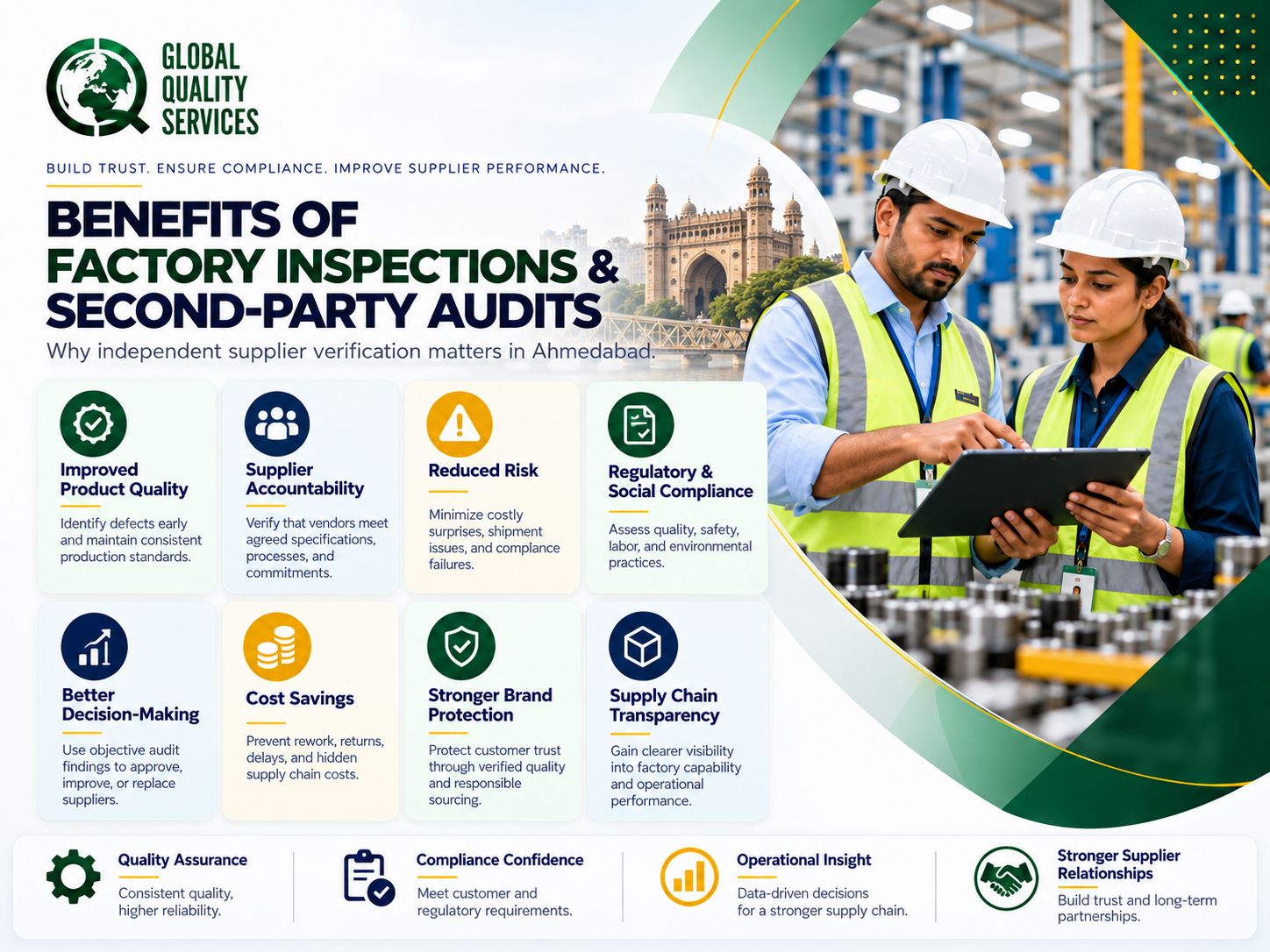
The inspection scope depends on the product and assignment. Typical areas may include:
Product and Material Inspection
Inspectors can review raw materials, components, finished products, identification, specifications, dimensions, artistry, and other agreed requirements.
Manufacturing Process Inspection
The assessment can examine production stages, process controls, equipment condition, operator practices, inspection points, and controls used to prevent defects.
Quality Control and Testing
The inspection may review incoming inspection, in-process checks, final inspection, testing arrangements, measuring equipment, calibration records, and quality records.
Documentation and Traceability
The inspection may review relevant procedures, inspection records, production documents, material certificates, test reports, and traceability arrangements against the agreed requirements.
Storage and Handling
Where relevant, we can examine raw materials, work-in-progress, finished products, rejected material, packaging, and storage conditions.
Packing and Dispatch
For shipment-related assignments, you can verify packaging, labeling, quantities, product identification, loading, and other agreed requirements
Second-Party Supplier Audits for Delhi NCR Manufacturing
Delhi’s industrial supply network extends beyond the city into major NCR manufacturing locations. This makes supplier assessment relevant to companies sourcing from factories across the wider region.
GQS can support second-party audit requirements for supplier facilities located in or around areas such as:
- Mayapuri Industrial Area
- Naraina Industrial Area
- Okhla Industrial Area
- Bawana Industrial Area
- Narela Industrial Area
- Wazirpur Industrial Area
- Jhilmil Industrial Area
- Patparganj Industrial Area
- Noida and Greater Noida
- Faridabad
- Ghaziabad
- Gurugram and Manesar
The exact inspection or audit scope can be developed according to the factory, product, industry, customer requirements, and applicable standards.
Which Industries Can Benefit from Factory Audits in Delhi?
Second-party audits and factory inspections can be used across different manufacturing and supply-chain environments.
- Automotive and engineering: Evaluation of production processes, component quality, traceability, testing, and process controls.
- Electronics and electrical products: Review of manufacturing processes, component handling, testing, inspection, and product conformity.
- Textiles and consumer products: Inspection of materials, production quality, artistry, packaging, and supplier processes.
- Medical and healthcare products: Assessment of relevant production controls, documentation, traceability, inspection, and quality requirements.
- Industrial equipment and machinery: Verification of manufacturing capability, fabrication processes, dimensions, testing, documentation, and final product requirements.
- Food, packaging, and related manufacturing: Review of applicable production, hygiene, quality, traceability, storage, and supplier requirements based on the audit scope.
What Happens During a Second-Party Factory Audit?
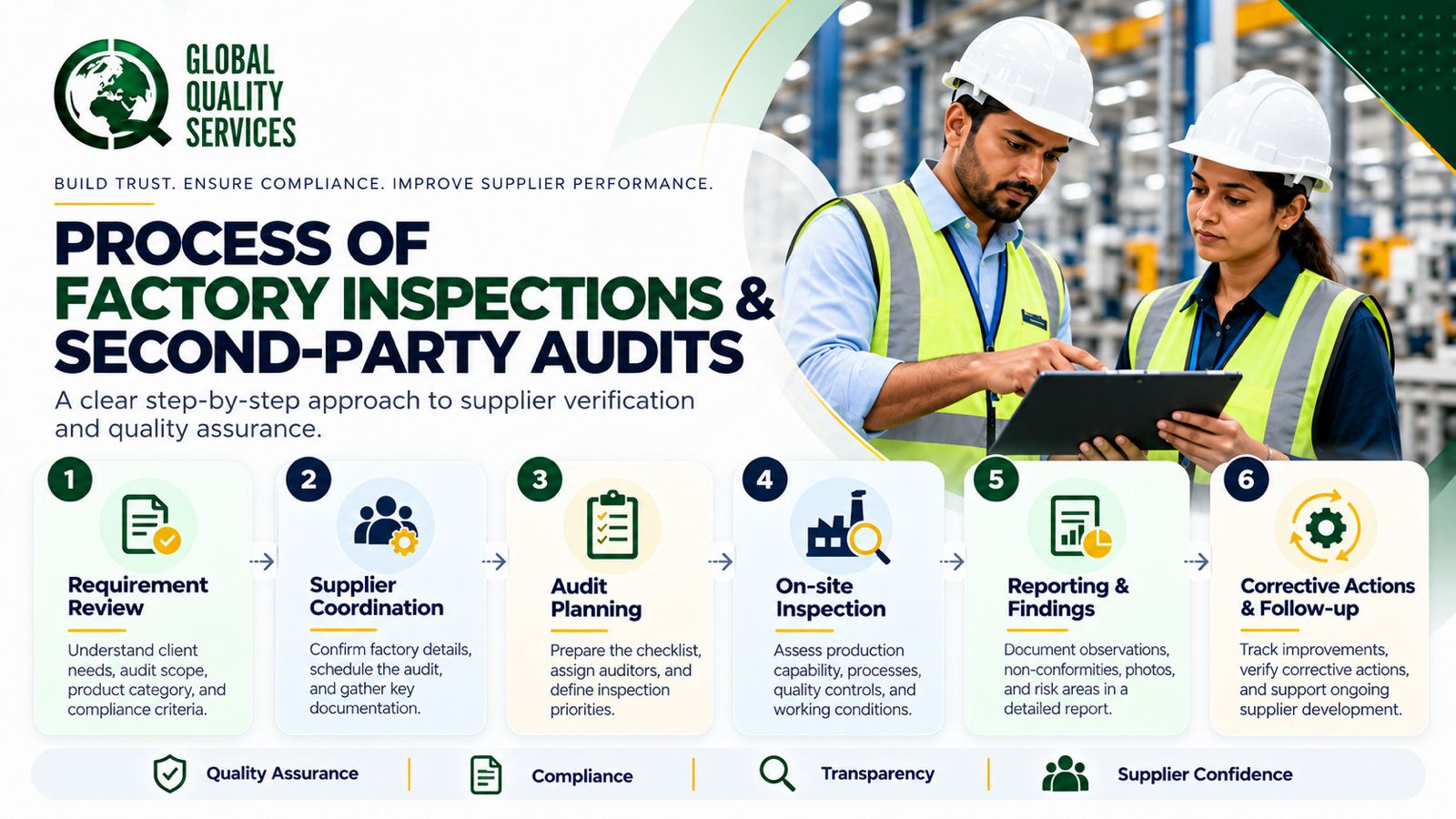
A structured audit generally begins with understanding the buyer’s objectives and defining the audit criteria.
1. Audit Planning
The audit scope, factory location, product or process, applicable requirements, and assessment criteria are established.
2. Document Review
The auditor reviews relevant procedures, specifications, quality records, previous audit findings, and other available information, as required.
3. On-Site Factory Assessment
The auditor visits the manufacturing facility and evaluates the agreed areas through observation, interviews, document review, and examination of relevant records.
4. Process Verification
The auditor compares actual manufacturing activities with documented procedures and customer requirements.
5. Findings and Evidence
The auditor documents non-conformities, observations, risks, and areas requiring attention using objective evidence.
6. Audit Report
A structured report is prepared to communicate to the customer or organization commissioning the audit.
7. Corrective Action Follow-Up
Where required, corrective actions can be reviewed to determine whether identified issues have been appropriately addressed.
How Can GQS Help with Factory Inspections and Second-Party Audits in Delhi?
Global Quality Services can support organizations that need independent factory inspections or second-party supplier audits in Delhi and the surrounding NCR manufacturing region.
We can tailor our approach to the purpose of the assessment, whether you need supplier qualification, manufacturing process verification, quality evaluation, customer-specific compliance, or follow-up on previously identified issues.
Before an assessment, the customer can establish the audit criteria and scope. During the factory visit, the assessment focuses on objective evidence from the relevant manufacturing and quality processes. Findings are then documented in a structured report to help the customer understand supplier performance and areas requiring attention.
For companies managing multiple suppliers, periodic second-party audits can also form part of a broader supplier evaluation and monitoring program.
Frequently Asked Questions
1. What is a second-party factory audit?
A second-party factory audit is an assessment conducted by a customer or on behalf of a customer to evaluate a supplier against defined requirements. It can cover quality, manufacturing capability, processes, documentation, and other supplier-specific criteria.
2. How is a factory inspection different from a second-party audit?
An inspection generally focuses on a specific product, process, material, equipment, or manufacturing activity. A second-party audit typically has a broader supplier evaluation scope and examines whether the supplier’s systems and processes meet the customer’s requirements.
3. Can a second-party audit be conducted before selecting a supplier?
Yes. Organizations can use supplier audits as part of their qualification and evaluation process before placing significant orders or entering a longer-term supplier relationship.
4. Can GQS conduct audits against customer-specific requirements?
Yes. The assessment can be structured around defined customer requirements, specifications, supplier procedures, applicable standards, or other agreed audit criteria.
5. Do second-party audits apply only to factories in Delhi?
No. GQS can support supplier assessment requirements across Delhi NCR and other manufacturing locations in India, subject to the agreed scope and availability of the appropriate audit resources.