India is rapidly strengthening its renewable energy and biofuel sectors, making ISCC Certification and ISCC Plus Certification increasingly important for businesses in biomass, agriculture, and sustainable manufacturing.
India achieved 20% ethanol blending in petrol by 2025, rising from 1.5% in 2014, while renewable power generation grew 24.4% to 134.43 billion kWh, reflecting the country’s rapid shift toward sustainable energy. As sustainability requirements increase globally, certifications like ISCC help Indian companies demonstrate responsible sourcing, traceability, and environmental compliance in international supply chains.
What is ISCC Certification
ISCC certification plays an important role in promoting sustainable resource management and traceable supply chains across industries involved in renewable materials and bioenergy. ISCC (International Sustainability and Carbon Certification) is a globally recognized sustainability standard designed for biomass, agricultural feedstocks, and renewable energy supply chains. It verifies sustainable land use, greenhouse gas reduction, and responsible sourcing across the entire production and distribution process.
What is ISCC Plus Certification
ISCC Plus certification focuses on industries adopting circular economy practices and sustainable raw materials across modern manufacturing and industrial sectors. ISCC Plus certification is a voluntary sustainability certification that supports industries using recycled, renewable, or bio-based materials. It ensures supply chain transparency and verifies sustainability claims for products used in sectors such as chemicals, plastics, packaging, and consumer goods.
Why ISCC Certification Matters for Businesses in India
India’s growing renewable energy policies and international trade requirements are making sustainability certifications increasingly important for businesses operating in global supply chains. Implementing ISCC and ISCC PLUS standards helps Indian exporters:
- Meet International Regulatory Demands: Fulfill European Union Renewable Energy Directive (RED II) requirements and global corporate ESG benchmarks.
- Eliminate Greenwashing Risks: Provide third-party verified mass balance calculations and chain-of-custody documentation.
- Protect Export Revenues: Maintain seamless supply chain relationships with global brands and multinational buyers who enforce strict sustainability metrics.
Businesses looking to strengthen their wider environmental management practices can also consider ISO 14001 certification for a structured approach to managing environmental impacts, compliance, and resource use
Key Benefits of ISCC Certification and ISCC Plus Certification in India
These certifications offer multiple advantages for Indian businesses, helping improve sustainability performance, strengthen global credibility, and access international markets.
Key Benefits of ISCC Certification in India
- Access to Global Biofuel and Biomass Markets
- Verified Sustainable Raw Material Sourcing
- Improved Environmental and Carbon Management
- Stronger Export Credibility and Market Trust
- Better Regulatory and Sustainability Compliance
Key Benefits of ISCC Plus Certification in India
- Supports Circular Economy and Sustainable Materials
- Transparency in Recycled and Bio-Based Supply Chains
- Increased Opportunities with Global Brands
- Stronger Sustainability and Brand Reputation
- Competitive Advantage in Sustainable Manufacturing
For organizations focused on reducing energy consumption and improving energy efficiency alongside sustainability goals, ISO 50001 certification can provide a structured energy management framework.
How Can ISCC PLUS Certification Help Your Organization
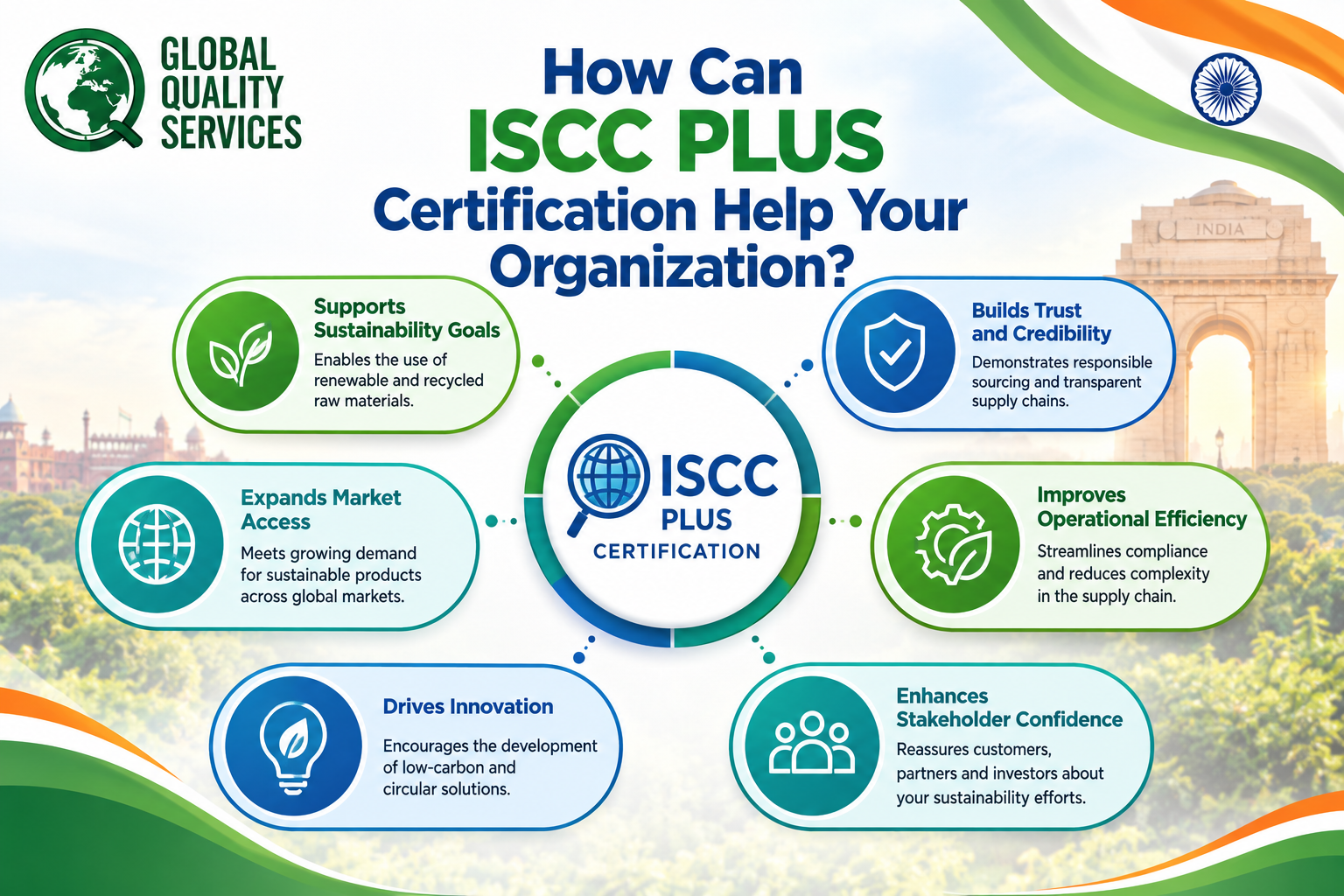
Adopting ISCC PLUS certification transforms your operational sustainability into a measurable business asset.
1. Expand Access to High-Value Global Markets
International buyers in Europe, North America, and Asia-Pacific actively prioritize suppliers with certified circular and bio-based material flows. ISCC PLUS certification unlocks export pipelines and positions your enterprise as a preferred global vendor.
2. Validate Circular Economy and Recycled Content Claims
ISCC PLUS offers a standardized mass balance methodology that verifies raw material mixing in chemical processing and plastic manufacturing. This allows your team to make audit-backed marketing and regulatory claims regarding bio-based or recycled content.
3. Strengthen Enterprise ESG Ratings and Brand Value
Third-party verification enhances your corporate governance, environmental performance metrics, and overall ESG standing. This transparency attracts sustainable investors, mitigates reputational exposure, and reinforces customer trust.
4. Gain First-Mover Advantage in Sustainable Manufacturing
Early adopters of ISCC PLUS standards secure early long-term supply contracts with global brands seeking verified eco-friendly packaging and circular feedstocks.
Major Industries in India Benefiting from ISCC Certification
Several Indian industries are adopting sustainability certifications as global demand for responsibly sourced materials continues to grow.
Biofuel and Ethanol Production
India is expanding ethanol blending programs under national renewable energy policies. ISCC certification helps biofuel producers demonstrate sustainable sourcing and compliance with international environmental standards.
Chemical and Polymer Manufacturing
Indian manufacturers using recycled plastics, bio-based chemicals, and renewable feedstocks benefit from ISCC Plus certification by validating sustainability claims and improving transparency across global supply chains.
Agricultural and Biomass Supply Chains
India’s large agricultural sector produces significant biomass feedstock. ISCC certification helps ensure responsible land use, sustainable farming practices, and traceability for international export markets.
Chemical and manufacturing organizations can also strengthen their environmental and operational controls through RC 14001 certification, particularly where responsible chemical management and sustainability are key priorities.
How the ISCC Certification and ISCC Plus Certification Work
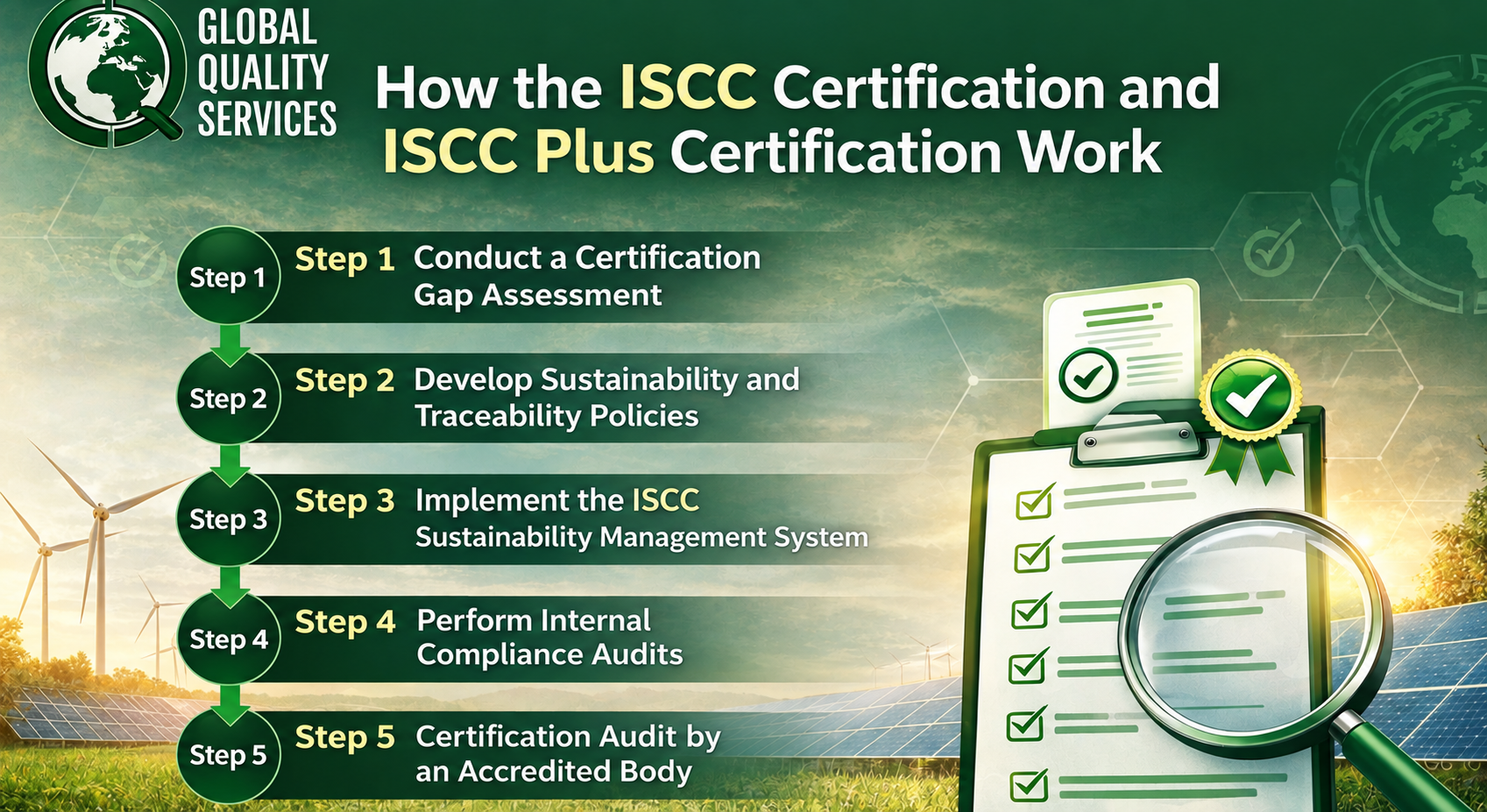
Organizations must follow structured procedures to implement sustainability systems and successfully achieve certification.
Step 1: Conduct a Certification Gap Assessment
A gap assessment evaluates existing operational processes against ISCC certification requirements. It helps identify missing sustainability practices, documentation gaps, and compliance areas that need improvement before implementation.
Step 2: Develop Sustainability and Traceability Policies
Organizations must establish clear sustainability policies addressing responsible sourcing, environmental protection, greenhouse gas monitoring, and supply chain traceability across operations.
Step 3: Implement the ISCC Sustainability Management System
Companies implement procedures to monitor sustainability practices, maintain traceability records, and ensure operational compliance with ISCC standards throughout the production and supply chain processes.
Step 4: Perform Internal Compliance Audits
Internal audits evaluate whether implemented processes meet certification requirements. These audits help identify non-conformities and ensure the organization is prepared for the official certification assessment.
Step 5: Certification Audit by an Accredited Body
An accredited certification body performs an independent audit to verify compliance with ISCC standards. After successful verification, the organization receives the official certification.
Documents and Records Commonly Required for ISCC PLUS
The documents required depend on your certification scope and operations. Common records include:
- Company and site details
- Supplier and material information
- Purchase and sales records
- Material traceability records
- Production and inventory records
- Sustainability declarations
- Mass balance records, where applicable
- Training and internal review records
- Corrective action records
- Relevant procedures and supporting documents
Why Choose Global Quality Services for ISCC Certification and ISCC Plus Certification
A reputed and expert consultant like Global Quality Services help organizations navigate complex certification requirements and ensure a smoother and faster certification journey.
Expert Knowledge of Sustainability Standards
Consultants possess in-depth knowledge of ISCC certification frameworks and help organizations correctly interpret requirements and implement sustainability practices efficiently.
Faster Certification Process
Professional guidance helps businesses streamline documentation, training, and audit preparation, reducing delays and enabling faster certification completion.
Understanding of Indian Industry Regulations
Consultants familiar with India’s renewable energy and manufacturing sectors can provide tailored solutions aligned with local regulatory requirements and operational challenges.
Reduced Compliance Risks During Audits
Experienced consultants identify potential non-compliance issues early and guide organizations in implementing corrective measures before the certification audit.
Long-Term Certification Maintenance Support
Consultants assist businesses with ongoing compliance, internal audits, and documentation updates to ensure certification validity and continuous sustainability improvement.
Start Your ISCC PLUS Certification Journey with the Right Preparation
Whether you are introducing recycled feedstocks, expanding into bio-based materials, supplying international customers, or preparing to meet new sustainability requirements, the right preparation can make your certification journey much more straightforward.
Speak with Global Quality Services to understand the applicable ISCC PLUS requirements, identify your certification scope, and plan the steps needed to prepare your organization for the certification audit.
Frequently Asked Questions
1. What is ISCC Certification used for in India?
ISCC certification verifies sustainability, traceability, and responsible sourcing in biomass, biofuel, and agricultural supply chains, helping Indian businesses meet global sustainability requirements and export standards.
2. What industries commonly require ISCC Plus Certification?
Industries such as chemicals, plastics, packaging, recycling, and bio-based manufacturing adopt ISCC Plus certification to verify sustainable sourcing and ensure transparency in their supply chains.
3. How long does it take to obtain ISCC certification in India?
Obtaining ISCC certification in India usually takes a few weeks to several months depending on documentation readiness, operational compliance, and preparation for the certification audit.
4. Is ISCC certification mandatory for Indian companies?
ISCC certification is not legally mandatory in India, but many international buyers and sustainability-focused markets require it to verify responsible sourcing and sustainable production.
5. Can small and medium enterprises obtain ISCC certification?
Yes, small and medium enterprises can obtain ISCC certification if they follow sustainability requirements, maintain traceability systems, and comply with certification standards across their supply chain.