Mumbai’s commercial buildings, high-rise developments, corporate offices, hotels, and infrastructure projects operate in a city where energy demand, limited space, water management, and coastal conditions all influence building performance. As businesses and developers explore sustainable construction and cleaner energy options, LEED Certification in Mumbai offers a structured framework for evaluating environmental performance and improving building sustainability.
For Mumbai projects, sustainability planning can also include renewable electricity, energy-efficient cooling, lower-carbon building materials, water conservation, and measures that support long-term operational resilience. Global Quality Services (GQS) helps project teams understand LEED requirements, organize certification documentation, and prepare for the assessment process.
Why LEED Certification Matters for Mumbai’s Buildings
Mumbai’s dense urban environment makes efficient use of energy, water, and building space an important consideration. Commercial towers and large facilities may have substantial cooling, lighting, and ventilation needs, while redevelopment projects must consider sustainability within the limits of existing sites and structures.
LEED provides a framework for assessing building strategies across areas such as energy, water, materials, indoor environmental quality, and sustainable sites. It can help project teams set measurable objectives and coordinate sustainability decisions from early design through construction and operation. Mumbai’s climate and urban conditions make it useful to evaluate building strategies in context. Project teams may need to consider:
These factors should be evaluated against the project’s actual conditions and the requirements of its selected LEED rating system.
Sustainable Green Energy and LEED Projects in Mumbai
Sustainable energy planning is an important consideration for Mumbai developments, particularly buildings with high electricity demand and extensive cooling systems. LEED projects can assess energy performance and, where applicable, incorporate renewable energy strategies as part of a broader approach to reducing environmental impact.
Potential measures include:
- Renewable electricity: Evaluate suitable options such as rooftop solar, off-site renewable electricity procurement, or other eligible renewable energy arrangements.
- Energy-efficient cooling: Consider efficient chillers, HVAC controls, heat management, and building-envelope strategies to address Mumbai’s cooling requirements.
- Smart energy management: Use building management systems, monitoring, and operational controls to track consumption and identify improvement opportunities.
- Efficient lighting: Incorporate energy-efficient lighting and controls in offices, common areas, parking facilities, and other spaces.
- Lower-energy design: Assess orientation, shading, glazing, insulation, and other design choices that can help reduce cooling loads.
- Commissioning and performance review: Check that building systems are designed, installed, and operated in line with project objectives.
Renewable energy alone does not establish LEED certification. The project must meet the applicable rating system’s prerequisites and pursue the relevant credits, with evidence appropriate to its certification pathway.
Benefits of LEED Certification in Mumbai
LEED certification can help Mumbai projects bring environmental performance, energy efficiency, and sustainable building practices into a structured framework. For developers and businesses, the benefits can extend from day-to-day building performance to long-term sustainability planning.
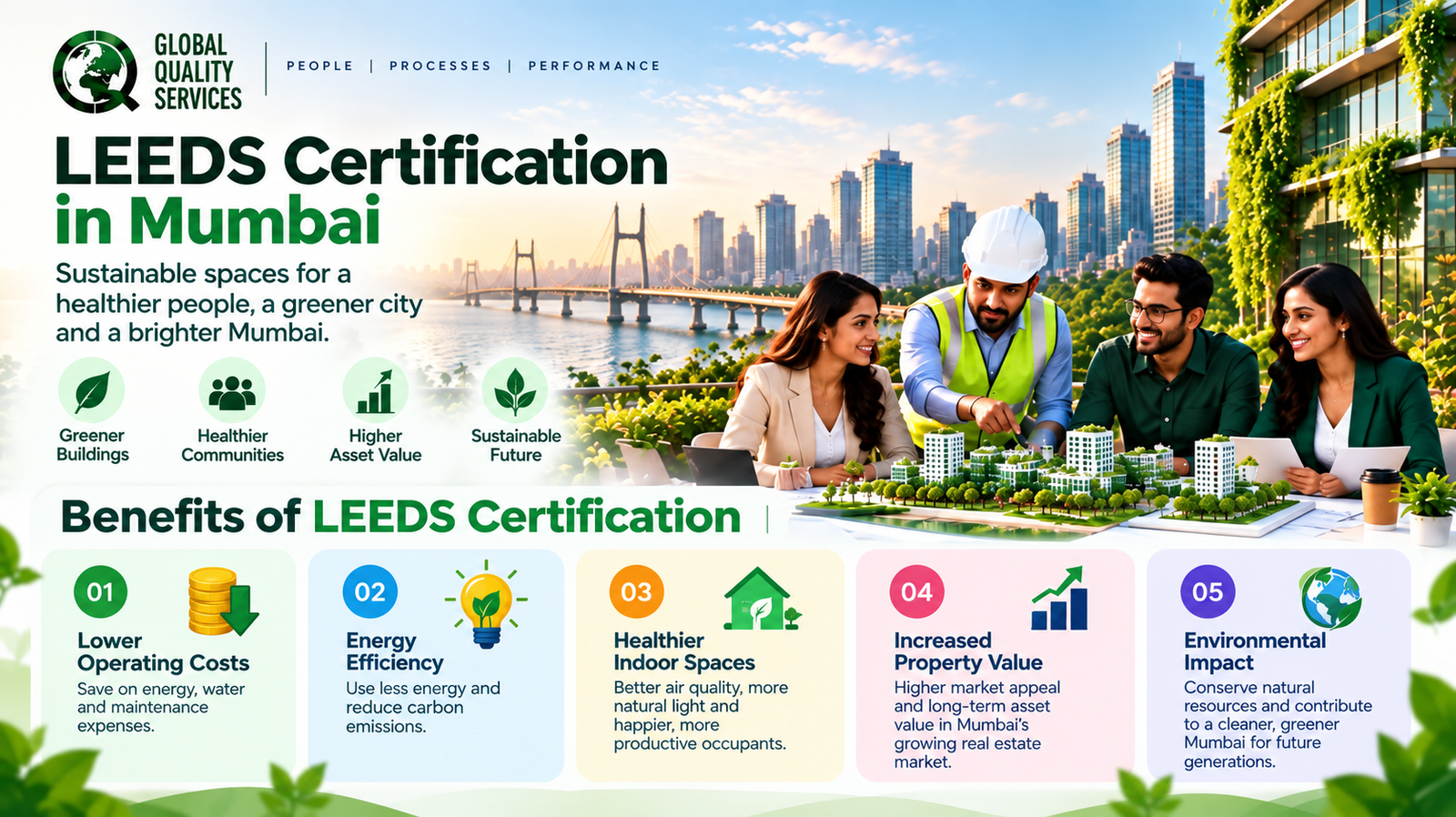
- Improved Energy Efficiency
- Support for Renewable Energy
- Lower Water Consumption
- Better Indoor Environment
- Reduced Environmental Impact
- Better Prepared Buildings
- Stronger Sustainability Credentials
- Long-Term Operational Planning
Where LEED Certification Support Is Relevant Across Mumbai
LEED-related planning and documentation support may be useful for projects in Mumbai’s commercial, business, industrial, and redevelopment areas.
- Bandra Kurla Complex (BKC): Corporate offices, financial services buildings, commercial towers, and large business facilities.
- Lower Parel and Worli: Redeveloped commercial properties, premium offices, hotels, and mixed-use developments.
- Andheri East and MIDC: Corporate offices, business parks, industrial facilities, and supporting infrastructure.
- Powai: Technology offices, commercial campuses, residential developments, and institutional facilities.
- Navi Mumbai: IT parks, commercial buildings, educational facilities, logistics-related developments, and large campuses.
- Thane: Commercial complexes, residential townships, healthcare facilities, and mixed-use projects.
- South Mumbai: Offices, hospitality properties, heritage-sensitive upgrades, and redevelopment projects.
The right certification approach depends on the building’s use, project boundary, stage, and the LEED rating system selected.
Which Mumbai Projects Can Pursue LEED Certification?
LEED may be relevant to a range of building types, depending on the applicable rating system and eligibility criteria.
- Commercial offices and business centers: Projects can assess energy use, water efficiency, indoor environmental quality, and building operations.
- High-rise and mixed-use developments: Teams can consider sustainability across shared services, common areas, building systems, and applicable project boundaries.
- Hotels and hospitality properties: Energy-intensive cooling, hot water, lighting, and water use can be important areas for sustainability planning.
- Healthcare and educational facilities: Projects can review building performance alongside ventilation, occupant comfort, lighting, and resource management needs.
- Industrial and technology facilities: Administrative buildings, campuses, and eligible facilities can assess energy performance, resource use, and operational practices.
- Existing buildings and interior projects: Depending on the project, an appropriate LEED pathway may focus on ongoing operations or interior spaces rather than new construction.
How Can GQS Help with LEED Certification in Mumbai?
GQS supports Mumbai project teams with LEED certification planning and documentation coordination. We help clients understand the applicable requirements, organize evidence, and identify areas that need attention as the project progresses.
Our support can help developers, facility owners, architects, consultants, and businesses preparing a new development or evaluating an existing building. For projects with sustainable energy goals, GQS can help teams organize relevant certification information alongside their broader sustainability documentation. Contact us for consultations in certifications like ISO 27001, PCI DSS assessment, and more.
Frequently Asked Questions
1. What is LEED Certification?
LEED stands for Leadership in Energy and Environmental Design. It is a green building rating system that evaluates sustainability-related aspects of buildings and projects, according to the requirements of the applicable rating system and version.
2. Does LEED Certification include sustainable energy?
LEED includes energy-related requirements and opportunities to earn credits for improved energy performance and eligible renewable energy strategies. The exact requirements depend on the rating system and version.
3. Can a Mumbai building use solar power as part of its LEED strategy?
Solar power may be considered as part of a project’s renewable energy approach, subject to the applicable LEED requirements and documentation rules. The project must also satisfy the other relevant certification requirements.
4. Can existing commercial buildings in Mumbai pursue LEED?
Certain LEED pathways are intended for existing buildings and ongoing operations. Eligibility and requirements depend on the building’s use, operating conditions, and selected certification route.
5. How can GQS support LEED Certification in Mumbai?
GQS can help you understand certification requirements, plan documentation, coordinate project information, and prepare teams for the assessment process. The scope of support depends on the project and its stage.