A supplier can have the right certifications, a strong company profile, and years of manufacturing experience, but how do you know that the factory is actually meeting your requirements on the production floor? This is where factory inspections and second-party audits become important.
For companies sourcing products, components, raw materials, or finished goods from Ahmedabad and the surrounding industrial areas, an on-site assessment can provide a much clearer picture of a supplier’s manufacturing capabilities, process controls, product quality, documentation, and operational practices.
Inspection or Second-Party Audits of Factories in Ahmedabad help buyers and organizations evaluate suppliers against defined requirements before selecting them, during an ongoing supplier relationship, or when a specific quality or compliance concern needs investigation.
Global Quality Services (GQS) supports organizations with factory inspections and second-party audits tailored to the product, supplier, industry, and customer-defined requirements.
When Should You Consider a Factory Inspection or Second-Party Audit?
Imagine placing a large order with a new supplier and discovering only after production has started that its actual capacity, quality controls, inspection methods, or documentation don’t match what it presented during the procurement process.
A factory audit can help identify such gaps earlier.
Businesses may consider a second-party audit when they are:
- Evaluating a new supplier before approval
- Planning a major or long-term purchase
- Investigating recurring product-quality issues
- Reviewing an existing supplier’s performance
- Verifying manufacturing capacity before increasing order volumes
- Checking compliance with customer-specific requirements
- Following up on previous audit findings
- Assessing whether documented procedures are being followed in practice
The purpose is not simply to collect paperwork. The assessment provides an opportunity to examine the supplier’s actual processes and supporting evidence at the factory.
What Is Covered During Second-Party Audits of Factories in Ahmedabad?
The scope of an inspection depends on what the customer needs to verify. It may focus on a particular product, production stage, shipment, material, or manufacturing process.
Raw Materials and Components
Where relevant, inspectors can review incoming materials, identification, specifications, storage conditions, certificates, and traceability arrangements.
Production Processes
The assessment can examine manufacturing activities, process controls, equipment, operator practices, inspection points, and controls used to prevent defects.
Product Quality
Depending on the assignment, inspectors may examine dimensions, artistry, quantity, specifications, product identification, packaging, and other agreed characteristics.
Testing and Inspection Controls
Relevant testing equipment, inspection methods, calibration records, test reports, and quality-control records can be reviewed.
Storage and Handling
The condition and identification of raw materials, work-in-progress, finished products, rejected materials, and other relevant items can be assessed.
Packing and Dispatch
Where the assignment relates to an upcoming shipment, auditors may also inspect packaging, labeling, quantities, product identification, and loading arrangements.
Benefits of Factory Inspection and Second-Party Audits
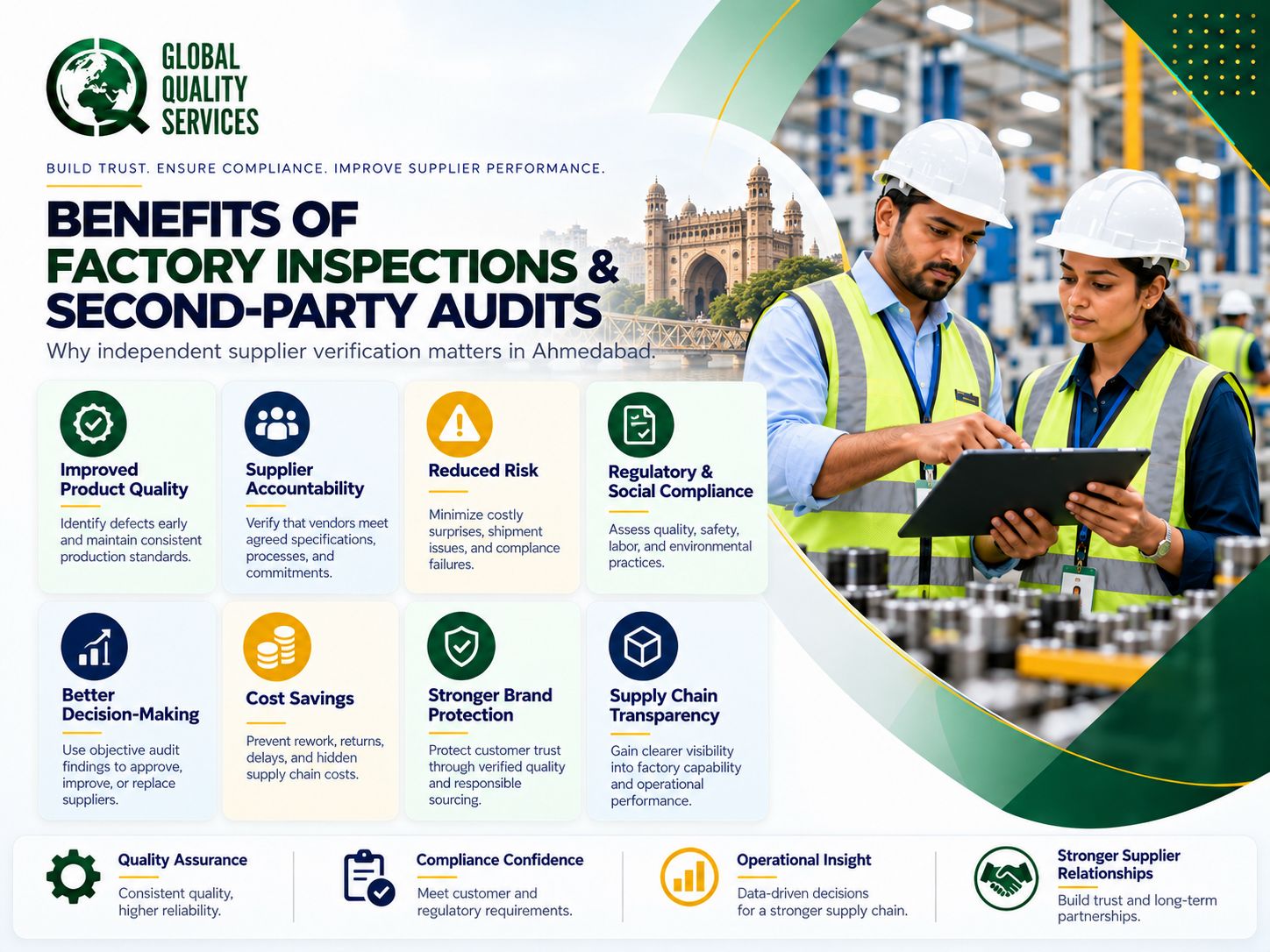
For businesses purchasing from Ahmedabad-based suppliers, factory assessments can provide practical information that documentation alone may not show.
- Better Supplier Evaluation: Gain a clearer understanding of a supplier’s actual manufacturing capabilities.
- Quality Risk Identification: Identify weaknesses in production, inspection, testing, or process controls.
- Pre-Order Verification: Assess a supplier before committing to significant production volumes.
- Customer Requirement Verification: Check processes against defined specifications and buyer requirements.
- Production Visibility: Understand how products are manufactured, inspected, stored, and prepared for dispatch.
- Corrective Action Monitoring: Follow up on issues identified during previous assessments.
- Supplier Performance Monitoring: Use periodic audits as part of an ongoing supplier evaluation program.
Second-Party Audits for Ahmedabad’s Manufacturing Supply Chain
Ahmedabad has a broad manufacturing base, while the wider industrial belt around the city connects suppliers across engineering, chemicals, pharmaceuticals, textiles, automotive components, plastics, food processing, and other sectors. For businesses sourcing from these locations, second-party audits can provide independent evidence of supplier capabilities and help procurement teams structure supplier evaluations.
Factory assessments may therefore be relevant across areas such as Vatva, Naroda, Odhav, Rakhial, Kathwada, Changodar, Sanand, Sarkhej, and the Ahmedabad-Gandhinagar industrial corridor.
Factory inspections and second-party audits can be adapted to different manufacturing environments.
- Engineering and industrial manufacturing: Assessment of production processes, fabrication, machining, inspection, testing, and documentation.
- Pharmaceutical and chemical manufacturing: Review of relevant production controls, documentation, material handling, traceability, and customer-specific requirements.
- Textile and garment manufacturing: Evaluation of raw materials, production processes, artistry, quality inspection, packaging, and order requirements.
- Automotive and component manufacturing: Assessment of process controls, component quality, testing, traceability, and production capability.
- Food and packaging industries: Review of relevant production, storage, hygiene, quality, traceability, and packaging controls.
- Electrical and electronics manufacturing: Assessment of manufacturing processes, component handling, testing, inspection, and product conformity.
What Happens During a Second-Party Factory Audit?
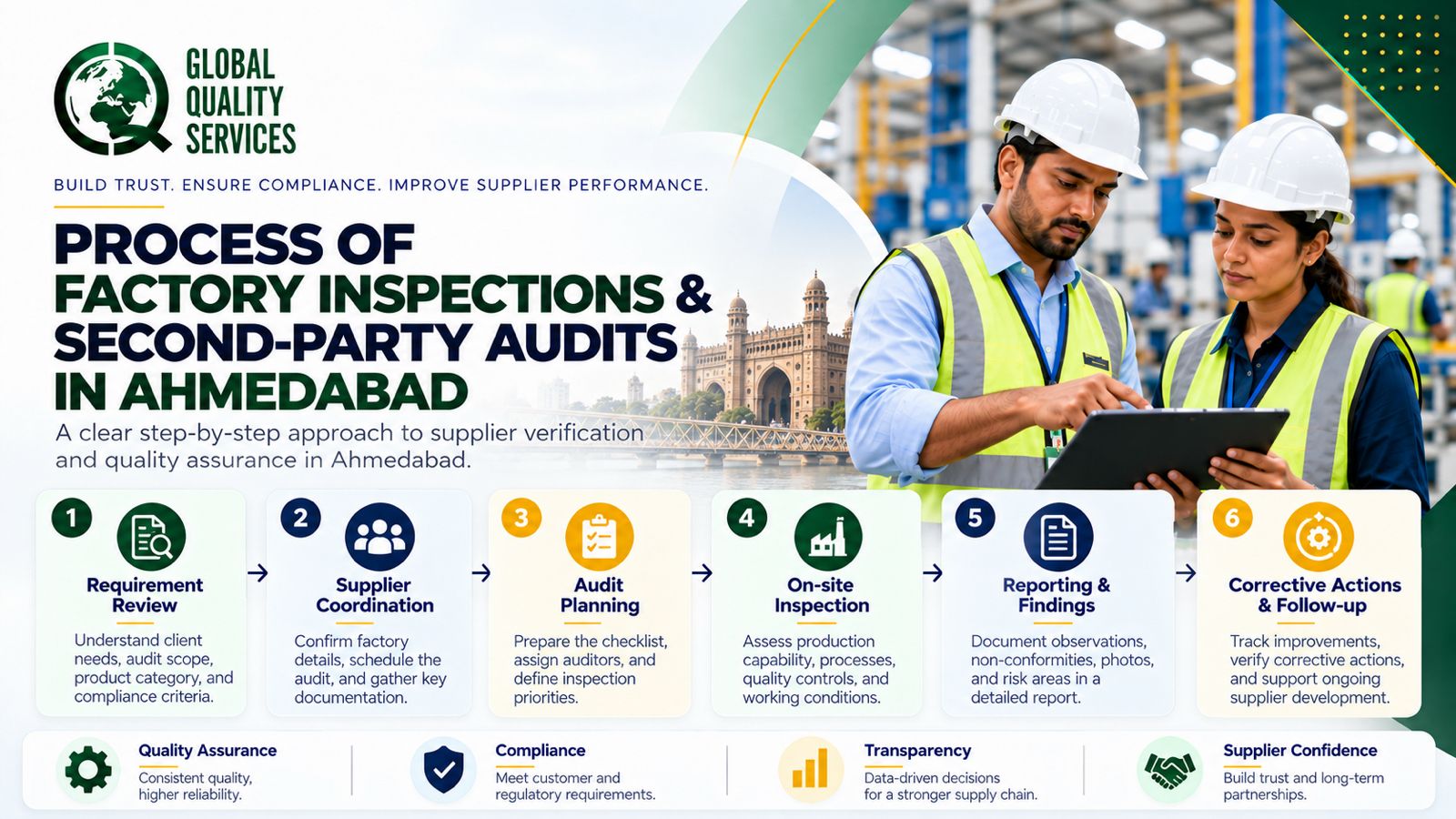
A second-party audit begins with a clear understanding of what the customer needs to verify.
Audit Scope and Criteria
The audit team establishes the factory, product, processes, requirements, and areas to be assessed.
Document and Record Review
The team reviews relevant procedures, specifications, inspection records, test reports, quality records, and previous findings.
On-Site Assessment
The auditor evaluates the agreed areas at the manufacturing facility through observation, discussions, document review, and examination of available evidence.
Process Verification
The auditor compares actual production-floor practices with documented procedures and applicable customer requirements.
Findings and Reporting
Identified non-conformities, observations, and areas requiring attention are documented using objective evidence and presented in an audit report.
Corrective Action Follow-Up
Where required, corrective actions can subsequently be reviewed to determine whether identified issues have been addressed.
How Can GQS Help with Factory Inspections and Second-Party Audits in Ahmedabad?
Global Quality Services supports organizations requiring factory inspections and second-party audits in Ahmedabad and surrounding industrial areas. We can tailor the assessment to the customer’s objectives, supplier requirements, product specifications, applicable standards, or internal supplier evaluation criteria.
Our team can support assessments for new supplier qualification, ongoing supplier monitoring, manufacturing process verification, product-quality evaluation, customer-specific requirements, and corrective-action follow-up.
The objective is to provide the customer with structured findings based on what was observed and verified during the factory assessment, helping procurement and quality teams maintain better visibility across their supply chain.
Frequently Asked Questions
1. What is a second-party audit of a factory?
A second-party audit is an assessment conducted by or on behalf of a customer to evaluate a supplier against defined requirements. It can cover manufacturing processes, quality controls, documentation, production capabilities, and other agreed criteria.
2. What is checked during a factory inspection?
The inspection scope can include raw materials, production processes, product quality, testing, documentation, traceability, storage, packaging, and dispatch, depending on the customer’s requirements.
3. Can a factory audit be conducted before approving a supplier?
Yes. A second-party audit can form part of supplier qualification and can help organizations assess a potential supplier before entering into a significant purchasing relationship.
4. Can the audit be based on our own supplier checklist?
Yes. The assessment can be structured around customer-specific requirements, specifications, internal supplier checklists, applicable standards, or other agreed criteria.
5. Does GQS provide factory inspections outside Ahmedabad?
GQS can support factory inspections and second-party audit requirements across Ahmedabad, Gujarat, and other locations in India, depending on the scope and audit requirements.