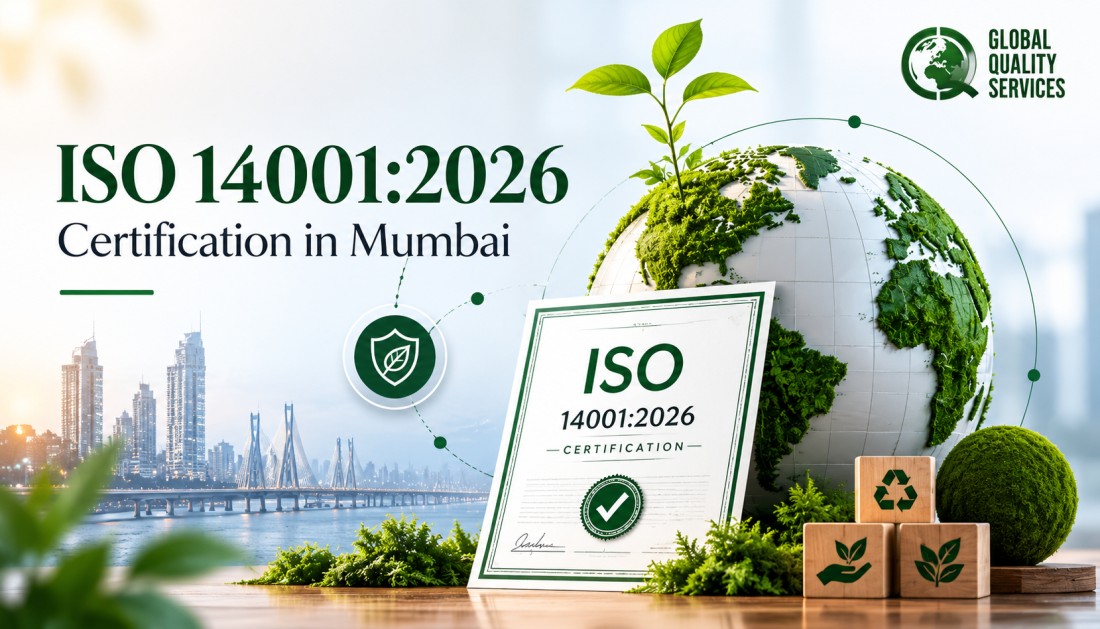
Mumbai is India’s financial and commercial hub, home to major manufacturing units, logistics operators, infrastructure companies, pharmaceutical businesses, and corporate headquarters. As environmental compliance expectations continue to grow, organizations are increasingly adopting structured environmental management systems to improve performance and meet stakeholder requirements.
Mumbai’s economic significance makes environmental responsibility more important than ever. The city contributes approximately 6.16% of India’s GDP and remains the country’s largest business center. Additionally, Mumbai Port Authority handled a record 75.15 million tonnes of cargo during FY 2025-26, reflecting the scale of industrial and trade activity operating across the region.
ISO 14001:2026 certification helps organizations establish a practical framework for managing environmental responsibilities, reducing operational risks, improving resource efficiency, and strengthening business credibility in local and global markets.
Why ISO 14001:2026 Matters for Mumbai Businesses
ISO 14001:2026 provides a structured approach to achieving these objectives. Key reasons businesses are implementing ISO 14001:2026 include:
- Better control over environmental impacts
- Improved compliance with environmental regulations
- Reduced waste generation and resource consumption
- Enhanced reputation among customers and stakeholders
- Greater eligibility for tenders and procurement opportunities
- Stronger support for ESG and sustainability initiatives
- Improved readiness for future environmental requirements
Industries in Mumbai That Benefit Most from ISO 14001:2026
ISO 14001:2026 is suitable for organizations of all sizes. However, it delivers significant value in industries where environmental impacts must be carefully managed.
|
Industry |
Typical Benefits |
|
Manufacturing |
Reduced waste, energy efficiency, and compliance management |
|
Pharmaceuticals |
Improved environmental controls and operational consistency |
|
Chemicals |
Better handling of environmental risks and regulatory requirements |
|
Construction |
Structured environmental management across projects |
|
Logistics and Warehousing |
Resource optimization and sustainability improvements |
|
Food Processing |
Better waste management and environmental performance |
|
Engineering Companies |
Improved process control and environmental accountability |
|
Corporate Offices and IT Parks |
Energy management and sustainability initiatives |
ISO 14001:2026 Certification Process in Mumbai
Achieving certification requires a clear, step-by-step approach to ensure the management system integrates smoothly with existing business operations.
Phase 1: Initial Gap Analysis
The certification process begins with an assessment of your current operational processes against the requirements of the updated standard. This step identifies existing compliance gaps, resource leaks, and areas where waste management workflows require adjustment.
Phase 2: System Design and Documentation
Next, your team establishes the core framework for your environmental management system. This phase involves defining clear environmental policies, setting specific performance objectives, and mapping out the required documentation to track operational waste and resource consumption.
Phase 3: Workforce Training and Implementation
A system is only effective if your team knows how to use it. This phase focuses on training employees across different departments to follow the new protocols, log operational data correctly, and respond effectively to potential environmental risks.
Phase 4: Internal Auditing and Performance Review
Before undergoing the final evaluation, your team conducts an internal audit. This step verifies that the new procedures are working as intended, data logging is accurate, and any remaining process deviations are corrected.
Phase 5: Final Certification Audit
An independent, accredited certification body conducts a thorough review of your system. They verify that your operations fully comply with the standard and, upon a successful evaluation, officially issue your certification.
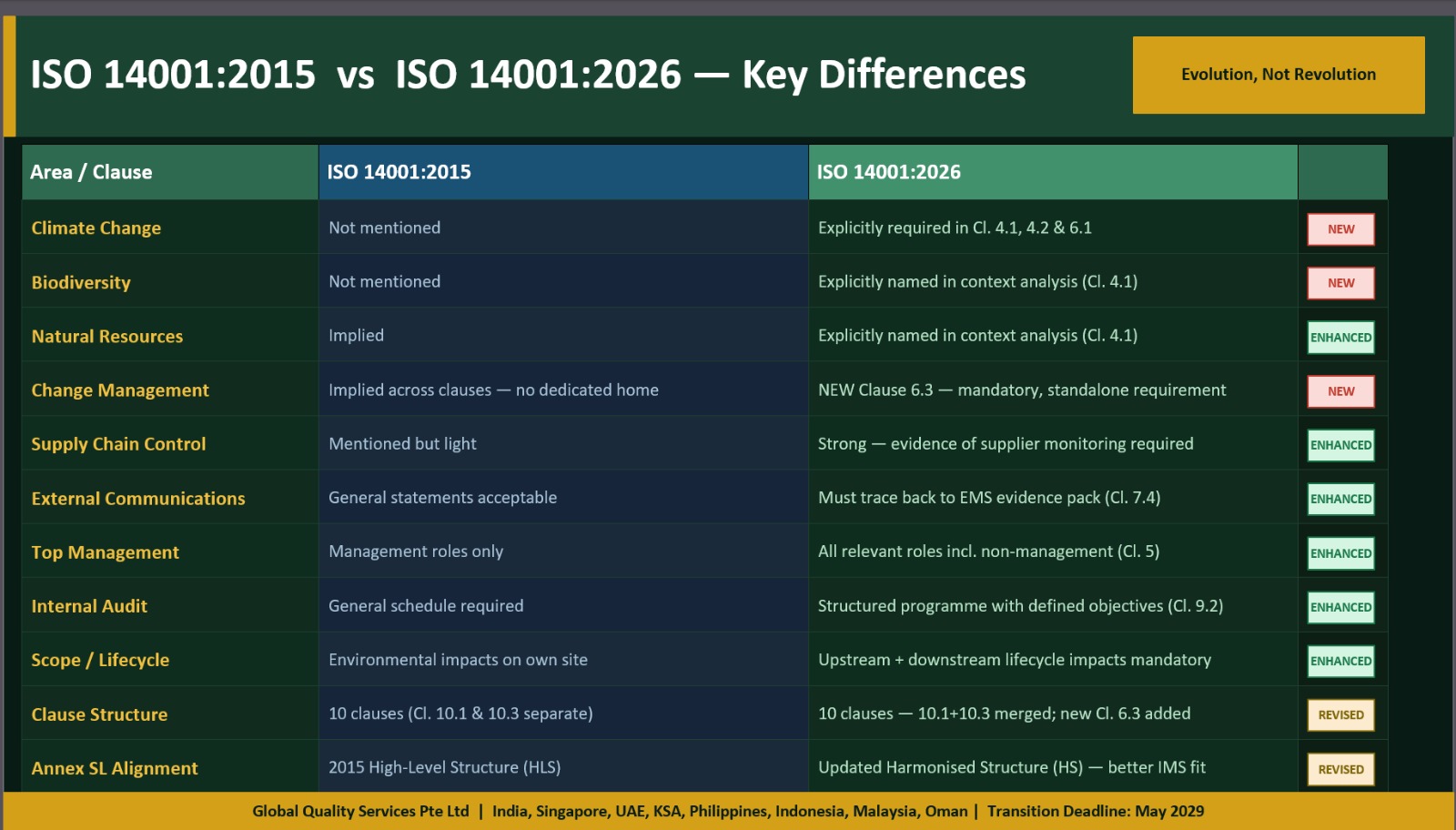
ISO 14001:2026 Migration from ISO 14001:2015
The newer version shifts focus from basic procedural compliance toward verifiable environmental performance, climate transition planning, and digital data management.
Why Choose Global Quality Services for ISO 14001:2026 Certification in Mumbai
Global Quality Services provides clear, practical support to help businesses design, implement, and maintain effective environmental management frameworks. Our consultants understand the specific regulatory challenges facing businesses across the Mumbai Metropolitan Region, ensuring your compliance system is practical and effective.
We focus on building management systems that simplify regulatory compliance while uncovering opportunities to reduce waste and lower utility costs. By avoiding overly complex documentation, our team ensures your environmental protocols integrate smoothly with your daily business activities.
Contact Us for Migration to ISO 14001:2026
The transition to ISO 14001:2026 is more than a compliance update. It is an opportunity to strengthen your Environmental Management System, align with evolving sustainability expectations, and prepare your organization for future business requirements. Organizations that start early can identify gaps, update processes efficiently, and avoid last-minute transition challenges.
Whether you are planning a fresh certification, upgrading from ISO 14001:2015, or seeking support for certification continuity, our team can help simplify the process. From ISO 14001:2026 Migration consulting and implementation guidance to ISO 14001:2026 transfer certification support, we provide practical solutions tailored to your business needs. If you are looking for an experienced ISO 14001:2026 consultant or reliable ISO 14001:2026 Consultancy services in Mumbai, contact Global Quality Services to discuss your certification and migration requirements with our experts.
Frequently Asked Questions
1. Is ISO 14001:2026 certification mandatory in Mumbai?
No. ISO 14001 certification is voluntary. However, many organizations pursue certification to strengthen environmental management, improve compliance practices, and meet customer requirements.
2. How long does it take to achieve ISO 14001:2026 certification?
The timeline depends on the size and complexity of the organization. Most businesses complete implementation and certification within a few months when adequate resources are allocated.
3. Can small and medium-sized businesses obtain ISO 14001:2026 certification?
Yes. ISO 14001 is designed for organizations of all sizes. The requirements can be scaled according to the nature and complexity of the business.
4. What documents are typically required for ISO 14001 implementation?
Organizations generally require environmental policies, objectives, risk assessments, operational controls, monitoring records, audit reports, and management review documentation.
5. How can organizations assess their readiness for ISO 14001:2026 migration?
A gap assessment is typically the most effective starting point. It helps identify differences between the current management system and the revised standard requirements.