
The rapid growth of IT companies, manufacturing units, and electronic industries in Pune makes this city an ideal candidate for increasing concern about e-waste disposal methods. According to the MPCB, the Pune area is designated as one of the significant e-waste belts of Maharashtra due to the burgeoning IT sector, electronics manufacturing plants, and usage of electrical and electronic goods in the region. This trend aligns with existing regulations in India. In accordance with the E-Waste Management Rules 2022, producers are required to fulfill their recycling targets using registered recyclers, and CPCB monitors such EPR compliance via their website.
R2v3 Certification in Pune helps recycle, refurbish, handle, and process electronic waste sustainably, safely, securely, and responsibly while complying with the latest recycling standards. However, obtaining R2v3 certification is not only about compiling documentation. Learn everything about the certification requirements, procedure, benefits, fees, and steps organizations can undertake to successfully clear their audits.
Why R2v3 Matters for Service Organizations
The R2v3 certification is voluntary, but it plays a critical role for electronics recyclers, refurbishers, and ITAD providers. With growing concerns, it is also becoming mandatory, as it will help the company to demonstrate a commitment to sustainable and ethical business practices. It ensures:
- Data protection and secure destruction of all data-bearing devices.
- Environmental responsibility, prioritizing reuse and recovery over disposal.
- Downstream vendor accountability, ensuring traceability of all materials.
- Worker health & safety through documented training, emergency preparedness, and hazard controls.
For Pune-based organizations, R2v3 certification not only supports compliance but also strengthens customer trust, expands global market access, and aligns your business with responsible sustainability standards.
Who Requires R2v3 Certification
R2v3 certification is crucial for organizations that handle used electronics and aim to enhance safety, security, and responsible recycling practices throughout their operations.
Who Requires R2v3 Certification?
- Electronics recyclers and refurbishers
- IT asset disposition (ITAD) companies
- E-waste collection centers
- Data destruction and data sanitization service providers
- Organizations involved in electronics repair or resale
- Reverse logistics and take-back program operators
- Electronics dismantling and processing facilities
- Businesses managing large volumes of used or end-of-life devices
The R2v3 Core Principles Explained
The R2v3 standard addresses responsible electronics recycling. This includes everything from ensuring the security of data-bearing devices to protecting the environment, securing workers, complying with the law, recovering materials responsibly, and continually improving operations.
There are six categories total.
- Data Security: Secure any data-bearing devices and keep documentation of either the sanitization process or disposal.
- Environmental Protection: Manage hazardous substances, hazardous wastes, greenhouse gas emissions, and other environmental considerations.
- Health and Safety: Hazard identification, employee training, and health and safety controls.
- Legal Compliance: Complying with environmental, occupational health, safety, and data security laws and regulations.
- Reuse and Recovery: Focusing on reuse, refurbishing, repairing, and recovering materials responsibly.
- Downstream Management: Evaluating your downstream vendors’ ability to manage electronics responsibly.
Companies may complement their environmental and quality framework with complementary standards like the ISO 14001 Environmental Management System Certification, the ISO 45001 Occupational Health & Safety Certification, and the ISO 9001 Quality Management System Certification. There are many standards available to choose from.
Step-by-Step Process of R2v3 Certification in Pune
This concise guide outlines the step-by-step R2v3 certification process for Pune recyclers, from gap analysis and documentation to audit, corrective actions, and SERI approval.
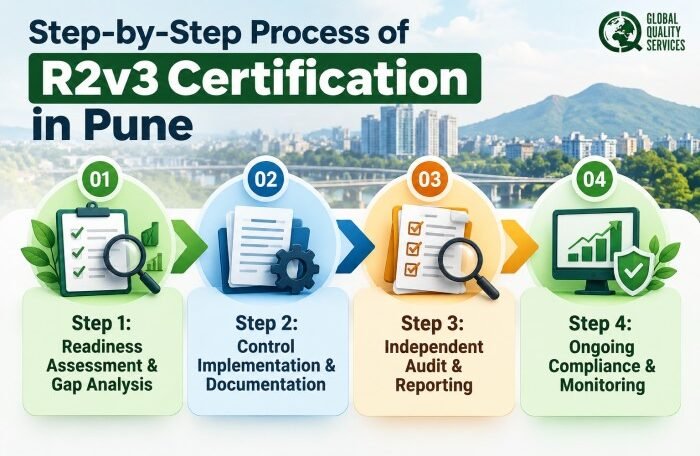
Step 1: Readiness Assessment & Gap Analysis
The certification process begins with a readiness assessment to evaluate existing policies, downstream vendor compliance, and data sanitization controls against the R2v3 requirements. Consultants in Pune usually conduct a gap analysis to identify areas for improvement before implementation.
Step 2: Control Implementation & Documentation
After identifying gaps, companies must implement missing controls, develop or update policies, and document procedures for environmental management, reuse planning, vendor evaluation, and data destruction. Proper documentation, SOPs, and records form the foundation of compliance.
Step 3: Independent Audit & Reporting
An accredited Certification Body conducts an external audit to verify conformance with the R2v3 standard. The audit includes a documentation review, site inspection, interviews, and verification of downstream vendors. Once all non-conformities are addressed, the organization receives its certificate.
Step 4: Ongoing Compliance & Monitoring
Certification requires continual monitoring. Companies must conduct regular internal audits, management reviews, and implement corrective actions. Annual surveillance audits ensure ongoing compliance and continuous improvement.
Benefits of R2v3 Certification for Pune Businesses
R2v3 certification empowers Pune recyclers to boost operational efficiency, strengthen customer trust, meet global compliance standards, and unlock new business opportunities in the responsible electronics recycling industry.
Strengthening Data Security & Reducing Risk
R2v3 certification assures that all electronic assets and storage devices are processed securely, protecting clients from data breaches and liability.
Building Client Trust & Winning Contracts
The certification will indicate that these facilities have good management practices, document everything, and maintain higher control levels. The program will therefore be particularly beneficial to the recyclers operating in locations such as Hinjewadi, Kharadi, and Pimpri-Chinchwad who need to prove themselves to companies like Infosys and Dell.
Aligning with Global Compliance Standards
R2v3 aligns with leading global standards, including ISO 14001 and ISO 45001. Certification allows Pune organizations to compete in international markets and meet global environmental and data security expectations.
R2v3 Certification Audit in Pune
An R2v3 audit tests whether the facility has put the necessary controls and processes into effect. The purpose of a certification audit is to confirm not only documentation but actual implementation through document review, inspection, interview, observation, and verification of downstream controls. Some examples of areas assessed during an R2v3 audit include:
- Documented process implementation
- Data security and sanitization controls
- Environment and occupational health & safety controls
- Compliance with relevant laws and regulations
- Management of materials flow and downstream vendors
- Staff training and knowledge
- Internal auditing and corrective actions records
R2v3 Certification Requirements in Pune
Facilities located in Pune must set up the necessary processes and controls before pursuing their R2v3 certification, and these will differ based on the type of operations conducted at each individual site. Some common requirements include:
- Scope definition that includes the facility, activities, and processes covered.
- Compliance with legal and regulatory requirements for the environment, health, safety, and operations.
- An established EHS management system before certification.
- A QMS that satisfies the criteria set by SERI.
- Controls for sanitizing data-bearing devices.
- Controls for downstream vendors regarding those vendors who handle the materials.
- Training documentation related to employees and their competence within R2v3 processes.
- Internal audit activities to find compliance issues and make corrections.
Cost and Timeline for R2v3 Certification
The cost and timeline for R2v3 certification depend on your facility’s size and readiness, ensuring a structured, efficient path to compliance. R2v3 certification costs vary depending on audit duration, readiness level, and the need for internal training.
Factors Influencing Cost
The total investment depends on multiple factors:
- Facility size and operational complexity
- Scope of activities (reuse, refurbishment, or full recycling)
- Number of locations
- Level of existing system maturity and documentation
- Consultant or audit support required
Duration for Certification
Typically, organisations take 3 to 6 months to complete the certification process from readiness and documentation to audit and certification issuance. Smaller facilities with strong existing systems may achieve this goal more quickly.
Documents Required for R2v3 Certification
Good documentation is an important part of R2v3 readiness. While the exact records depend on the facility’s scope and applicable requirements, businesses should be prepared with documents such as:
- R2v3 policies, procedures, and scope statement
- Environmental, health and safety records
- Legal compliance records and applicable licenses
- Data sanitization and destruction procedures
- Employee training and competency records
- Internal audit reports and corrective action records
- Downstream vendor evaluation and monitoring records
- Reuse, refurbishment, recycling, and material recovery records
- Emergency preparedness and incident records
- Management review and continual improvement records
Why Partner with Global Quality Services for R2v3 Certification in Pune
Partnering with Global Quality Services ensures expert guidance, smooth documentation support, and a hassle-free certification journey tailored to Pune’s e-waste recycling needs.
- Local Expertise with Global Standards: Consultants based in Pune possess in-depth knowledge of both local e-waste regulations and the R2v3 framework, enabling organisations to seamlessly integrate Indian regulatory compliance with global standards.
- Streamlined End-to-End Consulting: From gap analysis to documentation, training, and audit support, compliance experts streamline every step to minimise delays and non-conformities.
- Tailored Solutions for Every Organisation: Whether a small refurbishment unit or a full-scale recycler, consulting partners design R2v3 implementation strategies tailored to your operational needs and industry goals.
Contact us to partner with reliable R2v3 certification consultants in Pune and enhance compliance, customer trust, and leadership in the circular electronics ecosystem.
R2v3 Certification Support Services in Pune
Improve your electronics recycling business through expert assistance from a renowned consultant with 26 years of experience in certification consulting services. Receive professional advice on gap analysis, documentation, implementation, staff training, internal audits, and audit preparation. Enhance your R2v3 certification readiness process efficiently by addressing any non-compliances and working systematically towards achieving certification. Contact us today to start your R2v3 Certification journey in Pune.
Frequently Asked Questions
1. Is R2v3 certification mandatory in India?
No. R2v3 is a voluntary standard; however, many global clients require certified partners. Achieving R2v3 certification demonstrates your organisation’s commitment to responsible recycling, data security, and environmental stewardship. It also enhances business credibility and access to international markets where compliance is highly valued.
2. Who can apply for R2v3 certification?
Any organisation involved in electronics reuse, refurbishment, IT asset recovery, or recycling is eligible to apply. This includes ITAD companies, e-waste recyclers, refurbishers, and resellers of electronic components. The certification framework accommodates businesses of varying sizes, provided they comply with the core R2v3 requirements and demonstrate operational transparency.
3. How long is the certification valid?
R2v3 certification is valid for three years, with annual surveillance audits. These audits verify that the organisation maintains its environmental, health, and data protection standards in accordance with the R2v3 guidelines. Consistent adherence during the three years strengthens the company’s reputation as a trusted and responsible recycler.
4. Does R2v3 replace R2:2013?
Yes, R2v3 is the latest version, replacing R2:2013. All existing certifications are transitioning to R2v3. All existing R2:2013 certifications are being transitioned to R2v3, which introduces stricter controls and clearer environmental accountability. The updated framework enhances traceability, data management, and downstream vendor oversight, aligning with global best practices.
5. How to verify an R2v3-certified facility?
The directory provides up-to-date listings of certified organisations in India and across the world. Always confirm certification validity before partnering, as it ensures the facility adheres to the recognised Responsible Recycling principles.