
In today’s fast-expanding electronics recycling landscape, R2v3 certification has become a globally recognized standard for responsible processing and secure IT-asset handling. According to a report, Karnataka generates around 0.8 million metric tonnes of e-waste annually, with Bengaluru being its biggest contributor.
For businesses in Bengaluru that deal in e-waste collection, refurbishment, or secure data destruction, R2v3 certification demonstrates a solid commitment to environmental stewardship, data security, and worker safety. Local firms can partner with certification bodies to strengthen their credibility, ensure compliance, and align with sustainable global practices.
What is R2v3 Certification
R2v3 is the current edition of the Responsible Recycling (R2) Standard for enterprises engaged in the reuse and recycling of electronics. It addresses the collection, processing, reuse, refurbishment, recycling, and shipment to downstream processors of electronic equipment.
Data protection is another vital component of this standard due to the fact that many obsolete computers, servers, storage media, and other pieces of electronic equipment may contain sensitive data. Certification includes an independent evaluation of the enterprise’s relevant procedures against the corresponding R2v3 requirements.
Why R2v3 Matters for ITAD Facilities and Electronics Recyclers?
R2v3 certification is voluntary, but for refurbishers, recyclers, and ITAD providers, it has become essential. As concerns around e-waste grow, clients increasingly trust certified partners who follow ethical, safe, and sustainable methods. With R2v3 certification, an organisation ensures:
- Effective data protection, through secure handling and documented sanitisation of all data-bearing devices.
- Environmental responsibility, by reusing devices or recovering materials safely.
- Downstream accountability, with full traceability across the recycling chain.
- Worker health and safety, via training, documented procedures, and hazard mitigation.
Businesses looking to strengthen their environmental management alongside R2v3 can also consider ISO 14001 certification, which provides a broader framework for managing environmental responsibilities.
Who Requires R2v3 Certification?
R2v3 is especially relevant for organisations in Bengaluru that handle used electronics and want to run safe, secure, and traceable recycling operations, such as:
- Electronics recyclers and refurbishers
- IT asset disposition (ITAD) firms
- E-waste collection centres
- Data destruction/sanitisation providers
- Electronics repair or resale businesses
- Reverse logistics operators
- Dismantling or disassembly facilities
- Organisations managing large volumes of end-of-life devices
The R2v3 Core Principles Explained
R2v3 is built on core principles that guide organisations toward safer, responsible, and transparent electronics management. These principles create a strong foundation for sustainable, compliant operations. R2v3 is based on seven core principles:
- Data security – secure handling, sanitisation, and record-keeping.
- Environmental care – managing hazardous materials, recycling, and recovery.
- Worker health & safety – training, audits, risk controls.
- Legal compliance – all operations must meet applicable regulations.
- Quality systems – documented processes, continuous improvement.
- Reuse & recovery – maximise reuse and efficient materials recovery.
- Transparent chain of custody – traceability from start to finish, including downstream vendors.
R2v3 Certification Requirements
Requirements relevant to an organization are based on the activities and certification scope of the organization. But in general, the following controls have to be put in place in most organizations:
- Data Protection: Control measures have to be in place regarding data protection of equipment, which may include data erasure and disposal.
- Environmental Management: The organization must have control measures related to storage, processing, recycling, recovery, and disposal of electronic materials.
- Employee Health and Safety: There should be appropriate training, safety procedures, risk control, and protection for employees according to their jobs. Organisations looking for a more comprehensive approach to workplace safety can also explore ISO 45001 certification, which focuses on occupational health and safety management.
- Legislation Compliance: There is a need for the organisation to understand and comply with applicable laws and regulations for its operation.
- Downstream Control: In the case where equipment/materials are transferred to another processor, there is a need for a proper process of evaluating and monitoring such processors.
- Reuse and Recovery: When it is feasible, the equipment and materials should be evaluated on the basis of their reuse, recovery, or recycling and not just disposal.
- Documentation and Record-keeping: There needs to be evidence that the policies and procedures are being implemented.
Step-by-Step Process of R2v3 Certification in Bengaluru
Here’s a simple guide for Bengaluru recyclers, ITAD firms, and service providers to achieve R2v3 certification from assessment to audit and ongoing compliance.
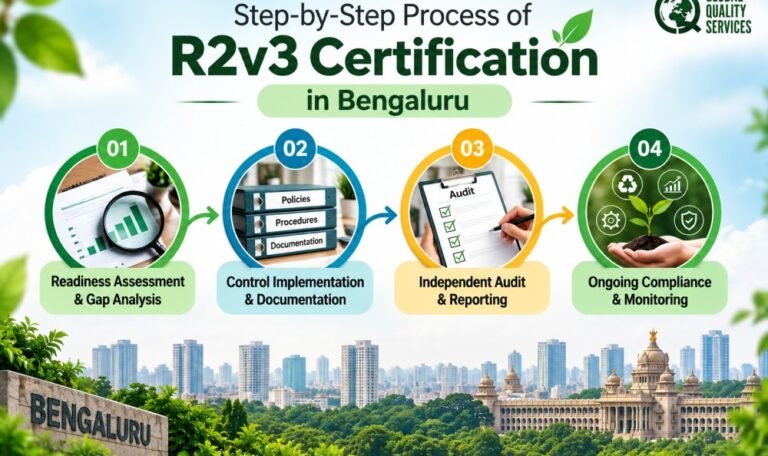
Step 1 – Readiness Assessment & Gap Analysis
Begin with a readiness check: review your policies, vendor controls, data sanitisation methods, and how you handle e-waste. Engage a consultant in Bengaluru to carry out a gap analysis and flag missing or weak areas.
Step 2 – Control Implementation & Documentation
Once gaps are identified, implement the required controls. Update or establish policies, SOPs, and record-keeping systems for data security, downstream vendor oversight, and environmental safeguards.
Step 3 – Independent Audit & Reporting
A certified Certification Body conducts an external audit, which may involve document review, site inspections, interviews, and downstream checks. After addressing any non-conformities, the R2v3 certificate is awarded.
Step 4 – Ongoing Compliance & Monitoring
Maintain compliance through regular internal reviews, corrective actions, and annual surveillance audits. Use a continuous improvement cycle (Plan-Do-Check-Act) to sustain and enhance your R2v3-aligned practices.
Benefits of R2v3 Certification for Bengaluru Businesses
Obtain R2v3 certification and gain significant advantages in Bengaluru’s electronics recycling ecosystem:
Strengthening Data Security & Risk Reduction
R2v3 raises the bar on how data-bearing devices are handled, from secure transport to verified sanitisation and chain-of-custody documentation, reducing the risk of data breaches or leaks.
Building Trust & Winning Business
Certification improves credibility with OEMs, IT firms, enterprises, and government bodies. It signals that your Bengaluru facility adheres to best practices in sustainability and data protection, helping you win more tendered contracts or partner deals.
Aligning with Global & National Standards
R2v3 aligns well with ISO 14001 (environment) and ISO 45001 (safety), facilitating both domestic regulatory compliance and global market access. For Bengaluru firms, this means being seen as a responsible and forward-looking operator.
Cost and Timeline for R2v3 Certification
The cost and duration for certification depend on your facility’s size, maturity, and readiness. Here are the factors influencing the cost of R2V3 certifications:
- Scale of operations (facility size, number of locations)
- Scope of services (collection, refurbishment, destruction, downstream)
- Existing system maturity (policies, documentation)
- Need for consultant and audit support
How Long Does R2v3 Certification Take
As a general planning range, the complete process may take around 3–6 months. Businesses with established processes may complete preparation sooner, while larger or more complex operations may require additional time. The timeline depends on the organisation’s size, scope, existing systems, documentation, and readiness for the audit.
Documents Required for R2v3 Certification
The exact documents depend on the organisation’s scope and activities. Common documentation may include:
- R2v3 policies and procedures
- Data sanitisation and destruction records
- Environmental procedures
- Health and safety procedures
- Employee training records
- Risk assessments
- Legal compliance records
- Equipment and material tracking records
- Downstream vendor records
- Incident and corrective-action records
- Internal audit records
- Management review records
Why Partner with Global Quality Services in Bengaluru?
Partnering with Global Quality Services, a reputed consultant, gives Bengaluru organisations the advantage of expert, local guidance with global-grade certification. Here’s how we help:
- Local Expertise + Global Standards: Our consultants in Bengaluru understand both Karnataka’s regulations and R2v3 requirements, ensuring your systems align seamlessly.
- End-to-End Support: From gap analysis to documentation to audit coordination, we provide hands-on guidance to avoid delays.
- Tailored Strategy: Whether you’re a small unit or a large facility, we design a certification roadmap that fits your scale, risk, and maturity.
Start Your R2v3 Certification Journey in Bengaluru
If you operate an electronics recycling, ITAD, refurbishment, data destruction, dismantling, or related business in Bengaluru, understanding your current level of readiness is a good place to start.
With over 26 years of experience, Global Quality Services can help you identify gaps, organise your documentation, improve operational controls, and prepare for the R2v3 certification audit. Reach out today to engage trusted R2v3 certification consultants in Bengaluru to elevate your compliance, credibility, and sustainable leadership in electronics recycling.
Frequently Asked Questions
1. Is R2v3 certification mandatory in Karnataka or Bengaluru?
No, R2v3 is not mandatory in Karnataka or Bengaluru. However, many organisations choose it because certified facilities gain more trust, better compliance, stronger sustainability credentials, and better chances of winning contracts from OEMs and enterprise clients.
2. Which organisations are eligible for R2v3 certification?
Any organisation handling the reuse, refurbishment, recovery, or recycling of electronics can apply. This includes ITAD companies, recyclers, refurbishers, e-waste collection centres, and data destruction providers willing to consistently meet core R2v3 requirements.
3. How long is the certification valid?
R2v3 certification remains valid for three years. During this period, organisations must undergo annual surveillance audits that verify ongoing compliance, proper system maintenance, and continuous improvement across environmental, safety, and data security controls.
4. Did R2v3 replace an older standard?
Yes, R2v3 replaced the earlier R2:2013 version. The updated standard introduces stricter rules for data protection, downstream vendor oversight, transparent traceability, environmental responsibility, and overall system maturity, ensuring more secure and sustainable operations.
5. How can someone verify a facility’s R2v3 status?
You can verify certification by checking SERI’s official online directory. It lists all globally certified R2v3 facilities along with their validity dates, certification status, and audit history, helping organisations choose responsible recycling partners confidently.