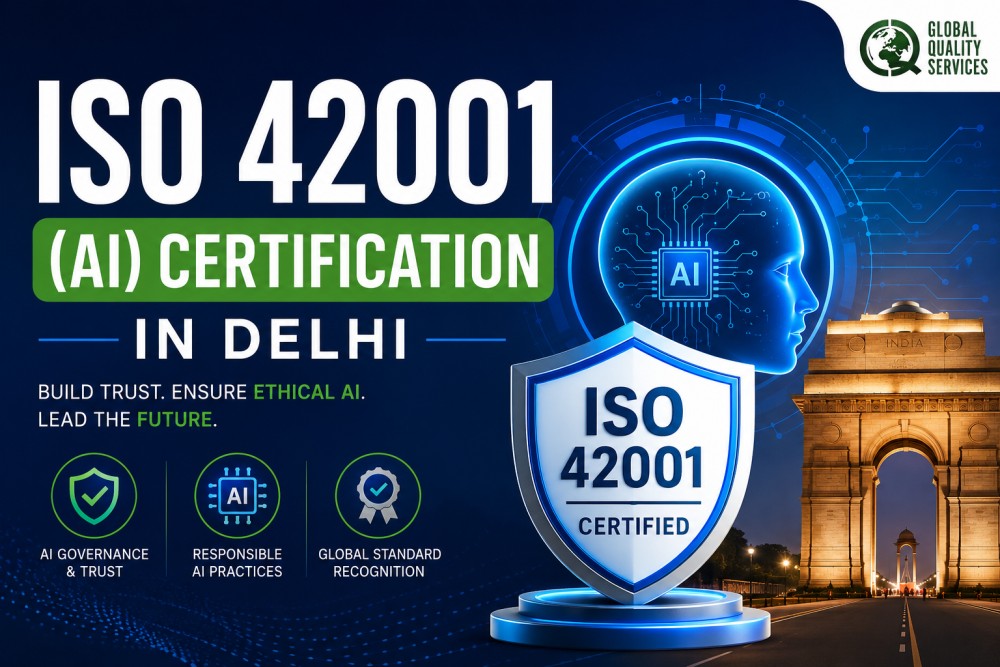
Delhi NCR is rapidly becoming one of India’s most active regions for AI adoption, enterprise automation, and digital transformation. From fintech companies in Gurugram to SaaS firms and analytics providers across Noida and Delhi, businesses are increasingly using AI systems to improve operations, customer experience, and decision-making. Along with this growth comes a stronger need for AI governance, accountability, and risk management.
Delhi’s startup ecosystem continues to expand. In 2026, the Delhi government introduced a ₹ 325-crore startup policy to support 5,000 ventures across emerging technology sectors, including AI and DeepTech.
As AI adoption increases, organizations are now expected to show that their AI systems are secure, transparent, monitored, and responsibly managed. This is where ISO 42001 certification becomes important. It provides a structured framework for managing AI systems responsibly while helping businesses reduce operational and compliance risks.
Why AI Governance Is Becoming Important for Businesses in Delhi NCR
AI is no longer limited to large technology companies. Businesses across Delhi NCR are using AI for customer support, fraud detection, predictive analytics, HR automation, document processing, and decision support systems. Some of the biggest reasons AI governance is becoming critical include:
- Increasing use of Generative AI tools within enterprises
- Growing concerns around AI bias and inaccurate outputs
- Rising client expectations for AI transparency
- Need for stronger human oversight in AI-driven decisions
- Vendor and third-party AI risks
- Pressure from global AI regulations and procurement standards
Which Organizations in Delhi Should Consider ISO 42001 Certification?
ISO 42001 is relevant for any organization that develops, deploys, manages, or uses AI systems as part of its operations. Here is a list of organizations in Delhi that should consider this certification:
- AI and SaaS Companies: AI startups and SaaS providers using machine learning or Generative AI tools can use ISO 42001 to establish structured governance from the early stages of growth.
- IT and Technology Service Providers: Technology companies delivering AI-enabled solutions for clients need proper controls around data usage, model monitoring, and accountability.
- Fintech and Financial Services Organizations: AI systems used for credit scoring, fraud detection, customer profiling, and automation require proper oversight to reduce risk and improve transparency.
- Healthcare and MedTech Companies: Healthcare organizations using AI for diagnostics, patient analytics, or operational decision making need governance controls to support accuracy and responsible use.
- Enterprises Using Internal AI Systems: Even companies that are not building AI products may still need ISO 42001 if they are actively using AI tools internally across HR, operations, analytics, or customer service functions.
- Government and Public Sector Vendors: Organizations working on AI-enabled projects for government departments or smart city initiatives can benefit from stronger governance frameworks and audit readiness.
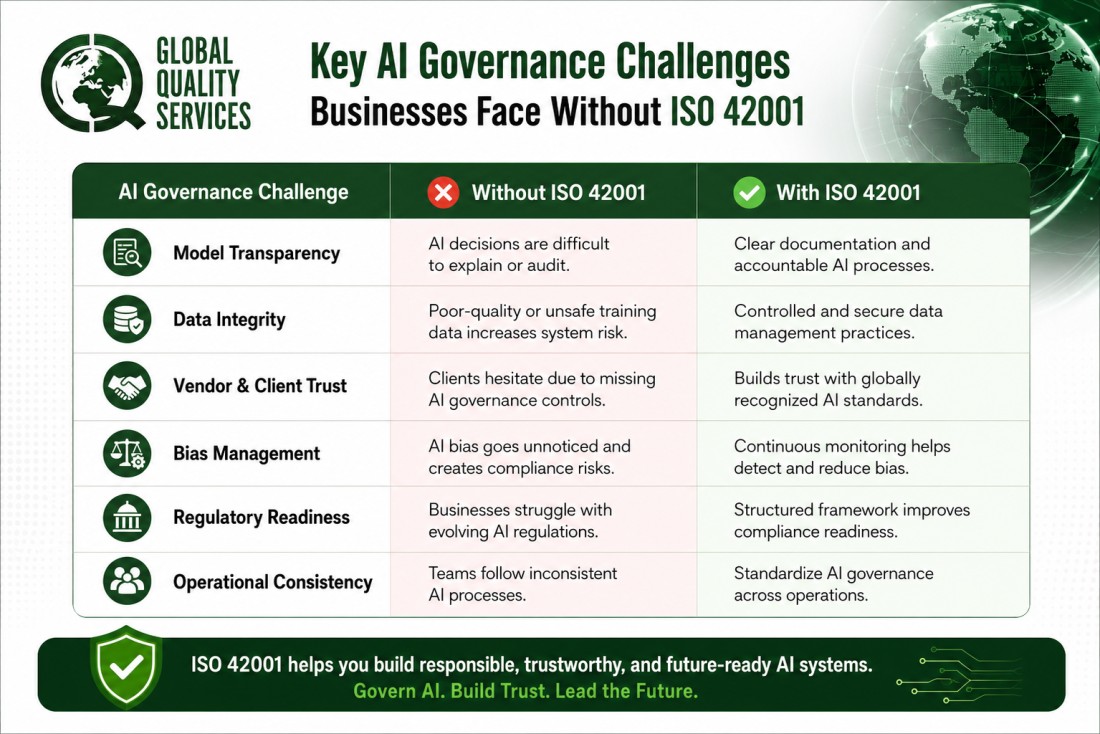
Key AI Governance Challenges Businesses Face Without ISO 42001
Running AI systems without a structured governance framework can create operational, legal, and reputational risks for businesses. ISO 42001 certification helps organizations build a controlled and transparent AI management system that reduces these risks and improves trust.
ISO 42001 Certification Process in Delhi
Transitioning your tech organization into full alignment with the international standard requires a deliberate, methodical approach. This is not a superficial paperwork exercise; it is a structured upgrade to your core software development lifecycle.
Step 1: Gap Analysis & Scope Boundary
Assess your existing model development workflows, active datasets, and current engineering controls against the core mandates of the standard. Establish exactly which product lines or internal systems will fall within the official management boundary.
Step 2: AIMS Architecture & Policy Design
Draft explicit corporate policies governing algorithmic accountability, ethical data sourcing, and life-cycle risk mitigation. Build structured tracking metrics that match the physical reality of your engineering pipelines.
Step 3: Control Deployment & Pipeline Integration
Embed risk mitigation procedures directly into live machine learning operations. This includes automating drift alerts, establishing data lineage logs, and running regular fairness testing across all target models.
Step 4: Internal Audit & Management Review
Execute an independent mock audit across your entire management system. Identify any leftover technical or administrative gaps, update documentation, and verify readiness before inviting external evaluation teams.
Secure Your Global Market Position: Partner with Global Quality Services for ISO 42001 Certification in Delhi
AI adoption is moving faster than ever across Delhi NCR. Businesses that implement AI governance early are better positioned to reduce operational risks, improve enterprise trust, and prepare for future compliance expectations.
ISO 42001 certification helps organizations move beyond uncontrolled AI usage and build structured governance processes that support responsible growth.
Connect with Global Quality Services to understand how your organization can prepare for ISO 42001 certification in Delhi with a practical and business-focused approach.
Frequently Asked Questions
1. Is ISO 42001 mandatory for companies in India?
No. ISO 42001 is currently a voluntary certification standard. However, many organizations are adopting it to strengthen AI governance, improve enterprise trust, and prepare for future compliance expectations.
2. Does ISO 42001 apply only to companies developing AI products?
No. The standard also applies to organizations using AI internally for operations, analytics, automation, HR, customer service, or decision support systems.
3. How long does ISO 42001 certification take?
The timeline depends on the size of the organization, the complexity of AI systems, and the current level of governance maturity. Many organizations complete the process within a few months after implementation begins.
4. Can startups apply for ISO 42001 certification?
Yes. AI startups and SaaS companies can benefit significantly from implementing governance controls early. It can help improve investor confidence, operational structure, and enterprise credibility.
5. What kind of internal preparation is usually required before certification?
Organizations generally need to establish AI governance policies, risk assessment procedures, monitoring controls, documentation systems, and internal audit processes before the certification audit begins.